Page 2923 of 6197
1 2.921 2.922 2.923 2.924 2.925 6.197

Nicaragua: Educación intercultural bilingüe para las comunidades indígenas.

Docentes de las comunidades mayangnas mejor preparados para impartir educación bilingüe.

Centroamérica/Nicaragua/03.01.2018/Autor y Fuente:  http://www.lavozdelsandinismo.com

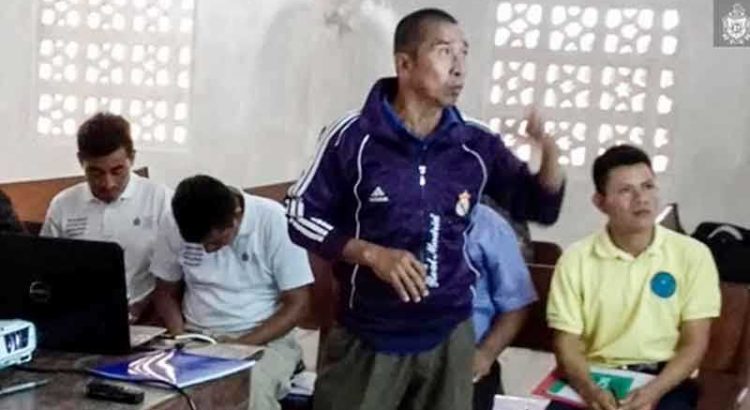
Un total de 38 docentes de comunidades mayangnas del país reciben en la Universidad Autónoma de Nicaragua (UNAN-Managua) un diplomado para fortalecer en sus territorios la Educación Intercultural Bilingüe, especialmente en la educación preescolar y primaria.

El diplomado lo reciben profesores de las comunidades Sakalwas, Musawás, Belén, Kibusna, Suniwás, Mukuswás, Supawás, Espanyulina, Arenaloso, que pertenecen al municipio de Bonanza. También participan asesores pedagógicos de Siuna y Rosita.

Esta iniciativa forma parte del proyecto “Generando Capacidades en Docentes y Materiales Didácticos para el fortalecimiento de la Educación Intercultural Bilingüe” y durante el mes de diciembre se desarrolló el módulo IV del diplomado que está enfocado en el “Diseño Curricular y Didáctica en la Educación Intercultural Bilingüe”.

La quinta y última parte del diplomado se desarrollará el próximo mes de enero y estará centrado en la “Elaboración de Materiales Didácticos en la Educación Intercultural Bilingüe”. No obstante, el proyecto continuará con una segunda fase en febrero, cuando los docentes estén listos para la adecuación curricular de programas de preescolar y primaria, de textos escolares y materiales didácticos.

Los mayangna son un pueblo indígena, también conocido como sumo que habitan a lo largo de los ríos Waspuk o Huaspuc, Pispís y Bocay, en el nororiente de Nicaragua, así como de los ríos Coco y Patuca en la frontera con Honduras y mucho más al sur a lo largo del río Grande de Matagalpa.

Hablan el idioma sumo que pertenece a la familia de las lenguas misumalpas. Se distinguen también los dialectos tawahka, panamahka, bawihka, kukra y ulwa. ​

Fuente: http://www.lavozdelsandinismo.com/nicaragua/2017-12-29/educacion-intercultural-bilingue-las-comunidades-indigenas/

Imagen: http://www.lavozdelsandinismo.com/wp-estaticos/2017/12/Capacitan-en-educaci%C3%B3n-intercultural.jpg

Comparte este contenido:

Cuba exhibe logros tangibles en Educación Especial.

Centroamérica/Cuba/03.01.2018/Autor y Fuente: http://www.prensa-latina.cu
Cuba exhibe hoy logros tangibles en la Educación Especial, la cual está orientada a formar un ciudadano bajo los principios de la equidad y la igualdad de posibilidades.
Pedagogos de la nación caribeña coinciden en que toda la educación ha de ser especial, adaptarse al ritmo individual de cada educando, abierta a quienes la necesiten, que sea incluyente, asuma las diferencias como valor y sea más justa y solidaria.

En la actualidad, la Educación Especial cubana está orientada hacia la solución de aquellos problemas que emanan de las necesidades sociales, y para tal empeño cuenta con más 12 mil profesores, más de 500 máster y de 120 doctores en Ciencias Pedagógicas, cifra que avala los avances en este campo.

También dispone de más 370 escuelas especiales con un personal docente que rebasa la cifra de 15 mil 700.

De acuerdo con información del Centro de Referencia Latinoamericano para la Educación Especial, no existe la pretensión de alinear el pensamiento en una sola dirección, es vital el análisis permanente de las prácticas educativas y de las reflexiones teóricas que deriven del perfeccionamiento educacional cubano, y ningún hombre está condenado por las leyes de la genética a no desarrollarse.

De ahí que cada día deja de tener sentido hablar de ‘niños diferentes’ por lo que hay que centrarse en el déficit que presentan.

El concepto inclusión en Cuba reconoce el derecho de todos a una educación de calidad, independientemente de sus particularidades y características que condicionan las variabilidades en su desarrollo.

También propicia la integración a la sociedad como individuos plenos en condiciones de poder disfrutar las posibilidades que ella ofrece y contribuir a su perfeccionamiento.

Más que asegurarle la educación a quienes poseen algunas deficiencias, reconocidos aún como los que tienen Necesidades Educativas Especiales, su objetivo debe tener un mayor alcance: la incorporación a la vida socio-laboral y estar preparados para contribuir a su transformación.

La inclusión educativa no está centrada en el tipo de escuela, especial o regular, sino en el alcance de objetivos socioeducativos.

Fuente: http://www.prensa-latina.cu/index.php?o=rn&id=141832&SEO=cuba-exhibe-logros-tangibles-en-educacion-especial
Imagen: http://www.prensa-latina.cu/images/2017/diciembre/29/cuba-aniv-59.jpg
Comparte este contenido:

Ministerio de Educación haitiano exhibe progresos

Haití/03 de Febrero de 2018/Prensa Latina

Actualización de los pagos atrasados, construcción de nuevos centros escolares y la preparación de maestros, son los progresos que exhibe hoy el Ministerio Nacional de Educación y Formación Profesional (Menfp), luego de un año en la presidencia de Juvenel Moise.
El titular de la entidad educativa, Josué Pierre Agénor Cadet, dijo que alrededor del 90 por ciento de los profesores del Programa Escolar Universal Gratuito y Obligatorio, recibieron el reembolso de sus sueldos.

Asimismo, afirmó que las autoridades educativas trabajan en la integración al sistema nacional de los cuatro mil maestros que se hallan en una situación irregular.

Estos avances no dejan fuera las problemáticas que enfrenta el sector, cuando el 90 por ciento de sus escuelas se encuentran en mal estado constructivo.

En cuanto a esto, señaló Cadet, se han rehabilitado 200 instituciones públicas en el Departamento Sur, y otras 20 en los departamentos Oeste, Centro y Norte.

El funcionario subrayó, además, que el ministerio prevé la construcción de 30 nuevas escuelas secundarias, tres por cada departamento.

Cadet, quien asumió la dirección del Menfp en marzo del pasado año, recordó que 150 mil docentes necesitan de una nueva capacitación, y en pos de solucionarlo la entidad presentó un conjunto de directrices para la implementación de una política nacional de formación.

A un año de la asunción de Juvenel Mosie, el Menfp muestra cierto desarrollo, sin embargo, no son pocos los docentes que aún reclaman el pago de los salarios atrasados, una mejor calidad en la enseñanza y medidas que prevengan la corrupción en el ministerio educativo.

Fuente: http://www.prensa-latina.cu/index.php?o=rn&id=148714&SEO=ministerio-de-educacion-haitiano-exhibe-progresos
Comparte este contenido:

Malasya: 100 per cent access to early childhood education by 2020’

Malasya/January 3, 2018/By: Saiful Bahari, reporters@theborneopost.com/Source: http://education.einnews.com

Access to early childhood education in Sarawak is set to reach 100 per cent by 2020.

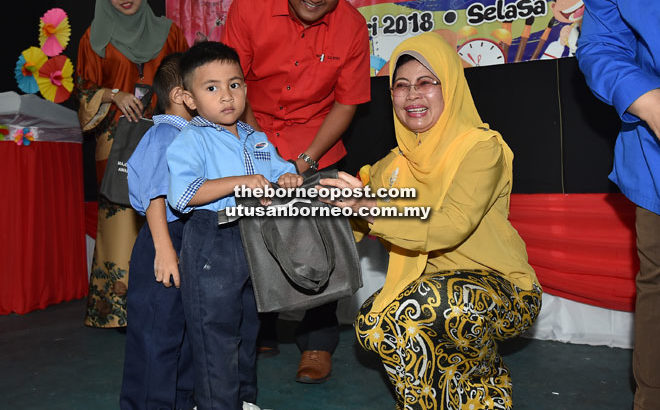
Minister of Welfare, Community Well Being, Women, Family and Childhood Development Datuk Seri Fatimah Abdullah said currently, 97.5 per cent of children in Year 1 underwent preschool education prior to entering primary school.

“Our vision to provide access to early childhood education to all is showing signs of success, and awareness among parents is significantly showing improvement,” she said during a visit to the Community Development Department (Kemas) Taska Permata at Kampung Sri Tajo, Asajaya yesterday.

Fatimah said the government’s aim to provide 100 per cent access to early childhood education by 2020 can be achieved and is nearing its target.

On a related matter, the minister stressed that the quality of early childhood education is another important factor that needs to be looked into, as it will provide the necessary impact.

“Access needs to be complemented with the right quality, and these traits are the pillars toward producing a quality child who is ready to enter primary school.

“The government continuously looks into how we can develop preschool teachers and their teaching materials and methods to ensure that we can churn out the best to shape the child,” she said.

The government, added Fatimah, will continue to empower preschool training centres for teachers, and its learning module will be improved constantly to ensure it gives the best results. During her visit, she presented the Quality Preschool Benchmark Award 2017 for government preschool to staff of Taska Permata Kampung Sri Tajo.

Kota Samarahan MP Rubiah Wang and Kemas state director Mohd Zamri Mustajab were among those present.

Source:

http://education.einnews.com/article/424405727/86f3RnrqETg2P1SX?lcf=eG8zt30RHq4WcGF5PkFdHg%3D%3D

Comparte este contenido:

Qatar: Ministry of Education receives 37,000 job applications

Qatar/ January 03, 2018/Source: http://education.einnews.com

The Ministry of Education and Higher Education announced that the number of applicants for academic, administrative and special education posts received through its website exceeded 37 thousand applications from various Arab nationalities after the announcement of the opening of the submission of these jobs during the period from 15 to 31 December.

The ministry said in a statement that its work teams have started sorting the applications immediately after the start of receiving them. The interview process is scheduled to take place in Qatar and external interviews in a number of Arab countries during the months of January and February.

The Ministry of Education and Higher Education in mid-December, announced its job openings in the public schools for the academic year 2018/2019 with regard to educational posts (males and females), administrative jobs (males only) and special education posts (male and female) as the number of candidates targeted is about 900 in the required positions.

Source:

http://education.einnews.com/article/424244114/chuvCNswRZfG3bBW?lcf=eG8zt30RHq4WcGF5PkFdHg%3D%3D

Comparte este contenido:

India: Fund allocation for school education could increase by up to 14% in Budget 2018-19

India/January, 03, 2018/ By : Himadri Ghosh/Source: http://www.ibtimes.co.in

The government’s financial constraints will make it difficult for them to spend aggressively or increase budgetary allocation in a large way.

The Budget for the fiscal year 2019 will be the last full budget that will be announced by the government before going in to poll in 2019. Hence it is highly likely that the budget will be more on populism and less on pragmatism.

Fund allocation for school education is likely to rise by up to 14 percent for the financial year 2019, with Centre planning to prove extra top-ups on the existing schemes, Mint reported.

Schemes such as mid-day meals and right to education are expected to receive higher budgetary allocations from the previous year.

«It will be much less than what the ministry demanded, but higher than the previous year’s allocations in the range of 11-14 percent,» two government officials told Mint.

The Union Budget is scheduled to be tabled on February 1. The country currently spends around four percent of the gross domestic product (GDP) on education, both school and higher education. In last year’s budget, Rs 46,356 crore was allocated for school education.

The government’s financial constraints will make it difficult for them to spend aggressively or increase budgetary allocation in a large way.

The central government has breached its full-year fiscal deficit target for the financial year 2018 in November itself. Data revealed that during the April-to-November period, the government’s fiscal deficit was 112 percent of its Rs 5.5 trillion budgetary targets.

This prompted the government to announce that it would borrow additional Rs 50,000 crore from the market for the ongoing fiscal.

«Given the financial constraints of the government, one cannot complain about the expected size of the increase in allocation,» the second official said.

Officials also told the business daily that as Goods and Services Tax (GST) continue to slide on a month-on-month basis, it would be tough for the government to spend more.

Source:

http://education.einnews.com/article/424386335/hHVo6DOcY4kvDNKz?lcf=eG8zt30RHq4WcGF5PkFdHg%3D%3D

Comparte este contenido:

Malaysia: No politics in education

Malaysia/January 3, 2018/By: Datin Noor Azimah Abdul Rahim/Source: http://education.einnews.com

THE Education Act 1996 states that as a «general principle pupils are to be educated in accordance with the wishes of their parents».

The Dual Language Programme (DLP) is a programme which allows the learning of STEM subjects in its lingua franca, which is English, and at the same time to enhance proficiency in the English language and was culminated from months of deliberation by diverse apolitical parties including the private sector with the Ministry of Education facilitating the decision.

SJKT Vivekananda Petaling Jaya was declared a DLP school in 2017. However, at the eleventh hour, the ministry had in a letter dated Dec 20, 2017 ordered the Selangor State Education Department to indefinitely postpone the DLP in 2018 for the new intake of Std One and eager Std Four pupils in that school, pending a lawsuit. The department then informed the school principal of the same in a letter dated Dec 26, 2017.

In the meantime, parents had registered their children in Std One and are excitedly awaiting its start, along with those being elevated to Std Four. Together they are looking forward to DLP. But now their hopes are dashed and they are left confused.

The parents of SJKT Vivekananda Petaling Jaya have appealed for the DLP to continue yet the ministry continues to remain unresponsive and insensitive which is contrary to what is provided for in the Act.

We question the logic of this reasoning. Why would a pending lawsuit have the impact of jeopardising the future of six- and nine-year-old children whose parents only want more English language hours in their chosen curriculum? The lawsuit can be long drawn and time is ticking for the children. Until a decision is made the status quo should remain.

The parents could picket, seek an injunction to continue DLP thus maintaining the status quo until the courts decide, initiate a mediation process as an alternative for dispute resolution or sit down and agree on amicable terms.

Once a school is declared of DLP status there should be no turning back unless there is a formal reversal of the programme. Parents want their children to have the best education they can which they see possible in DLP.

The ministry should not at all costs allow personal or political manoeuvres to interfere with the education of our children. Children are not to be made anyone’s sacrificial lamb.

Datin Noor Azimah Abdul Rahim
Chairman
Parent Action Group for Education Malaysia

Source:

http://education.einnews.com/article/424220636/wG85YdnOk-_1lXpH?lcf=eG8zt30RHq4WcGF5PkFdHg%3D%3D

Comparte este contenido:
Page 2923 of 6197
1 2.921 2.922 2.923 2.924 2.925 6.197