Page 101 of 396
1 99 100 101 102 103 396

What’s the point of education? It’s no longer just about getting a job

This essay is part of a series of articles on the future of education.


For much of human history, education has served an important purpose, ensuring we have the tools to survive. People need jobs to eat and to have jobs, they need to learn how to work.

Education has been an essential part of every society. But our world is changing and we’re being forced to change with it. So what is the point of education today?

The ancient Greek model

Some of our oldest accounts of education come from Ancient Greece. In many ways the Greeks modelled a form of education that would endure for thousands of years. It was an incredibly focused system designed for developing statesmen, soldiers and well-informed citizens.

Most boys would have gone to a learning environment similar to a school, although this would have been a place to learn basic literacy until adolescence. At this point, a child would embark on one of two career paths: apprentice or “citizen”.

On the apprentice path, the child would be put under the informal wing of an adult who would teach them a craft. This might be farming, potting or smithing – any career that required training or physical labour.

In Ancient Greece, boys would become either apprentices or citizens. Women and slaves didn’t get any education.Wikimedia CommonsCC BY-SA

The path of the full citizen was one of intellectual development. Boys on the path to more academic careers would have private tutors who would foster their knowledge of arts and sciences, as well as develop their thinking skills.

The private tutor-student model of learning would endure for many hundreds of years after this. All male children were expected to go to state-sponsored places called gymnasiums (“school for naked exercise”) with those on a military-citizen career path training in martial arts.

Those on vocational pathways would be strongly encouraged to exercise too, but their training would be simply for good health.


Read more: Guide to the classics: Homer’s Iliad


Until this point, there had been little in the way of education for women, the poor and slaves. Women made up half of the population, the poor made up 90% of citizens, and slaves outnumbered citizens 10 or 20 times over.

These marginalised groups would have undergone some education but likely only physical – strong bodies were important for childbearing and manual labour. So, we can safely say education in civilisations like Ancient Greece or Rome was only for rich men.

While we’ve taken a lot from this model, and evolved along the way, we live in a peaceful time compared to the Greeks. So what is it that we want from education today?

We learn to work – the ‘pragmatic purpose’

Today we largely view education as being there to give us knowledge of our place in the world, and the skills to work in it. This view is underpinned by a specific philosophical framework known as pragmatism. Philosopher Charles Peirce – sometimes known as the “father of pragmatism” – developed this theory in the late 1800s.

There has been a long history of philosophies of knowledge and understanding (also known as epistemology). Many early philosophies were based on the idea of an objective, universal truth. For example, the ancient Greeks believed the world was made of only five elements: earth, water, fire, air and aether.


Read more: Where to start reading philosophy?


Peirce, on the other hand, was concerned with understanding the world as a dynamic place. He viewed all knowledge as fallible. He argued we should reject any ideas about an inherent humanity or metaphysical reality.

Pragmatism sees any concept – belief, science, language, people – as mere components in a set of real-world problems.

Charles Peirce is sometimes known as the ‘father of pragmatism’.

In other words, we should believe only what helps us learn about the world and require reasonable justification for our actions. A person might think a ceremony is sacred or has spiritual significance, but the pragmatist would ask: “What effects does this have on the world?”

Education has always served a pragmatic purpose. It is a tool to be used to bring about a specific outcome (or set of outcomes). For the most part, this purpose is economic.

Why go to school? So you can get a job.

Education benefits you personally because you get to have a job, and it benefits society because you contribute to the overall productivity of the country, as well as paying taxes.

But for the economics-based pragmatist, not everyone needs to have the same access to educational opportunities. Societies generally need more farmers than lawyers, or more labourers than politicians, so it’s not important everyone goes to university.

You can, of course, have a pragmatic purpose in solving injustice or creating equality or protecting the environment – but most of these are of secondary importance to making sure we have a strong workforce.

Pragmatism, as a concept, isn’t too difficult to understand, but thinking pragmatically can be tricky. It’s challenging to imagine external perspectives, particularly on problems we deal with ourselves.

How to problem-solve (especially when we are part of the problem) is the purpose of a variant of pragmatism called instrumentalism.

Contemporary society and education

In the early part of the 20th century, John Dewey (a pragmatist philosopher) created a new educational framework. Dewey didn’t believe education was to serve an economic goal. Instead, Dewey argued education should serve an intrinsic purpose: education was a good in itself and children became fully developed as people because of it.

Much of the philosophy of the preceding century – as in the works of Kant, Hegel and Mill – was focused on the duties a person had to themselves and their society. The onus of learning, and fulfilling a citizen’s moral and legal obligations, was on the citizens themselves.


Read more: Explainer: what is inquiry-based learning and how does it help prepare children for the real world?


But in his most famous work, Democracy and Education, Dewey argued our development and citizenship depended on our social environment. This meant a society was responsible for fostering the mental attitudes it wished to see in its citizens.

Dewey’s view was that learning doesn’t just occur with textbooks and timetables. He believed learning happens through interactions with parents, teachers and peers. Learning happens when we talk about movies and discuss our ideas, or when we feel bad for succumbing to peer pressure and reflect on our moral failure.

Learning doesn’t just happen through textbooks and timetables. Photo by Alexander Dummer on Unsplash

Learning would still help people get jobs, but this was an incidental outcome in the development of a child’s personhood. So the pragmatic outcome of schools would be to fully develop citizens.

Today’s educational environment is somewhat mixed. One of the two goals of the 2008 Melbourne Declaration on Educational Goals for Young Australians is that:

All young Australians become successful learners, confident and creative individuals, and active and informed citizens.

But the Australian Department of Education believes:

By lifting outcomes, the government helps to secure Australia’s economic and social prosperity.

A charitable reading of this is that we still have the economic goal as the pragmatic outcome, but we also want our children to have engaging and meaningful careers. We don’t just want them to work for money but to enjoy what they do. We want them to be fulfilled.


Read more: The Melbourne Declaration on Educational Goals for Young Australians: what it is and why it needs updating


And this means the educational philosophy of Dewey is becoming more important for contemporary society.

Part of being pragmatic is recognising facts and changes in circumstance. Generally, these facts indicate we should change the way we do things.

On a personal scale, that might be recognising we have poor nutrition and may have to change our diet. On a wider scale, it might require us to recognise our conception of the world is incorrect, that the Earth is round instead of flat.

When this change occurs on a huge scale, it’s called a paradigm shift.

The paradigm shift

Our world may not be as clean-cut as we previously thought. We may choose to be vegetarian to lessen our impact on the environment. But this means we buy quinoa sourced from countries where people can no longer afford to buy a staple, because it’s become a “superfood” in Western kitchens.

If you’re a fan of the show The Good Place, you may remember how this is the exact reason the points system in the afterlife is broken – because life is too complicated for any person to have the perfect score of being good.

Michael explains to the judge how life is so complicated, people can never really be good enough.

All of this is not only confronting to us in a moral sense but also seems to demand we fundamentally alter the way we consume goods.

And climate change is forcing us to reassess how we have lived on this planet for the last hundred years, because it’s clear that way of life isn’t sustainable.

Contemporary ethicist Peter Singer has argued that, given the current political climate, we would only be capable of radically altering our collective behaviour when there has been a massive disruption to our way of life.

If a supply chain is broken by a climate-change-induced disaster, there is no choice but to deal with the new reality. But we shouldn’t be waiting for a disaster to kick us into gear.

Making changes includes seeing ourselves as citizens not only of a community or a country, but also of the world.


Read more: Students striking for climate action are showing the exact skills employers look for


As US philosopher Martha Nussbaum argues, many issues need international cooperation to address. Trade, environment, law and conflict require creative thinking and pragmatism, and we need a different focus in our education systems to bring these about.

Education needs to focus on developing the personhood of children, as well as their capability to engage as citizens (even if current political leaders disagree).

If you’re taking a certain subject at school or university, have you ever been asked: “But how will that get you a job?” If so, the questioner sees economic goals as the most important outcomes for education.

They’re not necessarily wrong, but it’s also clear that jobs are no longer the only (or most important) reason we learn.

Fuente de la Información: http://theconversation.com/whats-the-point-of-education-its-no-longer-just-about-getting-a-job-117897

Comparte este contenido:

Fathers are necessary in the lives of children and their education

By: David Plazas. 


The absence of fathers in the home life of a child is bringing disaster to every fabric of our state and nation.

As Chair of the Tennessee General Assembly House Sub and Full Education Committees since 2013, I have spent many thousands of hours studying and looking for ways to best educate and challenge the children in our State.

The latest figures show that our 89.1% high school graduation rate is the highest in our state history.  Even with that positive statistic, still fewer than half of these graduates are ready to move into higher education or the workforce without remediation in English and/or Math.

Another startling statistic: Only 37% of our students in third grade are reading on grade level. This is a critical and very disturbing statistic: “if you cannot read you cannot learn!”

That means grades 4-12 and beyond will be difficult for these students. The inability to perform in School results in drop out, truancy and little or no skills to compete in todays workforce.

Funding has improved for education, but our outcomes are still low

So, what is the answer? Many say, “just add more money and we will improve.”  But time has proven that, even though money is a factor, it is not the solution.

In 2010, Tennessee was the recipient of $500 million “Race to the Top” dollars from the Federal Government.

Tennessee put that money in many excellent programs but still we struggle, as the 37% third grade reading statistic indicates.

Also, Tennessee has been on an education reform movement for the past 10 years.  We have added $1.5 billion new dollars to our state education budget and over $570 million new dollars to teacher compensation since 2013.

Tennessee Public Schools K-12 Education Budget for 2019-2020 School year is $6.6 billion dollars. Because of our reform and our funding, Tennessee has the title as the “fastest improving state in education” in the nation.  But there is a critical piece of the equation that is missing – a piece of the equation that money and the best teachers cannot remedy.

Why dads matter in the lives of their kids

It is now time that we address with seriousness why so many of our children are coming to school without the foundation to learn.  In 2007, I authored a book titled:  “May I Call You Dad? Why Fathers are needed in the Home.”

We must realize that fathers are necessary in the lives of children, and that their absence in the home life of a child is bringing disaster to every fabric of our state and nation.

In 2017, 43.6% of children in Tennessee were born to single mothers.  It is a fact that more poverty exists in single parent homes. Last year 1,000 new children were admitted to Tennessee Department of Children Services because of drugs and other addictions.

Domestic and sexual abuse in the home has risen so drastically that we now spend millions of dollars addressing the issue known as “Adverse Childhood Experiences or ACE.”

This is the new study on how a child’s brain is prevented from developing properly because of the constant trauma in their home. With enough ACE experiences from birth to age 5, the neuron connections in brain development are so damaged that the act of learning and simple behavior development is challenged.

We are now spending billions of dollars trying to do in school what the home is failing to do for children.

“Communities in School Programs» provide wrap around services for school age children, RTI or Response to Intervention Programs, mandated by the state but without adequate funding, attempts to put a second teacher’s aide in the classroom to help with children falling behind.

Our local school districts are trying to fill the funding gap but the demand is greater than funds available.

A few staggering statistics we should know are:

  • 63% of all youth suicides are from fatherless homes.
  • 85% of all youth in prison are from fatherless homes.
  • 71% of all high school dropouts are from fatherless homes.

Positive factors related to education include:

  • Children with fathers are less likely to repeat a grade in school.
  • Children with fathers are morel likely to get A’s in school.
  • Children with fathers are more likely to enjoy school and engage in school  activities.

The question is asked: “Have we lost a generation and now must find a way to change moving forward?”  I refuse to accept such a pessimistic attitude.

This is why we are looking for programs and budgeting state dollars to fill the gap where the home is failing. We must challenge and teach every teen and young adult that bringing another life into the world carries with it the responsibility of building a safe and loving fortress (Home) around that child.

It is the role of the father to be the provider, protector, guide, role model, listener, stabilizer and hope giver for the future of a child.  Let us resolve to renew this commitment to our children on this Father’s Day.

Source of the article: https://www.tennessean.com/story/opinion/2019/06/15/fathers-children-tennessee-education/1431197001/

Comparte este contenido:

Looking to history can shape Utah’s education future

By: Lynn Stoddard.

During the last week of May of this year, 30,250 students graduated from 78 Utah public high schools for an average of 388 students per graduating class. In 1945, I graduated from Ogden High School in a graduating class of approximately 400 students. During the 74 years since my graduation has anything changed in our system of public education?

Except for one big thing, nearly everything has stayed the same. All six of my grandchildren who graduated this year were required to abide by the same school system and curriculum that I did 74 years ago — the one that was installed in 1892 by a “Committee of Ten” scholars. This committee recommended eight years of elementary school followed by four years of high school and a “call to teach English, mathematics, and history or civics to every student every academic year in high school. The recommendations also formed the basis of the practice of teaching chemistry, and physics, respectively, in ascending high school academic years.”

My six graduating grandchildren each attended a different high school and were all subject to the same graduation requirements: 24 credits in English, mathematics, science, social studies, arts and computer, health and physical education and five electives.

What’s wrong with this picture? The “Committee of Ten” inaugurated a system of education to standardize students with a predetermined outline of subject matter courses. Each of my graduating grandchildren achieved what was required of them and has a diploma to show it. They were all exposed to the same knowledge and skills as the other 30,244 Utah graduates.

The one huge difference between education as it was 74 years ago and today is not really a difference at all, but a window to a revolution: computers and electronic communication have shined a spotlight on human differences. Back in my day, we obtained our information about the required curriculum from books and teacher lectures. Now, with the worldwide internet, television and hand-held interactive devices, we have suddenly found new ways to learn and discovered that it is impossible to standardize students in knowledge and skills.

Technology now offers a bridge to unlimited student learning and accomplishment. The present required curriculum allows for only a small percentage to become extraordinary, “sterling” scholars. On the other hand, using computers to access the whole world of events and information makes it possible for every student to attain phenomenal knowledge and accomplishment. Each student will now be able to prove that he or she can become a genius in some area of knowledge.

What needs to be done to have this utopia of education become a reality? Before the federal government imposed subject matter standardization on the system, some schools were starting to use human standards rather than subject standards to help learners grow as powerful individuals. Teachers and parents united to help students grow in human powers such as inquiry, interaction, imagination, initiative, identity, intuition and integrity.

Comment on this story

By using this approach, hundreds of students in several schools discovered their genius and reason to exist as important contributors to society. With “identity” as a top priority, teachers united with parents to help students magnify their unique talents and strengths. Teachers and parents were starting to learn how to find and develop student-oriented curriculum based on the important questions and needs of students. They were starting to learn how to develop a much better student-oriented education.

We now have a choice: go back and get on the right path or continue on the subject-dominated, assembly-line path of student standardization.

Source of the article: https://www.deseretnews.com/article/900075359/guest-opinion-looking-to-history-can-shape-utahs-education-future.html

Comparte este contenido:

Estados Unidos: Trump eliminará presupuesto para educación a niños migrantes

Estados Unidos / 16 de junio de 2019 / Autor: Redacción / Fuente: Bajo Palabra

Comenzaran a reducir o eliminar las actividades para menores migrantes que no son necesarias para la protección de la vida y la seguridad, incluidos los servicios de educación, recreativos o legales. 

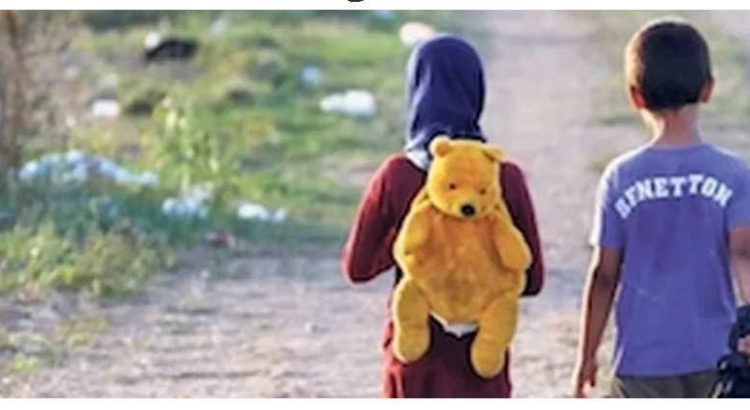
Autoridades de Estados Unidos anunciaron hoy que comenzarán a restringir los servicios educativos y recreativos, así como la asistencia legal, para los niños migrantes que permanecen en refugios del gobierno, lo que generó numerosas críticas de organizaciones humanitarias.

El Departamento de Salud y Servicios Humanos informó que su Oficina de Reasentamiento de Refugiados ordenó que comenzaran a reducir o eliminar las actividades para menores migrantes que no son necesarias para la protección de la vida y la seguridad, incluidos los servicios de educación, recreativos o legales.

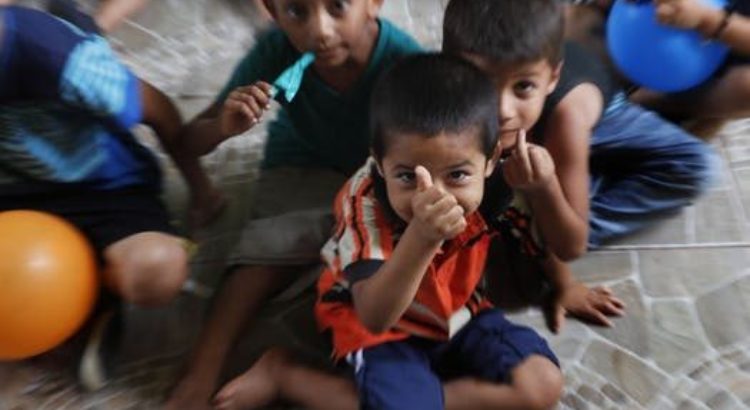
En la actualidad, unos 13 mil 200 menores migrantes, incluidos los que cruzaron la frontera solos y niños pequeños que fueron separados de sus padres, se encuentran en más de 100 albergues en todo el territorio estadunidense, donde reciben clases de inglés, matemáticas y educación cívica, entre otras.

«La mayoría de los refugios tienen además un campo deportivo y los niños pueden salir a realizar alguna actividad recreativa, como jugar futbol, ​​al menos una vez al día, de acuerdo con el portal del diario The New York Times.» 

Sin embargo, la portavoz del Departamento de Salud y Servicios Humanos, Evelyn Stauffer, indicó que hace más de un mes el gobierno federal advirtió al Congreso que la entidad atravesaba por una crisis financiera y requería recursos adicionales para evitar el recorte de servicios en los refugios.

La semana pasada, los operadores de los albergues fueron notificados de que «el Programa de Niños No Acompañados está actualmente operando con déficit», por lo que los recursos presupuestados para actividades recreativas o educativas serán restringidos.

«De acuerdo con un correo electrónico enviado a los responsables de los refugios, al que tuvo acceso The New York Times, el recorte solo se aplicará a los fondos otorgados después del 22 de mayo de 2019, y permanecerá vigente hasta nuevo aviso.»

Tras el anuncio del gobierno, defensores de los derechos civiles sostuvieron que cualquier medida para eliminar los servicios educativos y recreativos constituiría una violación de un acuerdo judicial conocido como Flores, que data de 1997, y establece que los menores migrantes deben ser detenidos en las condiciones “menos restrictivas”.

«Si esta administración continúa negando la educación, la recreación y otros servicios (…) sería una violación flagrante del acuerdo Flores y enfrentará una acción legal inmediata», advirtió Neha Desai, directora de inmigración en el Centro Nacional de Derecho Juvenil en Oakland, California.

Tras ser interceptados por la Patrulla Fronteriza, los menores migrantes son enviados a albergues del gobierno, donde permanecen hasta que un patrocinador, generalmente un familiar que ya vive en Estados Unidos, puede probar que es apto para cuidar al niño.

Más de 40 mil menores migrantes han quedado bajo custodia del gobierno estadunidense en lo que va del actual año fiscal, que comenzó el 1 de octubre pasado, cifra que representa un aumento de alrededor del 60 por ciento respecto al año pasado.

Fuente de la Noticia:

https://bajopalabra.com.mx/trump-eliminara-presupuesto-para-educacion-a-ninos-migrantes

ove/mahv

Comparte este contenido:

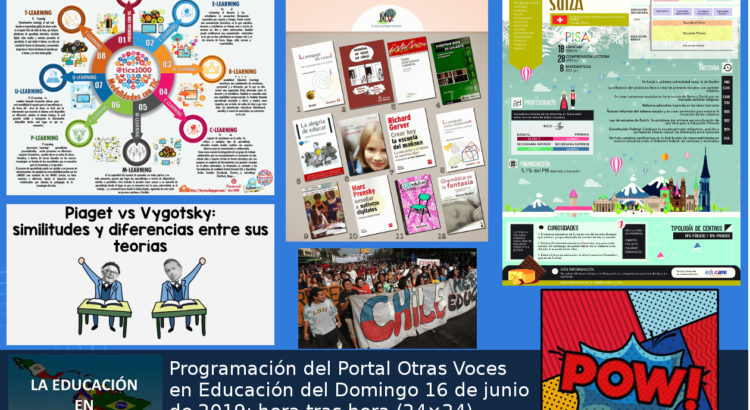
Programación del Portal Otras Voces en Educación del Domingo 16 de junio de 2019: hora tras hora (24×24)

16 de junio de 2019 / Autor: Editores OVE

Recomendamos la lectura del portal Otras Voces en Educación en su edición del día domingo 16 de junio de 2019. Esta selección y programación la realizan investigador@s del GT CLACSO «Reformas y Contrarreformas Educativas», la Red Global/Glocal por la Calidad Educativa, organización miembro de la CLADE y el Observatorio Internacional de Reformas Educativas y Políticas Docentes (OIREPOD) registrado en el IESALC UNESCO.

00:00:00 – Bolivia: El salario de los profesores subió hasta en 188% en 12 años

http://otrasvoceseneducacion.org/archivos/312124

01:00:00 – Honduras se moviliza por el derecho a la educación (Audio)

http://otrasvoceseneducacion.org/archivos/312273

02:00:00 – Estados Unidos: Trump eliminará presupuesto para educación a niños migrantes

http://otrasvoceseneducacion.org/archivos/312127

03:00:00 – La nueva reforma educativa: del plagio a la soberbia

http://otrasvoceseneducacion.org/archivos/312666

04:00:00 – Sistema educativo de Suiza #infografia #infographic #education

http://otrasvoceseneducacion.org/archivos/312688

05:00:00 – 12 libros que todo docente debe leer

http://otrasvoceseneducacion.org/archivos/312669

06:00:00 – Colección Pedagógica formación inicial de Docentes Centroamericanos de Educación Primaria o Básica. Volumen 2: Educación y Aprendizaje (PDF)

http://otrasvoceseneducacion.org/archivos/312694

07:00:00 – Tres tiempos de la educación mexicana (III)

http://otrasvoceseneducacion.org/archivos/311027

08:00:00 – Integración de TIC en los sistemas de formación docente inicial y continua para la Educación Básica en América Latina en PDF

http://otrasvoceseneducacion.org/archivos/312697

09:00:00 – Piaget vs Vygotsky: similitudes y diferencias entre sus teorías

http://otrasvoceseneducacion.org/archivos/312705

10:00:00 – Empatía y aprendizaje: potenciando las ganas de aprender

http://otrasvoceseneducacion.org/archivos/312691

11:00:00 – 10 claves para aprender (de verdad)

http://otrasvoceseneducacion.org/archivos/312685

12:00:00 – Modalidades TIC de la educación #infografia #infographic #education

http://otrasvoceseneducacion.org/archivos/312709

13:00:00 – Educación en América Latina: retos y avances (Audio)

http://otrasvoceseneducacion.org/archivos/312282

14:00:00 – México: PTEO, el magisterio democrático de Oaxaca y una crítica marxista

http://otrasvoceseneducacion.org/archivos/312656

15:00:00 – Las TIC se han convertido en un eje transversal de toda acción formativa : como instrumento facilitador , canal de comunicación y recurso didáctico…

http://otrasvoceseneducacion.org/archivos/312682

16:00:00 – Bolivia: Jaime Mamani, el profesor que pese a perder todo no dejó de enseñar

http://otrasvoceseneducacion.org/archivos/312130

17:00:00 – Chile: manifestaciones en medio de un intenso debate sobre la educación pública (Audio)

http://otrasvoceseneducacion.org/archivos/312296

18:00:00 – Brasil: Justicia Federal determina que el gobierno suspenda el bloqueo del presupuesto para las universidades

http://otrasvoceseneducacion.org/archivos/312659

19:00:00 – La decencia y la docencia

http://otrasvoceseneducacion.org/archivos/312663

20:00:00 – Argentina: una Universidad aprueba el uso de lenguaje inclusivo

http://otrasvoceseneducacion.org/archivos/312679

21:00:00 – Ideas para trabajar contenidos en clase con ayuda de los cómics

http://otrasvoceseneducacion.org/archivos/312303

22:00:00 – 1.579 maestros fueron víctimas del conflicto en los últimos 60 años. La fundación Compartir presentó un informe sobre la situación de la docencia rural en Colombia

http://otrasvoceseneducacion.org/archivos/312700

23:00:00 – Edgar Machado: Ministerio de “Educación” aplica en Venezuela la pedagogía del opresor

http://otrasvoceseneducacion.org/archivos/312712

En nuestro portal Otras Voces en Educación (OVE) encontrará noticias, artículos, libros, videos, entrevistas y más sobre el acontecer educativo mundial cada hora.

ove/mahv

Comparte este contenido:

Estados Unidos. Gobierno federal acuerda no más educación, servicios legales para niños inmigrantes

Redacción: La Prensa de Minnesota

El gobierno federal ha dejado de pagar por los cursos en inglés y los servicios jurídicos en las instalaciones que tienen los niños inmigrantes en todo el país, imponiendo recortes presupuestarios que dice son necesarios en un momento en que hay un número récord de niños no acompañados llegando a la frontera.

El Departamento de salud y servicios humanos notificó a los refugios de todo el país la semana pasada que no les iba a reembolsar el salario de los maestros ni otros costos, como servicios jurídicos o equipos recreativos. La medida parece violar un asentamiento legal conocido como el Acuerdo de Flores que requiere que el gobierno proporcione educación y actividades recreativas a los niños inmigrantes a su cuidado.

Pero la agencia dice que no tiene los fondos para proveer esos servicios, ya que se ocupa de un número creciente de niños que vienen a los Estados Unidos, en gran parte de Centroamérica.

Ahora depende de las diversas organizaciones sin fines de lucro y privadas ejecutar instalaciones para niños para que se cubra el costo de los maestros, suministros, servicios legales e incluso actividades y equipos recreativos – si pueden, o eligen hacerlo.

BCFS, un proveedor sin fines de lucro en varias ciudades de Texas dijo en una declaración que continuaría prestando servicios porque no hacerlo violaría las normas de licencias estatales. Dijo que utilizará fondos de emergencia de su organización matriz.

“La salud y el bienestar de los que están a nuestro cuidado son de suma importancia y esperamos que haya una resolución rápida para este asunto de financiación”, dijo la portavoz Evy Ramos.

El gobierno dice que actualmente tiene 13,200 niños en su cuidado, y más están llegando. La patrulla fronteriza dijo el miércoles que 11,500 niños cruzaron la frontera sin un padre justo el mes pasado. Los niños son transferidos al Departamento de Salud y Servicios Humanos después de que la patrulla fronteriza los procese. Salud y Servicios Humanos contrata su cuidado y vivienda a empresas sin fines de lucro y privadas.

“Como hemos dicho, tenemos una crisis humanitaria en la frontera provocado por un sistema de inmigración roto que está creando una tremenda tensión (en la Agencia)”, dijo la portavoz Evelyn Stauffer. “Se requieren urgentemente recursos adicionales para satisfacer las necesidades humanitarias creadas por esta afluencia – para sostener las operaciones críticas de bienestar y liberación de los niños y aumentar la capacidad.”

El Departamento de Salud y Servicios Humanos está buscando casi $3 millones en fondos de emergencia para cubrir más camas y proporcionar atención básica.

Un funcionario de uno de los proveedores de refugio dijo que el gobierno les notificó el 30 de mayo que no estarían reembolsando los costos de proporcionar educación y otras actividades. Los proveedores pagan cosas como el salario del maestro por adelantado y luego son reembolsados por el gobierno.

El funcionario, que hablaba bajo condición de anonimato porque no estaba autorizado a hablar sobre el asunto, dijo que su empleador estaba luchando por averiguar cómo cubriría el costo de los maestros. El proveedor no ha despedido a nadie, pero se preocupa por los niños que necesitan desesperadamente aprender inglés y ser estimulados intelectualmente.

Los defensores también están preocupados por las ramificaciones de cortar actividades recreativas. Los recortes de fondos pueden causar un corte en coordinadores de educación física resultando en una escasez de adultos para supervisar a los niños cuando juegan afuera.

“Los niños están adentro por 23 horas, y la hora que pasan fuera es una verdadera salvación para ellos”, dijo J.J. Mulligan, un abogado de la clínica de leyes de inmigración en la Universidad de California, Davis, quien ha visitado y hablado con muchos de los niños en las instalaciones. “La mayoría de ellos provienen de países latinoamericanos donde el fútbol es el rey, por lo que la capacidad de jugar con sus amigos realmente les trae alegría en circunstancias oscuras.”

En un memorando para el personal obtenido por la Associated Press, el CEO interino de Southwest Key, Joella Brooks, dijo que estaba trabajando con el gobierno para averiguar por qué había finalizado el financiamiento y cómo puede seguir ofreciendo los servicios. Southwest Key es una organización sin fines de lucro y el mayor proveedor de refugios para niños inmigrantes.

“Mientras tanto, recuerden que el servicio, el aliento y la compasión que brindan a estos jóvenes todos los días importan mucho. Por favor, continúe centrándose en cuidar bien de ellos “, escribió Brooks a su personal.

El representante estadounidense Raúl Grijalva, de D-Arizona, criticó los recortes.

“Al eliminar las clases de inglés y la asistencia legal que son fundamentales para garantizar que los niños naveguen con éxito el proceso de asilo, la administración Trump está condenando esencialmente a los niños a la cárcel y tirando la llave hasta su inminente deportación” Grijalva, que representa un distrito en la frontera, dijo en un comunicado.

Fuente: http://www.laprensademn.com/federales-no-mas-educacion-servicios-legales-para-ninos-inmigrantes/

Comparte este contenido:

Guerra comercial: ¿cuánto dependen las universidades de EE.UU. de los estudiantes procedentes de China?

Redacción: BBC News Mundo

Estados Unidos es el principal destino de los jóvenes chinos que salen a estudiar al extranjero.

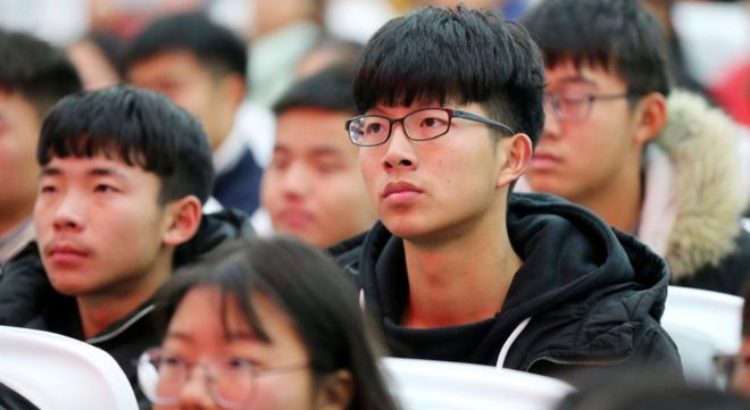
Los chinos representan al menos un tercio del alumnado llegado del exterior a las universidades estadounidenses, donde dejan considerables sumas de dinero.

Pero esto ya está empezando a verse afectado por la guerra comercial entre Washington y Pekín.

Y es que crece la presión en Estados Unidos para que se limiten las admisiones de extranjeros, particularmente chinos.

De hecho, cientos de jóvenes chinos no han podido obtener una visa para estudiar en EE.UU.

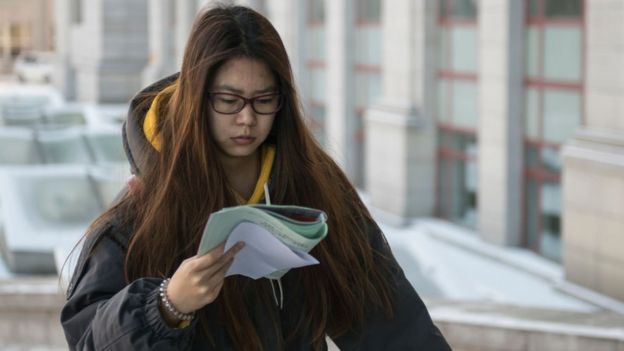
Mujer china leyendo

Aumenta la tensión

El gobierno de EE.UU. ha señalado a grupos específicos de estudiantes o académicos que sospecha que pueden representar un riesgo para la seguridad nacional o a los que señala de estar involucrados en robo de propiedad intelectual.

El año pasado, el Departamento de Estado de EE.UU. redujo la vigencia de las visas de estudiantes chinos que cursaban algunas asignaturas bajo el temor de que estuvieran espiando o robando propiedad intelectual.

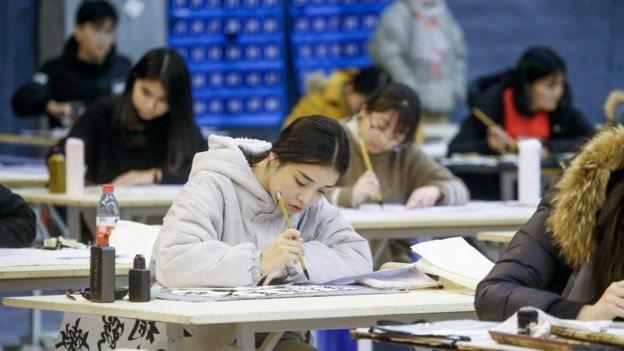
Mujer china escribiendo sobre un cuaderno

Los republicanos en el Congreso están también introduciendo una legislación para prohibir que cualquiera que reciba financiamiento o haya sido empleado por las fuerzas armadas de China reciba visas de estudiante o de investigación.

Por su parte, la semana pasada China lanzó una advertencia sin precedente a sus estudiantes y académicos.

El gobierno pidió que elevaran su consideración de los riesgos luego de un aumento en los rechazos de visas de estudiantes en EE.UU.

Hay analistas que creen que China quiere disuadir a los estudiantes de ir a EE.UU. para aumentar la presión, como parte de la escalada de la guerra comercial.

Estudiantes rechazados

La tasa de rechazo de estudiantes chinos que buscan estudiar este año en EE.UU. con becas del gobierno chino fue del 13,5% en el primer trimestre de 2019, según las estadísticas oficiales. Cifra que se compara con el 3,2% en 2018.

Es un aumento significativo, pero cubre solo una fracción del número total de estudiantes chinos que van a estudiar a EE.UU.

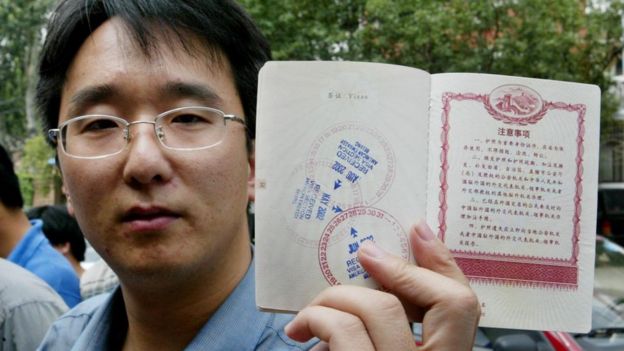
Hombre chino mostrando su pasaporte

Durante la última década, el número de estudiantes chinos matriculados en universidades de EE.UU. se ha triplicado.

En el año académico 2017-18, había 360.000 estudiantes chinos inscritos en EE.UU.

Se convirtieron así en una importante fuente de ingresos para las instituciones académicas estadounidenses.

En general, la mayoría de las universidades privadas no cobran extra por los estudiantes internacionales, pero puede que haya costos administrativos adicionales.

En las universidades públicas, administradas por gobiernos estatales, los estudiantes extranjeros generalmente pagan lo mismo que los estadounidenses que son de fuera del estado.

En general, los extranjeros contribuyeron con el 28% de todas las tasas de matrícula a las universidades públicas en 2015, según Deserve, una compañía que brinda servicios financieros a los estudiantes.

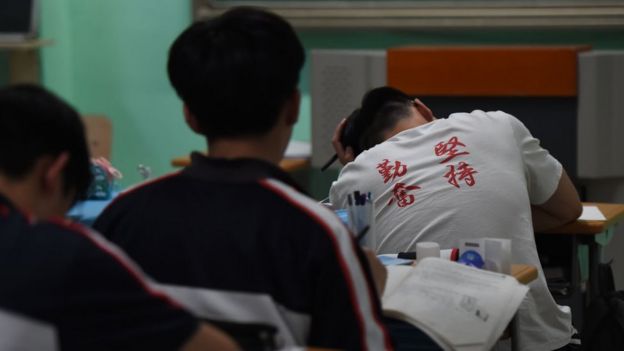
Personas sentadas

Y aproximadamente un tercio de estos estudiantes extranjeros provienen de China, esa es una proporción considerable de los ingresos generados por esta fuente.

La cantidad de estudiantes chinos y sus familias que contribuyen a la economía de EE.UU. sigue aumentando.

Se estima que durante el periodo 2017-2018 la cifra fue de US$13.000 millones, una cifra que incluye las tasas de matrícula y los gastos de subsistencia, según NAFSA: Asociación de Educadores Internacionales.

Estudiar en EE.UU. sigue siendo una opción muy atractiva para los jóvenes chinos.

«Hay una percepción entre los padres chinos de que el sistema educativo no es tan bueno como en otros lugares», dice Mary Gallagher, directora del Centro de Estudios Chinos de Lieberthal-Rogel en la Universidad de Michigan.

A modo de comparación, el número de estudiantes estadounidenses que viajan a China es pequeño, con poco menos de 12.000 inscritos en 2017-2018.

Fuente: https://www.bbc.com/mundo/noticias-48629858


Comparte este contenido:
Page 101 of 396
1 99 100 101 102 103 396