Page 892 of 1686
1 890 891 892 893 894 1.686

Colombia: Los líderes que le apuestan a la educación

Colombia/26 de septiembre de 2017/Fuente: http://www.semana.com

‘Ad portas’ del año electoral, educar a los niños y jóvenes para que se conviertan en ciudadanos integrales es esencial en épocas de posconflicto. Aquí las claves que dejó la Cumbre Líderes por la Educación para que sea una realidad.

Cuando se habla de educación, es fácil caer en lugares comunes. El tema no es nuevo y resulta difícil proponer perspectivas que puedan ejecutar proyectos a cabalidad. Por eso es tan importante producir encuentros como la Cumbre Líderes por la Educación, realizada el 20 y el 21 de septiembre en Bogotá. No cabe duda de que la educación debe ser uno de los ejes principales para el futuro de Colombia, pero lo esencial es descubrir cómo consolidarla para que los niños y jóvenes crezcan como ciudadanos integrales.

La cumbre dejó pistas que podrían ser la hoja de ruta para los próximos años. Una de esas claves es transversal e ineludible: cerrar la brecha entre las zonas rurales y las urbanas. Lastimosamente, el lugar y las circunstancias en las que se nace son la base para conseguir empleo en la adultez. Colombia es un país con amplio potencial rural; sin embargo, la tendencia de despoblar el campo para migrar a las ciudades ha sido una constante.

Según datos del Ministerio de Educación, un niño en las zonas rurales va en promedio 5,5 años al colegio, mientras que un niño de ciudad va 9. Y solo 3 de cada 10 niños del campo avanzan a la educación media, una enorme desventaja desde temprana edad. Los jóvenes rurales no encuentran incentivos suficientes para quedarse en sus veredas y allí está una clave de corto y mediano plazo: hay que educar realmente en las regiones para lograr incluirlas en el desarrollo.

Pero hay otra brecha que parece agudizarse con los años: los pocos jóvenes que terminan sus estudios profesionales no están listos para el mercado laboral, porque hay una dicotomía entre los planes de estudio y los perfiles laborales. Li Kai Chen, de la compañía McKinsey, lo dejó claro: “85 millones de estudiantes carecen de habilidades aplicables al trabajo. El 42 por ciento de los empleadores afirman que los jóvenes no están preparados”. Se necesita no solo el reciente marco nacional de cualificaciones, sino también comenzar a educar con perfil vocacional, para que los jóvenes no engorden las tasas de desempleo.

A esto se le añade la necesidad de desestigmatizar la educación técnica. Colombia se ha enfocado en la universitaria, pero como explicó María Andrea Nieto, directora del Sena, “la formación técnica es una oportunidad de movilización económica y social: disminuye la pobreza, genera empleo e ingresos”.

Y otra forma para propulsar la economía es la educación posmedia. Académicos, líderes sociales y políticos enfatizaron la importancia de las nuevas tecnologías, pero tomándolas simplemente como una herramienta y no como la solución para tener gente educada. Es esencial que los maestros estén capacitados en el uso de los dispositivos. La economía naranja está tomando fuerza en el país y los jóvenes deben ser formados como ciudadanos digitales que sepan cómo utilizar las TIC y también cómo comportarse en la red.

Es primordial educar desde la primera infancia en inteligencia emocional. Habilidades socioemocionales como el trabajo en equipo, la resolución de conflictos y la resiliencia deben ser las bases para formar ciudadanos en épocas de posconflicto. No solo hay que educar en matemáticas, es imprescindible una educación de la empatía, que será posible con currículos integrales que lleven a las nuevas generaciones a construir un país en paz.

“Si queremos gente educada, hay que fortalecer los jardines infantiles”

Estonia es un caso especial en el mundo: se la jugó por reforzar la educación preescolar y se catapultó en las pruebas internacionales. Jaak Aaviksoo, rector de la Universidad Tecnológica de Tallin, le contó los pormenores a SEMANA.

SEMANA: ¿Cómo logró Estonia cambiar la tendencia de que los profesores más formados solo deben estar en las universidades?

JAAK AAVIKSOO: Los jardines infantiles tienen niños con problemas de comportamiento o dificultades de aprendizaje que luego llevan al colegio y que a veces han echado raíces profundas. Entre más rápido se encuentren y corrijan los errores que vienen de la edad temprana, más fácil será guiar a los niños para que entren a la sociedad.

SEMANA: Pero también se necesita un cambio de imaginario colectivo…

J.A.: Es complicado. Yo soy el rector de la universidad y mis colegas me preguntan “¿por qué está diciendo que los jardines infantiles son más importantes que las universidades? Nos van a quitar el presupuesto”. Pero yo creo que hay que mirar la educación como algo integral. Queremos gente educada, y para tenerla en las universidades, necesitamos buenas bases. No creo que un profesor de Física sea capaz de dictarles clase a niños de jardín. Necesita tener habilidades especiales en psicología, en neurociencia, disciplinas que enseñen a los niños a resolver problemas.

SEMANA: ¿Y qué rol debe jugar el gobierno?

J.A.: En Estonia decidimos que necesitamos profesores de maestría en los jardines infantiles, el problema es que sigue habiendo una brecha salarial grande. El próximo año el presupuesto de las universidades va a crecer un poco, pero el de los jardines va a crecer considerablemente. Y esto hay que verlo como beneficioso a largo plazo, incluso para las universidades.

SEMANA: La lectura crítica y las capacidades de interpretación son básicas en Estonia. ¿Cómo explicar esto en Colombia, donde el enfoque ha sido matemático?

J.A.: Yo soy físico, y creo en el conocimiento sólido en matemáticas y ciencias naturales. Pero veo muy a menudo que la gente que trabaja en investigación no tiene habilidades comunicacionales, motivacionales. No es suficiente tener la razón para convencer a otro, hay que tener la capacidad de persuadir. En la vida real es más complicado que el dos más dos igual a cuatro, hay que trabajar con la gente. Por eso es importante educar en expresión y pensamiento crítico.

SEMANA: “Hay que saber menos, pero entender más”. ¿Qué tan controversial es esta postura?

J.A.: El paradigma de la educación en casi todo el mundo sigue el mismo modelo técnico de 1900, con un programa establecido: esta cantidad de conocimiento aprendiendo esto y esto. Pero luego alguien de 40 años recuerda poco de lo que aprendió en el colegio, no logra entender cómo funcionan los seguros de vida o los fondos de pensión. Debes saber aplicar el conocimiento, y si se te olvida algo, ya existe Google. Por eso, debe haber un cambio que pase de mucha teoría a mucha práctica. Así hay más comprensión.

Fuente de la Entrevista:
http://www.semana.com/nacion/articulo/semana-cumbre-de-lideres-por-la-educacion-2017/541509
Comparte este contenido:

Todo el apoyo y toda la solidaridad para los hermanos en desgracia

Por:  Miguel Ángel Pérez

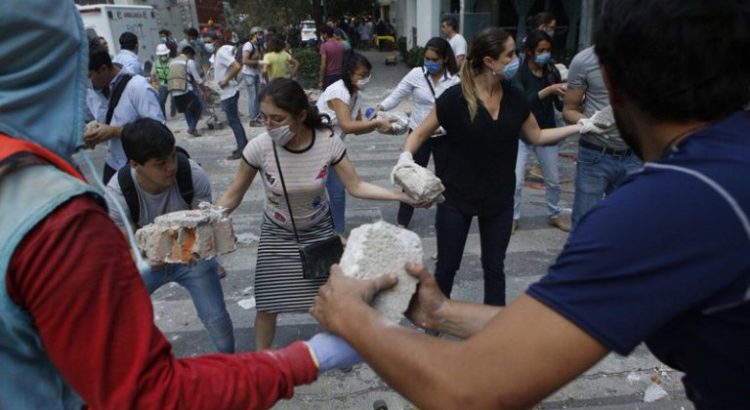
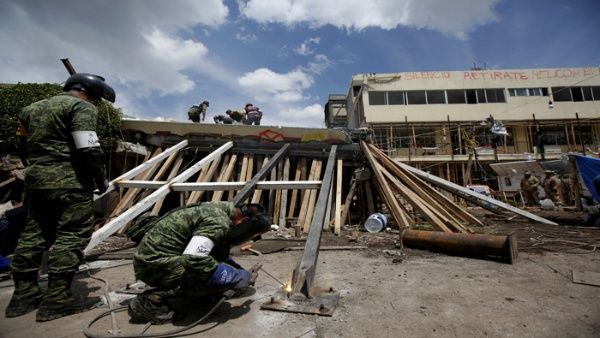
Aun recuerdo hace 32 años en la misma fecha y el mismo lugar pero el año 1985, el sismo de arriba de 7 grados en escala Richter que sacudió y conmocionó a la ciudad de México, hoy 32 años después sucede lo mismo, en el año 2017. En aquel año apareció el número 1 de la emblemática revista pedagógica llamada “Cero en Conducta” el titulo era elocuente,  con una fotografía de un edificio derrumbado el encabezado decía “Las escuelas deberán ser las ultimas en caerse”. Hoy no fue así, un una escuela de organización particular en lo administrativo “Colegio Enrique Rébsamen”, ha sido sacudido por este nuevo sismo de escala 7.2 ahora, se derrumba edificio, mueren niños pequeños de edad preescolar, mueren docentes y hay muchas personas desaparecidas. El hecho de que en un sismo o bajo cualquier riesgo caigan escuelas mueran niños, niñas y docentes en lo simbólico ya es grave en sí, y es muestra de que algo no estamos haciendo bien.

La nota del periódico La Jornada de este viernes 24 dice que hay en el DF 1,800 inmuebles y hay 286 personas fallecidas y una cifra difícil de precisar de desaparecidos. Los datos son sólo un pequeño ejemplo para reflexionar en torno a los riesgos que genera este tipo de desastres.

Como ciudadano primero y como académico después, me preguntaría ¿cuál es el estado que guarda nuestra capacidad de prevención ante este tipo de riesgos? La prevención no sólo tiene que ver con hacer simulacros y diferenciar zonas de resguardo, no. La prevención está asociada con la política inmobiliaria, las técnicas de construcción pensadas en prevenir hasta donde sea posible en una zona de alta sismicidad, y el esquema pedagógico tanto dentro como fuera de las escuelas, la autorización para construir escuelas, en qué zonas, en qué lugares colindando con quiénes, etc.

La prevención e intervención oportuna ante los desastres es otra de las asignaturas pendientes del Modelo educativo mexicano. Si bien la naturaleza es difícil, caprichosa e impredecible; uno no puede saber cuándo, en qué lugar y bajo qué circunstancias temblará, lloverá o habrá un tsunami, pero lo que si podemos hacer es prevenir de manera organizada cuando algo de este tipo suceda.

¿Qué tanto hemos aprendido en 32 años cuando tuvimos la primera lección de la asignatura de Riesgología I? Tal vez no mucho, pero el despliegue solidario de la gente, las manos al lado de otras manos es indescriptible. Ese mismo despliegue solidario deberla servir para sacar de las oficinas a los malos gobernantes, ese mismo despliegue de la gente organizada en búsqueda de la vida de los iguales deberá servir para reorientar el rumbo de este país, con las manos y la fuerza de todos los que desean un cambio verdadero.

Quisiera terminar diciendo que nos toca a nosotros buscar formas activas y directas de solidaridad, perdón pero el descrédito de los organismos y agencias gubernamentales llegan hasta esto. Ser solidarios es asumir la solidaridad en la acción, ¿cómo? ese le toca decidir a cada quien. Y no olvidarnos de Oaxaca, de Chiapas, de Guerrero, de Morelos y de Puebla en nuestro país, pero también de Puerro Rico y la República Dominicana en nuestro continente. La solidaridad no tiene nacionalismos tiene formas que se concretizan en dar la mano de igual a igual. Hoy educar es saber ser solidarios en estas pequeñas cosas que nuestros hermanos esperan de nosotros.


*Doctor en educación. Profesor-investigador de la Universidad Pedagógica Nacional. Campus Guadalajara. Correo mipreynoso@yahoo.com.mx

Fuente del Artículo:

Todo el apoyo y toda la solidaridad para los hermanos en desgracia

Comparte este contenido:

Special Education meeting held

By Ka’ssee Burchfield

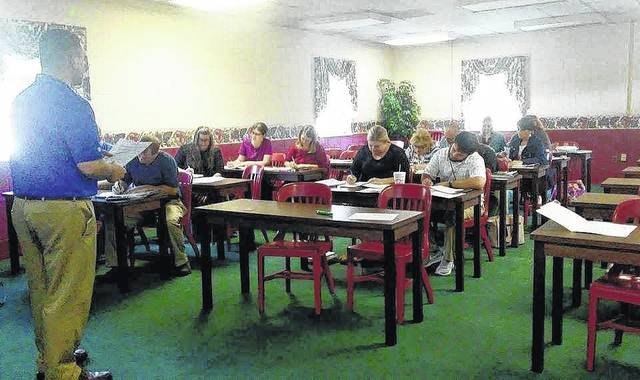
Not all children learn at the same pace, or even through the same methods. Because of this, educators- especially those working in special education — must be ready to work with each child’s individual learning behaviors. The Bell County Board of Education hosted a Southeast/South-Central Educational Cooperative (SESC) training on Friday for upcoming special education teachers in the region to learn how to do just that.

The individualized training program (IEP) brought in several new special education teachers from all across the area, many of whom just recently completed college. However, the meeting also consisted of several who have taught for years, but have decided to redirect their career towards a new path, as teaching those with special needs often provides teachers with a completely different component.

“When the opportunity arose for me to switch to special education I decided I would like to try it,” said former Knox County science teacher, April Helton. “What I love about teaching special education is the relationships you get to build with individual students. They trust you and you are the person they feel they can depend on.”

The session was led by Jim Feger, an educational consultant at SESC, who says the main purpose of the training is to help better prepare teachers with ways to provide consistency and clarity to children with special needs. Special education teachers are brought in and shown various ways to properly identify with and remediate children by developing general education plans.

“I look at this job as a privilege. I get to take my years of experience working with kids with special needs, and then be able to promote those practices to increase the quality of special designed instruction for kids within our region,” said Feger.

Educators left the session raving over the significant knowledge they were able to obtain in only one day, with several claiming to be in awe with just how much they learned from the SESC’s program.

“The program was excellent and the facilitator was exceptional. I feel I gained a lot of needed information that will help me for years to come,” said Helton.

SESC is a non-profit service agency which provides professional learning and support services to 27 different public school districts throughout the Appalachian region. Although beginning as a part of Eastern Kentucky University’s Community Outreach Program in 1991, SESC was — after many years of success — recognized as an independent entity in 2013. The agency’s slogan — “serving others as you serve them” — appears to be quite appropriate considering the various ongoing opportunities being offered to educators through the agency.

SESC hopes to be recognized as Kentucky’s leading educational cooperative by the year 2020 by continuing to provide services that are data-driven, evidence/research-based, and customer-focused. The agency also plans to soon incorporate various delivery methods for such services, including face-to-face and technologically-based delivery.

As the session came to an end, educators were given a short assessment in order to evaluate what they each learned during the program, as well as the opportunity to evaluate Feger and the way he handled operating the session. Then, they were each awarded with a certificate of completion, proving that they attended the program and now have the knowledge to provide specialized teaching methods to special needs students.

Due to the always ongoing growth and change in the education field, educators should be provided with up-to-date ways to stay in touch with those changes. In order to provide this, Feger has made plans to continue ongoing support for the new special educators of the region via Skype sessions.

While details have yet to be revealed, Dr. Mitch Bailey of the Bell County Board of Education also plans to contribute to the growth of special educators in the area. He is currently working on providing a Progress Monitoring Training for special education teachers within the school district in early to mid-October.

Source:

http://www.middlesborodailynews.com/news/20808/special-education-meeting-held


Comparte este contenido:

Donald Trump’s Addiction to Violence

BY HENRY GIROUX

The president has normalized violence by emboldening the idea that it is the only viable political response to social problems.

Donald Trump is addicted to violence. It is the principal force that shapes his language, politics and policies. He revels in a public discourse that threatens, humiliates, bullies and inflicts violence. He has used language as a weapon to humiliate women, a reporter with a disability, Pope Francis and any political opponent who criticizes him. He has publicly humiliated and waged symbolic violence on members of his own Cabinet, such as Attorney General Jeff Sessions, not to mention the insults and lies he perpetrated against former FBI Director James Comey after firing him.1 He has humiliated world leaders with a discourse that in its infantilism uses language to insult and belittle. In the case of North Korean leader Kim Jong-un, he has not only insulted him with the war-like moniker “Rocket Man,” he has appeared before the United Nations and blithely threatened to address the nuclear standoff with North Korea by wiping out its 25 million inhabitants.2 He has emboldened and indirectly supported the violent actions of white supremacists, and during the presidential campaign encouraged right-wing thugs to attack dissenters — especially people of color.

During his presidential campaign, he endorsed state torture and pandered to the spectacle of violence that his adoring crowds treated like theater as they shouted and screamed for more. As Sasha Abramsky observes in The Nation, Trump’s embrace of torture made clear that he not only was willing to normalize the unspeakable, but was more than willing to turn the American government into a criminal organization. She writes:

Torture …in the campaign, [became] Trump’s leitmotif — and he did far more than applaud the waterboarding sanctioned by George W. Bush’s administration, as if that weren’t bad enough. Time and again, Trump urged his crowds of supporters on by dangling before them the prospect of violence for violence’s sake. Time and again, he flaunted his contempt for international norms by embracing torture — the word, for so long taboo, as much as the deed — as an official policy of state.3

Under such circumstances, violence for Trump became performative, used to draw attention to himself as the ultimate tough guy while signaling his embrace of a criminogenic ethic that allowed him to act as a mafia figure willing to engage in violence as an act of vengeance and retribution aimed at those who refused to buy into his retrograde nationalism, regressive militarism and nihilistic sadism. The endless call to “lock her up” signaled more than an attack on Hillary Clinton; he endorsed the making of a police state where the call to law and order become the foundation for Trump’s descent into authoritarianism.

On a policy level, he has instituted directives to remilitarize the police by providing them with all manner of Army surplus weapons — especially those local police forces dealing with issues of racism and poverty. While addressing a crowd of police officers in Long Island, New York, he endorsed and condoned police brutality.4 During his presidential campaign he stated that he would pay the legal costs of a thug who attacked a black protester. These are typical examples of many ways in which Trump repeatedly gives license to his base and others to commit acts of violence. He also appears to revel in producing representations of violence suggesting it is the medium by which to deal with news media, or the “fake news” crowd, that hold him accountable for his actions and policies. For instance, he tweeted an edited video showing him, body-slamming and punching a man with the CNN logo superimposed on his head during a wrestling match.5

This adulation of violence is mimicked in many of Trump’s domestic policies, which bear the weight of a form of domestic terrorism — a term I’m using in this case to describe an act of violence intended not only to harm or kill but also to instill fear through intimidation and coercion in specific populations. For instance, Trump’s call to deport 800,000 individuals brought to the United States as illegal immigrants through no intention of their own and who know no other country than the United States reflects more than a savage act of a white nationalism. It also suggests the underlying state violence inherent in embracing a politics of disappearance and disposability. Couple this cruel and inhumane policy with Trump’s pardon of the vile Joe Arpaio, the disgraced former Arizona sheriff and notorious racist who was renowned by white supremacists and bigots for his hatred of undocumented immigrants and his abuse and mistreatment of prisoners in his tent city jail. This marriage of a culture of cruelty and Trump’s backing of a sadistic racist offers support for a society of violence in the United States that before Trump’s election resided on the margins of power rather than as it does now, at the center of power.

This adulation of violence is mimicked in many of Trump’s domestic policies, which bear the weight of a form of domestic terrorism.

What Wendy Brown calls Trump’s “apocalyptic populism” has reinforced a savage form of neoliberalism that, as Pope Francis has pointed out, produces an economy that kills.6 Trump’s militarized disregard for human life is evident in a range of policies that extend from withdrawing from the Paris Agreement on climate change and slashing jobs at the Environmental Protection Agency to gutting teen pregnancy prevention programs and ending funds to fight white supremacy and other hate-producing, right-wing groups. At the same time, Trump has called for a $52 billion increase in the military budget while arguing for a revised health care bill being sponsored by Sens. Bill Cassidy (R-LA) and Lindsey Graham (R-SC) that would cut $4 trillion in health care over 20 years while allowing 32 million to lose health coverage by 2027. These figures speak clearly to Trump’s passion for violence, but his embrace of this form of domestic terrorism cannot be captured fully in critical commentaries about his ruthless domestic and foreign policies. The real measure of such policies must begin as Brad Evans argues in “the raw realities of suffering” and the terrible price many young, old and vulnerable populations pay with their lives.7

For instance, Trump has added a new dimension of cruelty to the policies that affect children, especially the poor. He has supported cutting food stamp programs (SNAP) to the tune of $193 billion; slashing $610 billion over 10 years from Medicaid, which aids 37 million children; slashing $5.8 billion from the budget of the Children’s Health Insurance Program which serves 9 million kids; defunding public schools by $9.2 billion; and eliminating a number of community assisted programs for the poor and young people. Trump’s proposed 2018 budget is an act of unbridled cruelty given its draconian cuts in programs that benefit poor children. As Marian Wright Edelman, the president of the Children’s Defense Fund observes:

Our nation’s budget should reflect our nation’s professed values, but President Trump’s 2018 Federal Budget, “A New Foundation for America’s Greatness,” radically does the opposite. This immoral budget declares war on America’s children, our most vulnerable group, and the foundation of our nation’s current and future economic, military and leadership security. It cruelly dismantles and shreds America’s safety net laboriously woven over the past half century to help and give hope to the 14.5 million children struggling today in a sea of poverty, hunger, sickness, miseducation, homelessness and disabilities. It slashes trillions of dollars from health care, nutrition and other critical programs that give poor babies and children a decent foundation in life to assure trillions of dollars in tax cuts for millionaires and billionaires and powerful corporations who do not deserve massive doses of government support. The cruel Trump budget invests more in our military — already the most costly in the world — but denies vulnerable children and youths the income, health care, food, housing and education supports they need to become strong future soldiers to defend our country.

These draconian and cruel cuts merge with the ruthlessness of a punishing state that under Trump and Attorney General Sessions is poised to implement a vicious law and order campaign that criminalizes the behavior of the poor. It gets worse. At the same time, Trump supports policies that pollute the planet and increase health risks to the most vulnerable and powerless.

Violence runs through the United States like an electric current and has become the primary tool both for entertaining people and addressing social problems while also working to destroy the civic institutions and other institutions that make a democracy possible. Needless to say, Trump is not the sole reason for this more visible expression of extreme violence on the domestic and foreign fronts. On the contrary, he is the endpoint of a series of anti-democratic practices, policies and values that have been gaining ground since the emergence of the political and economic counterrevolution that gained full force with the election of Ronald Reagan in 1980, along with the rule of financial capital and the embrace of a culture of precarity. At one level, Trump is the unbridled legitimator-in-chief of a gun culture, police brutality, a war machine, a culture of violent hypermasculinity and a political and social order that expands the boundaries of social abandonment and the politics of disposability — especially for those marginalized by race and class. Trump has emboldened the idea that violence is the only viable political response to social problems and in doing so normalizes violence in its multiple expressions.

Violence that once seemed unthinkable has become central to how Trump’s understanding of American society now defines itself.

Violence that once seemed unthinkable has become central to how Trump’s understanding of American society now defines itself. Violence in its multiple hard and soft forms has become the very condition of our existence, both as a powerful structural force and an ideology wedded to the reproduction of human suffering. Language in the service of violence has a long history in the United States, and in the current historical moment has succumbed to what I have called the violence of organized forgetting. As memory recedes, violence as a toxin morphs into entertainment, policy and world views that embrace it less as a regime and practice of terror than as a template to guide all of social life.

What is different about Trump is that he relishes in the use of violence and warmongering brutality to inflict humiliation and pain on people; he pulls the curtains away from a systemic culture of cruelty, a racially inflected mass incarceration state, and in doing so refuses to hide his own sadistic investment in violence as a source of pleasure. Jeffrey St. Clair has argued that Trump is the great reveller who pulls back “the curtains on the cesspool of American politics for the inspection of all but the most timid” while going further by insisting that Trump is the bully-in-chief, a sadistic troll who has pushed the country — without any sense of ethical and social responsibility — deep into the abyss of authoritarianism and a culture of violence and cruelty that is as unchecked as it is poisonous and dangerous to human life and democracy itself.8

At the current moment, it may seem impossible to offer any resistance to this authoritarian order without talking about violence, how it works, who benefits from it, whom it affects and why it has become so normalized. This does not have to be the case once it is recognized that the scourge of American violence is as much an educational issue as it is a political concern. The challenge here, in part, for progressives is to address how people might be educated about violence through rigorous and accessible historical, social, relational analysis and narratives that provide a comprehensive understanding of how the different registers of violence are connected to new modes of American authoritarianism. This means making power and its connection to violence visible through the exposure of larger structural and systemic economic forces. It means illustrating with great care and detail how violence is reproduced and legitimated through the manufacture of mass illiteracy and the reproduction of dead zones of the imagination. It means moving away from analyzing violence as an abstraction by showing how it works concretely at the level of everyday life to inflict massive human suffering and despair.

The American public needs a new understanding of how civic institutions collapse under the force of state violence, how language coarsens in the service of carnage, how a culture hardens in a market society so as to foster contempt for compassion while exalting a culture of cruelty. How does neoliberal capitalism work to spread the celebration of violence through its commanding cultural apparatuses and social media? How does war culture come to dominate civic life and become the most honored ideal in American society? Unless Americans can begin to address these issues as part of a broader discourse committed to resisting the existent authoritarianism in America, the plague of mass violence will continue and the promise of a radical democracy will become nothing more than a relic of history.


1. Henry A. Giroux, “Trump vs. Comey: The Politics of Lawlessness, Lying and Fake News,” Ragazine (June 10, 2017). 

[2] Harriet Alexander, “Donald Trump says US may have to ‘totally destroy’ North Korea,” The Telegraph (Sept. 19, 2017).

[3] Sasha Abramsky, “How Trump Has Normalized the Unspeakable,” The Nation (Sept. 20, 2017).

[4] Amy Goodman and Denis Moynihan, “Trump’s Call for Police Brutality is No Joke,” DemocracyNow (Aug. 3, 2017). 

[5] Michael M. Grynbaum, “Trump Tweets a Video of Him Wrestling ‘CNN’ to the Ground,” The New York Times (July 2, 2017). 

[6] Wendy Brown, “Apocalyptic Populism,” Eurozine, (Sept. 5, 2017).

[7]7 Brad Evans, “Remembering the 43,” Los Angeles Review Blog (Sept. 9, 2017). 

[8] Jeffrey St. Clair, “To See or to Nazi: Trump’s Moral Blindspot is America’s.” CounterPunch, (Aug. 18, 2017). 

Source:

Donald Trump’s Addiction to Violence

Comparte este contenido:

EEUU: Trump to create $200M grant program for computer education

EEUU/September 26, 2017/By: DARLENE SUPERVILLE/Source: http://www.seattletimes.com

President Donald Trump on Monday directed his education secretary to prioritize science and technology education and spend at least $200 million annually on competitive grants so schools can broaden access to computer science education in particular.

During an Oval Office appearance, where he was surrounded by students from local schools, Trump said more than half of U.S. high schools don’t teach computer programming and that nearly 40 percent don’t offer physics.

He said more widespread access to such instruction will help students develop the skills they need to compete and win in tomorrow’s workforce.

 “Who likes to win?” Trump asked the students. “Who likes to lose?”

Ivanka Trump, the president’s daughter and senior White House adviser on the workforce issues, told reporters during a telephone briefing earlier Monday that it is vital that students, especially girls and racial minorities, learn how to write computer code and study computer science.

 She said exposure in grades K-12 is vital.

“Today represents a giant leap forward as we think about aligning the skills that are taught in the classroom with the skills that are in demand in the modern economy,” Ivanka Trump said in the Oval Office before the president signed a directive instructing Education Secretary Betsy DeVos to act.

 Money for the grants has been appropriated by Congress, officials said. Trump’s order asks DeVos to prioritize high-quality STEM – science, technology, engineering and math – education along with computer science education under an existing grant program that schools and districts have access to.

Ivanka Trump said she would visit Detroit on Tuesday with private sector officials as they announce pledges in support of computer science education.

Source:

http://www.seattletimes.com/nation-world/nation-politics/trump-to-create-200m-grant-program-for-computer-education/?utm_source=RSS&utm_medium=Referral&utm_campaign=RSS_all

Comparte este contenido:

Diez mil escuelas afectadas tras sismos en México

México/25 septiembre 2017/Fuente: Telesur

El reinicio de clases en el país será de forma escalonada mientras continúen los estudios técnicos de las estructuras que realiza Protección Civil.

Unos diez mil centros educativos quedaron dañados y otros 400 deben ser reconstruidos en México, como consecuencia de los sismos ocurridos el 7 y 19 de septiembre, informó este lunes el secretario de Educación Pública, Aurelio Nuño.

«Tenemos ya cerca de diez mil escuelas que tienen algún tipo de daño», indicó Nuño junto a altos jefes de las Fuerzas Armadas, encargados de coordinar las acciones de emergencia.

Durante un acto oficial por el reinicio de actividades en una escuela pública, el secretario aseguró que «la mayoría de los daños son menores, pero tenemos ya cerca de 400 escuelas que vamos a tener que reconstruir totalmente.

Ver imagen en Twitter

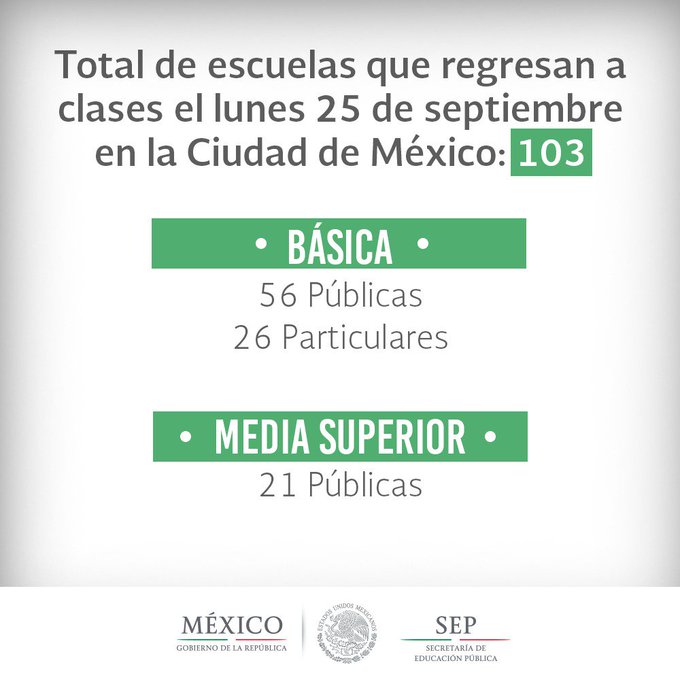
Conoce aquí el listado de las 103 escuelas con las que inicia el  el día de mañana: http://bit.ly/2hsilVk 


Por otro lado, solo 103 escuelas ubicadas en la capital mexicana reiniciaron sus actividades este lunes. De las escuelas de educación básica que retomaron las clases, 56 son instituciones públicas de primaria y 26 escuelas privadas, mientras en educación media solo 21 públicas comenzaron sus actividades, informó.

Unas 60 cuadrillas de peritos recorren las infraestructuras educativas de Ciudad de México (capital) para determinar las condiciones de los edificios, mencionó el secretario de Educación.

Unicef dará apoyo psicológico a estudiantes afectados

Asimismo, Nuño informó que el Fondo de Emergencia de las Naciones Unidas para la Infancia (Unicef) brindará apoyo psicológico a los estudiantes afectados por el sismo de magnitud 7.1, ocurrido el 19 de septiembre pasado.

«Unicef ayudará en las escuelas a los estudiantes que se sientan con miedo o intranquilos, tenemos que ser fuertes como pueblo, como país, para continuar con nuestra vida», precisó.

Ver imagen en Twitter

Ver imagen en Twitter

Con la participación de @UNICEFMexico brindaremos apoyo psicológico a los alumnos que lo necesiten.

Fuente: https://www.telesurtv.net/news/Diez-mil-escuelas-afectadas-tras-sismos-en-Mexico-20170925-0054.html

Comparte este contenido:

México: Artistas crearán brigadas culturales para niños en albergues

México/25 septiembre 2017/Fuente: La Jornada

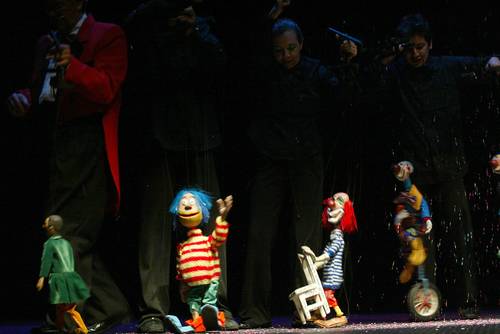
Diversos artistas como teatreros, titiriteros, cuentacuentos, así como educadores crearán brigadas culturales con el propósito de llevar espectáculos artísticos a los niños afectados por el sismo que se encuentran en los albergues de la Ciudad de México.

En entrevista, Rogelio Mejía Suárez, conocido como Roger Crayola Rascatripas y responsable de La Banda del Club Papiro Plástika, explicó que varios grupos artísticos a través de redes sociales como Facebook y Twitter con el Hastang #AlegraUnAlbergue y #DePiePorLaInfancia, están convocando a los artistas de diversas disciplinas a sumarse a este proyecto de las brigadas culturales.

Mejía Suárez, quien ha colaborado con el programa Alas y Raíces de la Secretaría de Cultura, precisó que se crearán varios grupos de acuerdo a la disciplina para llevar espectáculos de calidad.

“En Papiro Plástika ya hemos apoyado en la remoción de escombros como voluntarios, pero ahora nos centraremos en las actividades de emergencia en el rubro cultural con un programa que llevaremos a los albergues”.

La convocatoria está abierta a titiriteros, cuentacuentos, teatreros, educadores y pedagogos y a los jóvenes que deseen llevar un poco de diversión a los niños.

“Nos estamos coordinando para llevar actividades de calidad. Ya hay brigadas culturales que se están organizando de manera emergente, donde la gente se puede sumar de manera inmediata.

“Los espectáculos serán rotativos en los albergues porque la idea es que sea un programa permanente mientras está la contingencia”.

Sobre el tipo de eventos que presentarán a los pequeños, Roger indicó que contarán con “contenidos de calidad en el aspecto artístico y si se puede también en lo educativo. Todas las disciplinas son bienvenidas, hay mucha gente que se dedica a pintar caritas, todo eso es bienvenido, pero el foco es que sea cultural”.

El coordinador de Papiro Plástika expresó también que esta iniciativa de oferta cultural emergente es totalmente altruista porque a nadie se le pagará. “El propósito es llevar a la gente que está viviendo momentos terribles, un poco de alegría y unos momentos de esparcimiento”.

Rogelio Mejía indicó que apenas se están reuniendo los grupos para organizar las actividades que llevarán a los albergues y espera que en unos tres días ya inicien las brigadas culturales.

“Primero vamos a recibir las propuestas y luego dividirlas por categorías, y cuando estén conformados los grupos, comenzaremos. También nos coordinaremos con las autoridades de albergues para contar con el permiso y tener el apoyo logístico”.

Otros artistas que están participando en las brigadas culturales son el grupo La Papilio del arte, Circonciente, Circo Teatro y Adriana Morales, quien está organizando una brigada de clown.

Fuente: http://www.jornada.unam.mx/ultimas/2017/09/21/artistas-crearan-brigadas-culturales-para-ninos-en-albergues-8292.html

Comparte este contenido:
Page 892 of 1686
1 890 891 892 893 894 1.686