Page 24 of 73
1 22 23 24 25 26 73

En india Conferencia Transformando la Educación para la Humanidad

Asia/India/08 Noviembre 2018/Fuente: Prensa Latina

La Conferencia Transformando la Educación para la Humanidad (TECH 2018) mostrará próximamente en la ciudad india de Visakhapatnam el rol de los juegos y el aprendizaje digital en la creación de sociedades pacíficas y sostenibles.
El profesor Anantha K. Duraiappah, director del Instituto Mahatma Gandhi de Educación para la Paz y el Desarrollo Sostenible de la Unesco, dijo en conferencia de prensa en esta capital que la anterior cita, en 2017, reunió a las mejores mentes del mundo de la educación y la tecnología para poner de relieve las pedagogías digitales que fomentan la paz y el desarrollo sostenible.

De acuerdo con Duraiappah, el Instituto Mahatma Gandhi de Educación para la Paz y el Desarrollo Sostenible de la Unesco organiza el evento, que sesionará del 15 al 17 de noviembre, en la referida urbe portuaria en conjunto con las autoridades del estado indio de Andhra Pradesh.

La cita tiene la pretensión de integrar el concepto de paz, ciudadanía global y desarrollo sostenible en las pedagogías digitales de los libros de texto digitales.

TECH, 2018 contará con oradores de los campos del aprendizaje digital, inteligencia artificial, juegos para el aprendizaje y más.

Duraiappah declaró que el encuentro apunta a dibujar un plan para aprovechar las posibilidades pedagógicas abiertas por las tecnologías digitales, con el objetivo de catalizar un cambio en la educación.

Afirmó que será el primer evento internacional que reunirá a expertos y profesionales en el campo de la tecnología de la educación y la educación para la paz, el desarrollo sostenible y la ciudadanía global.

La lista de asistentes se compone de ministros de educación, políticos, especialistas en tecnología de la educación, educadores y maestros, diseñadores de planes de estudio, investigadores, estudiantes, diseñadores de juegos, expositores de tecnología y otros.

Imagen: https://www.prensa-latina.cu/images/2018/noviembre/03/TECH-2018.
Fuente: https://www.prensa-latina.cu/index.php?o=rn&id=225422&SEO=en-india-conferencia-transformando-la-educacion-para-la-humanidad
Comparte este contenido:

India ranks 37 in quality of education

Asia/ India/ 07.11.2018/ Source: www.deccanchronicle.com.

Singapore has the best education in science and math in the world, followed by Finland, Switzerland, Lebanon, Netherlands, Qatar, Belgium, Estonia, Honh Kong and the US, according to the World Economic Forum. India stands at the 37th position.

The quality of math and science education depends upon public funding and the education system.

The countries ranked up to 36 spent more than 6 per cent of their GDP on education against 3.3 per cent in India.

“Our education system gives more stress on marks and grades rather than quality. Our education policy should be changed to address quality concerns,” an expert said.

Dr Srini Bhupalam, an education expert, said, “It has been proven that quality of education can be provided pretty effectively to small populations.”

“If you look at the list, most of the countries population is very small. It’s always a challenge to do the same for very large populations. Nevertheless we have a lot of scope to do better,” he added.

He said Indian students were good at reproducing on paper due to rote learning. “We cannot expect any change in our rankings until the method of teaching is transformed into practical, concept and application based,” he said.

“Our testing and evaluation methods also need to be transformed to measure students understanding and application for creative problem solving,” Dr Bhupalam said.

Dr Narsimha Reddy, Principal, Hyderabad Public School, said, “Small countries are progressing in science, math and technology. The government must take education as a challenging field. The curriculum and methodology should be altered to teach science and math’’.

He said most teaching happens to score marks. “What, why, where, when and how are the most important questions in science and math. How many schools are really making students curious and inquisitive,” Dr Reddy asked.

He said hands-on experience was given top priority in developed countries.

“What facilities are available in our schools. Teachers are busy finishing the syllabus and parents are worried about marks. Curriculum and pedagogy have to be changed,” Dr Reddy said.

Not everyone was in agreement that Indians did poorly in maths.

P. Obul Reddy Public School principal Anjali Rajdan said Indian students do very well in maths but the WEF ranking did not reflect it.

“I can accept the ranking in science as our labs and infrastructure are not at par with other countries, so standing 37th is humbling.”

Source of the notice: https://www.deccanchronicle.com/nation/current-affairs/041118/india-ranks-37-in-quality-of-education.html
Comparte este contenido:

Educación y Economía podrían reducir los suicidios en mujeres indias

Asia/India/01 Noviembre 2018/Fuente: Prensa Latina

 Alrededor de 15 mujeres se suicidan por cada 100 mil en la India, que tuvo una tasa 2.1 veces superior al promedio mundial en 2016, según un estudio sobre diferencias de género y las muertes por esa causa.
De acuerdo con los especialistas, si las mujeres indias tuvieran una mejor educación, fueran económicamente independientes y enfrentaran menos violencia doméstica, es probable que disminuyan los suicidios en el populoso país surasiático.

Las mujeres casadas representan la mayor proporción de muertes por suicidio entre las indias, destacó la investigación.

En ello inciden factores como el matrimonio arreglado, el matrimonio precoz, la maternidad joven, el bajo estatus, la violencia doméstica y la falta de independencia económica.

Los matrimonios tempranos todavía son comunes en India, el 27 por ciento de las mujeres se casaron antes de los 18 años y el ocho por ciento del grupo de entre 15 y 19 años estaban embarazadas, según la última Encuesta Nacional de Salud Familiar.

La investigación mostró que casi el 29 por ciento de las mujeres casadas en el grupo de 15 a 49 años en la India experimentaron violencia conyugal y el tres por ciento enfrentó violencia durante el embarazo.

A diferencia de los hombres, la educación es un factor protector para las mujeres contra el suicidio, dijo al portal del periódico India Spend Lakshmi Vijayakumar, uno de los autores del trabajo.

Solo el 36 por ciento de las mujeres indias de 15 a 49 años tienen más de 10 años de educación. Así que, junto con el matrimonio precoz, la maternidad y la violencia doméstica, las mujeres indias no tienen la educación ni la independencia económica para apoyarse.

La prevención de los matrimonios infantiles, la educación de las niñas y la reducción de la dote ayudarían a prevenir los suicidios de mujeres, agregó Vijayakumar.

Asimismo, es preocupante que la tasa de suicidios de los varones no cambió en casi tres décadas. Las muertes por suicidio entre mujeres fueron 20 por 100 mil en 1990 y 15 por 100 mil en 2016; en los hombres, la cifra fue de 22 por 100 mil en 1990 y 21 por 100 mil en 2016.

También hay un aumento en los suicidios en adolescentes, según el estudio. Casi el 17 por ciento de las muertes de niñas de 15 a 19 años se debieron al suicidio, la tercera incidencia más alta entre todos los grupos de edades.

Fuente: https://www.prensa-latina.cu/index.php?o=rn&id=224204&SEO=educacion-y-economia-podrian-reducir-los-suicidios-en-mujeres-indias
Comparte este contenido:

Ministro de Educación de la India: La universidad abierta se hará realidad el próximo año

Asia/India/Por Express News Service

Después de que se establezca la universidad abierta, la educación a distancia y el registro privado se incluirán en ella y, con esto, la prisa por asegurar la admisión a las universidades y colegios se reducirá, el mínimo

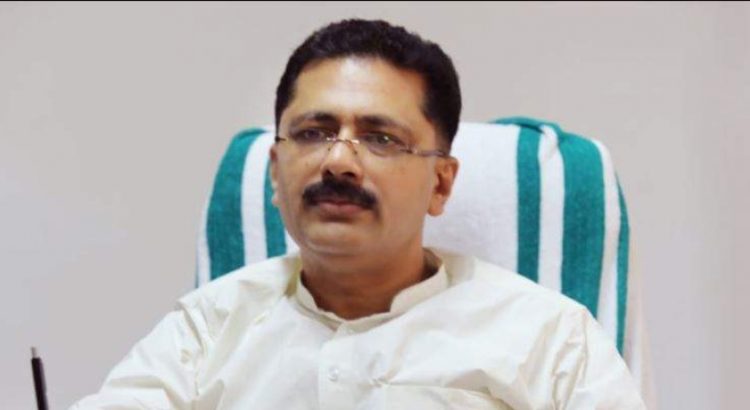
El ministro de Educación Superior, KT Jaleel, dijo el miércoles que la universidad abierta propuesta se convertirá en una realidad para el próximo año. Al presidir la reunión de directores y directores de escuelas asistidas, Jaleel dijo que a partir de ahora no se permitirán nuevos cursos de autofinanciamiento en las universidades asistidas. Después de que se establezca la Universidad Abierta, la educación a distancia y el registro privado se incluirán en ella y, con esto, se apresurará a conseguir la admisión en las universidades y colegios, dijo el ministro. El gobierno brindará todo el apoyo a los colegios asistidos para mejorar las instalaciones de infraestructura Así como la calidad de la educación impartida, dijo. El ministro dijo que una vez que el adalat sobre la carga de trabajo supere, se harán esfuerzos para crear nuevos puestos. Se llevará a cabo una reunión con el Ministro de Finanzas para crear nuevos puestos académicos y será precedida por una reunión de los administradores escolares ayudados.

Según el ministro, la acreditación de NAAC debe tomarse antes del 31 de diciembre y las universidades deben proporcionar servicios en línea a partir del próximo año académico. Los cursos asistidos y autofinanciados ofrecidos por las universidades deben mostrarse en sitios web separados y las universidades autofinanciadas deben detener la práctica de cobrar un monto asombroso como honorarios. Los detalles de los maestros deben mostrarse en los sitios web y deben ser parte de la realización de exámenes. dijo. El ministro hizo un llamado a las administraciones para garantizar la cobertura de CCTV en las escuelas y fortalecer el Plan Nacional de Servicios (NSS) y el NCC.

Las actividades de la Unión Universitaria deberían iniciarse en las universidades y esto evitará que las instituciones caigan en manos de grupos de la mafia, dijo el ministro. Las celdas de reparación de quejas deben iniciarse en todas las universidades y cuando el personal no docente está empleado, deben ser capaces de manejar el gobierno electrónico, dijo Jaleel al tiempo que pedía una mayor participación de los maestros de escuelas asistidas en el Desafío de Salarios. Aquellas instituciones que son RUSA (Rashtreeya Uchathar Sikhsa Abhyan) calificadas para obtener fondos deben completar los proyectos en un plazo determinado, dijo el ministro. Se asignarán fondos de segunda etapa bajo RUSA, dijo Jaleel, que se adjudicarán fondos de la segunda etapa a ciento dos colegios universitarios, nueve colegios de capacitación, cinco colegios autofinanciados, diez colegios gubernamentales y dos universidades, que incluyen un total de 128 instituciones. Estos fondos deben utilizarse dentro de los 10 a 15 meses y Kerala se encuentra entre los primeros tres estados que reciben más fondos de RUSA y la agencia ha considerado la financiación para instituciones que tienen una calificación NAAC de 3.5 y superior.

Tales universidades recibirán millones de rupias de las cuales `40 lakh es una contribución del gobierno y ’40 lakh es una contribución de la universidad. Las universidades autofinanciadas obtendrán una financiación RUSA de Rs 5 crore y, como primer paso, si las universidades depositan $ 20 lakh, la agencia depositará una primera cuota de Rs 1 crore en la cuenta de la universidad. La directora de educación superior de la universidad, Haritha V Kumar y otros oficiales participaron en la reunión.

Fuente: http://www.newindianexpress.com/states/kerala/2018/oct/25/open-university-to-become-reality-next-year-minister-kt-jaleel-1889679.html

Comparte este contenido:

Grade 5 Students Answer Questions About Girl Child Education

By YKA.

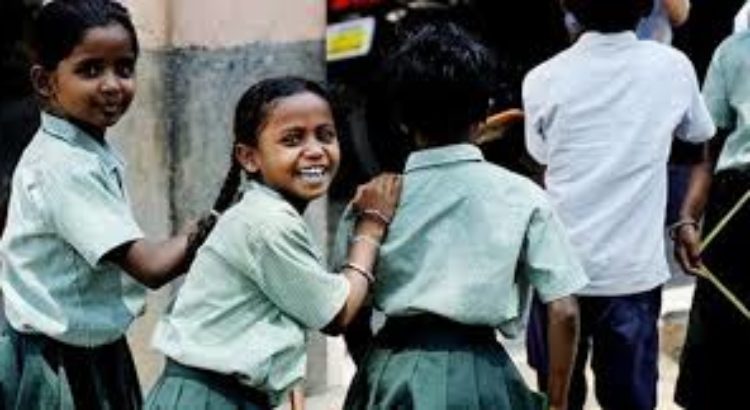
Several Grade 5 students of the TFI classroom in Shri Ram Vidya Mandir, Mumbai, answer different questions on girl child education for #EveryGirlInSchool. 

1. What is your understanding of equal opportunities for girls and how do you think we all are working towards achieving it?

In my opinion, girls and boys should get equal opportunities. Teach For India is a good example of gender equality since in Teach For India, all girls and boys are given equal opportunities, always. Other examples are Just For Kicks and The Right Pitch where both boys and girls are given the right to play sports such as Football and Cricket which are otherwise rare for girls. What the government does right now is still not enough. Government should focus on sending girls to bigger and better schools. If girls get this opportunity, they can do amazing things in their life. They will be successful and will be able to do what they really have interest in. In my class, girls played cricket very well and became champions. Even in football they played and reached the finals. If girls get opportunities like this they will surely become successful and do good to society.
-Mitesh Ramachal Prajapati, Grade 5, Shri Ram Vidya Mandir
2. What do you think are the barriers to access education for girls in India and how can we overcome these challenges?
There are a lot of problems for girls in India. The began in olden days when things like Sati, Dowry death, selling girls for money, kidnapping for marriage, and rapes were so common. India has 49% female population but only 65% are educated. In my opinion, girls and boys are equal and must get equal right to good education. With every opportunity it is important to involve both boys and girls because only then will the opportunity be complete. We have good examples of girls who have achieved many things like Poorna Malavath, Gita, Babita, Malala Yousufzai, Shakuntala Devi, etc. But why do we still see husband beating up wives especially when they give birth to a girl child? They torture them and call them a burden to the family. The government has started many programmes to solve this problem but it is not enough. People don’t have money to afford education for all members in the family and so they choose to only send their boys to school. Government must make education compulsory for all girls and should help them with the money problems. We need more schools for this big population of India. If we compare China and India, 82% females get educated which is a big number. We deserve this right for equal opportunities for all girls and boys in this country. We should all stand up for this together as good citizens of this country.
-Navin Baudh, Grade 5, Shri Ram Vidya Mandir
3. What according to you is the best solution to ensure that every girl goes to school?
Every girl must get equal opportunity for education. If we see parents or other members of our community trying to stop girls from going to school, we should first try to talk to them and make them understand about the importance of educating girls. We need to explain to them how even the government is working hard to make sure that girls get educated. Government has many good programmes for parents who have money problems in sending girls to school by giving free education and good facilities like free meals, books, etc. We have all heard of ‘Beti Bachao, Beti Padhao’ programme launched by the government. We need to make sure that in every community all parents are made aware of importance of girl child, education, health and hygiene and not to believe things like girls are a burden to the family. We need to support and motivate girls to join sports, defense, business and all other jobs. We should stop making fun of girls by saying mean words like ‘item’ that can hurt their feelings. We must understand that our mother is also a woman and she has taken great pain to give birth to us and take care of us. So we must make sure to give equal opportunities for girls and boys and give them good quality education.
-Anmol Tiwari, Grade 5, Shri Ram Vidya Mandir, Kandivali East
4. If you have a personal story of lack of opportunities for girls, please share it.
In my community, many girls don’t go to school. Even in my class, there are very few girls compared to boys. I have a story to share about the lack of opportunities for girls in my community. This story is about a girl called ‘Bomthi’. She lives in my neighborhood with two brothers and parents. Till 4th standard all three kids went to a nearby government school. Her parents always scream at her and tell her to only do housework and not to go to school. She always had to work extra but her brothers never had to do the same. One day, her parents removed her from school. At that time she did not understand why they did that. So she only sat at home and did housework. Then she realized that her parents didn’t have money to send all the children to school. So her parents decided to only send her brothers to school. There are so many girls like Bomthi who don’t go to school in my chawl. I felt really awful about this situation. So I talked to my parents about it and asked them to talk to Bomthi’s parents. My parents were finally successful in telling Bomthi’s parents to send her to a government school where they wouldn’t have to spend so much money but still give some education to Bomthi. There are so many stories like this in India. So many girls don’t have the basic right to basic education and health facilities. Even though the government is doing many programmes like Beti Bachao, Beti Padhao it is still difficult for poor people especially to give opportunities like quality education and sports to their girls children. It is my dream to one day stop all this and make sure that every girl in India will be able to have good education and a bright future.
-Nandini Santosh Sonkamble, Grade 5, Shri Ram Vidya Mandir, Kandivali East
Source of the review: https://www.youthkiawaaz.com/2018/10/grade-5-students-answer-questions-about-girl-child-education/
Comparte este contenido:

Priyanka promotes importance of girls’ education in India

Por: TheSiasatDaily.

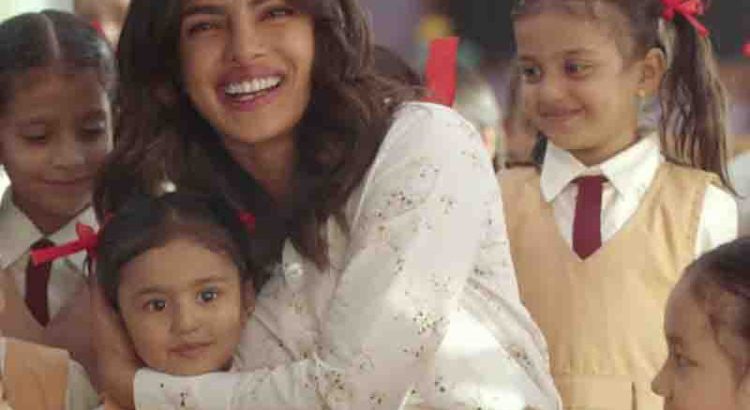
“I want to help little girls get an education to build a brighter, more secure future,” said global star Priyanka Chopra, on the occasion of International Day of the Girl Child.

To mark the important day, the 36-year-old, who is working with YouTube to highlight the impact of educating girls in India, took to Twitter to share a video.

In the clip, the actor – a UNICEF Goodwill Ambassador – appeals to everyone to give girls a chance at everything. She captioned it as, “Let them raise their voices so they achieve their dreams. This #InternationalDayOfTheGirlChild, @YouTubeIndia, @UNICEFIndia and I want to help little girls get an education to build a brighter, more secure future.”

Let them raise their voices so they achieve their dreams. This #InternationalDayOfTheGirlChild, @YouTubeIndia, @UNICEFIndia and I want to help little girls get an education to build a brighter, more secure future. ?https://t.co/nXxgCKui2y #DayoftheGirl

Talking about her initiative, ‘The Sky is Pink’ star, in an official Google blog post, said, “Today, on October 11, 2018, International Day of the Girl Child, I have teamed up with YouTube to highlight the importance of educating a girl child. What I love about it is that through this campaign, viewers will be directly linked to stories from NGOs making an impact all across the nation.”

Comparte este contenido:

Coquille Tribe moving forward with Indian education curriculum, celebrating culture


The Coquille Indian Tribe has a long cultural history, broken apart by the loss and restoration of their «Tribe» designation.

The tribe has not always been given the chance to teach their history to the younger generation.

Newly passed legislation, Senate Bill 13, puts into law the process to make sure the next generation knows and celebrates their culture.

The Oregon Department of Education will draft a mandated statewide curriculum for the 2019-2020 school year. and the nine tribes of Oregon can submit their own lesson plans specific to their history.

«What an Indian is and what they look like is the story of their tribe,» said Bridgett Wheeler, the tribes’s culture, education and library director. «One of the things I’ve struggled to convince my children is that they are, in fact, legit Indians of the Coquille Indian tribe.»

According to the tribe, after miners arrived and the government pushed the indigenous people from their lands in the 1850s, few Coquille women with white husbands were allowed to stay.

Many married white people, and these mixed-race families now make up the Coquille Tribe.

Kristina Simpson, Head Start director, said educating the younger generation is important to her as a mom and a tribal spouse.

They are currently accepting bids for proposed lesson plans that are in line with state and federal standards

«Our expectation is we lay out what we would like people to provide us,» Wheeler said, «their expertise, examples of lesson plans, basically, what their plan and price would be for them to provide this product.»

Source of the notice: https://kcby.com/news/local/coquille-tribe-moving-forward-with-indian-education-curriculum-celebrating-culture

Comparte este contenido:
Page 24 of 73
1 22 23 24 25 26 73