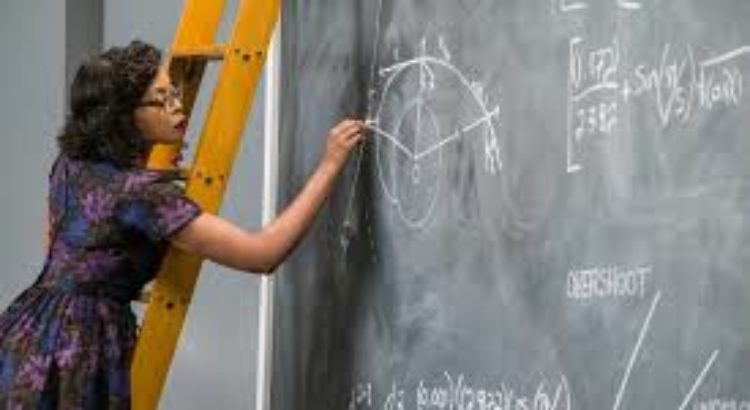
El 11 de febrero se celebra el Día Internacional de la Mujer y la Niña en la Ciencia. La ONU instauró este día en 2015 para intentar reducir «la brecha de género en los sectores de la ciencia, la tecnología, la ingeniería y las matemáticas (STEM) que persiste desde hace años en todo el mundo».
Aquel mismo año se publicó el último informe Científicas en Cifras que dejaba en evidencia que el número de mujeres que se dedican a este ámbito de trabajo no se corresponde con el reconocimiento que reciben ni con su presencia en puestos de responsabilidad. Aunque el 39% de profesionales dedicados a la investigación científica son mujeres, sólo un 21% del profesorado catedrático de las universidades públicas españolas son mujeres.
Otro estudio más reciente, el Informe Mujeres Investigadoras 2016 del CSIC, revela que si echamos la vista a Europa a medida que se asciende en la carrera científica la proporción de mujeres disminuye. Esta es una tendencia común en los Veintiocho, a pesar que desde hace varios años más del 60% de los títulos universitarios y al menos el 45% de los doctorados los obtienen las mujeres.
Estos datos son el síntoma de una realidad que hay que revertir dando visibilidad a las mujeres científicas, reivindicando su trabajo y acercando la ciencia a las niñas a través de la educación. Así nacen iniciativas como 11 defebrero, una plataforma ciudadana formada por profesionales de la comunidad científica decididos a “contribuir a cerrar la brecha de género que actualmente existe en el ámbito científico”. Esta plataforma quiere promover prácticas que favorezcan la igualdad de género en el ámbito científico desde fases tempranas a través de actividades auspiciadas por investigadoras y rescatando del olvido el trabajo de aquellas mujeres que cambiaron el curso de la ciencia.
Reafirmando su compromiso con la igualdad de género, ACCIONA han aunado fuerzas con 11defebrero organizando encuentros entre las científicas del presente y las científicas del futuro, quienes envían un mensaje de optimismo y confianza en el futuro de la mujer en la ciencia. Científicas de la talla de Assumpta Parreño, investigadora y profesora de Física Nuclear en la Universidad de Barcelona o Júlia Borràs, investigadora en el Instituto de Robótica e informática Industrial del CSIC conversan con las niñas que en unos años tomarán el testigo en una carrera de fondo por la igualdad.
ACCIONA colabora en varios proyectos para acabar con la brecha que separa a mujeres y hombres en las disciplinas STEM. Es el caso de Homeward Bound, la expedición que une la lucha contra el cambio climático y el liderazgo femenino, o de Inspiring Girls, que bajo el lema Niñas sin límites: la energía del futuro, busca que las niñas sigan sus aspiraciones personales y profesionales sin dejarse guiar por estereotipos de género.
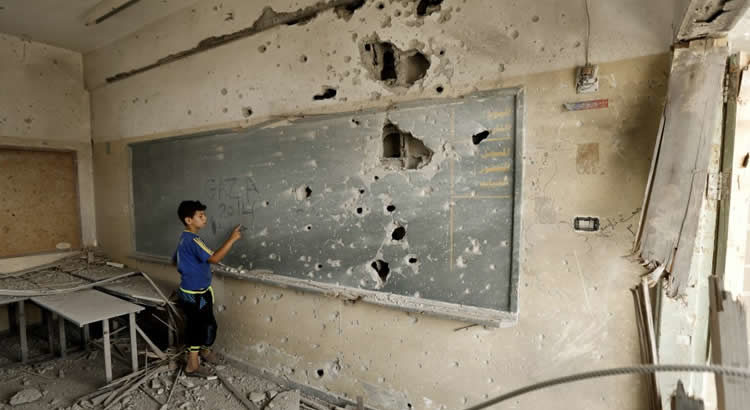
Las escuelas palestinas necesitan más protección ante los efectos de la ocupación israelí, coinciden hoy varias agencias de ONU tras al alto número de incidentes ocurridos en centros de enseñanza en Cisjordania.
De acuerdo con un reporte conjunto de la oficina de coordinación de la ONU para los territorios palestinos ocupados, la Unicef y la Unesco, desde el comienzo del año escolar -en septiembre pasado- aumentaron los hechos que atentan contra la educación.
Amenazas de demolición, choques en el camino a la escuela entre estudiantes y fuerzas de seguridad, maestros detenidos en los puestos de control y acciones violentas por parte de militares y colonos israelíes figuran entre ellos, señala el informe.
Solo en 2018, se documentaron 111 casos diferentes de interferencia a la educación en Cisjordania, los cuales afectaron a más de 19 mil niños, añade.
Por ello, esas agencias de ONU pidieron que las escuelas estén mejor protegidas de las amenazas de la ocupación.
Según destacó el coordinador de asuntos humanitario de Naciones Unidas Jamie McGoldrick, las aulas deben ser un santuario en medio del conflicto, para que los niños pueden aprender y convertirse en ciudadanos activos.
Los menores nunca deben ser objeto de violencia ni deben exponerse a ella, ellos necesitan un ambiente de aprendizaje seguro y el derecho a una educación de calidad, recalcó el reporte.
Por otra parte, el experto independientes de la ONU, Michael Lynk, pidió a la comunidad internacional tomar medidas decisivas en respuesta al aumento de las actividades de asentamientos de Israel en Cisjordania ocupada, incluida Jerusalén Oriental.
El relator especial advirtió sobre los intentos de anexión de ese territorio y detalló como los asentamientos israelíes ‘son la fuente de una serie de violaciones persistentes de los derechos humanos’.
Tras más de 50 años de ocupación ilegal israelí y de violenta represión al pueblo palestino, la situación en la Franja de Gaza y Cisjordania empeora cada día para la población civil que es despojada de sus territorios ancestrales y sufre la escasez producida por los bloqueos de Tel Aviv.
De hecho, esta es una de las crisis más complejas a la que se enfrenta la comunidad internacional desde hace 70 años, pese a que la gran mayoría de los países miembros de la ONU apuestan por la solución de crear dos Estados: Israel y Palestina.
Living in limbo hasn’t stopped some of the country’s 160,000-plus refugees from being driven to build new lives for their communities – be it through setting up schools or arts troupes, as CNA Insider finds out.
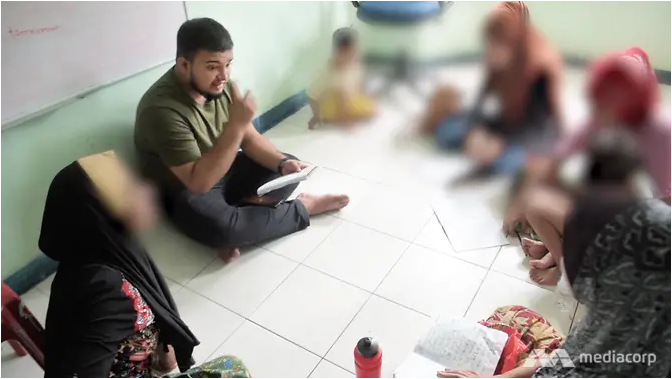
KUALA LUMPUR: Sitting in a circle, the women one by one took turns to read aloud from their notes. “I’ve been suffering since yesterday,” recited one lady in English.
Suffering from a fever, a cold, a headache – they learnt to say a litany of symptoms. Basic though the conversation might be, without this they wouldn’t be able to tell a doctor what was wrong with them, and get the right – or even any – treatment.
He co-founded the Rohingya Peace Institute as a school for his community; he also established a health project for Rohingya families, supporting them in their medical cases. And he’s still not done with uplifting his displaced community, for whom he hopes to be a voice.
In another part of Kuala Lumpur, 36-year-old Afghan Saleh Sepas is giving fellow refugees the chance to be their own voice – as part of a theatre troupe.
Feeling isolated and disenfranchised his first year here, he came to realise that was what many of the 1,600-plus Afghan refugees and asylum seekers in the country grappled with as well. And so he founded Parastoo Theatre as their outlet.
Now, he’s raising awareness about Malaysia’s refugee population – officially numbering more than 160,000, one of the largest in South-East Asia.
It’s not an immediately visible fact, because the refugees don’t live in camps as they do in some other host countries; instead, families set up home in any low-cost housing they can afford.
And because they have no legal status in Malaysia, even if they are registered with the office of the United Nations High Commissioner for Refugees (UNHCR), they are unable to officially work – though work they must, often in low-paying menial jobs that see them exploited – or to attend government schools.
But amid this indefinite state of limbo, some are striving to build new lives for their community in a new land.
BORN IN A REFUGEE CAMP, LOST AT SEA
Mr Hasson was born in Bangladesh in the Nayapara refugee camp, where the only education available was up to the third grade. Eventually, his father managed to get him a fake identity and enroll him in a government school, where he studied until the ninth grade.
“It was really good. I enjoyed with my friends and going to school,” recalled the youth who had dreams of becoming a doctor like his dad.
But when his true identity as a Rohingya refugee was discovered, he was kicked out of school. “It shocked me. It pushed me to decide to go somewhere else, to leave that country.» Determined to chase his dream, he wouldn’t settle for life in camp “like a prison”.
His departure was sudden: The day after contacting a trafficker, he was picked up outside the camp. His last words to his unsuspecting mother were, “Don’t open my room until I come back”.
He was told he could reach Malaysia in three days by boat. He ended up stuck at sea for two to three months, smack in the middle of the Andaman Sea boat crisis of 2015.
He survived; others were less lucky. He remembers that when the traffickers decided to transfer everyone from three boats to one boat, one of the refugees protested against it.
“They shot this guy who spoke up, and then just threw him into the water. So when everyone saw this, everyone was silent,” he recalled, adding that the traffickers were carrying not only guns but bombs.
Asked if he’d felt in danger, he replied: “Every second.”
After the traffickers abandoned them, they ended up in Indonesian waters and were sent back and forth by the Indonesia and Malaysian authorities – until a fight between the Bangladeshi and Myanmar migrants caused a hole on the boat.
Mr Hasson jumped into the sea. He was in the water for about five hours, hanging on to floating wood, when Acehnese fisherman rescued the capsized refugees.
Just days after the dramatic rescue, while he was still recovering, he started helping the Langsa hospital in Aceh with interpretation as he could speak English, Rohingya and Bengali.
As the months passed, he befriended the locals and didn’t particularly miss his family (although he did call his mother). Life seemed good. But one day, he realised he’d forgotten his dream of a medical education in Malaysia.
His drive renewed, he called a trafficker again. And in January 2016, he finally reached Malaysia. It took one day by boat.
GRADUATED FROM UNIVERSITY
Back home in Ghazni province in Afghanistan, Mr Sepas was also blessed to have the support of a father who, despite being illiterate, was “always motivating and helping” him and his brothers to study.
“He would … bear many problems, but he never asked us to leave school, or to delay our studies,” said the bespectacled man. “I mean, with his salary as a labourer, he’d send us to university and school.”
Mr Sepas was one of 12 students enrolled in the theatre course in the Faculty of Fine Arts at Kabul University when it reopened in 2001, following the fall of the Taliban.
After graduating, he worked in local radio and television organisations before joining BBC Radio in 2008. There, he worked on a programme in his country about the family, women’s role in the economy, freedom of speech, democracy and human rights.
And when BBC Radio decided in 2010 to work on theatre in Afghanistan, he got into Theatre of the Oppressed, which uses theatre as a tool for social change.
But to the Taliban, which sought to control Afghan society, his work on radio and in bringing theatre to marginalised communities as a means of empowerment was subversive.
Mr Sepas, a member of the persecuted Hazara ethnic group, says that he was put on the Taliban’s blacklist. «If I’d continued my work in Afghanistan, they’d surely have killed me – not only me but my family,” he said.
A Parastoo actress getting ready. Among other things, Mr Saleh’s radio show in Afghanistan touched on women’s roles, and persuaded families to let their daughters attend school.
In the end, they sought asylum in Malaysia. In 2016 his wife and three young children arrived by plane with help from smugglers.
Those were intolerable moments – that one had to leave everything without reasonable excuse, and become displaced and miserable.
«I try to forget those moments,» he said.
In Kuala Lumpur, to support his family, he was ready to swallow his pride and find work where he could, and got his first job as a furniture mover.
“(That first day) was the worst day of my life,” he said. “The client told us that there wasn’t much furniture, but it was three times what they had told us … It was very unbearable physical work.”
That night, his wife and children were waiting for him to return, and when he did – after being paid RM100 (S$33) – he was so tired that he “burst into tears”.
It is not an uncommon story to hear among refugees, of those who work illicitly in service jobs or construction and are shortchanged on their pay – if they get paid at all – with no recourse.
REFUGEES TURNED ACTORS
As mid-2017 approached, his family’s “hardship, uneasiness and bitterness” lessened, and it occurred to Mr Sepas that he should “do some activities” for other refugees.
“Honestly, seeing the refugees’ situation in Malaysia, they were people who were just breathing,” he said.
“I thought of doing something that even if nothing changes, the achievement could be hope …
People smile at least for a moment, and trust that there’ll be a future, and that future’s a bright one.
He decided to start an Afghan refugee theatre troupe. He chose the name Parastoo – which is Persian for “swallow”, the migratory songbird – to match the refugees’ situation.
His focus was especially on the youth, as “they were suffering from having no destination”. He said: “Because of legal limitations they have lost educational, financial, social and cultural opportunities.”
Mr Sepas wanted to establish a place where they could “show their skills and strengths and use them”.
Parastoo’s first play was at a refugee festival that August, performed with six actors. It was a small-scale start, but the challenges grew bigger.
The troupe members were doing theatre for the first time and rehearsing for performances after their work. The rehearsals tended to be cut short because they «were really tired”.
Mr Sepas also struggled to find a rehearsal place because of rent, before he found a hall in a school run by a voluntary welfare organisation for RM400 a month.
He was paying for some of the troupe’s costs out of pocket, but the biggest cost – the actors’ wages, which he promised would be RM30 per rehearsal – was not something he could afford.
By January 2018, he had 12 actors whom he owed RM14,000 in total. “Sometimes they’d say, ‘If you don’t pay my salary, I won’t continue’. I’d say, ‘Please don’t be like this because we go slowly for a good future.’”
But these are problems he does not allow to get in the way of the big picture of what he wants to achieve with Parastoo.
It’s embodied in 11-year-old Fatimah Jafari, for example. The troupe’s youngest member, who only learnt from her parents last year that she was a refugee, said her experience with theatre has made her a more confident person.
“I was like a mouse that never came out of the hole (before),” she said. Now, the little Hazara girl wants to even become president of her country someday, or of her “next country” if she can’t in Afghanistan.
She added, with all the determined idealism of the young: “The first thing I’d change: No poor is allowed.”
TEEN ON A MISSION
Children were also the first group of refugees Mr Hasson began to help in Malaysia, after two Rohingya refugees approached him about setting up a school. “I told them, let’s do it,” he said.
Using their pay from the jobs they had, they found a place in Selayang, Selangor to rent.
“We started to tell people what our plan was, and people started sending their kids to school where there was no school at all. And we created this,” he said.
One of the strongest encouragements he received was from a Malaysian he had met in Aceh. Ms Lilianne Fan, the international director of refugee assistance organisation Geutanyoe Foundation, has been like a “teacher” and “sister” to him since they met.
“She was really proud and (saying), ‘Hasson, you really did a great job,’” he recounted. “And she supported that school with funding.”
It was Ms Fan, 41, whom he approached when he had an idea for medical assistance and a literacy project for Rohingya families and women.
He used to accompany Rohingya women to hospital and the clinics as their translator, but sometimes “they couldn’t explain to me what had happened to them because they were shy”, said Mr Hasson.
From there, the concept for the women’s classes took shape, including for “young girls who were sitting at home not going to school because her family doesn’t want her to go far”.
”We said, okay, if we bring this school to the homes for these kinds of girls … the parents can’t say, ‘my daughter can’t go out’,” he explained.
It was not easy trying to convince people, however, especially husbands who thought there was “no need for the mothers to study”. But this teenager had a counter-argument that mothers were important.
“What is she going to teach to your children if the children are going to school and … you don’t know anything (and) your wife doesn’t know?” he asked the men.
“If she knows a little bit, she can check on her children at home.”
Some of the husbands relented, but he then had to find female Rohingya teachers.
Bit by bit, he built up a small pool of them, went door to door with them to speak again to the men in “every house”, and in December 2017, the programme was started.
There are now 50 to 70 students in total, spread across six classes. He is also facilitating a handful of medical cases, ranging from accidents to births and including a Rohingya man in Johor who has cancer.
The programmes and salaries, including Mr Hasson’s, are funded by Geutanyoe Foundation – which means he now gets to enjoy a state of stability unlike his first few weeks in Malaysia, when he worked 17 days for a supermarket but was paid only for five days.
He’d then had to change his job to selling poultry in a market, in order to pay back the RM8,000 he borrowed from people, his mother included, to pay his traffickers.
DRIVEN TO MAKE AN IMPACT
Mr Hasson’s family is proud of him – Ms Fan, who met them in Bangladesh, told them what he was doing.
“They never expected something like what I’m doing here. They thought I was working in an office, just sitting there,” he said.
His English has also improved compared to the “terrible” grasp he had when he was in Aceh. He was able to take language classes in Malaysia, but has made no other educational progress towards becoming a doctor.
In any case, his medical dreams have since changed to hopes of entering journalism.
He explained: “I want people to speak. I don’t want them to keep silent. There are a lot of people who want to speak, but they don’t know how … and who to contact.”
Asked how he felt about helping others, rather than himself, he said he was “blessed”.
He thinks more must be done, however, to allow refugees in Malaysia to work legally, not be dependent on handouts and give their children a better education.
There are close to 43,000 refugee children below the age of 18 in Malaysia, and the local UNHCR office supports nearly 130 informal refugee schools. “They just want some way to send their kids to a good school – better school – for their better future,” said Mr Hasson.
Last year, the government also began a pilot project to allow 300 Rohingya refugees to work legally in the country. There is a long way to go, but every effort counts, as Mr Sepas’ experience has shown him.
One of his troupe members, Mr Mohammad Ismaeil Zafari, was so depressed after coming to Malaysia – with no end in sight to the war in Afghanistan, where his family is – that he attempted suicide.
But joining Parastoo has helped his “mental issues to fade away”, said the 43-year-old.
Just a year ago, when CNA Insider first met him, Mr Sepas was unsure where he would end up with his theatre project. He had been visibly under stress from managing actors who did not always take rehearsals seriously, and from struggling to pay them.
But over the months, their work has received recognition. In August, the AirAsia Foundation approved a one-year grant of RM55,000 for Parastoo to help it train new actors and mount regular performances.
The troupe is now 15-strong and has done about 10 public performances and three workshops.
Ms Kong Phui Yi, who helps to organise the workshops and plays at schools for the troupe, as well as moderate their post-performance engagement sessions with their audiences, thinks Mr Sepas is “opening up conversations”.
«He’s scratching the surface of issues that refugee communities face, and there’s a lot more to be done,” said the 27-year-old Malaysian.
The theatre director sees the need to dispel not only the negativity refugees might feel, but also the negative attitudes locals might have towards them.
“Local people didn’t know why we left our country before. They had misconceptions about refugees. But now the reality is clear to them,” he said.
They thought refugees had no knowledge and skills … We’ve proved by (our) workshops and practices that we all have common pain.
«We’ve created mutual respect – that the refugees and peoples of the locality think of a common humanity.”
The future, however, is still a mystery for him and Mr Hasson. The latter wants to see his homeland, Myanmar, and make it his real home one day.
Mr Sepas would like to return to Afghanistan, but sees no way of that happening currently. He may want to move to another country, like Canada or Australia, for his children. But what would he find there?
For now, they are driven to make an impact on their people at a time when the situation of refugees around the world is as difficult as it has ever been.Read more at https://www.channelnewsasia.com/news/cnainsider/refugees-malaysia-uplift-school-theatre-rohingya-11115436
Source of the article: https://www.channelnewsasia.com/news/cnainsider/refugees-malaysia-uplift-school-theatre-rohingya-11115436
Palestina / 3 de febrero de 2019 / Autor: Redacción / Fuente: La Vanguardia
El ministro de Educación palestino, Sabri Saidam, aseguró hoy que Israel planea cerrar las escuelas palestinas del este ocupado de Jerusalén y denunció una «israelización de la educación».
«Controlan la demografía árabe de Jerusalén controlando la educación y nuestros colegios. Han llevado a cabo un plan para vaciar la Ciudad Vieja de instituciones privadas (que aplican currículo escolar palestino) y cerrar los de la (agencia de refugiados palestinos) UNRWA», declaró Saidam tras una rueda de prensa informativa en el Ministerio de Educación.
Según el titular de la Autoridad Nacional Palestina (ANP), las escuelas privadas que no incluyan el currículo israelí corren el riesgo de que no se les renueven los permisos autorizados por Israel, que tras anexionar la parte oriental en 1980 aplica su legislación civil.
«Quieren establecer sus propias escuelas, son su propaganda», denunció Saidam, quien explicó que la ANP destina 30 millones de dólares para apoyar programas de protección de escuelas y educación en Jerusalén, lo que incluye el pago del transporte de los alumnos.
La ANP no tiene control sobre Jerusalén oriental, pero el currículo palestino del Ministerio se aplica en escuelas privadas, en las del Waqf – autoridad jordana de patrimonio islámico – y en las de la UNRWA, 46 en total en Jerusalén Este.
«Rechazamos el currículo israelí en nuestras escuelas», declaró el ministro, que negó que el plan de estudios palestino «incite a la violencia», como ha denunciado Israel y que motivó la revisión de los libros de texto que utiliza la UNRWA.
Saidam destacó de forma concreta el riesgo de los centros educativos dentro de la Ciudad Vieja de Jerusalén y denunció que los estudiantes se enfrentan a presión por las intervenciones de la Policía israelí en los centros y el acoso de los colonos.
En siete años, sus centros educativos han perdido unos casi 1.500 niños, de los 5.589 que había en el curso 2012-2013 a los 4.095 en el actual y algunos públicos – del Ministerio de Educación israelí – han dejado de registrar estudiantes.
El muro de separación construido por Israel en Cisjordania también impide que profesores de ese territorio sin permiso para entrar a Jerusalén, puedan enseñar en los centros de la ciudad.
El titular de Educación palestino pidió a la comunidad internacional actuar para revertir esta tendencia y garantizar el «derecho a la educación de los palestinos con los valores nacionales».
El portavoz de UNRWA, Sami Mshasha, dijo a Efe que no han recibido ninguna notificación de cierre hasta el momento y que la agencia mantiene acuerdos bilaterales con Israel para proteger las instalaciones y facilitar sus funciones.
Por su parte, preguntado por Efe, un portavoz del Ministerio de Educación israelí señaló que «no está familiarizado» con información sobre el cierre de escuelas palestinas en Jerusalén Este.
Recomendamos la lectura del portal Otras Voces en Educación en su edición del día domingo 3 de febrero de 2019. Esta selección y programación la realizan investigador@s del GT CLACSO «Reformas y Contrarreformas Educativas», la Red Global/Glocal por la Calidad Educativa, organización miembro de la CLADE y el Observatorio Internacional de Reformas Educativas y Políticas Docentes (OIREPOD) registrado en el IESALC UNESCO.
00:00:00 – Nicaragua: Jóvenes serán afectados con recorte de presupuesto universitario
02:00:00 – Estados Unidos: Crece la rebelión docente en estados demócratas: educadores de Denver deciden iniciar la huelga mientras en Los Angeles gritan victoria
En nuestro portal Otras Voces en Educación (OVE) encontrará noticias, artículos, libros, videos, entrevistas y más sobre el acontecer educativo mundial cada hora.
Un informe elaborado por Unicef detalla que esta situación se debe a que actualmente el número de conflictos bélicos es el más alto de las últimas tres décadas
La organización Unicef ha advertido este martes que la situación de los niños en el mundo es la peor en los últimos 30 años por las crisis humanitarias, cada vez más complejas, y porque el número de países implicados en conflictos bélicos es el más alto en las últimas décadas.
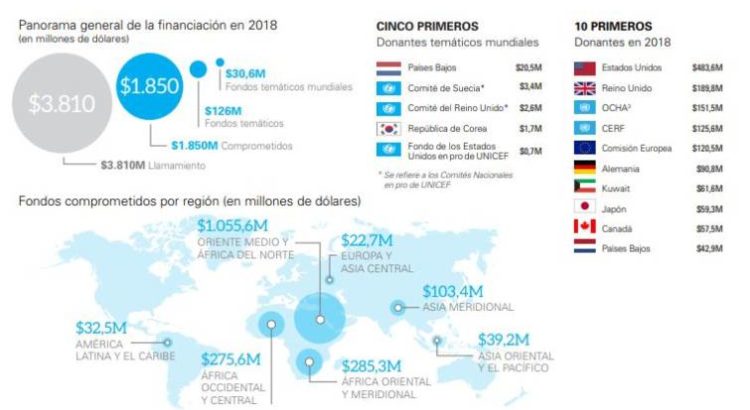
La coordinadora de emergencias del comité español de Unicef, Lorena Cobas, y la coordinadora del comité catalán de Unicef, Quima Oliver, han presentado el informe Acción humanitaria para la infancia 2019de la organización, que en 2018 prestó servicios de salud mental y apoyo psicosocial a más de 3,1 millones de niños y cuidadores. Cobas y Oliver han resaltado que para este año 2019 necesitan 3.900 millones de dólares para atender a 73 millones de personas, 41 de ellos niños en 59 países, y han alertado sobre las trágicas situaciones que atraviesa la infancia en Bangladesh, por la persecución a los rohingyas, en Sudán, Siria, Congo y Yemen, por los conflictos armados.«Cada vez hay más problemas para proteger a los niños y niñas», ha advertido Quima Oliver, que ha destacado la situación de los menores de estos países, ya que «son los más vulnerables en una situación de emergencia».
Por su parte, la organización ha propuesto, en el informe, una hoja de ruta para asistir a estos niños que se encuentran en situación de riesgo, habida cuenta de que se estima que son necesarios 27 años para que un país se recupere de una crisis humanitaria. El plan de acción para 2019, presentado hoy en rueda de prensa en Ginebra, busca brindar acceso a agua potable, comida, educación, y servicios sanitarios para niños estos 59 países, así como garantizar su seguridad. La principal partida, de 904 millones de dólares, se destinará a comunidades de acogida de refugiados sirios en Egipto, Jordania, Líbano, Irak y Turquía, seguida de las dirigidas a Yemen (542,3 millones de dólares), la República Democrática del Congo (326,1 millones de dólares), Siria (319,8 millones de dólares) y Sudán del Sur (179,2 millones).
Unicef aspira a lograr junto a sus donantes y socios en 2019 objetivos como apoyo psicosocial a 4 millones de niños, educación básica para 10,1 millones, la inmunización de 10,3 millones contra el sarampión o el tratamiento de 4,2 millones de menores con desnutrición aguda grave. Además, calcula que más de 34 millones de niños que viven en situaciones de conflicto y desastre, carecen de acceso a servicios de protección de la infancia, a los cuales considera «fundamental que se produzca una acción internacional considerable y sostenida».
La Fundación Gran Mariscal de Ayacucho (Fundayacucho) dio inicio a la convocatoria de Becas de los acuerdos China- Venezuela.
Fundayacucho está haciendo un llaado a los jóvenes profesionales, docentes e investigadores venezolanos, sobre el inicio de la convocatoria pública y abierta para cursar estudios en especialidades, maestrías y doctorados en áreas productivas que permitan sustituir el modelo económico rentista a un nuevo modelo económico- productivo para el desarrollo del país.
Se da cumplimiento con los lineamientos emitidos por el Presidente Constitucional, Nicolás Maduro; en aras de fortalecer la economía nacional a través de los 15 Motores Productivos que conforman la Agenda Económica Bolivariana.
Las áreas ofertadas en este proceso son: Ingeniería, Construcción, Ingeniería e Innovación Automotriz, Minerales, Metalmecánica y acero, Diseño Industrial, Tecnologías de la Información y la Comunicación, Nanociencia y Nanotecnología, Biotecnología, Ciencia y Tecnología Espacial; Ciencias Básicas, Biología, Física, Química; Ciencias del Agro y del Mar, Agricultura y Seguridad Alimentaria, Ciencias Sociales, Economía, Comercio Internacional y especialidades en el marco de los 15 Motores Productivos.
OtrasVocesenEducacion.org existe gracias al esfuerzo voluntario e independiente de un pequeño grupo de docentes que decidimos soñar con un espacio abierto de intercambio y debate.
¡Ayúdanos a mantener abiertas las puertas de esta aula!





 Users Today : 8
 Total Users : 35460271
 Views Today : 9
 Total views : 3418977