Page 926 of 1655
1 924 925 926 927 928 1.655

Reino Unido: University rankings: good intentions, image polishing and more bureaucracy

Europa/Reino Unido/Junio del 2017/Noticias/https://theconversation.com/


Some UK universities will be cheering, some groaning, after the release of rankings under the Teaching Excellence Framework (TEF). My own university received a silver, so we’re shrugging. Despite all these reactions, we don’t know if we can expect any impact on the quality of teaching. What we do know, however, is that it will lead to a large-scale image polishing, the mushrooming of rankings-related bureaucracy, judicious gaming of the new rules, and cynicism amongst professors and lecturers.

When the universities minister, Jo Johnson, announced the TEF, he had good intentions. He hoped to address the widely recognised problem that academics were rewarded for obscure research read by a handful of people. Teaching commitments were being neglected and Johnson worried this meant that students suffered.

Now, those students can see if their £9,000-a-year tuition fees are spent on gold, silver or bronze-rated universities. The government hopes this will create transparency and allow for more informed choices. Johnson also hoped that the rankings would also drive up teaching quality across the sector. I have spent much of my academic career studying how knowledge-intensive organisations, including universities, build reputations and respond to new challenges. I fear that Johnson may be disappointed.
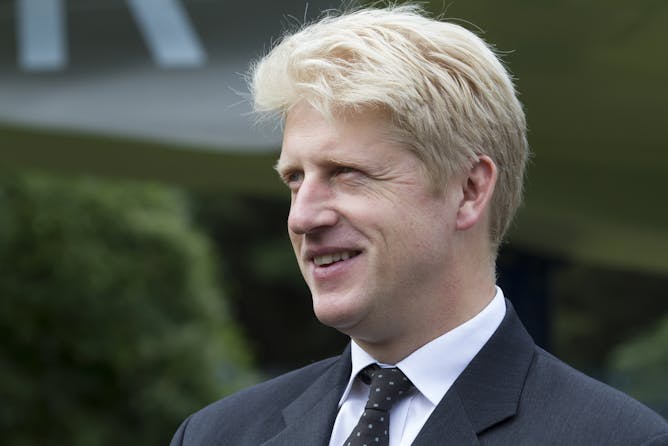
How will Jo Johnson define success? Keith Larby/Shutterstock

Quibbles

Of course this isn’t the first rankings system. In 1910, James McKeen Cattell’s directory, American Men of Science, ranked US institutions on the basis of the concentration of distinguished people. In 1983, the US News and World Report Best College Ranking attempted a comprehensive national ranking. Since 2003, there has been a flowering of global ranking systems, including the Academic Ranking of World Universities, the THE-Thomson Reuters World University Ranking and QS World University Rankings.

There have always been quibbles over whether these are meaningful indicators of university quality. How reliable are they? Are the right questions being asked? How do they deal with missing information? How are different indicators weighted? How much should small differences affect relative ranking? The TEF now faces the same questions.

In truth though, rankings are more about perception than performance: more about PR than getting accurate information about how a university operates. The results will make it on to promotional material one way or another – however the rankings come out. When the results of the most recent Research Excellence Framework was announced, I read an email from one disappointed dean who nevertheless saw cause to celebrate his achievement – of ensuring the school was ranked at the top of the list in the West Midlands.

Pulling in the punters. Sean Locke Photography

These image-polishing activities are not in vain. An OECD study found that students do indeed use rankings as a way to filter information about institutions. One US study found that rankings had a genuine effect on the number of student applications.

Impact assessment

Aside from PR puffery, do rankings actually affect how universities operate? Well, yes. But that may not be a good thing. Generally speaking, as soon as you create a ranking system, you also create a whole system for gaming the rankings.

In some cases, this has involved outright lying as institutions have fabricated statistics about various things including graduation rates, staff-student ratios and test scores. This is relatively rare. What is more common is known in US law schools as “jukin’ the stats” – manipulating the results to get a favourable ranking.

Common tricks include bringing in students who you know will perform well, will feel satisfied and go on to earn high salaries. This of course might boost your scores, but it can mean many “non-traditional” students face discrimination.

One effect of the gaming of the system is that universities become increasingly standardised. To fit in with rankings, universities can spend big on building up attributes and offerings which they hope will push them up the table.

We can see this effect from the creation of global systems such as the Shanghai rankings have encouraged universities across the world to model themselves on large US science-intensive universities. The Finnish government ploughed tens of millions into merging three institutions in Helsinki to create a “Nordic MIT”, an exercise in reputation-building with the aim of improving its standing in the rankings. Of course, this may turn out to be a wonderful investment for the university and students alike, but you have to wonder about the fragile motivation behind it.

In other cases, it has led to universities putting on the appearance that they have changed. The French government recently formed a single research-intensive university in Paris by pushing together individual institutions in the region. This changed little about how the institution operated. But it did create a new brand which could climb up the global rankings.

Rankings rituals

Rankings have also created vast bureaucracies. Many universities have whole offices entirely devoted to processing and dealing with the wide range of accreditation and ranking exercises in which they participate. Rankings often require academics and administrators to engage in shallow bureaucratic rituals. As a result, faculty time is taken up with tasks that do nothing to increase the quality of teaching or research, but simply grease the wheels of the rankings process. Academics might find themselves inputting data on fleeting interaction with students, laboriously documenting the most minor “teaching innovations” or attending poor-quality teacher training courses.

That’s where the cynicism sets in. In research on business schools, we found that academics would often be deeply cynical about their role in producing the rankings, but would participate in the process anyway. Many talked about it as “playing the game”, helping to pull in the punters by whatever means necessary.

It is a possibility that the TEF will drive up teaching quality in UK universities, but the certainties are less benign. And it must be a concern that the troubling baggage of rankings systems – the gaming, the bureaucracy, the cynicism – will end up undermining that primary goal.


Fuente

https://theconversation.com/university-rankings-good-intentions-image-polishing-and-more-bureaucracy-79936

Fuente imagen:

https://lh3.googleusercontent.com/KWKwT7GOKP9_1pEDRu-VM8VwqDe41CBgQkYNjuhFLHg7vpHbSwmMj5iRA9ZNiMxvL8lmsuQ=s85


 

Comparte este contenido:

España: Educación congela todas las tasas universitarias

Europa/España/Junio del 2017/Noticias/http://www.lne.es

La Educación congela todas las tasas universitarias pero el Rector juzga insuficiente la medida

onsejería de Educación congela todos los precios de grado y máster, tanto en primera como en sucesivas matrículas. Así, el Ejecutivo permitirá fraccionar los pagos en cinco plazos para facilitar su abono a las familias en situaciones económicas más desfavorecidas. La reivindicación, que mantenía en pie de guerra a los alumnos, llevó a varios actos de protesta que tenían como objetivo el Presidente Javier Fernández y el consejero de Educación, Genaro Alonso. El último episodio que enfrentó a los estudiantes con el Gobierno fue en el mitin de Susana Díaz en Gijón.

La congelación de tasas anunciada ahora por el Ejecutivo afecta tanto en primera como en sucesivas matrículas y se aplicará a partir del curso 2017-18. En el curso recién finalizado se optó por mantener congelado por quinto año consecutivo el precio de las tasas de primera matrícula pero la novedad ahora es que se podrán fraccionar los pagos en cinco plazos, en lugar de cuatro, tanto en estudios de grado como de máster, «para facilitar su abono a las familias en situaciones socioeconómicas más desfavorecidas», subrayó el Gobierno. Y añaden que esta medida intenta paliar los efectos negativos de la crisis al tiempo que se facilitar el acceso a estudios universitarios a todo el alumnado que lo desee, independientemente de su situación socioeconómica y familiar. El precio medio por crédito en las enseñanzas de grado en Asturias se sitúa, como en cursos anteriores, en 17,13 euros.

La consejería de Educación ya había anunciado meses atrás que tenía previsto presentar próximamente al Consejo de Gobierno una propuesta para congelar los precios. Pero la medida confirmada ayer ha contrariado al rector de la Universidad de Oviedo, Santiago García Granda, quien aseguró. «Nuestra política es muy clara. Las tasas debería ser competitivas con las de las regiones vecinas y en Galicia, por ejemplo, tenemos las más bajas de toda España. Nosotros deberíamos ir también hacia niveles más bajos y ya no sólo por la simple competitividad, sino porque es importante que los jóvenes con limitaciones económicas».

García Granda, que ayer participó en Mieres en la ceremonia de clausura de los másteres, explicó que los precios de las matrículas «no deben repercutir en la calidad de los estudios. La inversión por alumno debería ser de 10.000 euros por estudiante y si cobramos menos debemos tener una aportación mayor del Principado». La congelación de tasas tampoco convence a los estudiantes que no se dan por satisfechos con la propuesta de Educación.

Fuente: http://www.lne.es/asturias/2017/06/29/educacion-congela-tasas-universitarias-rector/2127809.html

Fuente Imagen:

https://lh3.googleusercontent.com/Vj0rk9I7LwZ6Vy1YV_uZVANbkHbWTYZa8b9DgLlB0VRGj5S0XP_fEPver-lAOvjDwbl7zpY=s85

Comparte este contenido:

Reino Unido: Oxford and Cambridge ‘need to improve access for disadvantaged students’

Europa/Reino Unido/ The Guardian

Resumen: Oxford y Cambridge han fallado en reconocer el potencial de los solicitantes en desventaja y la necesidad de mejorar sus esfuerzos, de acuerdo a la politica gubernamental de darles un mayor acceso a la educación . En declaraciones emitidas en una conferencia de educación, Les Ebdon, director de la Oficina de Acceso Justo (Offa), dijo: “¿Creen que hay un acceso justo a Oxbridge? Bueno, obviamente no “. Ebdon criticó las dos universidades de élite por no utilizar sistemáticamente datos sobre los antecedentes de los solicitantes en lugar de depender de los requisitos de entrada elevadas. “Si me preguntan, ‘¿Deberían hacer más?’, La respuesta es sí, obviamente, porque tienen pocos estudiantes de los grupos más desfavorecidos, pocos estudiantes en las comidas escolares gratuitas y pocos estudiantes de diferentes grupos étnicos minorías “, dijo Ebdon. “Así que sí, que sin duda deberían estar haciendo más, y ese es mi trabajo, asegurar de que no hacen más”.

Director of Office for Fair Access praises universities’ efforts so far but says more needs to be done to identify potential in poorer applicants

Oxford and Cambridge universities have failed to recognise potential among disadvantaged applicants and need to improve their efforts, according to the government’s higher education access tsar. In outspoken remarks at an education conference, Les Ebdon, director of the Office for Fair Access (Offa), said: “Do I think there’s fair access at Oxbridge? Well, obviously not.”

Ebdon also criticised the two elite universities for failing to systematically use data on applicants’ backgrounds rather than relying on high entry requirements. “If you ask me, ‘Should they be doing more?’, the answer is yes, obviously, because they have so few students from [the most disadvantaged groups], so few students on free school meals, so few students from different ethnic minorities,” Ebdon said. “So yes, they certainly should be doing more, and that’s my job, to make sure that they do do more.”

Ebdon told the conference that as the director of fair access to education, he required Cambridge and Oxford “to do more work than anyone else” to improve access and opportunities. “They’ve moved significantly. We’re seeing the highest level of state school students at Oxbridge for over 30 years.

“It’s a real mountain to climb. Part of that mountain, of course, is the fact that typically, Oxbridge are asking for three A*s for entry, and there are very few people in state schools who get that, and that’s why it’s important they work with schools to raise attainment, because that is where the real barrier is. Having said that, you can get in to some parts of Oxbridge on lower grades, but that typically is [for] Classics.

“Oxbridge need to make a decision, and it is a decision for them as to what the balance of subjects is. They have a series of decisions to make and I actually am legally not allowed to interfere with the admissions process. But I wish they would recognise potential more than they currently do.”

A spokesperson for Oxford disputed Ebdon’s remarks, saying the university “makes extensive, systematic use of contextual data to identify high potential in students from disadvantaged backgrounds” along with outreach programmes costing £4m a year, summer schools and £8m annually in financial support.

“This is a fair and effective system, which, as Professor Ebdon says, is delivering significant progress. In 2016, 35.2% of our accepted undergraduates came from a disadvantaged category, compared to 31.5% in 2010. For 2017 entry, disadvantaged candidates have, for the first time ever, been more successful in winning offers to Oxford than the UK average,” the spokesperson said.

Cambridge also rejected Ebdon’s criticisms, saying: “Our admissions decisions are based on academic considerations alone. We aim to widen participation whilst maintaining high academic standards. The greatest barrier to participation at selective universities for students from disadvantaged backgrounds is low attainment at school.”

Cambridge also uses contextual data “to ensure that the achievements of students from disadvantaged backgrounds are assessed in their full context and that students with great academic potential are identified”, a spokesperson said

Ebdon’s comments came as his annual report on widening access to English universities was published. It says the sector is failing to do enough to encourage mature students and those taking part-time courses. Both groups have seen the biggest falls in participation since tuition fees were raised to £9,000 in 2012, and are showing few signs of recovery.

The annual review found that the proportion of students from disadvantaged families who dropped out of university after one year rose sharply in 2014-15, and was much higher than those from well-off backgrounds.

The report also showed that an undergraduate’s chances of gaining at least a 2:1 degree class varied significantly by ethnic background. While 76% of white students graduated with a first or 2:1, only 52% of black students were awarded the same degree classes.

Since you’re here …
… we have a small favour to ask. More people are reading the Guardian than ever but advertising revenues across the media are falling fast. And unlike many news organisations, we haven’t put up a paywall – we want to keep our journalism as open as we can. So you can see why we need to ask for your help. The Guardian’s independent, investigative journalism takes a lot of time, money and hard work to produce. But we do it because we believe our perspective matters – because it might well be your perspective, too.

I appreciate there not being a paywall: it is more democratic for the media to be available for all and not a commodity to be purchased by a few. I’m happy to make a contribution so others with less means still have access to information.

Fuente: https://www.theguardian.com/education/2017/jun/29/oxford-cambridge-improve-access-disadvantaged-students

Comparte este contenido:

Internacional de la Educación: La resolución de la ONU exime a los gobiernos de su responsabilidad

Prensa Internacional de la Educación

En muchos sentidos, la nueva resolución de las Naciones Unidas sobre el derecho a la educación constituye un avance positivo, pero desafortunadamente opta por el desarrollo de regulaciones relativas a los proveedores privados en lugar de instar a los gobiernos a que asuman sus responsabilidades.

Al solicitar un marco regulador para los proveedores de la educación, la resolución del Consejo de Derechos Humanos de la ONU ha abierto la puerta a la legitimación de actores con fines de lucro en el ámbito de la educación.

La Internacional de la Educación (IE) ha señalado que en lugar de fortalecer su compromiso de garantizar que los gobiernos «proporcionen fondos y recursos adecuados a la educación pública», en realidad, la ONU ha conseguido que a los gogiernos les resulte más fácil  eximirse de su obligación.

Susan Hopgood, Presidenta de la IE, dejó claro que «la existencia de la enseñanza privada no es un derecho, y en la mayoría de los casos es ideológico».

Hopgood, quien tiene previsto representar a la IE en un evento de Alto Nivel de las Naciones Unidas sobre educación, que tendrá lugar el 28 de junio en Nueva York, prosiguió aclarando que «cuando existen actores no estatales y forman parte de un sistema de reglamentación de actores no estatales y están registrados para ejercer sus actividades, estos deben cumplir un conjunto de normas mínimas».

La Internacional de la Educación sigue abogando por un sistema de reglamentación de los actores no estatales, y no para beneficio de los actores no estatales.

Fuente: https://www.ei-ie.org/spa/detail/15201/la-resoluci%C3%B3n-de-la-onu-exime-a-los-gobiernos-de-su-responsabilidad

Comparte este contenido:

En España: CERMI exige acabar con la segregación de alumnos con discapacidad, «Imaginen que hubiera escuelas por motivos étnicos»

Europa/España/Agencia Europa Press

El presidente del Comité Español de Representantes de Personas con Discapacidad (CERMI), Luis Cayo Pérez Bueno, ha exigido en la Subcomisión para el Pacto educativo del Congreso de los Diputados acabar con la «segregación» educativa de los alumnos con discapacidad, «la única que se permite», y se eduque a estos niños y jóvenes con el resto de alumnado, «sin distinciones ni separaciones aberrantes».

«Imagínense que hubiera escuelas especiales por motivos étnicos o de origen nacional. Repugnaría a la sensibilidad, al progreso moral, al imaginario colectivo de la sociedad», ha dicho Pérez Bueno a los diputados, a los que ha recordado que la separación educativa es una «gravísima violación de derechos humanos».

Pérez Bueno ha afirmado que la inclusión educativa con apoyos es un imperativo jurídico internacional de derechos y ha recordado que el 20% de los 173.797 alumnos con discapacidad estaban matriculados en educación especial en el curso 2014-2015, una proporción que se mantiene desde hace dos décadas.

«Si no hay decisión política y legislativa, no habrá inclusión», ha advertido el presidente del CERMI, que ha puesto como ejemplo a Portugal, donde solo el 2% de este alumnado está en estructuras no inclusivas y, sin embargo, en ese país «lo viven como un problema de enorme magnitud, al que buscan afanosamente soluciones».

Asimismo, ha recordado que Naciones Unidas tras la recomendación a España en 2011, en la que le pedía que ajustara el ordenamiento educativo a la Convención Internacional de los Derechos de las personas con discapacidad al resultar incompatible con este tratado, ha abierto una investigación al respecto, que, según Pérez Bueno, acabará en «condena».

Por todo ello, ha pedido a los grupos parlamentarios que la futura ley educativa resultante del pacto, ponga fin en un plazo de cinco años a la educación especial y se ponga en marcha una escolarización con apoyos desde el primer momento en que exista discapacidad (tres años).

Asimismo, ha solicitado una estructura flexible y evitar las rigideces para la progresión del alumnado con discapacidad en el sistema educativo; accesibilidad universal de los entornos y de las TIC, o la creación en el seno del Ministerio de Educación de una ‘Delegación del Gobierno para la Inclusión Educativa’.

Fuente: http://www.periodicoescuela.es/Content/Documento.aspx?params=H4sIAAAAAAAEAMtMSbH1czUwMDA0NjEzNDZQK0stKs7Mz7M1MjA0NzAzsgQJZKZVuuQnh1QWpNqmJeYUpwIAbmR2njUAAAA=WKE

Imagen tomada de: http://imagenes.lainformacion.com/2017/06/28/asuntos-sociales/discapacitados/CERMI-segregacion-discapacidad-Imaginen-escuelas_1039707795_131866009_667x375.jpg

Comparte este contenido:

La escuela de Murakami. “Lo más importante que aprendimos en ella es que las cosas más importantes no se pueden aprender allí”.

Por Jaume Carbonell

El entrecomillado del título lo escribió hace diez años en De qué hablo cuando hablo de correr (Tusquets, 2007). Los seguidores de este novelista que transita entre un singular realismo -con una clara influencia de Carver- y el surrealismo, y entre Oriente y Occidente, pueden acercarse a su reciente obra De qué hablo cuando hablo de escribir, donde cuenta cómo entró en este oficio y otros pormenores del mismo, mezclando reflexiones y jugosas anécdotas personales. Le dedica un capítulo entero a sus recuerdos escolares.

¿De qué habla en concreto? Primero, del aburrimiento. Reconoce que a menudo estaba en las nubes y que no mostraba ningún entusiasmo en los estudios. “No me interesaban o, mejor dicho, me daba cuenta que en el mundo había cosas mucho más divertidas. Leer, por ejemplo, escuchar música, ir al cine, bañarme en el mar, jugar al béisbol, con el gato,… salir con chicas y cosas por el estilo”.  Sostiene haber tenido algunos profesores excelentes que le enseñaron unas cuantas cosas interesantes pero, como balance general, considera que su aprendizaje fue tan inútil como aburrido. Algo de lo que siempre ha querido desprenderse con éxito desigual: “”Cuando mi vida de estudiante llegó a su fin, estaba tan inmensamente aburrido que lo único que quería era no aburrirme nunca más en toda mi vida. Me lo propuse con todas mis fuerzas, pero en esta vida el aburrimiento parece caer del cielo, brotar de la nada”. Pero para Murakami la lectura fue su gran escuela: ese lugar donde aprendió las cosas importantes de la vida, a su aire, sin competir con nadie para “alcanzar el primer puesto de ningún ranking.

Segundo, de la competitividad, sin duda uno de los rasgos más emblemáticos del sistema educativo nipón, sobre todo en la selección para acceder a la universidad. Cuenta que ni se esforzaba demasiado ni le gustaba competir con otros estudiantes. “No pretendo alardear, pero todos esos números que representan superioridad, como las notas, los rankings, o los valores de desviación de la media (en mi época, por fortuna, aún no se había inventado eso), me dan igual”.

Tercero, la crítica a un sistema educativo utilitarista que ahoga la libertad del individuo. Argumenta que es un fiel reflejo de las contradicciones y del  énfasis supremo que pone la sociedad japonesa en la empresa, y en cualquier otro ámbito social, a las estadísticas, orientada únicamente al logro de efectos inmediatos de utilidad y a la conformación dañina de una masa social homogénea y amorfa. “Como individuos debemos levantar un andamiaje de ideas y pensamientos libres que sirva para oponernos a un sistema de valores nocivo y peligroso basado en conceptos como la rapidez y la eficacia”.

Cuarto, el examen memorístico. “Me parece que el objetivo es meter conocimientos en la cabeza de los niños según lo que dicte el manual de turno y enseñarles una técnica para superar los exámenes y las distintas pruebas de acceso a las que han de enfrentarse a lo largo de todo el período educativo”.  El hecho de que el aprendizaje real y duradero poco tiene que ver con la adquisición del conocimiento más valioso lo ilustra de manera diáfana cuando explica que los profesores de inglés de su instituto valoraban la memorización de palabras complicadas y estructuras gramaticales complejas, al propio tiempo que obviaban la capacidad de leer un libro o de conversar con un extranjero. E insiste en el despropósito y absurdidad del abuso de la memorización mecánica: “No me parecía en absoluto útil memorizar fechas de acontecimientos del pasado, archivar palabras del inglés como si yo fuera una máquina. Los conocimientos aprendidos mecánicamente y no como un todo sistémico acaban por desaparecer y se quedan por ahí enterrados en alguna parte, en un lugar que podríamos considerar la tumba del conocimiento”.

Michelle Maria / Pixabay

Y quinto, el deseo de otra educación, la utopía. Un lugar más cálido y tranquilo, liberado de las presiones de la eficacia. donde tanto el sujeto como el sistema se puedan mover con libertad.  “Mi deseo con relación al sistema educativo es sencillo: que no aplaste la imaginación de los niños que la tienen. Eso me parece suficiente. Me gustaría que les dejasen espacio para que sus personalidades encuentren un camino propio, una forma de sobrevivir. De ser así, las escuelas se convertirían en lugares libres y enriquecedores y, por consiguiente, la sociedad terminaría por transformarse y evolucionar en la misma dirección”.

La música de la experiencia escolar revivida y reflexionada por Murakami nos suena y se repite a lo largo de la historia y de la geografía. Pero dejemos la educación para sumergirnos en otros capítulos de esta obra y otros de sus libros.

Y ya que estamos a las puertas del verano, y a modo de despedida temporal, ahí va otra recomendación bibliográfica para los amantes de la novela negra para que desconecten totalmente de su oficio: Sangre en los estantes, de Paco Camarasa (Destino, 2016), uno de los mayores especialistas en este género. Aquí encontrarán -ordenados alfabéticamente y seleccionados con mucho criterio- los grandes nombres y obras negrocriminales, amén de un rico anecdotario vivencial. Desde los clásicos -S.Holmes, D.Hammett, E.Chandler, G.Simenon, J. le Carré,…- a los contemporáneos: H.Mankell, P.Márkaris, Don Winslow, L.Padura, P.Ignacio Taibo, M.Vázquez Montalbán, L.Silva,…

Fuente: http://eldiariodelaeducacion.com/pedagogiasxxi/2017/06/21/la-escuela-de-murakami-lo-mas-importante-que-aprendimos-en-ella-es-que-las-cosas-mas-importantes-no-se-pueden-aprender-alli/

Comparte este contenido:

Global Pisa tests show how evidence-based policy can go wrong

Problems with the OECD program are raised from the input of data to interpretation of the facts, using a post-science approach to scores on maths, science and reading

Resumen:  El Programa para la Evaluación Internacional de Estudiantes (PISA) implementado por la OCDE ha sido motivo de controversia desde la publicación de sus primeros resultados en 2000. La medición de las habilidades matemáticas, ciencias y lectura de 15 años de edad, estudiantes cada tres años, PISA se basa en una amplia participación internacional. En la prueba de 2015, un máximo de 72 países se unieron al ejercicio, incluyendo aquellos fuera de la OCDE. Es común encontrar artículos en los que PISA se presenta como una medida de un país de la innovación y el crecimiento potencial . Pero tampoco es raro encontrar otros en los que las métricas utilizadas son controvertidos como irrelevante y potencialmente contraproducente. Para los defensores de la política “informado” “basado en la evidencia” o, PISA encarna los hechos desapasionados, objetivas que nutren la formulación de buenos enfoques – en este caso, en el campo de la educación. Permite realizar comparaciones entre ellos y puede ayudar a identificar las buenas prácticas que son digno de emulación. Los oponentes del programa rechazan la elección hecha por la OCDE para vincular la educación y el crecimiento económico. Mientras que esta elección se explicó al principio como una forma de mostrar el alto costo de un bajo rendimiento educativo , para algunos también encarna un encuadre neoliberal de las políticas de educación , lo que obliga al sector a adaptarse al contexto de la globalización .

The Program for International Student Assessment (Pisa) implemented by the OECD has been controversial since the publication of its first results in 2000.

Measuring the mathematics, science and reading skills of 15-year-old students every three years, Pisa relies on broad international participation. In the 2015 test, as many as 72 countries joined the exercise, including those outside the OECD.

It’s common to find articles where Pisa is presented as a measure of a country’s innovation and growth potential. But it’s also not rare to find others where the metrics used are contested as irrelevant and potentially counter-productive.

Pisa results for 2015. Source: OECD

For advocates of “evidence-based” or “informed” policy, Pisa incarnates the dispassionate, objective facts that nourish the formulation of good approaches – in this case, in the field of education. It allows for country comparisons and can help identify good practices that are worth emulating.

Opponents of the program reject the choice made by the OECD to link education and economic growth. While this choice was explained at the beginning as a way of showing the high cost of a low educational performance, for some it also embodies a neoliberal framing of education policies, which forces the sector into the context of globalization.

Post-normal science

In a new review study in the International Journal of Comparative Education and Development that I co-authored, we consider that facts such as those produced by Pisa can be viewed through the lens of post-normal science. This approach is particularly apt for assessing scientific evidence when it feeds the policy process.

Post-normal science is a problem-solving strategy for issues where “facts are uncertain, values in dispute, stakes high and decisions urgent.” The concept was created in the 1990s by Silvio Funtowicz and Jerome R Ravetz.

A key idea of the schema is “extended participation,” which suggests opening analyses to experts from different disciplines and forms of scholarship (one of the demands of Pisa’s critics). It also points toward the active participation of relevant and legitimate stakeholders.

According to our review, a post-normal science reading of the Pisa survey and its implications identifies a rich mix of methodological and ideological issues – in keeping with its tenet that the distinction between facts and values becomes problematic when the stakes are high.

Pisa gives scores to participating countries so they can be ranked from best to worst for the skills measured, as well as measuring how they stand globally over all skills.

Too much importance is being given to these scores and rankings, given the many non-transparent assumptions made by the OECD in their construction.

We don’t know, for example, how choices are made to include or exclude questions. There is also an issue about how many and which students participate in the test. The latter issue generates the so-called “non-response bias” and noticeably affects results.

Our review discusses the case of Pisa non-response for England, where the bias turned out to be twice the size of the OECD declared standard error in 2003. This case illustrates how the results are much more uncertain and dependent on non-educational variables than it appears on a superficial reading.

In other words, the margin of error on the scores provided by the OECD is underestimated, and the ranking of countries from best to worst is more open to interpretation than one would understand from OECD analyses.

To resolve this issue, the OECD should provide Pisa users with a structured sensitivity analysis that takes all the variables in the ranking into account.

Ideally this analysis could be made by the users themselves, but this would only be possible if the OECD made all data available, which is not the case at present.

The world view selected for the Pisa analysis is also contentious. A main issue with Pisa’s ambition to measure life skills needed to function in knowledge societies, for example, is that these skill are assumed to be the same across countries and cultures. Nor is it clear that all societies can safely be assumed to be destined to become “knowledge-oriented.”

Other fundamental questions emerged from our reading, too. Is it acceptable to see education as an input into growth? Does Pisa “flatten” curricula – narrowing our collective imagination regarding what education is and ought to be about – and encourage focusing on a subset of educational topics at the expenses of others?

As noted by our study, country comparison is achieved by “ignoring the great diversity of curricula across the participating countries – diversity which might in fact be a source of country-specific creativity and well-being.”

Urgency and caution

The PISA controversy is a helpful reminder that citizens in democracies must be critical of the facts that feed into public discourse. This predates any alarm about the emergence of the purported post-truth society, though that has made these discussions more urgent.

Facts must be taken with caution. For example, Pisa scores have supported such inferences as this paragraph in a 2014 study prepared for the European Commission:

If every EU Member State achieved an improvement of 25 points in its PISA score (which is what for example Germany and Poland achieved over the last decade), the GDP of the whole EU would increase by between 4% and 6% by 2090; such an 6% increase would correspond to 35 trillion Euro

The authoritative tone and use of crisp numbers here suggest causality – from education to growth – and an air of accuracy in a claim that is more like an act of faith than the result of scientific processes.

Our review of the Pisa controversy also highlighted a problem of power in the use of evidence. With Pisa, the OECD – an international organization composed of unelected officers and scholars – has constructed a neoliberal framing of education policy and used its authority to dominate the global conversation, potentially at the expense of national or regional authorities and institutions.

This “global super-ministry of education,” in the words of an educator quoted in our study, effectively marginalizes alternative visions of education that would normally hold weight.

Thus the idea of education as personal development and fulfilment, what Germans call bildung, becomes invisible, because it cannot be used as an internationally comparable metric.

Different skills

A full discussion of all points of controversy would take more space than this contribution allows, and should touch on the tension in using metrics to appreciate cognitive skills, as well as the need for other skills, such as critical thinking, intrinsic motivation, resilience, self-management, resourcefulness, and relationship-building.

The OECD is unlikely to suspend or abolish the Pisa study, in part because it serves a function. Before Pisa, a country’s educational development was approximated by the average number of years of schooling there.

Pisa raised awareness of other factors beyond classroom hours, such as literacy, that affect students’ educational outcomes. For those who study education, standardized tests like Pisa also offer a useful instrument for comparing within and among countries.

Still, our study reinforces that democratic societies view “evidence-based policy” with a critical eye, querying who produced the evidence and whose interests are served by it. Pisa is a strong example of the power asymmetries inherent in producing facts to inform policy.

In this case the OECD, possibly the most muscular player in the arena of international education policy, can frame evidence around its preferred norms and impose them on public discourse.

Andrea Saltelli, Adjunct Professor Centre for the Study of the Sciences and the Humanities, University of Bergen, University of Bergen

This article was originally published on The Conversation. Read the original article.

The ConversationFuente: http://www.atimes.com/article/global-pisa-tests-show-evidence-based-policy-can-go-wrong/

Comparte este contenido:
Page 926 of 1655
1 924 925 926 927 928 1.655