Saltar al contenido principal
Page 831 of 6796
1 829 830 831 832 833 6.796

Entrevista a Moira Millán, weichafe mapuche «Resistencia es nuestra lucha contra el terricidio»

Por Luz Ailín Báez
Fuentes: Mundo Lesa

El 22 de mayo es el Día de Acción Global contra el Terricidio. Entrevistamos a Moira Millán,
weichafe mapuche, integrante del Movimiento de Mujeres Indígenas por el Buen Vivir, para hablar sobre la resistencia identitaria, ancestral y antipatriarcal que llevan adelante las mujeres
indígenas del Wallmapu contra el terricidio.

“Hermanas. Estamos llegando al final de este recorrido de casi 2.000 kilómetros. Hoy nos estáabrazando la lluvia. No es cualquier lluvia. Es la lluvia que en nuestro pueblo se interpreta comofuerza de limpieza. No es la lluvia que nos empuja con fuerza a escondernos sino que nos invita a salir a limpiarnos. Estamos agradecidas porque hoy la fuerza del cosmos, la fuerza de lanaturaleza se está expresando. Aquí con nosotras están llegando millones de personas de todo el mundo que a lo largo de estos últimos tiempos han perdido sus seres amados por culpa delterricidio, por todos los muertos y las muertas que esta pandemia se ha llevado. Por todos losmuertos y las muertas que el extractivismo ha arrancado. Por todas nuestras muertas violadas y asesinadas. Por toda la niñez que se muere de hambre, desnutrida. Por cada animal, cada planta, cada ser que fue arrancado por este maldito sistema economicista, depredador. Este sistema de muerte, ha venido la lluvia a limpiarnos, a limpiar el odio la indignación y la rabia para convertirla en fuerza y coraje, a limpiarnos del miedo, lo principal que ha inoculado este sistema. Tenemos la responsabilidad histórica de generar una revolución mundial que detenga el terricidio. Hoy la lluvia nos da la bienvenida”.

Hace frío pero el calor de sus palabras tornan cálido cualquier lugar. Quizás ésta -y no la entrevista que leerán- sea la imagen que mejor la pinta de cuerpo y alma.

WEICHAFE

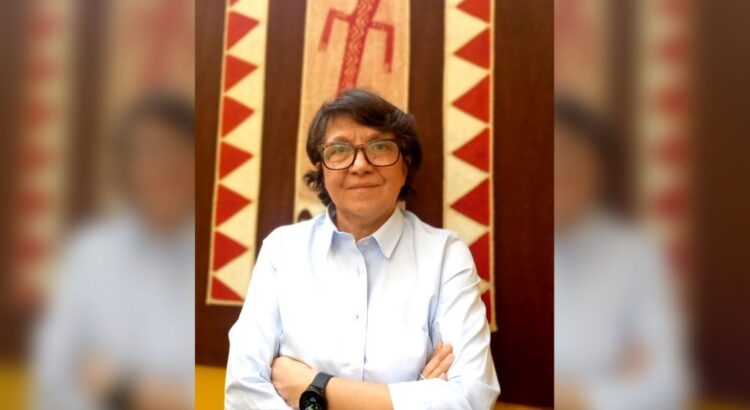
Ella es Moira Millán, weichafe mapuche, integrante fundadora del Movimiento de Mujeres Indígenas por el Buen Vivir. Nacida en El Maitén -departamento Cushamen a orillas del río Chubut- en Agosto de 1970 y en el seno de una familia evangélica, Moira Millán se preparaba para ser, quizás, una pastora. Sin embargo, a los 18 años fue a visitar a unos tíos abuelos a la comunidad mapuche de Futa Anekón, cerca de Ingeniero Jacobacci, Río Negro, y participó de una ceremonia ancestral donde terminó asumiendo su identidad y abrazando la lucha ancestral originaria:

“Llegué justo antes del Camarikún– una ceremonia bellísima de 4 días que se hace anualmente, donde se le hace ofrenda a la tierra y se repacta la convivencia armónica con ella. Se enciende el fuego sagrado y durante 4 días purruqueamos, danzamos y cantamos alrededor del fuego sagrado, le hablamos a los elementos a través del mapundungún, compartimos los alimentos, dormimos a la intemperie en ramadas, nos encontramos con amigos de otras comunidades, con las lamngen[hermanas] de todas las comunidades, hablamos las noticias. El último día recordamos a los muertos y lloramos. Cuando empieza a llover (porque si se hace bien la ceremonia, siempre llueve) traemos a los recién nacidos y danzamos alrededor del fuego sagrado con ellos, como un bautismo de la tierra. Somos tierra. Recuerdo, a mis 18 años, encontrándome con mi pueblo a través de esa espiritualidad. Después fue caminar la cultura, la lucha política, territorial. Y en esto estoy. Fue un camino de ida el encuentro con mi pueblo”, recuerda Moira hoy con 50 años.

A lo largo de toda la entrevista, Moira Millán traducirá de forma casi automática cada una de las palabras del mapuche al español. Tenía 30 años cuando asumió su condición de weichafe[guerrera] durante otra ceremonia ancestral presidida por un machi [curandero]. Llegaba a esa instancia con “todo un caminar”, una deconstrucción y reconstrucción identitaria impactante: A los 18 años había asumido su identidad mapuche, a los 21 años empezó a luchar y a los 29 estaba participando activamente en una recuperación territorial, con tres hijos a cuesta.

“En el año 1999 fui parte con mi madre y hermanas de la recuperación territorial del [actualmente denominado] Lof Pillán Mahuiza. En su inmensa mayoría fuimos mujeres las que lo recuperamos ese territorio. Fue sustancial el cambio de haber asumido mi condición de weichafe espiritualmente porque empecé a confiar, no tuve dudas”.

En sus redes sociales e intervenciones en eventos sociales y mediáticos, Moira se presenta como weichafe mapuche y contextualiza la razón:

“El mundo mapuche -y el mundo indígena en general- se estructura de una manera muy diferente a la sociedad colonial. Las repúblicas coloniales ordenan su vida política y social de acuerdo a una estructura que tiene que ver con la meritocracia, la construcción de líderes y referentes, construyendo siempre un poder vertical. En el mundo mapuche nos ordenamos a partir de la tierra, de la mapu, que tiene espíritus que van diciendo cuál es tu newen, cuál es tu fuerza, la que te habita. Entonces hay personas que nacen como hombres o mujeres-medicina. No estudian para ser machi [médique/curandere], nadie los vota para eso. Nacen siendo machi. Y encontrándose con esos püllü, esos espíritus de los que te hablo, asumen su newen, su fuerza de machi. Los longkos [líderes espirituales y políticos] no son elegidos por voto, no van a estudiar a la facultad para ser longkos. Nacen con espíritu de longkos. Y finalmente asumen el rol que les corresponde. Weichafe [guerrera, luchadora], tampoco se entrena, se estudia o se “llega” por voto. Nacés siendo weichafe. Yo nací siendo weichafe. El espíritu se me reveló a través de una ceremonia de machi cuando era joven y me explicaron que todos los peuma, todos los sueños que me llegaban cuando descansaba y me traían información y me indicaban a dónde tenía que ir y qué es lo que iba a pasar, era porque yo era weichafe y un espíritu muy antiguo vive en mí y me lleva por estos caminos de la lucha.

A veces voy a lugares terribles, donde hay tremenda violencia, misoginia, múltiplesopresiones, injusticias que son inenarrables de tanto dolor. Podría elegir quedarme pero mi espíritu se enfermaría. Entonces tengo que obedecer. Asumí mi condición de weichafe. Y no es fácil porque también soy mamá y ahora abuela”.

¿Qué tuvo que ocurrir para que empezaras a caminar y finalmente te aceptaras comomapuche?

Yo era un subproducto del proceso de argentinización -un constructo político social- al igual que todos los indígenas en este país. Se me había enseñado de muy pequeña que yo era argentina, que mi idioma era el español. Cuando era chiquitita, uno de los seres que más amé en la vida fue mi abuela materna. Ella venía a visitarnos y venía vestida de mapuche y hablaba mapundungún [mapuche] y aonikash [tehuelche] también, porque ella era mapuchetehuelche. Y me enseñaba a cantar. Yo cantaba mientras la hacía caminar, porque ella era cieguita. Y en la escuela me enseñaban que habían matado a todos los indígenas de todos los pueblos y no quedaba nadie. Y todos mis compañeritos eran descendientes de inmigrantes. Y cuando armaban los grupos de trabajos escolares, yo no los quería hacer en mi casa para que no vieran a mi abuela. Yo ocultaba a mi abuela, me daba vergüenza y eso me dolió como un puñal cuando fui más grande porque pensaba ¿cómo puedo estar negando al ser que más amo y admiro? Fijate la perversidad del Estado hegemónico racista que lleva a una criaturita de 8 años a negar al ser que más ama sólo porque hay un discurso racista enquistado en el modelo educativo. Entonces ahí empecé a rebelarme contra eso.

CAMINAR

Moira plantea el proceso de asumirse como mapuche como “caminar la lucha de la nación mapuche hacia la libre determinación”. En 2011 empezó a filmar un documental con Florencia Copley: “Pupila de mujer, mirada de la tierra”, un documental que cuenta su historia como mujer mapuche que va al encuentro de otras mujeres de pueblos originarios, recorriendo la Argentina. “Fue muy fuerte para mi ir a los territorios, escuchar los testimonios de despojos, de violación, de violencia racista machista hacia las mujeres indígenas de todo el país. Ahí me di cuenta que nos teníamos que organizar”. Tras varias reuniones entre mujeres hermanas, surge la idea de armar una marcha hacia Buenos Aires “para dar visibilidad de nuestra existencia como mujeres indígenas y emplazar la agenda que nosotras creíamos que era urgente y necesaria”, explica Millán, fundadora e ideóloga del Movimiento de Mujeres Indígenas por el Buen Vivir.

ANTRIPATRIARCAL

Millán describe al Movimiento como hermoso y autogestivo. “No le pedimos ni un centavo al sistema, ni al empresariado ni a los gobiernos. Completamente autónomo. Funcionamos con la solidaridad y el amor de la gente que apoya nuestro caminar. No somos feministas. Somos un movimiento antipatriarcal, anticlerical. Un movimiento horizontal, plurinacional que busca la unidad de los pueblos hacia el Buen Vivir”. Ante la sorpresa de quien suscribe, explica por qué no se definen como feministas:

“En este caminar que estamos haciendo, venimos replanteándolo todo. Decimos: no se puedehacer una lucha antipatriarcal si no es anticolonial, antirracista. El feminismo es una construcción antropocéntrica de la lógica huinca [blanca, europea] del otro lado del charco. Esta lógica huinca entiende el problema del patriarcado como un problema de poder, como un problema de equidad social, de género. Nosotras entendemos el patriarcado como un aspecto más del coloniaje huinca. Antes de que llegara el Estado huinca y esa cultura de afuera había un reconocimiento de múltiples géneros, porque el mundo espiritual mapuche y el mundo espiritual de los pueblos originarios es tremendamente profundo y no binario. El binarismo lo trajo la colonialidad. Si asumimos la identidad o categoría feminista, reducimos un montónnuestra visión como mujeres indígenas. Y al contrario: el feminismo debería ser permeado por nuestra lógica, porque ahí aparece una cuestión muy importante que es el ordenamiento espiritual de las fuerzas de la tierra que nos habita”. Y agrega:

“Cuando nosotras decimos que somos cuerpo territorio no es poesía, es verdad. El territorio nos habita. El territorio tiene un ecosistema espiritual sumamente complejo, vastísimo, con una diversidad de fuentes distintas, que habita nuestras cuerpas. Y entonces somos lo que el territorio decide. Y ahí ya la lógica antropocéntrica se va al carajo. Y ahí ya no hay manera de poder explicarlo desde las estructuras racionalistas de esta matriz civilizatoria. Nos quedaríamos siempre cortas: si fuéramos ambientalistas nos quedamos cortas, si fueramos feministas nos quedamos cortas. ¿Qué somos? Somos mujeres indígenas y proponemos la recuperación del orden cosmogónico, la feminización cosmogónica, que es mucho más trascendente que el poder feminista: estamos hablando de restituir la fuerza femenina de la tierra, de los espíritus de la tierra, a todo el orden social, político, cultural, biológico incluso.

Estamos hablando de otra cosa más fuerte y más poderosa. Ancestralmente todas las mujeres del mundo teníamos fuerzas ancestrales que nos traían videncia, capacidad de traslación, éramos mujeres-medicina. Era impresionante el poder. Planteamos la Cordillera No Frontera con la cuestión del derecho a la medicina no ancestral, con el derecho a abortar, el derecho a parir, a sanar. Por eso hablamos de la libre determinación de nuestras cuerpas y que el aborto queda secuestrado entre el método quirúrgico y el método químico, con lo cual seguimos alimentando a los grandes laboratorios y al comercio de la medicina y no reconocen lossistemas alternativos naturales como el de la medicina indígena y la homeopatía, sin embargo eso no entra en debate porque estamos hablando de costos ínfimos, y ya no sería un negocio, sería un derecho. Entonces se legisla sobre los potenciales negocios, no sobre los derechos. Eso es un debate que quedará pendiente pero sería bueno que lo recojan las mujeres en general que se sientan identificadas con estos que decimos y que nos ayuden a caminarlo y que puedan multiplicarlo en otros frentes. Hubo que dominar ese poder para que el patriarcado se impusiera. Ese poder habitando las cuerpas de las mujeres resultaba sumamente amenazador para el poder del hombre. El feminismo no quiere recuperar eso, quiere seguir analizando el problema desde el reduccionismo que el patriarcado le permite”.

-En febrero de 2020 el Movimiento de Mujeres Indígenas por el Buen Vivir organizó el primer campamento climático llamado “Pueblos contra el terricidio”, en el territorio que ustedes recuperaron hace ya 21 años, el Lof Pillán Mahuiza. ¿Cómo llegaron a esto?

-Caminando los territorios. Tardé casi 3 años en recorrer todos los territorios de todo el país. Desde Ushuaia a la Quiaca. Es un movimiento sin precedentes en la Argentina: somos las mujeres indígenas organizadas y estamos en todo el país. En el 2015 hicimos la primera gran marcha [hacia el monumento a Julio Argentino Roca en Perú al 100, y luego al CongresoNacional] con 15 mil personas que participaron. Luego realizamos una ocupación pacífica del Ministerio del Interior en octubre de 2019. Y en febrero de 2020 se hace este campamento climático, en los 20 años del aniversario del Lof Pillán Mahuiza. Fue un salto importante para el Movimiento de Mujeres Indígenas porque ahora tenemos proyección internacional.

Empezamos a invitar compañeres de todo el mundo para emplazar el concepto terricidio como un crimen de lesa humanidad y lesa naturaleza e hicimos nacer allí al movimiento de Pueblos contra el Terricidio.

-¿Qué es el terricidio?

-El terricidio es la síntesis de todos los mecanismos de muerte que encontró el sistema para arrancar la vida del planeta. Implica una visión tridimensional: no es solamente el espacio tangible, es decir los ecosistemas, sino también los humanos como pueblos habitando los ecosistemas, y también la cultura que emana de ellos, el ecosistema espiritual. Entonces decimos: el terricidio es la síntesis de los genocidios, ecocidios y epistemicidios. Y el epistemicidio lo planteamos como algo estructural: en la lógica de entender “el arte-habitar de los pueblos indígenas” aparece el mundo perceptible, el mundo espiritual como algo estructurante de la vida. Entonces decimos: cuando se asesina la tierra, se asesina también los lugares sagrados y con él, los idiomas, las formas de ceremoniar, las formas de hablarle a la naturaleza, se está asesinando una alternativa de vida en el mundo. Y eso es gravísimo. La gente dice: ¿ por qué inventan una palabra si ya existe el término ecocidio? Porque ecocidio queda corto. Y es importante darle la dimensión que verdaderamente tiene.

-¿Que es resistir para vos?

-Rita Segato me hablaba de un compañero de ella que decía Resistir y ReExistir. Resistir es vivir porfiadamente. Es arrancarle al enemigo nuestro derecho a vivir. No hay mejor expresión de triunfo frente al enemigo que nos ha querido exterminar, que estar vivos. De eso se trata nuestra lucha contra el terricidio, con desesperación por la vida. Por abrazar la vida y abrazar con mucho fuerza el modo de entender la vida que tenemos los pueblos indígenas. Eso es resistir. Cuando vamos a recuperar territorio estamos resistiendo. Nos resistimos a la muerte.

Abrazamos la vida. Cuando luchamos porque se reconozca nuestro derecho a la salud desde nuestras plantas, nos resistimos a morir con los fármacos y con toda la contaminación del huinca. Abrazamos la vida cuando decimos no a los modelos productivos extractivistas, contaminantes y sembramos la tierra y tratamos de compartir los alimentos de otros lugares.

Abrazamos la vida y resistimos todo el tiempo. Incluso cuando nos descolonizamos de las religiones opresoras y cuando expresamos nuestra verdadera espiritualidad. Resistimos cuando tenemos peumas [sueños] y nos juntamos en círculos, contamos nuestros sueños y sabemos que son oráculos en nuestro espíritu. Orgullosas de nuestras ancestras que murieron para que hoy estemos acá, vivas. Por eso entiendo lo de Vivas Nos Queremos, más que el Ni una menos.

Fuente: http://www.mundolesa.com/notas/159-resistencia-es-nuestra-lucha-contra-el-terricidio-por-luz-ailin-baez

Comparte este contenido:

En el día del niño traemos seis ideas de propósitos para compartir con la familia

En el día del niño traemos seis ideas de propósitos para compartir con la familia

Los pequeños también pueden enlistar sus metas, hacer este ejercicio puede llegar a comprometerlos aún más para cumplirlos.

Los niños pueden realizar propósitos como parte de una divertida actividad manual.

Usted, como padre de familia, puede que quiera que su hijo o hija se comprometa con una meta o simplemente poder inducirlo a realizar ciertos cambios de una manera fluida y lo menos trastabillada posible. Por ejemplo, que deje de comer tantos dulces e incluya más verduras en su dieta diaria. Por más que esto es también responsabilidad de los adultos, la voluntad que el pequeño ponga es clave por los procesos más pequeños y fáciles, así como para los complejos.

Por ello, una buena alternativa es que los niños escriban propósitos con los que se quieren comprometer por lo que queda del año. Esto podría parecer una actividad para el final o inicio del año, sin embargo, nunca es tarde para tener y encaminar las metas, sobre todo para realizar el primer paso que es fijarlas, y lo podemos hacer en un papel para que no solo quede en una idea.

Aquí le presentaremos seis propósitos guía para que se los pueda plantear a su pequeña o pequeño; pero en esa lista también deberá incluir propósitos que verdaderamente ellos quieran intentar cumplir, mas no que predominen sus deseos como padre. Poco a poco el infante irá desarrollando sus perspectivas y deseos de metas. No olvide que el método de compensación por haber cumplido los propósitos es válido y actúa como motivación para ellos, todo con mesura.

Propósitos para los niños:

1) Enfocarse más en los estudios

Los tiempos han cambiado y la casa es la nueva escuela, por ello, los pequeños pueden perder concentración de manera rápida (también puede ser producto de la falta de motivación). Sin embargo, si su hijo o hija acostumbra a pararse mucho durante las clases y no prestar atención, o no hace las tareas, sentarse y escribir este pr opósito puede ser de gran ayuda.

2) Disfrutar más del tiempo que pasamos con los hermanos

Al pasar más tiempo en casa las peleas entre hermanos podrían incrementar, por ello, convivir en paz y armonía y poner la voluntad en intentarlo es importante.

3) Hacer cosas en casa

Ayudar en casa desde pequeño es parte de la formación. Los pequeños y jóvenes pueden contribuir con tareas del hogar como poner la mesa, barrer, limpiar un anaquel, etc., de acuerdo a la edad y sus capacidades. Así también desarrollarán el sentido de trabajo en equipo, cuando todos los integrantes se repartan funciones.

4) Leer más libros físicos o jugar en el parque

Las nuevas tecnologías han atrapado a los pequeños por las atractivas imágenes y formas de jugar y consumir contenido, pero refrescarse de eso también es importante. Así que leer un buen libro en físico o salir a jugar con los amigos por un rato también es una opción saludable.

5) Aprender a hacer cosas solos

Esto es perfecto para los pequeños que ya se van haciendo mayores. Intentar hacer, por ejemplo, los deberes o un rompecabezas solos les dará autonomía y confianza en sí mismos. También podemos adaptarlo a los más pequeños: ponerse los zapatos, quitarse el abrigo, ir al baño solos.

6) Ser solidario

Hay muchas formas de ser solidario. Podemos ayudar a nuestra vecina a subir la compra a casa, podemos donar juguetes en Navidad y en cualquier otra época del año, podemos ayudar a un niño que se ha caído en el parque, recoger alimentos para los más necesitados o visitar a un familiar en la residencia de ancianos. Aprender a ser solidarios y a hacer cosas buenas por los demás nos ayudará a nosotros mismos a ser mejores personas. (I)

Fuente: https://www.guiainfantil.com

Fuente de la Información: https://www.eluniverso.com/larevista/orientacion/en-el-dia-del-nino-traemos-seis-ideas-de-propositos-para-compartir-con-la-familia-nota/

Comparte este contenido:

How to help end rural America’s physician shortage

How to help end rural America’s physician shortage

Physician shortages in rural America are sustaining. To help fix this, states should remove some barriers to entry for foreign physicians.

Access to rural hospitals has been deteriorating for years. Low patient volumes and substantial reliance on government payers have made rural hospitals increasingly susceptible to pandemic-induced financial pressures. It all came to a head in 2020, when a record high of 20 rural hospitals closed in a single year — that’s 14% of all hospital closures in the last decade.

The loss of so many healthcare facilities has unleashed a cascade of repercussions, one of them being an acute physician shortage. This has led to higher prices, increased disparities in health outcomes, and reduced access to specialty care for vulnerable populations. Rural Medicare beneficiaries are 18% less likely to receive appropriate medications after hospitalizations, and fewer doctors mean outrageous commute times for rural residents. No one should have to travel 45 minutes to get to their mother who’s having a stroke in the nearest emergency room.

Luckily, there’s a ready supply of doctors that states could tap into. State legislators should consider removing the requirement of repeating a residency program for foreign doctors to practice in the states.

The push is already happening. In Missouri, Rep. Derek Grier is attempting to empower foreign physicians by allowing regulatory state boards to waive residency requirements for international applicants who meet the state’s safety, competency, and conduct standards. It makes sense that this would happen in Missouri. Forty-four of the state’s 114 counties are without a single hospital. To ignore this problem would be irresponsible. Other states should follow suit.

The national doctor shortage is projected to reach 159,000 by 2033. That’s ridiculous, especially given the 263,000 medically trained immigrants in America who are stuck in positions beneath their skill levels. We have more than enough supply to address this growing crisis. So, why are we refusing to use these workers?

Unfortunately, to a certain degree, this crisis is being self-inflicted by rigid review processes influenced by American doctor associations. It seems wrong that the American Medical Association mandates foreign physicians repeat steps in their training when these doctors often come from countries with better healthcare outcomes than ours.

For a physician who completed a decade of training in Australia, Switzerland, or the United Kingdom, the prospect of repeating a residency for another three years is completely unnecessary. Additionally, there are simply not enough U.S. residency programs to support the influx of foreign physicians in a reliable way. In 2020, nearly 45,000 qualified medical school graduates applied for only 37,000 residency positions. Those who completed their educational training abroad faced the harshest odds.

Rural healthcare systems are either fragile or nonexistent. The road to recovery for rural communities in post-pandemic America is steep. It’s thus far past time for state legislators to reevaluate the metric of accreditation.

Tanner Aliff is a Young Voices associate contributor and healthcare policy research fellow.


Fuente de la Información: https://www.washingtonexaminer.com/opinion/how-to-help-end-rural-americas-physician-shortage

Comparte este contenido:

The Indian Children Orphaned By COVID-19

The Indian Children Orphaned By COVID-19

Twin sisters Tripti and Pari, who lost both their parents due to the COVID-19 coronavirus, play with their toys at a relative’s home in Bhopal on 11 May, 2021. (AFP Photo)

Five-year-old Pratham and his 10-month-old brother Ayush lost their father to COVID in April. Days later, at a different Delhi hospital, they lost their mother.

Their world had changed and they didn’t even know it. They couldn’t understand why their parents were taking so long to come home. Relatives told Pratham that his mum and dad had gone out for work. But Pratham kept asking, and each day became more difficult than the last.

The relatives decided to contact a Delhi-based non-governmental organisation (NGO) that works with orphaned children. The NGO says it hopes someone will adopt both Pratham and his brother.

Sonia, 12, and her brother Amit, 7, lost their father in the first wave of the pandemic in June last year and their mother in April this year. Their paternal grandmother is looking after them at the moment. She is worried about their future, but doesn’t even want to consider registering them for adoption.

«Who will look after these kids after me?» she said. «These children are the legacy of my son and daughter-in-law. A lot of people are coming to ask for adoption. How can I give them away?»

These are not isolated stories.

COVID has devastated families across India, orphaning many children.

Smirti Irani, minister for women and child welfare, recently tweeted that both parents of at least 577 children had died with coronavirus between 1 April and 25 May. Experts say this number is likely a significant underestimate.

Over the weekend, India’s Prime Minister Narendra Modi also announced measures to help orphaned children, with a fund of around US$13,970 set aside for each child. This will be given to them as a stipend from the ages of 18-23.

India has strict adoption laws – every state has a child protection and welfare commission which appoints officials in districts. A number of NGOs also help the commissions in identifying children who are at risk.

There is a national portal for adoption where people seeking to adopt children can register themselves. Matches are made after all necessary checks are done and the state’s child welfare committee declares a child «legally free for adoption».

But India’s adoption rates are low – just 3,351 children were adopted in the year to March 2020, while tens of thousands were orphaned. By comparison, more than 66,000 children were adopted in the US in 2019.

And the size of the issue had dramatically increased after the second wave in India, said Anurag Kundu, the chairperson for the Delhi Commission for Protection of Child Rights.

«In my life I have never heard of so many people die in such a small span of time – they must have left behind so many children who are below the age of 18. It is a national emergency in that sense,» Mr Kundu said.

In India’s most populous state, Uttar Pradesh, more than 1,000 COVID orphans had been identified, said Dr Preeti Verma, a member of the state’s child welfare commission.

As with the national picture, the real number is probably higher, Ms Verma said. The commission had enlisted police constables, village-level healthcare workers and village chiefs to identify such children, she said. According to Mr Kundu, a short-term focus on foster care, rather than full adoption, was required to help alleviate the problem.

«It is a myth that every child is adopted,» he said. «Family members can always come forward. Foster care is a great idea but in our country it has not taken off, even though there is a specific provision in the law.»

Foster care allows children to be looked after by families and friends and they don’t have to wait in overcrowded care homes for someone to adopt them.

Experts say it can help improve India’s dismal adoption rates as more families may come forward to look after such children temporarily, which may eventually motivate them to formally adopt.

Trafficking Fears

Many have used social media websites effectively to seek help with hospital beds, oxygen and medicines. But social media has also been flooded with calls to adopt children whose parents have died of COVID.

But such open sharing of phone numbers and photos of children raises fears of trafficking. Mr Kundu warned against social media becoming an «Amazon-like» service where people could pick children for adoption.

His team had come across a Facebook page that was offering children for adoption, he said.

«One of my staff members called the number in the Facebook page, and they quoted the price of US$7,000 for one child. We have reported the group to the police.»

There are fears in India that children can be exploited for cheap manual labour or even sex work. Sonal Kapoor, the CEO of Delhi-based NGO Protsahan, said her organisation had come across cases where one parent had died and the other one, usually the father, pushed children into manual work.

That created a need to look out for children who had not been orphaned, but only lost one parent. In one case, she said, a father began sexually assaulting his daughters after the mother became very sick with COVID.

«COVID orphans are a big issue at the moment but that’s not the whole truth. The number of children who have lost one parent is huge and they also need equal attention,» she said.

Ms Kapoor said Protsahan had received heart-breaking distress calls during the pandemic. One call came from two young children whose father had died in a hospital and they needed help to cremate him, because their mother was debilitated with COVID.

In another family, the mother died and the father was in such shock that for three days he was not able to feed his children. «We got a call from the relatives asking for help to feed the children,» she said.

State governments have begun ramping up efforts to care for India’s pandemic orphans, but experts say much more needs to be done. The risk is that many children may grow up from this moment without a family around them. – BBC

Some names have been changed to protect their identity .

Fuente de la Información: https://theaseanpost.com/article/indian-children-orphaned-covid-19


Comparte este contenido:

Bahamas: Letters to the Editor: The crisis of the Bahamian economy

Letters to the Editor: The crisis of the Bahamian economy

Bahamas Democratic Movement (BDM) Leader Cassius Stuart.

Dear Editor,

In his 2020/2021 budget communication, the prime minister outlined in the approved budget section that the current GDP stands at $11.5 billion. According to his numbers, this represents an 11.6 percent decrease from the previous period. On the other hand, data from the Department of Statistics contradicts this initial assessment. A statement released by the Department of Statistics on May 21, 2021 indicated that the Bahamian economy contracted sharply by 24.7 percent in normal terms and by 14.5 percent in the real terms. It said that the current GDP in real terms now stands at $9.665 billion. This paints a much grimmer picture than what the prime minister would have the Bahamian people to believe.

Considering another aspect, if we rely on the information provided by the Department of Statistics, which states that our debt is $9.506.8 billion and the current GDP in real term stands at $ 9.665 billion, then our debt-to-GDP ratio is 1:1. Further, it is projected that our debt will continue to increase and reach as high as $12 billion by the end of the fiscal period 2021. This will result in a GDP ratio that is negative. This is a dangerous financial position for our country to be in and if we do not fix it, we will “fall” off the economic cliff.

Fellow Bahamians, not only are we compromised by the excessive level of debt being laid upon us, I ask you to consider more deeply the factors of our GDP, which is the measure of productivity in our country. During the current fiscal period 2020/2021, The Bahamas will experience a $900 million recurring deficit because of the reduction in revenue in the same period and the increase in public debt servicing to the tune of $397 million. In fact, according to the Department of Statistics, over the period of 2019/2020, The Bahamas experienced a decrease in every industry except financial services and insurances. While these two industries saw a positive net gain, our most significant industry, the hotel and food industry, saw a decline of 71 percent in total value to the tune of $820 million and the aviation industry saw a 70 percent decrease in total value to the tune of $115 million. This is understandable, in part due to the impact of the pandemic, but where I cry shame and lament is in the lack of vision on the part of this administration! This government has done very little to stimulate or even promote alternative industries in our country so that masses of Bahamians could start to pull themselves up from in the midst of the destabilization of the world economies.

Equally appalling to me is the lack of attention successive governments have paid to the literal health of our people. Undoubtedly, and I am sure you will agree, that the dynamism of our economy is underpinned by the human resources of our nation. While we grapple with tools to move our economy forward, we cannot neglect to raise the alarm and create policy that address the level of sickness and death we experience as a people. According to the Diabetic Association of The Bahamas, The Bahamas presently has 155,000 people diagnosed with diabetes. This number represents 40 percent of the nation’s population. What is even more frightening about this statistic is that diabetes is not the number one killer of Bahamians, hypertension is. According to the world health ranking, The Bahamas is ranked eighth in the world in prostate cancer, 11th in hypertension and sixth in breast cancer. This is indeed a crisis.

Fellow Bahamians, we are in a fight for our financial freedom and in a fight literally for our lives. If our country is to see the “light of day” again, we must address the decay of both our economy and our health with the same degree of criticalness and urgency. If not, there will not be a thriving and healthy Bahamas for our children to inherit.

Cassius Stuart

Leader, Bahamas Democratic Movement


  • To have your letter to the editor published, email eyewitnessbahamas@gmail.com. Please note letters should be under 500 words and refrain from using profanity, slurs or otherwise offensive language.

Fuente de la Información: https://ewnews.com/letters-to-the-editor-the-crisis-of-the-bahamian-economy


Comparte este contenido:

The tech promising to bring lectures alive

The tech promising to bring lectures alive

For Jennifer Kasiama, a student at Toronto’s Ontario College of Art and Design, 2020 was an incredibly frustrating year.

Like so many others, her course become all-virtual when the pandemic took hold. «I spent so much time on my laptop, I definitely got Zoom fatigue,» says Ms Kasiama, 20.

«My attention wasn’t as focused as I’ve been with in-person classrooms, and my grades definitely suffered in the first semester.»

After struggling in the autumn she began to monitor her screen habits, while also managing her time more successfully. In the second term her grades inched up.

The lurch into virtual learning has been jarring for both students and educators.

«The transition was so unbelievable, I practically got whiplash from it,» says Steven Miller, a professor of journalism and media studies at Rutgers University in New Jersey.

Steven Miller, professor of journalism and media studies at Rutgers University in New Jersey

He was used to teaching his journalism students about reacting to a crisis, but also found himself struggling to manage the sudden shift to virtual courses as the pandemic forced Rutgers and colleges across the world to lock down.

First, he noticed a gap in communication between educators and students. «In teaching you want to see your students faces to find out if they understand what is being presented to them, and when we went to online learning, students weren’t obligated to turn on their cameras,» Prof Miller says.

Then, he had to quickly adapt to new software his school asked teachers to use for synchronous (real-time) and asynchronous (pre-recorded videos students can access anytime) learning. He recorded lectures using Canvas, which helps deliver online video to students, similar to Zoom.

So what does the future hold? It seems likely that for many colleges there will be a hybrid format of online and in-classroom learning.

Tech firm Top Hat is hoping to cash-in on that.

The Toronto-based firm offers a digital courseware platform that lets anyone running a course film lectures, grade assignments, add live chat and discussion boards, and launch custom quizzes.

The popularity of its system surged during the pandemic. Top Hat recorded a 66% growth in revenue growth in the year to March 2021 – half of its current users have joined since the pandemic began.

Nick Stein, Chief Marketing Officer at Top Hat.

«What drove this uptick in demand is how educators needed to maintain that engagement with their students – it’s something we even saw pre-pandemic, for those in distance-learning programmes,» says Nick Stein, chief marketing officer at Top Hat.

It’s not enough to just move everything to a virtual space, though. Post-secondary students didn’t feel as motivated by their courses when online classrooms became the norm.

A study found half of US students said they were very satisfied with their courses before they went fully online, but that figure fell to 19% when their courses shifted online.

The software can only do so much, Mr Stein says. Educators still have to maintain some of the routines they practised pre-remote learning, such as arriving 10 minutes before the class begins to chat with students.

Mural, a San Francisco-based start-up that’s known for its digital workspaces to promote visual collaboration, is popular among more than educators but its presence in classrooms has rocketed in the past year.

Between April 2020 and March 2021, educational workspaces grew by 492% and, in general, monthly active members and guests grew by 359%.

The software simplifies how teachers can add quizzes to courses, for example, or use a course template that another educator using the service has designed and made public.

Marianno Suarez-Battan, co-founder and chief executive of Mural.

«I think we all realized soon after the lockdowns began we can’t handle six hours straight of Zoom,» says Marianno Suarez-Battan, co-founder and chief executive of Mural.

«We can unbundle that for students, say, and bring more interactivity and flexibility to classrooms using features such as breakout rooms.»

So-called breakout rooms are a common feature on Zoom, which Ilona Posner gladly used when teachings students at the University of Toronto’s computer science department. «Large classes don’t offer individual attention but they can group together in those breakout rooms,» she says.

What helped her in 2020, and what she will continue to monitor this year, is the cognitive load her students have to deal with in a virtual classroom.

«I try very hard to minimize all that switching from Zoom to slides then to Canvas then to Mural. That can disengage students from the class.»

Student using Mural software

When the right interactive tools are used to keep the interest of students, it can be a win-win for both sides: Designing effective learning environments and embedding online technologies «can serve as catalysts for teachers to experiment new things, explore creative alternatives and reflect on their own practices,» a European research report found in July 2020.

What all players in the virtual classroom sector should also be cheering on is the acceptance of online credentials among senior managers.

According to a survey that will soon be released by Northeastern University, the perception of quality for qualifications earned online has been growing steadily, says Sean Gallagher, executive director of its future of higher education centre.

«It appears that the remote schooling and working experiences of the pandemic have helped shed some of the scepticism and stigma that surrounded online learning for some in the past,» Mr Gallagher adds.

Yet for some students, online learning is never going to be enough.

Jennifer Kasiama is not sure she will return to her course if it becomes online only, saying she might take a year out.

«I miss going into the city for school and I miss being with my fellow students in-person, not just on Zoom. I don’t think online school is right for me.»

Fuente de la Información: https://www.bbc.com/news/business-57226744


Comparte este contenido:

New Zealand Assures Australia There Is No Rift Over China

New Zealand Assures Australia There Is No Rift Over China

SYDNEY – New Zealand Prime Minister Jacinda Ardern has insisted relations with close ally Australia are not going to be negatively impacted by China. The Ardern government has been accused of going soft on Beijing in order to profit from better trade relations with the East Asian nation.

Ardern has also been holding annual talks with Australian Prime Minister Scott Morrison to discuss trade, security and the challenges linked to the COVID-19 pandemic.

In the New Zealand skiing and adventure sports resort of Queenstown, Prime Minister Jacinda Ardern and her Australian counterpart, Scott Morrison, have downplayed signs of division over relations with China.

Earlier this year, New Zealand said it was “uncomfortable” using the 70-year-old Five Eyes intelligence grouping, which includes the United States, Britain, Australia and Canada, to criticize China. That was widely interpreted as an attempt by Wellington to avoid damaging its lucrative trading relationship with Beijing.

A television news documentary accused New Zealand of abandoning Australia “for a fast Chinese buck.”

New Zealand was reluctant to sign joint statements from its alliance partners condemning China’s crackdown on the pro-democracy movement in Hong Kong and its treatment of its minority Uyghur Muslim population. The declarations have angered China’s government.

But after annual talks Monday with the Australian prime minister, Ardern said she stood in solidarity with her trans-Tasman neighbor.

“At no point in our discussions today did I detect any difference in our relative positions on the importance of maintaining a very strong and principled perspective on issues around trade, on issues around human rights, and you will see that Australia and New Zealand have broadly been positioned in exactly the same place on these issues consistently. So, I really push back on any suggestion that we are not taking a strong stance on these incredibly important issues,” Ardern said.

New Zealand has also indicated it will support Australia in its ongoing trade dispute with China. Tensions between Canberra and Beijing have increased in recent years over geopolitical disputes and allegations of Chinese interference in Australian politics. Canberra’s call for a global investigation into the origins of the coronavirus, which first emerged in China in late 2019, sent the relationship into a tailspin, resulting in sweeping Chinese tariffs on many Australian exports, including wine, barley and coal.

Morrison said his country’s relationship with New Zealand remained strong.

“As great partners, friends, allies and indeed family, there will be those far from here who would seek to divide us, and they will not succeed,» Morrison said.

There are, however, areas of disagreement.

Canberra’s controversial deportation of New Zealanders convicted of crimes, including children, has strained the two countries’ relationship. A senior Australian minister compared the policy to “taking the trash out.” In response, New Zealand officials said practice was «deplorable» and that the minister’s inflammatory remarks served only to «trash his reputation.»

Both countries also discussed how to ease tough COVID-19 border controls to eventually reconnect with the rest of the world.

In a joint statement, Ardern and Morrison urged China to respect human rights in Hong Kong and criticized its incarceration of Uyghur Muslims in Xinjiang.

In response, China said that Australian and New Zealand leaders had made “irresponsible remarks” on its internal affairs and made groundless accusations against Beijing.

China has been a subject of global condemnation over the treatment of a million Muslim Uyghurs held in internment camps, including a U.S. classification of Chinese policies toward Uyghurs as ‘genocide.’

Fuente de la Infomación: https://www.voanews.com/east-asia-pacific/voa-news-china/new-zealand-assures-australia-there-no-rift-over-china

Comparte este contenido:
Page 831 of 6796
1 829 830 831 832 833 6.796
OtrasVocesenEducacion.org