UK/ May 22, 2018/Source: https://www.secularism.org.uk
The National Secular Society has criticised the Scottish government’s «failure to stand up for children’s interests» after a minister gave an «absolute assurance» of its commitment to providing Catholic education.
In remarks reported on Friday by the Scottish Catholic Observer, Scotland’s deputy first minister recently praised «the Catholic education tradition» in a speech to the Catholic Headteachers Association Scotland (CHAS) conference.
John Swinney, who is also the cabinet secretary for education, said: «The Catholic tradition gives young people the foundations, the values and the attitudes to help work out what on earth five years in the future is going to look like and how they can relate to it based on deeply set personal and Christian values.
«I’m here to give you the absolute assurance of the commitment of the government to maintain the Catholic education tradition in the years to come.»
The CHAS conference brings together the headteachers of Scotland’s Catholic schools, church education agencies and senior figures in the clergy. At this year’s gathering the archbishop of Glasgow, Philip Tartaglia, told secondary headteachers to «prioritise the Catholic mission of your school over other considerations».
And Michael McMahon, a church representative who advises Catholic schools on sex education, said: «If the [sexual] act is not ordered towards creation, then it is not procreative and therefore it is not a legitimate expression of sexuality, as far as we are concerned.»
Swinney indicated that the first minister, Nicola Sturgeon, will also praise Catholic education when she delivers the rescheduled Cardinal Winning speech at the University of Glasgow on 2 June. He said Sturgeon would say more about «the significance that we attach to the Catholic education system and the protection of that system within Scottish education».
The Winning lecture was originally created by Scotland’s Catholic Church to honour Cardinal Thomas Winning, who called homosexual sex «perverted», campaigned against the repeal of Section 28 and was an outspoken critic of reproductive freedom.
NSS education and schools officer Alastair Lichten said: «John Swinney’s remarks suggest the Scottish government is failing to stand up for children’s interests because it is too keen to cultivate a cosy relationship with the Catholic Church.
«At this conference church officials made alarmingly uncompromising declarations on how ‘their’ schools should be run and the intolerant messages they should promote in sex education. Instead of calling this out ministers seem keen to indulge them.
«Organised religion already has far too much control in Scotland’s schools. The government should be rolling it back, not reinforcing it.»
A number of events will take place this year to mark the 100th anniversary of state-funded Catholic education in Scotland. Swinney said these would allow the government «to recognise publicly and openly the significant and valued contribution that Catholic education has made to the fabric of Scottish society».
After the speech Philip Tartaglia, the archbishop of Glasgow, said the church was «very gratified» by Swinney’s «supportive and appreciative comments».
Public universities have started cracking the whip on striking lecturers and other staff as the industrial action enters its third month on Tuesday.
The University of Nairobi (UoN) has suspended 35 lecturers after they declined to return to work following Labour Court’s ruling that declared the strike illegal and unprotected last month.
Technical University of Kenya (TUK) on Friday started a head count of lecturers who are teaching, and has threatened to sack those who will not report to work.
The government is set to launch an inter-ministerial Task Force to discuss the stand-off that has led to a biting strike by lecturers in public universities.
Education Cabinet Secretary Amina Mohammed, whom lecturers have accused of not playing ball, will launch the task force at Jogoo House Thursday morning.
The bone of contention between lecturers and the government is a Collective Bargaining Agreement signed with the Universities Academic Staff Union.
USA / May 20, 2018 / Author: Katrina Schwartz / Source: KQED News
In the classroom, good teachers constantly test small changes to class activities, routines, and workflow. They observe how students interact with the material, identify where they trip up and adjust as they go. This on-the-fly problem solving is so common in classrooms many teachers don’t realize they’re even doing it, and the expertise they are gathering is rarely taken into account when schools or districts try to solve larger, systematic problems.
In education research, researchers come up with ideas they think will improve teaching and then set up laboratory experiments or classroom trials to test that idea. If the trial goes well enough that idea gets put on a list of research-approved practices. While research-informed practices are important, this process can often mean that the interventions are unrealistic or disconnected from the hectic reality of many classrooms, and are rarely used. But what if teachers themselves were the research engine — the spark of continued improvement?
The Carnegie Foundation is trying to bridge that gap in identifying techniques that work and «create a much more democratic process in which teachers are involved in identifying and solving problems of practice that matter to them,” said Dr. Manuelito Biag, an associate in network improvement science at the foundation. Biag previously worked on developing research-practitioner partnerships for Stanford’s Graduate School of Education.
For the past several years, under the leadership of Dr. Tony Bryk, Carnegie is trying to apply a structured inquiry process to problems in education, building the capacity of teachers, principals and district administrators to continuously improve. This type of improvement science started in manufacturing and has been used to successfully change human-based systems like healthcare.
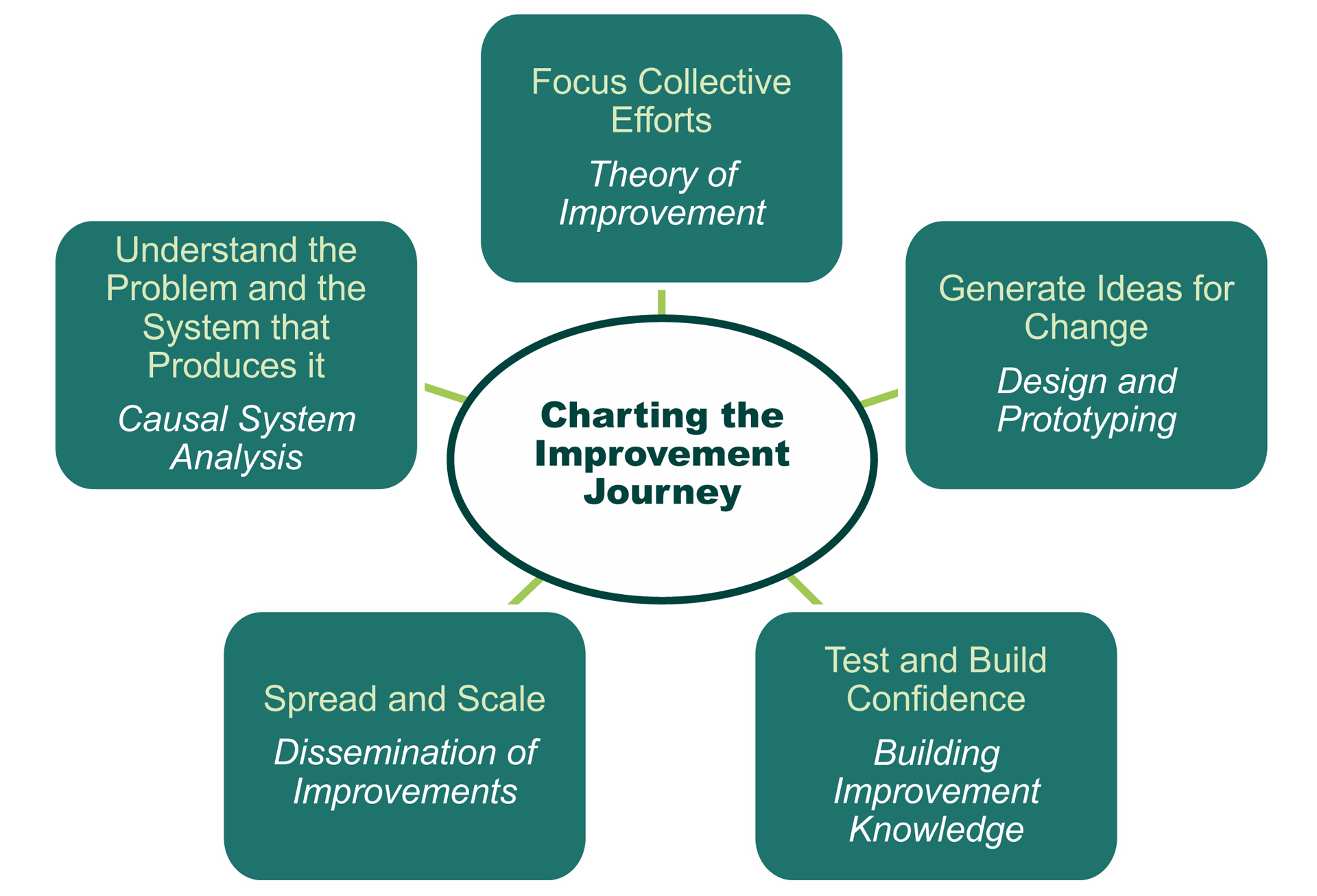
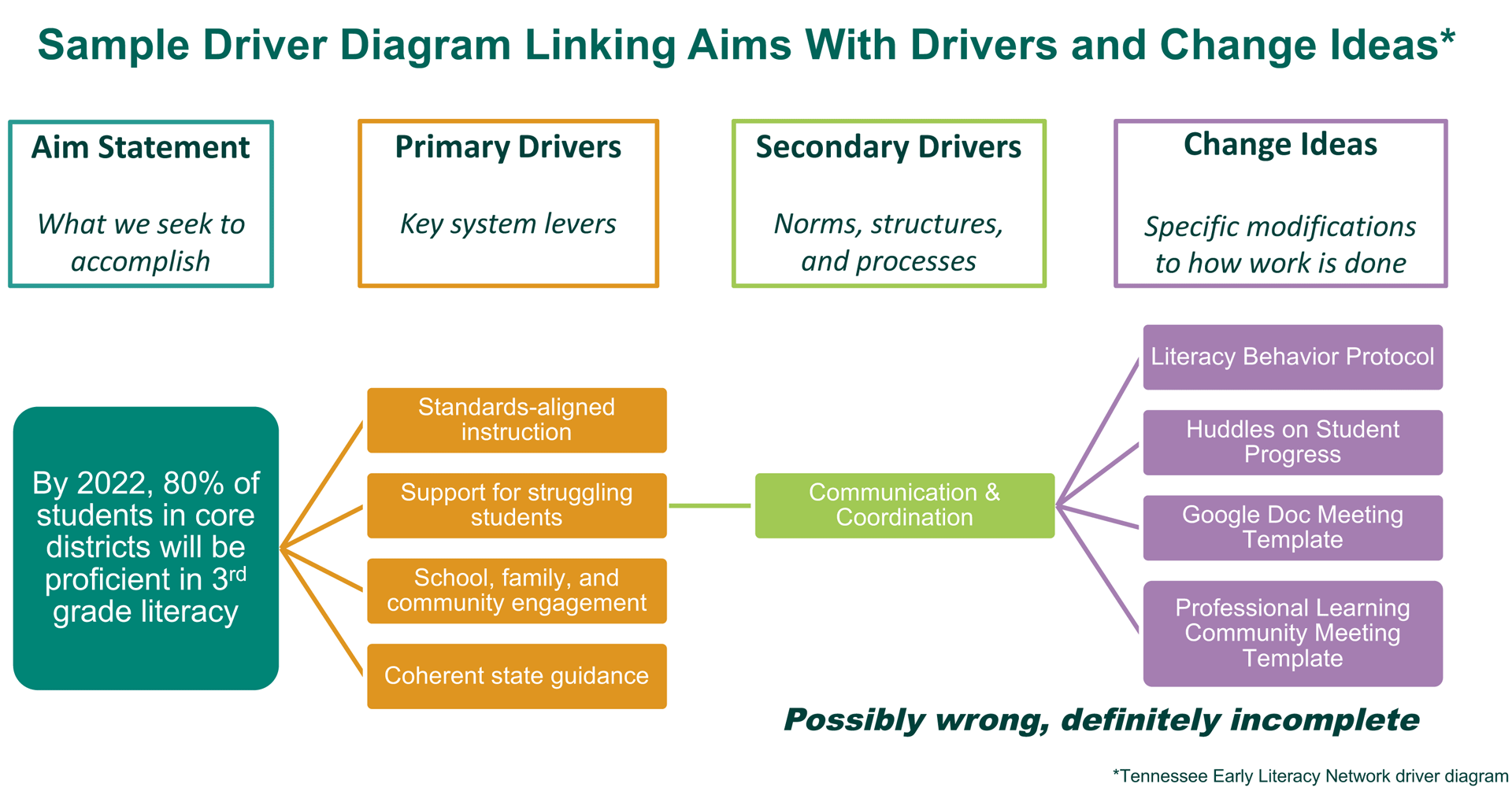
The basic tenets of the process involve understanding the problem, defining a manageable goal, identifying the drivers that could help reach that goal, and then testing small ideas to change those drivers. When done in a network, this cycle of improvement is expedited as various participants test different change ideas and share their findings with the group. Through a constant interplay of these elements a few change ideas will rise to the top and can be scaled across a system.
UNDERSTANDING THE PROBLEM
Many of the biggest problems of practice have been around a long time and aren’t easy to solve. Too often when trying to improve something leaders jump to solutions before properly examining the problem. Understanding the problem requires valuing many types of knowledge. It means doing empathy interviews with participants in the system including teachers, staff, parents, and students. It involves bringing the best research literature to bear on the problem. And sometimes representing the processes involved in the problem can illuminate areas that are breaking down.
Biag said this stage is crucial and shouldn’t be rushed. He’s seen improvement projects that require up to a year of study to fully understand the problem, its root causes and the levers of change available to leaders. Often an improvement network will know it’s time to move on when participants feel saturated — they aren’t turning up any new perspectives or information.
“Sometimes it’s good to stop doing the research and try something,” Biag said. Implementing some change ideas often helps inform the problem and may even necessitate that the team revisit and revise the problem statement.
Courtesy of Carnegie Foundation
DEFINE THE GOALS AND FOCUS COLLECTIVE EFFORT
Once the group has a “good enough” understanding of the problem it’s crucial that they write a clear, succinct aim statement. It should be specific, measurable and focus on a challenging problem, but it should be doable.
The crucial question, Biag said, is “What’s within your span of control and what’s not? So when you act on this problem you aren’t wasting your time on the things that aren’t in your control.”
He often sees people define the problem too broadly. If the problem is an achievement gap between student populations, a group might say the root problem is inequality or poverty. Those things may contribute to the problem, but they aren’t within the control of teachers or principals or even districts to solve. A more manageable aim statement might be: “By June 2020 we’re going to increase from 45% to 90% the number of male students enrolling in credit bearing math courses at community colleges.”
“It has to be motivating enough for people to continue working on it for several months,” Biag said about the reach goal. But it must be specific and concrete enough that the group can see if change ideas are helping progress towards the goal.
“While an aim statement can look deceptively simple, you need to build trust and get on the same page with everyone in your network to even agree on where to focus your efforts,” Biag said. The network itself is important because it accelerates the pace of learning about potential solutions.
Once the aim is clear, the group brainstorms three to five primary drivers of the problem. These are the things the group believes provide the most leverage to meet the goal, and that are within the span of control. It’s crucial to only have a few of these, not twenty, because the network must work on all of them in tandem. Staying focused allows for more progress.
After identifying the most important drivers, network participants brainstorm change ideas that might affect those drivers. “The word change is very specific to improvement science,” Biag said. “It means an actual change in how you do work.” In other words, the focus is on the process and results in action. Change ideas are not things like “more money” or “more staff.” “It’s an actual change of a process or the introduction of a new process,” Biag said.
TEST AND BUILD EVIDENCE
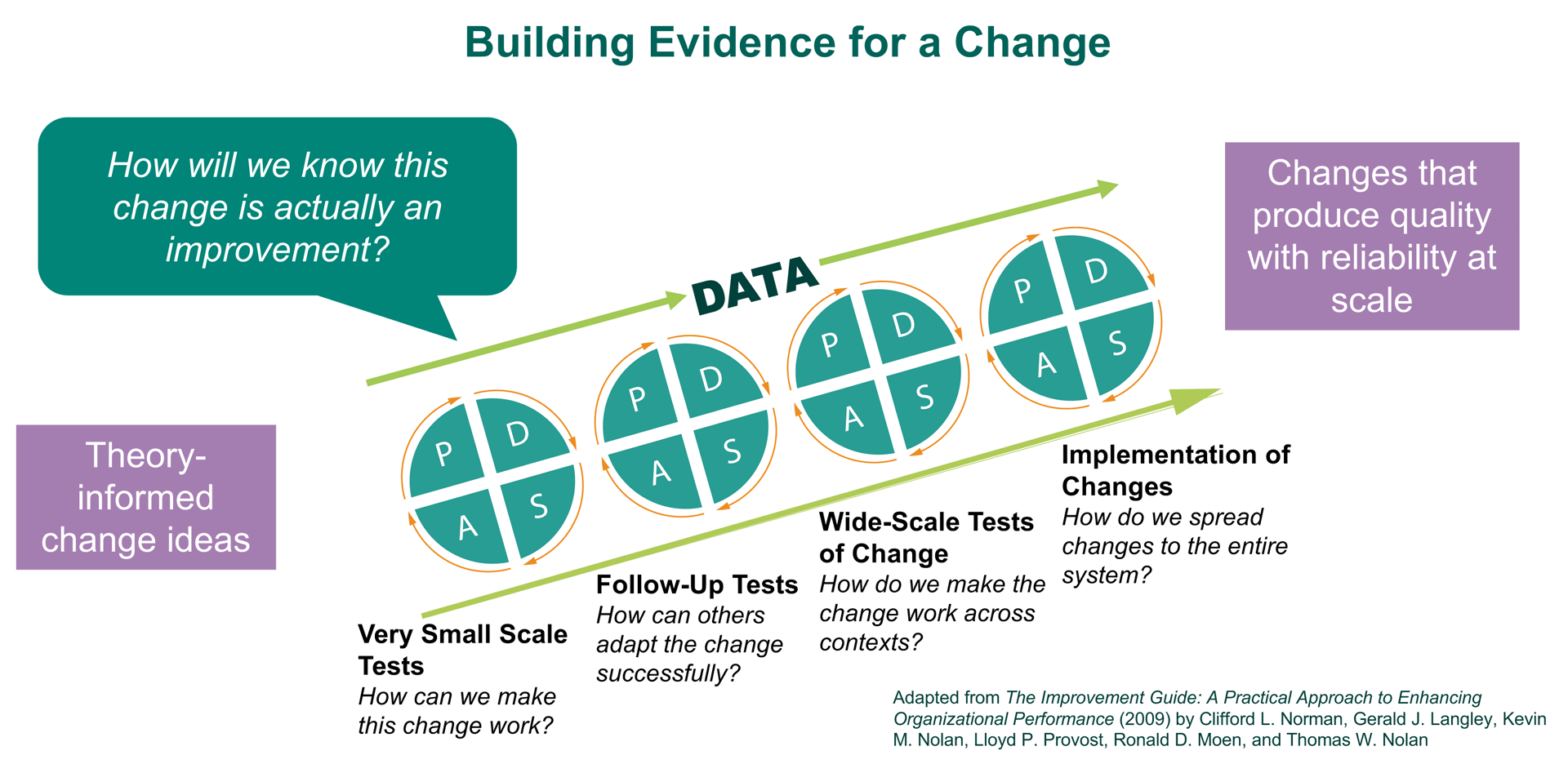
Once the group has a good understanding of the problem, its root causes, what drives it and some ideas that will directly affect those drivers, it’s time to start testing them. Carnegie uses a “Plan, Do, Study, Act” (PDSA) cycle for testing ideas. The changes should be fairly small and the tester collects data along the way. It doesn’t have to be complicated data, just something to help analyze and track whether the change is moving the needle.
Courtesy of Carnegie Foundation
“Most schools and districts plan plan plan, then do, and then they never study,” Biag said. He advocates that planning include a prediction because participants are more likely to compare a new strategy with the expected effect. If the change idea didn’t function as expected there’s a lot to learn there.
Many of the best change ideas come from looking at what Carnegie calls “positive deviants” — the bright spots in a network. For example, if a network sets the aim of improving college readiness for English language learner students, when leaders are assembling their knowledge base they should talk to teachers who seem to be achieving better than average results with that population. Those teachers are “positive deviants” and networks should try to learn from the ways their practices differ from colleagues.
For example, High Tech High Charter Network leaders identified that they wanted to increase the number of African American and Latino males applying to four-year colleges. When they looked at drivers, they realized school attendance was lower for this group and hypothesized that the way teachers communicated with parents might be part of the issue. To try to eliminate variation in parent-teacher communication they tested a change theory that involved using a set of protocols for interacting with families.
They went through several iterations of the protocols, but when they hit on one that seemed to work they spread it throughout their network of schools. Now, when teachers meet with parents around achievement or discipline they all try to make it positive, share data about the student, and co-construct an action plan with the parent, among other things.
The key thing about working in a network is that different people can be trying different change ideas and sharing their data. “The idea is that you’re not all working on all the same things at the same time,” Biag said. “So you leverage the network, and the power of the network, to increase change ideas.”
Some ideas won’t work and will be abandoned. Others might seem promising, but more data is needed, so others in the network might try them too. Over time the change ideas that seem to really impact the drivers rise to the top.
“As you’re testing and building evidence you’re going to find ideas that work and then you can talk about spreading those ideas,” Biag said.
Courtesy of Carnegie Foundation
SPREAD AND SCALE
Even with the best ideas implementation can be hard. Biag said leaders need to weigh several factors when thinking about how to spread an idea that seems to work. How costly will it be to implement? What are the consequences of failure? How reluctant are the people involved? How confident is the leader in the change idea?
For example, if the change is a parent meeting protocol and the leader doesn’t think it’s a great idea and that the cost of failure will be high, perhaps she only tests it on her sister first. But, if teachers are ready for the change and there’s nothing to lose, then maybe the idea can scale up more quickly. This is where knowing one’s own system and culture becomes important.
It’s also worth thinking about who within the system needs to be on board for the plan to go well. Those folks can be powerful advocates if convinced that the change idea is a good one. “The best people are those who were pretty skeptical in the beginning and you were able to change them,” Biag said.
Another strategy is to roll out the idea with those eager to try it and then demonstrate success to those who are more fearful. It’s also necessary to be humble and willing to go back and test new ideas if the ones that seemed to work in the smaller group don’t work when scaled. Perhaps the aim statement needs to change, or maybe the drivers aren’t actually the most impactful.
“Our theory is possibly wrong and definitely incomplete; that’s kind of a Carnegie saying,” Biag said. He doesn’t want anyone to think this process is linear, rather it’s a cycle. And when people get comfortable with the cycle they build it into everything they do naturally. The biggest strength of continuous improvement is that it offers a path for systemic change, a way to build the capacity within the system, rather than building whole new systems.
“What we’re trying to do is implement these tools and ways of thinking to empower people to engage in this work,” Biag said. And that means having a bias towards action.
“You have to start before you feel ready. Your understanding of the problem will change over time and when you act on that problem the problem will change and so your understanding of that problem will change,” Biag said.
People learn how to think about continuous improvement through the process of doing it. They get better at narrowing in on motivating, but achievable aim statements. They learn to include more voices in the information gathering stage. The “Plan, Do, Study, Act” cycles become second nature, and analyzing data gets less scary.
Perhaps one of the best parts of continuous improvement is that it helps empower those within a system to see themselves as the drivers of change. The ideas come from practice as does the data. And while data is often associated with accountability requirements, this improvement process offers practitioners the opportunity to think about and evaluate data that are important to their practice.
In this process, the data is only worthwhile if it shines light on whether the change is working. And when data is used this way, it’s easier for educators to be transparent about what they’re seeing. Improvement is not about judgement, it’s a constant, normal aspect of professional life.
“You have to have a lot of humility to come to the realization that you don’t have the answers, and that you’re going to learn your way into this,” Biag said. “You’ve got to think about this as a learning journey. If you really had the answers to this problem we wouldn’t be talking about it.”
To see measurable progress on some of the most intransigent problems in education requires a systematic focus on improving in every aspect of the system. It’s not enough for one teacher to be amazing, or one school to outshine the others around it. All kids deserve an incredible education; and that can only happen by building on the strengths already found in the system.
He was, however, extremely bright. Everyone recognised it straight away. He spent his life in a hurry, leading his mates on merry adventures and forever tinkering with things to make them work: motors, electrical switches, wirelesses, go-karts, motorbikes …
That didn’t cut it at boarding school, where Tim’s parents, like a lot of country people those days, sent him for an education.
A schoolmaster decided he would whip Tim into shape. Literally.
In his first term of secondary school, Tim was given “the cuts” – six thwacks of a strap to the hand – every day. For rushing when he was supposed to walk; for failing to finish assignments; for answering questions he wasn’t asked; for failing to understand what was required of him.
Not all require teachers to mention ‘healthy relationships,’ ‘sexual assault’ or ‘consent’ in class.
The Center for American Progress recently released an analysis of what it called «the current state of sex education standards» across the U.S., focusing on discussions of consent and healthy relationships in those teaching standards. Analysts at the think tank considered state laws in 24 states and Washington, D.C., that require sex education in public schools and found that not all states address those topics in their sex education standards.
According to the review, just 10 states and Washington, D.C., reference «healthy relationships,» «sexual assault» or «consent» in their sex education programs.
Rhode Island, West Virginia and Washington, D.C., mandate detailed state standards that «address aspects of sexual health and clearly categorize topic areas» by age, according to the analysis. Hawaii, Maine, Maryland, North Carolina and Vermont don’t spell out these requirements, but they have revamped state standards to address consent or health relationships.
Moreover, the review found that California, New Jersey and Oregon have comprehensive sex education standards, requiring teachers to discuss healthy relationships as part of sex education. Each state, CAP says, requires educators to use medically correct materials, as well as incorporate lessons on healthy relationships or consent. California, New Jersey and Oregon also boast teen pregnancy rates 3, 4 and 11 percent lower than the national average, respectively.
The majority of the states analyzed – Delaware, Georgia, Iowa, Kentucky, Minnesota,Mississippi, Nevada,New Mexico, North Dakota, Ohio, South Carolina and Utah – reportedly provide teachers with little guidance on which subjects should be covered in sex education curriculums. Those teachings cover pregnancy prevention and preventing sexually transmitted diseases, but don’t address the development of healthy relationships and don’t divide standards by age, according to the review.
Still, the think tank reports that a number of reforms are building momentum in state legislatures across the country.
MONROVIA – Around the world, some 263 million children remain out of school, and of those who do attend classes, 330 million are receiving substandard education. As a result, an estimated 617 million school-age children are unable to read at grade level.
The problem is a global one, but it is particularly acute in Sub-Saharan Africa, where 88% of young students– some 202 million boys and girls – are not achieving a sufficient level of reading proficiency. And it is also here where solutions are being tested.
African governments and international donors have long paid lip service to improving educational outcomes, especially in basic skills like reading, writing, and math. At a financing conference for the Global Partnership for Education in February, developing countries vowed to increase spending on education by $110 billion, and wealthy donors pledged an additional $2.3 billion to improve school systems in poor countries.
But as important as these commitments are, Africa’s education crisis will not be overcome by donations and pledges alone. A new approach is needed to strengthen struggling schools, train teachers, and ensure that every child can obtain the necessary skills to succeed. One pilot programme being tested in my country, Liberia, has shown considerable promise.
Because low-income countries rarely have enough money to implement needed education reforms, pooling public and private resources is an attractive alternative. Since 2016, Liberia’s education ministry has merged select public schools with various independent operators in an effort to increase educational quality in a tight budget environment. Early results are impressive.1
For example, at the free public schools currently managed by expert contractors participating in the program, learning outcomes improved by 60% in the first year. At the 25 schools operated by my employer, Bridge Partnership Schools for Liberia, average student test scores doubled in just nine months. Parents and pupils have embraced these reinvigorated schools, with many calling them the best they have ever experienced. As a result, the previous government expanded the program, and the current one is committed to continuing support.
One of the most powerful components of a Bridge Partnership School is the pedagogy. For every lesson in every subject across every grade, educators have access to detailed lesson plans developed by academics. These plans help teachers prepare and deliver instruction to maximise learning outcomes. By assisting in classroom planning, Bridge ensures a degree of standardisation across schools, and helps teachers focus more attention on individual students.
At first glance, Liberia’s school system might seem a poor fit for such an innovative experiment. Today, some 58% of Liberian children are out of school, the literacy rate is among the lowest in the world, and teachers are in short supply. Moreover, the current government budgets just $50 annually for each child attending elementary school. The average in the OECD in 2013 was $9,200.
But programmes like these are attractive for two reasons: they deepen a country’s access to educational expertise, and, more important, they open up new funding streams.
Developed countries have already recognised the value of strong public-private partnerships in education. Notably, the United Kingdom’s 2018 education policy encourages the expansion of such programs because they have been found to “improve access to education for poor and marginalized children.”
Not everyone will agree; partial partnerships with the private sector and NGOs in education generates considerable controversy, and there is little doubt that in Liberia, the Bridge model remains a work in progress. (A new impact analysis is due in the next academic year.)
But while costs were high, they are quickly falling. And continuous teacher training for those who are part of Bridge PSL is helping to increase the quality of instruction. As test results in Liberia demonstrate, children are learning more than ever. With the support of prominent global investors, our schools are achieving outcomes that were previously unthinkable.
From my perspective, the public-private partnership model has revolutionised education in Liberia, and I am confident that it can work in other parts of Africa, too. In countries where learning outcomes continue to lag, governments need collaborative solutions. And, as past failures have demonstrated, education systems in much of the Global South cannot succeed alone.
To achieve “education for all” by 2030, the target set by the UN Sustainable Development Goals, educators must embrace bold solutions like Bridge Partnership Schools. With millions of children still being denied the right to an education, the world can no longer afford the status quo.
The writer is the country director of Bridge Partnership Schools for Liberia.
The region’s remarkable economic success story belies a widening gap between rich and poor.
Inequality is increasing in Asia and the Pacific. Our region’s remarkable economic success story belies a widening gap between rich and poor. A gap that’s trapping people in poverty and, if not tackled urgently, could thwart our ambition to achieve sustainable development. This is the central challenge heads of state and government will be considering this week at the Economic and Social Commission for Asia and the Pacific (ESCAP). A strengthened regional approach to more sustainable, inclusive growth must be this Commission’s outcome.
It’s imperative, because ESCAP’s Sustainable Development Goal Progress Report shows that at the current rate of progress, Asia and the Pacific will fall short of achieving the UN’s 2030 Agenda. There has been some welcome progress, including in some of the least developed countries of our region. Healthier lives are being led and wellbeing has increased. Poverty levels are declining, albeit too slowly. But only one SDG, focused on achieving quality education and lifelong learning, is on track to be met.
In several critical areas, the region’s heading in the wrong direction. Environmental stewardship has fallen seriously short. The health of our oceans has deteriorated since 2015. On land, our ecosystems’ biodiversity is threatened. Forest conservation and the protection of natural habitats has weakened. Greenhouse gas emissions are still too high. But it’s the widening inequalities during a period of robust growth that are particularly striking.
Wealth has become increasingly concentrated. Inequalities have increased both within and between countries. Over thirty years, the Gini coefficient increased in four of our most populous countries, home to over 70 percent of the region’s population. Human, societal and economic costs are real. Had income inequality not increased over the past decade, close to 140 million more people could have been lifted out of poverty. More women would have had the opportunity to attend school and complete their secondary education. Access to healthcare, to basic sanitation or even bank accounts would have been denied to fewer citizens. Fewer people would have died from diseases caused by the fuels they cook with. Natural disasters would have wrought less havoc on the most vulnerable.
The uncomfortable truth is that inequality runs deep in many parts of Asia and the Pacific. There’s no silver bullet, no handy lever we can reach for to reduce it overnight. But an integrated, coordinated approach can over time return our economies and our societies to a sustainable footing. Recent ESCAP analysis provides recommendations on how to do just that.
At their heart is a call to in invest in our people: to improve access to healthcare and education.
Only a healthy population can study, work and become more prosperous. The universal basic healthcare schemes established by Bhutan and Thailand are success stories to build on. Expanding social protection to low income families through cash transfers can also help underpin a healthy society.
Increasing investment in education is fundamental to both development and equality. Here the key to success is making secondary education genuinely accessible and affordable, including for those living in rural areas. Where universal access has been achieved, the focus must be on improving quality. This means upskilling teachers and improving curricula, and tailoring education to future labor markets and new technologies.
Equipping people to exploit frontier technologies is becoming more important by the minute. Information and Communication Technology (ICT) is a rapidly expanding sector. It can quicken the pace of development. But it is also creating a digital divide which must be bridged. So investment in ICT infrastructure is key, to support innovative technologies and ensure no one is left behind. Put simply, we need better broadband access across our region. Geography can’t determine opportunity.
This is also true when it comes to tackling climate change, disasters and environmental degradation. We know these hazards are pushing people back into poverty and can entrench inequality. In response, we need investment to help people to adapt in the region’s disaster hotspots: targeted policies to mitigate the impacts of environmental degradation on those most vulnerable, particularly air pollution. Better urban planning, regular school health check-ups in poorer neighborhoods, and legislation guaranteeing the right to a clean, safe and healthy environment into constitutions should be part of our response.
The robust growth Asia and the Pacific continues to enjoy, gives us an opportunity to take decisive action across all these areas. But for this to happen, fiscal policy needs to be adjusted. More effective taxation systems would increase the tax take, and better governance would increase people’s willingness to contribute. Public expenditure could then be made more efficient and progressive, the proceeds of growth shared more widely, and inequalities reduced.
My hope is that leaders will seize the moment, strengthen our commitment to fighting inequality on all fronts and put us back on track to sustainable development in Asia and the Pacific.
Shamshad Akhtar is the Under-Secretary-General of the United Nations and Executive Secretary of Economic and Social Commission for Asia and the Pacific (ESCAP)
OtrasVocesenEducacion.org existe gracias al esfuerzo voluntario e independiente de un pequeño grupo de docentes que decidimos soñar con un espacio abierto de intercambio y debate.
¡Ayúdanos a mantener abiertas las puertas de esta aula!







 Users Today : 5
 Total Users : 35460497
 Views Today : 19
 Total views : 3419377