Page 218 of 622
1 216 217 218 219 220 622

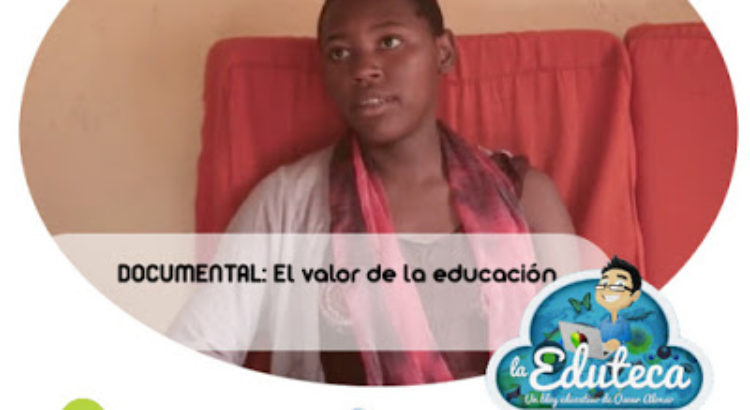
VIDEO FORUM | Documental: el valor de la educación

Tanzania / Autor: Proyecto Juntos / Fuente: Eduteca

‘El valor de la Educación’, un documental de la ONG Proyecto Juntos, sobre la cruda pero a la vez esperanzadora realidad de los niños de la ciudad de Moshi (Tanzania) para acceder a la escuela. Allí, los que pueden ir al colegio se sienten afortunados y creen sinceramente que con todo lo que aprenden en las aulas pueden ayudar a los demás y salvar a sus familias de la pobreza. ‘El valor de la Educación’ reivindica además el derecho a la enseñanza de todos los menores del mundo, no solo de Tanzania, si no de los niños de todo el planeta. Más de 250 millones de niños en el mundo, según la Unesco, no saben hoy en día ni leer ni escribir. Juntos podemos cambiar esta realidad.

Fuente de la Reseña:

http://laeduteca.blogspot.mx/2018/03/video-forum-documental-el-valor-de-la.html

Comparte este contenido:

Of investment in education: is Nigeria still Africa’s giant?

By Adekunle Adebajo

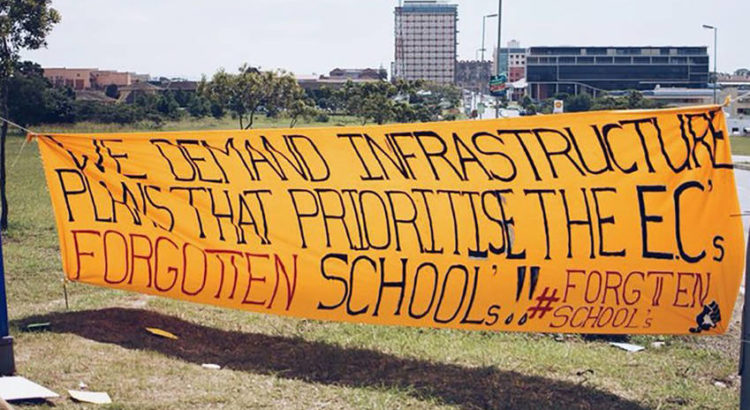
For as far as most Nigerians can remember, this country has been proudlyreferred to astheGiant of Africa. This title was earned by virtue of her intimidating economy, her huge population and her big brother role during the years immediately following her independence from British rule. However, the country is fast losing the respect accorded to her in the past, not only in Africa but across the globe. The factors responsible for this are not far-fetched: poor supply of electricity, poor state of infrastructure, notoriousness for internet fraud, corruption, an inferior quality of education among others.

Homing in on the last, it has been discovered that the state of the country’s schools can be easily explained financially. Comparing the budgetary behaviour of Nigeria and some other countries across Africa reveals that Nigeria’s giant status is not found where it matters the most, particularly in the level of attention paid to the education sector. While other African countries seem to have recognised the potency of education as a midwife to development, a better economy, a safer society and a more prosperous population, Nigeria’s priorities are still found in sustaining an excessively expensive system of governance and in national security, the funds for which often reflect better in foreign bank accounts rather than local battlefields. Rather than set the pace in implementing global standards, Nigeria evidently has a lot to learn from smaller and younger countries across the continent.

Kenya
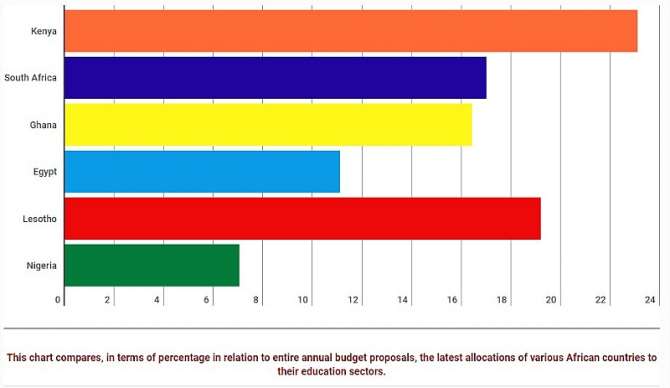
Kenya’s education sector has traditionally received the lion’s share of the country’s national budget to take care of teachers’ salaries, and primary and secondary school subsidies; and this tradition was upheld in the 2015 budget.In April 2016, the Kenyan government tabled its 2016/17 national budget estimates before the National Assembly. The Budget Policy Statement (BPS) ceilings in all the sectors summed up to 1,498 Kenyan shillings; but the Gross Expenditure Estimates, after the increase by the Treasury, amounted to 1.667 trillion Kenyan shillings. Based on the BPS, education received a total of 346.6 Ksh, which in other words is 23.1% of the entire budget. This figure is topped only by the allocation to Energy, Infrastructure and ICT, some of the projects under which are also academic in nature, for instance the laptop project gulping Ksh 17.58 billion.

South Africa
In the 2016/17 budgetary year in South Africa, the country spent R213.7 billion on basic education, which is about 15% of the total budget; and, according to the National Treasury, the allocation is projected to rise an average of 7.4% annually over the following three fiscal years. In terms of percentage, this allocation, according to data from the United Nations, trumps those of the United States, United Kingdom and Germany. As projected, more recent figures are even more education-friendly. According to aUnited Nations Children Fund (UNICEF) document titled, “Education Budget, South Africa, 2017/2018”, the budget for school children is presently 17% of total government expenditure.

Ghana
Ghana has also established herself as one of Africa’s big spenders on education. In 2013, she committed a whopping 31% of her budget to education as against Nigeria’s 8% in the same year. The following year, the figure dropped to 20.5%; and it declined even more in 2015 to 17.8% and in 2016 to 13.5%. In 2017, however, the Ministry of Education’s budget experienced a 20.7% increase from the previous year’s figure; that is from 7.55 billion Ghanaian cedes to 9.12 billion Ghanaian cedes. And in 2018, the allocation has increased by another 11.6% as the government proposed last year to spend GHS 10.18 billion on the Ministry. This amounts to 16.42% of the total budget of GHS 62 billion.

Egypt
As for Egypt, one country whose universities alwaysstand out on the continental ranking, the government proposed to spend EGP 104 billion on education in the 2016/2017 fiscal year, which amounted to 11.1% of government spending in that year. This is an improvement on the allocation of EGP 99.3 billion the previous year. The increment in the allocation is partly attributable to the Egyptian Constitution. According to the document, the government is required to spend at least 3 per cent of the Gross National Product (GNP) on healthcare and at least 4 per cent on education every year. It is noteworthy that the global average education budget in relation to GDP stands at 5%.

Lesotho
This country is renowned to spend most part of its GDP on education. According to the budget speech to the parliament for the 2017/2018 fiscal year presented by Dr.MoeketsiMajoro, the Minister of Finance, the government proposed to spend a total of M2.423 billion on education and training in 2018. This, to put it differently, is 19.2% of the entire budget. The previous year, the government had spent 20.7% on
the same sector.

Now to Nigeria
In the acclaimed giant of Africa and home to the largest black population on earth, regard for education appears to be an anathema to all forms of government, whether led by a military dictator or a democratically elected individual, a Northerner or a Southerner, a Major General or a Ph.D. holder. An assessment of the trend from 1999 shows that the lowest allocation, 4.46%, to education was in 1999, and the highest, 11.44%, was in 2015. The average allocation in all 16 years of democratic rule is 9.14%. In the pre-1999 years of military rule, the sector did not fare any better as a study has shown that the average allocation to education between the years of 1981 and 1998 was a meagre 4.18%.

The situation has in fact worsened under the present administration. The first budget presented by President MuhammaduBuhari in December 2015 for the 2016 fiscal year was in stark contrast to the double digits legacy left by his predecessor. Education received ₦369.6 billion, which was 6.07% of the entire budget. In the 2017 budget proposals, N448.01billion was allocated to education, representing about 6% of the ₦7.30 trillion budget. And in the 2018 Appropriation Bill, the government proposed an allocation of ₦435.01 billion to education, which is just 7.04% of the total budgeted amount of ₦8.612 trillion.

Nigeria against the world
Across Africa, most countries are spending more and more on education by the year. As a matter of fact, government expenditure on education in Sub-Saharan Africa increased from US$12 billion in 2000 to US$67 billion in 2013 representing over 450% growth. This trend has resulted in higher literacy rates, lesser numbers of out-of-school children, improved quality of learning, and more foreign investments as well as greater industrialisation owing to greater availability of skilled labour. It has also led to a gradual increase in GDP for many of these countries as educated citizens naturally earn more than those who do benefit from formal learning.

Nigeria, on the other hand, especially under the presidency of MuhammaduBuhari, has yet to board the train of progress, despite cries from various corners. For this country, it has become an unending cycle of budgetary disregard for education, and complaints from stakeholders, accompaniedby silence from the government. The same pattern is repeated year in year out. This habit has affected us greatly, because not only are our schools not reckoned with on the international stage, the culture of academic tourism has seen our economy shed weight to the benefit of such countries as the United States, the United Kingdom and even Ghana.

In 2012, the Chairman of Exam Ethics International, Ike Onyechere, said Nigerians spend over ₦1.5 trillion annually on students studying abroad. ₦160 billion out of this goes to Ghana, while ₦80 billion goes to the United Kingdom. Likewise, in 2016, the Chairman of the Senate Committee on Tertiary Institution and Tertiary Education Trust Fund, Senator BintaMasi, said Nigeria spends over $2 billion annually as capital flight on education abroad. With this figure alone, Nigeria can build one or two world-class universities every year, considering the fact that Pakistan planned to spend $750 million for each of its new universities of engineering, science and technology and Qatar’s Cornell University spent the same amount establishing its School of Medicine in 2002.

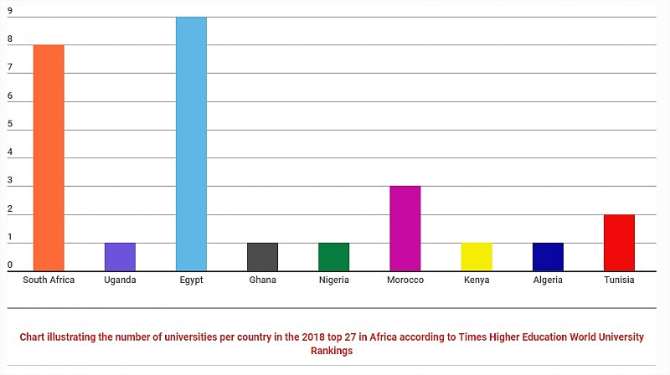
The country’s lacklustre attitude towards education equally reflects in the ranking of universities across the globe and in Africa. According to the 2016 Times Higher Education World University Rankings, there is only one Nigerian university in the top 15 ranking in Africa, and that university, the University of Ibadan, is number 14 on the list. On the same list, we have six universities from South Africa, three from Egypt, two from Morocco, one from Uganda (ranked fourth), one from the Ghana (ranked seventh), and one from Kenya (ranked eighth). A similar pattern recurred in the 2018 ranking.
Finally
It is high time the Nigerian government recognised that recognising the good in education is for the good of the country. We do not have to go as far as the extreme West or the far East to get examples of countries reaping bountifully from great investments in education. Right here in Africa, there are more than sufficient instances. The Nigerian National Assembly should adopt the Egyptian legislative model by incorporating, into the constitution, a benchmark for budgetary allocations to the education sector. This preferably must not fall below 5% of the nation’s GDP or 20% of government’s annual spending.

Our schools are ailing; and it is not by scrapping Post UTME or quelling industrial actions that they will get better. We must make conscious, radical efforts by investing all we can to turn things around for good. Before we complain that our graduates are unemployable, we must ask first if our schools are habitable and if our facilities are universally acceptable. But beyond just dumping huge sums of money into the sector in theory, the government has to also ensure a balance in recurrent and capital expenditures as well as an effective implementation of whatever plans are laid out on paper. If we can do this, then the return of the giant to her rightful place is not only inevitable but will happen before long, before our very eyes.

Source:

https://www.thenigerianvoice.com/news/263557/of-investment-in-education-is-nigeria-still-africas-giant.html
Comparte este contenido:

África: Matrimonio infantil, un problema que persiste

África/19 de Marzo de 2018/Extra

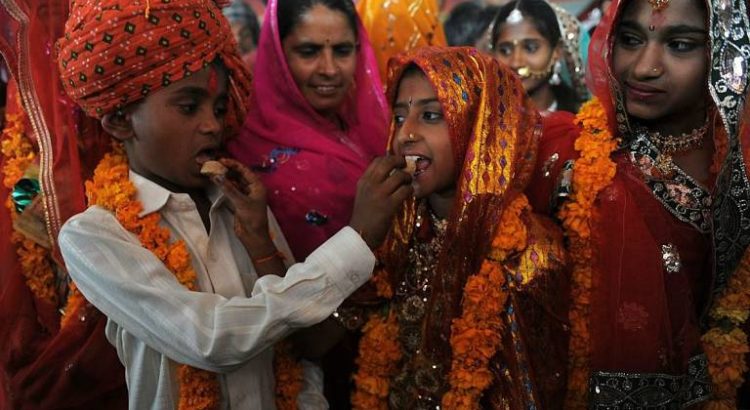
No se trata de una problemática del pasado. El matrimonio infantil continúa existiendo en pleno siglo XXI. Según la Organización de las Naciones Unidas para la Educación, la Ciencia y la Cultura (Unesco) —que trabaja para disminuir los casos— el matrimonioinfantil “viola los derechos humanos”. Agrega que se trata de una forma generalizada de abuso sexual y explotación de las niños. Esta problemática también puede terminar en trabajos forzados, esclavitud, prostitución y violencia. El desenlace puede ser la muerte.

En el caso de las niñas adolescentes, la probabilidad de muerte es mayor. Las complicaciones médicas por el embarazo y el parto colocan a las menores en riesgo.

En gran parte del continente africano se registra un elevado porcentaje de matrimonios infantiles. Un ejemplo es el conjunto de países que conforman África Subsahariana, ahí el 38 por ciento de mujeres se ha casado durante su infancia.

Los motivos para la incidencia de este fenómeno en África y Asia Meridional están relacionados con presiones económicas, sociales y culturales.

Un paso al frente

Las cifras parecen esperanzadoras. En la última década los índices de menores de edad que contrajeron matrimonio disminuyeron un 15 % a nivel mundial. Sin embargo, esto significa que aproximadamente 1 de cada 5 menores se siguen casando.

Según los datos de la Unesco con esta reducción se han evitado 25 millones de casamientos. La meta para la erradicación total está fijada para 2030, pero el ritmo debe acelerarse. La organización señala que si las medidas no se ajustan, en 12 años más de 150 millones de niños se casarán antes de los 18 años.

En Ecuador

En el país también se registran casos de matrimonio infantil, aunque en un contexto diferente. Según el Estudio sobre prácticas nocivas: matrimonio infantil y uniones precoces en Ecuador—publicado en diciembre de 2016 por el colectivo Coalición Nacional de Mujeres del Ecuador— “el matrimonio infantil precoz (en el país) es consecuencia de la discriminación por sexo, género, grupo de edad, prácticas sociales y creencias culturales que derivan en acciones que afectan los derechos humanos de las niñas”.

Según datos del estudio, entre 2009 y 2014, se registró el matrimonio de 6.740 mujeres menores de edad.

Fuente: Estudio sobre prácticas nocivas: matrimonio infantil y uniones precoces en Ecuador.

La desigualdad de género sale a relucir en los grupos menos favorecidos, especialmente indígenasafroecuatorianos, y en los contextos rurales. A esto se le suman los estereotipos y el embarazo adolescente.

Las consecuencias de un matrimonio a corta edad son:

– Exclusión del sistema educativo

– Problemas de salud (complicaciones en el embarazo)

– Pobreza

– Violencia de género

Fuente: http://www.extra.ec/actualidad/matrimoniosinfantiles-indices-mundiales-unesco-derechoshumanos-EG2080237

Comparte este contenido:

Education in South Sudan

South Sudan/March 19, 2018/International Policy Digest

Resumen: La mayoría de las discusiones sobre el desarrollo en Sudán del Sur giran exclusivamente en torno a la seguridad, la inversión extranjera y la ayuda. Los esfuerzos a gran escala, como la infraestructura, el cuidado de la salud y el comercio, deberán dirigirse a nivel nacional con el respaldo de inversiones de socios internacionales. Sin embargo, hay muchos desafíos de capacidad institucional y humana que se abordan mejor a nivel local. Focalizar la inversión en esfuerzos locales de pequeña escala puede hacer crecer economías que sean más sostenibles y que estén en mejores condiciones para adaptarse a futuros grandes planes de desarrollo.

Most discussions about development in South Sudan revolve exclusively around security, foreign investment and aid. Large-scale endeavors such as infrastructure, health-care, and trade will have to be directed at the national level supported by investments from international partners. However, there are many institutional and human capacity challenges that are better addressed at the local level. Targeting investment into small-scale local efforts can grow economies that are more sustainable and better able to adapt to future large development plans.

The African Development Bank, in “Infrastructure Action Plan in South Sudan: A Program for Sustained Strong Economic Growth,” identifies four broad areas where developing countries need to focus attention to grow into a successful middle-income country: well-functioning public and private institutions; well developed basic infrastructure; a stable macroeconomic framework; and a healthy and literate labor force.

On a macro-level, terms like well-functioning, developed, healthy, and stable are not used to describe any aspect of the Republic of South Sudan’s economy or government. However, at the local, micro-level, there are glimpses of civil society taking responsibility for local needs.

The most debilitating problem facing the new republic is its lack of internal security. The ongoing civil war atrocities undermine the economy & make a stable nation impossible.

Only after peace is secured can large-scale infrastructure programs commence. With the exception of China, other countries do not feel secure in investing their resources in South Sudan. Until the country can germinate its own industries, it will need to foster relationships with outside investors to build its economy and train its labor force. Diversification will be the foundation on which this economy will stabilize, not one dependent on oil. South Sudan will need to refocus its public expenditures on developing a strong education system to assure that the workforce can sustain domestic civil engineering projects, agriculture, healthcare, and technology sectors.

Even if the national government could redistribute its expenditures immediately, developing a new country from scratch is an immense endeavor. Development cannot be only top-down, but also must emerge from regional and local populations. Institutional and human capacity building will be most sustainable if it originates at the local level.

Across South Sudan, local communities are mobilizing themselves to provide universal education, suspend child marriage, enact gun control and develop businesses. In one of South Sudan’s largest cities, Rumbek, local residents, churches, and NGOs are working with the Rumbek and Lakes government to find creative ways to address contentious cultural issues and provide for the basic needs of the people.

(Abukloi Enterprises)

Motivated by UN Peace Conferences, schools are creating “Peace Clubs” and using classroom time to discuss conflict resolution techniques. Students participate in local and regional debates about political and cultural issues. They use their education to challenge long-standing cultural practices and empower their families to engage in new practices for everyday living.

Rumbek’s Abukloi Secondary School has developed innovative ways to build local capacity to solve problems. Abukloi is tackling food insecurity by using its school grounds as an agricultural training center. Students implement their science curriculum knowledge in the school gardens. Produce from the garden is sold at market and used to sustain the school project, thus exposing the students to the entire business cycle.

They then encourage one another to share and implement these ideas at home. With the help of funding from an American NGO, the school sponsors a women’s community garden that not only teaches sustainable agriculture practices, but also teaches the young women how to market their produce and manage their business and personal funds.

Business training goes beyond agriculture. Abukloi has developed a sewing program and internet café. Both projects employ community business people to train students, teaching them tangible skills they can expand upon to create businesses for themselves. Furthermore, their curriculum has students work in teams to develop business plans.

The most promising plans are loaned start-up funds by the NGO so not only will students have a job upon graduation, but they will also be able to employ others in their community.

The beneficial returns on this educational model are exponential. First, young women are encouraged to stay in school and participate in every aspect of the school’s programs. Educating women changes the cultural norm, encourages the older generation to take time to learn new skills and passes the value of education on to the next generation.

They are also addressing food insecurity without the direct aid of government or multinational organizations. This empowers the local population to demand the resources they need from the regional or national government deepening political participation and expanding political consciousness.

By teaching basic business skills, students also expand their creativity and problem-solving skills. By creating businesses, the community is literally creating its own economy: generating demand for goods and services that others will be inspired to provide.

The focus of economic and social development should not rest solely in the hands of NGOs. Investing in local communities throughout South Sudan can empower the people to understand and solve basic needs. It can create a new vision for how to confront difficult issues, provide a fair and stable government, and be the foundation for a lasting peace among all South Sudanese.

Comparte este contenido:

Microsoft da equipo a profesor de Ghana que enseña Word en pizarrón y gis

Ghana / 18 de marzo de 2018 / Autor: Redacción / Fuente: Publimetro

La empresa contactó al docente luego de que se viralizara una imagen en donde se observa a Owura Kwadwo impartir clase por medio de un pizarrón y no una computadora

Owura Kwadwo, el profesor de Ghana que enseña a sus alumnos a usar Word en un pizarrón, fue contactado por la compañía Microsoft, quien informó que brindará equipo y recursos necesarios para que imparta correctamente su clase.

La empresa estadounidense contactó al docente luego de que la usuaria, Rebecca Enonchong, compartiera la noticia. «Oye, Microsoft, (el profesor) está enseñando Word en un pizarrón. Seguro puedes conseguirle recursos adecuados», escribió.

Posteriormente, la compañía de tecnología informó que «equiparía» a Owura Kwadwo con un dispositivo y que le darían acceso al programa Microsoft Certified Educator (MCE), así como recursos de desarrollo profesional gratuitos.

Además, hizo una invitación para que el profesor asistiera a la «Cumbre Global Education Exchange Summit’, realizada este martes en Singapur, evento diseñado para proporcionar información sobre las últimas tendencias en educación.

«Estamos muy contentos de ver a Owura Kwadwo en Singapur», publicó la compañía por medio de su cuenta de Twitter.

Incluso, varias personas y organizaciones se han ofrecido a entregar a la escuela donde trabaja Kwadwo diferentes dispositivos, como computadoras y proyectores para los alumnos de la escuela ubicada en Kumasi, Ghana.

La historia de Owura Kwadwo dio la vuelta al mundo luego de que se viralizara una imagen en donde se observa al profesor enseñar Word por medio de un pizarrón, en el cual dibujó las funciones del programa.

Fuente de la Noticia:

https://www.publimetro.com.mx/mx/virales/2018/03/13/microsoft-contacta-profesor-ghana-ensena-word-pizarron.html

Comparte este contenido:

Soomaaliya: Wasaaradda Waxbarashada oo qorsheyneyso dib u soo nooleynta xarumihii Waxbarashda ee dowladda

Soomaaliya/ Author: Mohamed M Hassan / Xigasho: Radio Muqdisho

Kulan muda laba maalin ah oo magalada Muqdisho uga socday hay’adaha waxbarshada ee dalka ka howgala,  Waasaraddaha Maamul Goboleedyada xubnaha ka ah dowlada Federaalka iyo Wasaaradda waxbarshada Hidaha iyo Tacliinta sare ayaa waxa looga hadlay hirgelinta qorshaha mashariicda wax barshada ee dalka sanadka 2018 iyo in muhiim tahay in mashaaricda laga abaaro meesha ay ka jirto baahida waxbarsho .

Qaar ka mid ah xubnaha matalayay dowlad goboleedyada dalka ayaa soo dhaweeyay qorshaha Wasaaradda oo ah in la helo waxbarasho tayo leh iyo sidi loo soo celin lahaa xarumihii dugsiyadii lacag la’aanta oo ay Soomaaliya lahaan jirtay.

Agaasimaha Guud ee Wasaaradda Waxbarashada Hidaha iyo Tacliinta sare ee Xukuumadda Federaalka Soomaaliya ayaa sheegay in nidaamka dowladnimada uu soo noqonayo muhiimna ay tahay in laga wada shaqeeyo dhamaan hay’adaha Waxbarshada, sidii loo heli lahaa adeeg waxbarasho oo lacag la’aan ah.

Wasiirka Wasaarada Waxbarshada ee Xukuumadda Federaalka Soomaaliya Mudane Cabdiraxamaan Daahir Cusmaan ayaa xusay in ujeeddada kulanka uu ahaa isla xisaabtan dhab ah iyo sidii lo ogaan lahaa sida ay u shaqeeyaan hay’adaha Waxbarshada ee ka howgalaya guud ahaan dalka, isagoo xusay in dowladda ay xoogga saari doonto sidii loo heli lahaa adeeg waxbarasho oo tayo leh.

Hirgalinta qorshaha  2018 ee Waxabarshada dalka ayaa waxaa qeyb ka noqonaya dugsiyadii lacag la’aanta ahaa  sida ay uga faa’iideystaan dadka danyarta ah ee xaq u leh in ay helaan Waxbarasho.

Isha Wararka Xaqiiq:

http://www.radiomuqdisho.net/wasaaradda-waxbarashada-oo-qorsheyneyso-dib-u-soo-nooleynta-xarumihii-waxbarashda-ee-dowladda/

Isha laga helay Sawirka:

http://www.emol.com/noticias/internacional/2013/09/08/618675/somalia-pone-en-marcha-una-campana-para-escolarizar-a-un-millon-de-ninos.html

Comparte este contenido:

Entrevista a Ebele Okoye: Con educación las mujeres africanas podrán ser líderes

 Entrevista a Ebele Okoye, enfermera nigeriana Premio Harambee por la promoción de la mujer.

Por: Carmen Tapia

Los leoneses apoyarán económicamente el desarrollo del proyecto Amad de Ebele Okoye, enfermera nigeriana que ayer visitó el Colegio Peñacorada de León para divulgar el trabajo con el que ha conseguido el premio Harambee en España, una iniciativa que llega ya a 4.000 mujeres y menores.

carmen Tapia | león

—¿Qué es Amad?

 —Amad viene del verbo amar. Vamos a pueblos con universitarias que dan seminarios a las mujeres sobre liderazgo y responsabilidad social, excelencia personal, servicios comunitarios, espíritu de servicios, vamos con ellas y ponen en marcha programas que tienen que ver con el desarrollo de las mujeres del pueblo. Tenemos aldeas que son muy pobres. Las mujeres enseñan a las mujeres a conseguir microcréditos, cosas financieras que no saben, y darles más recursos. Muchas de esas mujeres trabajan en la yuca. Con los niños montamos como colegios temporales para que estudien con nosotras.

—¿A cuántas mujeres han ayudado?

—En diez años hemos llegado a 4.000 personas entre mujeres y niños y niñas.

—En nuestra sociedad se habla mucho del empoderamiento de las mujeres africanas, de cómo tiene en sus manos el futuro de África pero ¿cómo nos ven las mujeres africanas a las europeas?

—(Risas). Con muchísima admiración. Pensamos que gozáis de muchísimas cosas que ellas no tienen. Aquí cada mujer tiene la oportunidad de estudiar. Allí no es fácil. Nosotras queremos que cada mujer africana tenga esa misma oportunidad de ir a educarse en cualquier nivel, pero eso no es tan fácil. Aprovecho esta oportunidad para pediros que las mujeres que estáis aquí con las cosas más fáciles no os olvidéis de las que están allí intentando salir adelante.

—¿Qué se puede hacer desde aquí?

—He vivido en España todo la movilización de las mujeres el día 8 de marzo. He echado en falta un feminismo constructivo, que es mucho más positivo.

—¿A qué se refiere con feminismo constructivo?.

—Aquí están pidiendo todo. Están peleando, por decirlo de alguna manera, contra los hombres. Es como una competición. Creo que hay cosas que sólo están en la naturaleza de las mujeres, vienen como algo natural, el cuidado, los detalles. Hombres y mujeres se complementan. Hay que vivirlo en positivo.

—¿Cómo vivir en positivo que las mujeres africanas no tienen derecho ni a la educación?

—Por eso. Allí no todas las mujeres gozan de esos derechos. Ojalá todas las mujeres africanas tuvieran derecho a una buena educación. Las escuelas allí tienen poca calidad; muchas mujeres se quedan en el pueblo porque ni siquiera pueden aprobar los exámenes para seguir en la Universidad. .

—¿Qué habría que hacer para que este cambio se produzca? ¿cómo sería ese cambio estructural que tiene que producirse para empezar el cambio?

—El gobierno tiene que involucrarse un poco más. En las aldeas no hay una educación de calidad y no todo el mundo puede ir a la ciudad. Las oenegés no tienen ayudas del gobierno nigeriano. Estamos luchando para ayudarles. La mujer africana es muy trabajadora, tiene mucho peso. Ellas se quedan en las aldeas con los hijos mientras los hombres van a la ciudad y a veces no vuelven nunca. Si están ya educadas cuando llegue una oportunidad podrán tomarla, podrán ser líderes. En Nigeria no existen mujeres preparadas para que puedan salir como candidatas en las elecciones. Son muy pocas. Tendría que ser una capacitación de base estructurada.

—Es una tarea complicada en un país del que tenemos noticias de secuestros de niñas, de ablación de clítoris…

—Tenemos miedo de los secuestros, pero la ablación es una tradición. En la ciudad no pasa tanto, pero en las aldeas se practica porque es una tradición. Por eso debemos educar y formar. Con la educación la mujer puede salir de todos los problemas. El cambio tiene que venir desde dentro. Hace cuatro siglos en Nigeria mataban a las niñas gemelas, pero todo eso cambió.

—Usted es farmacéutica ¿cómo fue su oportunidad?

—Tuve suerte. Mi padre era profesor y mi madre enfermera. Somos clase media, que está surgiendo en Nigeria. Muchas mujeres que tienen suerte como yo salen de Nigeria porque no hay oportunidades. Hay nigerianas en todos los lados. Yo me quedo y estoy animando a mis amigas a que vuelvan para ayudar al país.

Fuente: http://www.diariodeleon.es/noticias/sociedad/con-educacion-mujeres-africanas-podran-ser-lideres_1234658.html
Comparte este contenido:
Page 218 of 622
1 216 217 218 219 220 622