Page 502 of 622
1 500 501 502 503 504 622

Etiopía bloquea redes sociales para evitar distracción de estudiantes

Etiopia/14 julio 2016/Fuente: Prensa Latina

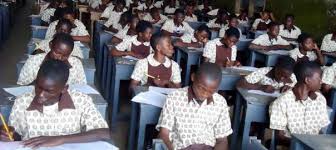
Facebook, Twitter, Instagram y Viber fueron bloqueadas en todo el país para que los educandos se concentren en la preparación de sus exámenes de ingreso a las universidades, refirió el portavoz oficial etíope, Getachew Reda.

La medida se extenderá hasta mañana, precisó el vocero.

Esta acción de bloquear las populares redes sociales tiene lugar luego de la publicación on line de los exámenses de admisión a la educación superior.

Etiopía fue uno de los primeros países africanos en censurar los blogs de Internet y sitios web de derechos humanos con frecuencia se bloquean, publicó la revista Asuntos del Cuerno de África, que circula en la comunidad Oromo, el mayor grupo étnico de Etiopía y representa una tercera parte de los 95 millones de habitantes de este país.

El pasado mes de mayo los exámenes de admisión universitarios fueron cancelados tras una publicación fraudulenta en las redes sociales, según estimó en la ocasión el gobierno etíope.

La semana pasada, el Consejo de Derechos Humanos de la ONU aprobó una resolución que clasifica a la censura de la Internet como una violación de los derechos humanos, Etiopía fue una de las naciones que votó en contra de esa Resolución, no vinculante.

Fuente noticia: http://www.prensa-latina.cu/index.php?option=com_content&task=view&idioma=1&id=5057021&Itemid=1

Fuente imagen: http://1.bp.blogspot.com/-WmX60kjk7Ew/Vf4pQpWqF2I/AAAAAAAAEq0/mH-3DTmIQ28/s1600/redes-sociales.png

Comparte este contenido:

South Africa: Basic Education Dismisses Reports That SA Schooling Period Will Be Increased From 12 Years to 25 Years

Press release

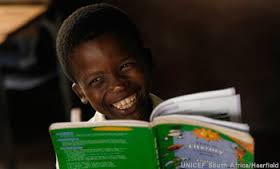
The Department of Basic Education wishes to distance itself from a hoax news report which has been circulated on social media platforms such as Facebook stating that «South Africa plans to increase schooling from 12 years to 25 years». The report further claims that «Minister of Basic Education Angie Motshekga stated that 12 years is not enough, 13 more years will be added to the schooling period, starting next year».

The Department of Basic Education can confirm that these reports are fake, misleading and do not represent any policy position of the South African Government especially the Department of Basic Education. All official communication surrounding any policy changes on basic education will be communicated directly by the Department of Basic Education through its official channels.

For more information kindly visit www.education.gov.za or call the DBE call centre on 0800 202 933 or simply follow the department on its social media platforms Facebook: DBE SA Twitter: DBE_SA.

Issued by: Department of Basic Education

Fuente: South Africa: Basic Education Dismisses Reports That SA Schooling Period Will Be Increased From 12 Years to 25 Years

Imagen: http://www.unicef.org/southafrica/SAF_wwdo_educ.jpg

Comparte este contenido:

Nigeria: Students Beg Lecturers of Kogi State University to Call Off 3-Month Strike

Äfrica/All África/ 13 de Julio de 2016

Students of Kogi State origin in tertiary institutions, have appealed to lecturers in Kogi State University, Ayangba, to call off their three months old strike.

The students, under the aegis of National Association of Kogi State Students (NAKOSS), made the appeal on Tuesday in Lokoja during a press conference.

The President of NAKOSS, Mr Ahamadu Ibrahim, told newsmen that students and parents had been at the receiving end of the lecturers’ action, saying it was time they have a rethink.

«We are tired of staying at home.

«Since Gov. Yahaya Bello had already met 80 per cent of their demands, the lecturers should call off the strike to pave a way for the remaining unresolved matters to be thrashed through round table discussion,» Ibrahim pleaded

He urged the lecturers to be mindful of the negative implications of the continued closure of the institution, saying that the future of the state and its citizens was at stake.

The NAKOSS President commended Gov. Bello’s administration for its efforts to take education out of the woods and pleaded with stakeholders in the sector to cooperate and support the government.

He chided the national secretariat of the National Association of Nigerian Students (NANS) for issuing ultimatum to Kogi government over the strike by the lecturers in KSU.

«Two wrongs will never make a right. NAKOSS dissociates itself from the position of NANS.

«We believe that Gov. Yahaya Bello should rather be commended for his efforts at reaching out to the lecturers to prevail on them to suspend the strike,» Ibrahim said. (NAN)

Fuente:Source: Nigeria: Students Beg Lecturers of Kogi State University to Call Off 3-Month Strike

Comparte este contenido:

Nigeria: Teachers Boycott Oyo Schools Despite Governor’s Order to Reopen

By Hassan Adebayo

Public primary and secondary schools in Oyo State, remained closed on Monday and Tuesday, despite an order by the state government for them to be reopened.

On Saturday, Oyo State’s Information Commissioner, Toye Arulogun, announced that schools closed in the wake of labour and students’ opposition to Governor Abiola Ajimobi’s proposed «privatization» of schools, would reopen.

Mr. Arulogun said the schools were to open for teaching on Monday.

He said only 17 schools whose students took part in a violent protest against the «privatization» plan, were to remain closed until the «management of the schools submit an undertaking to the government that the students under their care will not engage in nor be used for violent acts and that their safety will be guaranteed».

But on Monday and Tuesday teachers refused to return to work.

PREMIUM TIMES monitored the level of compliance across the state.

In places where students complied with the government order to return to school, there were no teachers.

In Saki, some students of Asabari Grammar School, Ansarudeen High School and Baptist High School went to school.

Salam Saheed, a Saki-based freelance Journalist and blogger, told PREMIUM TIMES that, «Some of the students went to school this morning but returned since no teacher was on duty.

«By and large, schools have not been reopened despite the government order.»

Teachers who spoke to PREMIUM TIMES said the government’s order could not be effective, as they were still on strike.

Before the proposal to involve private bodies in the running of the schools, the government and the workers had been squabbling over unpaid salaries.

Teachers in secondary schools, like workers in other public establishments, have not received their salaries since January. The last pay received was for December, 2015.

However, primary school teachers who are under local government councils, have been paid up to April.

Fuente: Nigeria: Teachers Boycott Oyo Schools Despite Governor’s Order to Reopen

Imagen:http://media.premiumtimesng.com/wp-content/files/2015/02/Lagos-schools-604×270.jpg.pagespeed.ce.6piG5XTDqg.jpg

Comparte este contenido:

Kenia: Multi-pronged approach needed in dealing with unrest in schools

Kenia / 13 de julio de 2016 / Por: DAVID ADUDA / Fuente: http://www.nation.co.ke/

Kenya’s education sector is once again reeling under a wave of student unrest in schools, characterised by massive destruction and loss of property.

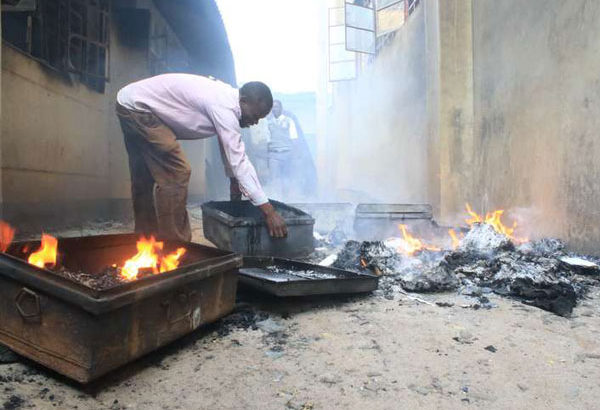
Unlike in the past when students broke windows and a few other things, this time round they are burning buildings and property worth millions of shillings.

The wave of strikes underlines the concern that no permanent solution has been found to end violent strikes. There have been worse cases in the past like Kyanguli Secondary School in Machakos where 68 students were burnt to death in 2001 by riotous colleagues and the 1991 incident at St Kizito Mixed Secondary school in Meru where some 19 girls were burnt to death in their hostel. In both cases, the government was compelled to set up task forces to examine the root causes of the mayhem and recommend solutions.

However, the reports — Presidential Committee on Student Unrest and Indiscipline in Kenyan Secondary Schools and chaired by former Cabinet minister Lawrence Sagini (1991) and Taskforce on Student Discipline and Unrest (2001), headed by former Education Director Naomy Wangai (2001) — were hardly acted upon.

Then, as now, it was established that the riots were a consequence of ineffective administrative systems, unwieldy academic programmes, general indiscipline and external influences.

So far, the strikes have been recorded in several schools across the country, the worst at Itierio High School in Kisii County where students burnt seven hostels in an orgy of violence to protest supposedly high-handed administration that denied them a chance to watch a football match.

However, evidence has since emerged to demonstrate that was just a smokescreen. Underneath was a simmering rage arising from a combination of factors, among them drug abuse, inadequate facilities and poor management. Strikes are an aberration that must be dealt with.

RING LEADERS EXPELLED

Penalties for students are very clear. Ring leaders are expelled, others punished and the rest made to pay for the damages. To be sure, Education Cabinet Secretary Fred Matiang’i has categorically stated that the students will pay for the damage, turning the burden to parents.

For its part, the Teachers Service Commission (TSC) has interdicted principals, deputies and even teachers in some of the schools affected to allow for investigations into their role in the unrests.

Preliminary investigations in the cases, while faulting the students, have established that the principals, deputies and some teachers may have contributed through acts of commission or omission.

Further investigations are still ongoing to give conclusive findings. This is not possible if the officials are in office, which is the reason the employer had to act. It is duplicitous, therefore, for the unions, sponsors, boards of management and parents to contest actions against the officials.

Part of the problem with school administration is poor governance arising from poor selection and deployment of headteachers by TSC; lack of supervision by the ministry; weak boards of management and dysfunctional parents-teachers associations (PTA); and external interferences by politicians, sponsors and communities.

Arising from these, there are cases where schools are managed by ill-suited principals and deputies, as well as incompetent boards.

Some headteachers are let to stay in particular stations for decades, turning the institutions into personal property and resisting any change.

It is for this reason that the Naomy Wangai Report of 2001 recommended that no headteacher should stay in a school for more than five years, unless in very exceptional and special cases.

The point, therefore, is that a multi-pronged approach is needed in tackling the school strikes. Students who cause chaos in schools must be disciplined, but that does not mean exempting headteachers, teachers, management boards and sponsors who may be equally culpable.

Education officials at the county and district levels must also be brought to account when there are chaos in schools under their charge.

Fuente noticia: http://www.nation.co.ke/oped/Opinion/Multi-pronged-approach-needed-in-dealing-with-unrest-in-schools/-/440808/3290390/-/nbxj3kz/-/index.html

Comparte este contenido:

África, un continente en reciclaje

África/La Vanguardia/ 13 de Julio de 2016.

  • Objetos tradicionales se han transformado en utensilios de la cultura occidental gracias a los nuevos creadores

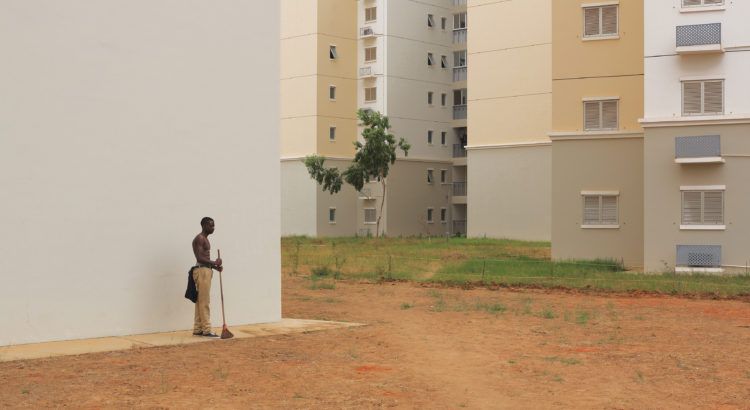
La cámara sigue a un joven trabajador por las calles de Kilamba Kiaxi. Lo sigue a él y a sus sueños de prosperidad en una ciudad semifantasma de Angola. Durante el día barre el vacío, de vez en cuando entra en alguno de los miles de pisos por vender, pone la televisión y se imagina viviendo allí. El corto del sudafricano Michael MacGarry es una de las piezas más interesantes de la muy interesante exposición Making Africa, con la que elCentre de Cultura Contemporània de Barcelona aborda la realidad de un continente que emerge lejos de los arquetipos creados primero por la colonización europea, luego por las guerras y las hambrunas, y lo hace desde la creatividad: el diseño, la arquitectura, la imagen para crear otra imagen. Esta visión de África no corresponde con la que suele aparecer en los noticiarios, pero en cambio se abre paso en los espacios culturales: al mismo tiempo que el CCCB presenta esta muestra, el Philadelphia Art Museum ofrece una similar bajo el título de Creative Africa y el corto de MacGarry se exhibe en el International Film Festival de Rotterdam, que incluye un apartado dedicado a Urban Africa.

África urbana. Hace un par de meses la OCDE alertaba sobre el vertiginoso crecimiento de las ciudades del continente, Lagos, Johannesburgo, El Cairo y Kinshasa cuentan ya con más de 10 millones de habitantes. ¿Cómo enfrentarse a este fenómeno? Espacio y objeto, uno de los cuatro ámbitos de Making Africa, analiza este desafío y algunas de las respuestas. Ponte City, el proyecto colaborativo de Michael Subotzky y Patrick Waterhouse, resulta ilustrativo de esta urbanización. El célebre rascacielos de Johannesburgo, el edificio de apartamentos más alto de África con 173 metros de alto, dejó de estar de moda con el fin del apartheid para convertirse en una ruina con los cristales rotos y elevada criminalidad. Las tres cajas de luz, cada una con seiscientas de las fotografías que tomaron durante dos años, simbolizan la historia de Sudáfrica. Ahora, la potencia colonial de Occidente está siendo sustituida por la no menos colonial de China, pero el desenraizamiento y la falta de atención a las condiciones locales siguen lastrando numerosas urbanizaciones de reciente creación.

En el extremo contrario se presenta la obra del arquitecto de Burkina Faso Kéré con su Centre de l’Architecture de la Terre, una serie de edificaciones en Mopti, Mali, en las que tanto los materiales como la tecnología son locales; la tradicional construcción en barro forma una barrera contra las altas temperaturas al mismo tiempo que presenta un bajo coste y permite preservar y transmitir una forma de construir que de otra manera estaría condenada a desaparecer. Otro proyecto que mira al futuro es Urban Africa Project, de David Adjaye (Tanzania), quien a lo largo de diez años fotografió cincuenta y tres ciudades africanas buscando modelos urbanos y clasifi­cando las imágenes según criterios geográficos y tipologías de construcción. Fotografiar y mapear para identificar problemas y proponer soluciones. Los participantes en el proyecto Map Kibera Trust cartografiaron Kibera, el mayor barrio de barracas de África con 200.000 habitan- tes, a cinco kilómetros de Nairobi. El mapa digital sirvió de base a otros estudios, gracias a la información detallada sobre seguridad, e instalaciones sanitarias. Los habitantes intervinieron directamente gracias a las plataformas en red en la elaboración de planes de acción para mejorar las condiciones de vida.

La tecnología cubre en África los espacios a los que no han llegado las infraestructuras. Un ejemplo es M-Pesa, un sistema que permite enviar dinero directamente con un simple mensaje SMS desde el móvil y que cuenta actualmente con 12,2 millones de usuarios activos. Otro ejemplo es BRCK, una iniciativa que prosperó gracias a micromecenazgos y que consiste en un resistente aparato wifi móvil provisto de una alimentación de energía propia y que sólo necesita una tarjeta SIM para enviar una señal a 140 países del mundo. Los diseñadores, creadores e ingenieros africanos hacen frente a lo que el arquitecto nigeriano Vigilism llama “la maldición africana de los recursos”: las regiones más ricas del continente son las que tienen índices de crecimiento económico más bajo. Recursos que hacen ricos a otros países; aquí se parte del aprovechamiento máximo, sea de la técnica o de los materiales, algo que queda muy patente en la exposición del CCCB: objetos y construcciones, obras de arte creados todos a partir de materiales reciclados. Unas botellas de agua mineral de plástico sirven como sandalias, la lámpara

Fuente:http://www.lavanguardia.com/cultura/20160702/402909107823/africa-un-continente-en-reciclaje.html

Comparte este contenido:

Representante para África Occidental destaca los grandes desafíos de la región

África/12 de julio de 2016/Fuente: cinu

– El representante especial de la ONU para África Occidental y el Sahel señaló hoy ante el Consejo de Seguridad que esa región registra ciertos avances, pero agregó que los grandes desafíos continúan e instó a la comunidad internacional a darle un apoyo continuo para impulsar su desarrollo y estabilidad.

En un informe al Consejo sobre la situación actual de los países de África Occidental y el Sahel, Mohamed Ibn Chambas destacó los procesos electorales que han tenido lugar pacíficamente en varios países de la región, como Côte d´Ivoire, Gambia, Ghana, Níger, Benin y Cabo Verde.

Sin embargo, recordó también que la desesperación y falta de oportunidades y justicia crean un entorno propicio para el surgimiento de movimientos militares como los que se observan en el norte de Mali y el noreste de Nigeria, que amenazan a toda la región.

En este sentido, Chambas citó los 4.5 millones de desplazados y 6 millones de personas requieren asistencia alimentaria de emergencia en el Sahel.

«Millones no pueden cultivar sus tierras y millones de niños no reciben la educación que necesitan para un futuro mejor. Boko Haram continúa cambiando sus tácticas y ha invadido dos veces la ciudad de Bosso, en Níger en junio, matando a decenas de soldados. Como resultado, sus residentes y los desplazados y refugiados tuvieron que huir», dijo.

Por otra parte, subrayó la expansión del desierto y la creciente carencia de recursos acuíferos y llamó a respaldar la Estrategia Integrada de la ONU para el Sahel, resaltando la amenaza cada vez mayor de la radicalización y el extremismo en esa subregión.

Chambas aseveró que abordar estos retos hace falta que la comunidad internacional redoble los esfuerzos colectivos de prevención de conflictos y promoción del desarrollo.

Fuente: http://www.cinu.mx/noticias/mundial/representante-para-africa-occi/

Imagen: http://www.cinu.mx/noticias/11072016/Sahel.JPG

Comparte este contenido:
Page 502 of 622
1 500 501 502 503 504 622