Page 17 of 49
1 15 16 17 18 19 49

South African students not prepared for tertiary education, says study

South African/August 8, 2017/By: Suthentira Govender / Source: https://www.businesslive.co.za

Not being happy with your study choice and failing schools standards are some of the reasons South African students have given for feeling unprepared for tertiary education, according to a new study

This revelation is contained in the latest PPS Student Confidence Index survey conducted among nearly 2‚500 students in fourth year and above‚ pursuing qualifications in engineering‚ medicine‚ law or accounting.

According to the survey‚ less than half those surveyed felt prepared for the transition from school to higher education institutions. This represents an 8% decline from 2016‚ and marks the first time in three years — since the survey was started — that the percentage has dropped below 50%.

Motshabi Nomvete‚ PPS spokeperson, believes the implications «of this lack of preparedness is no doubt contributing to the fact that 47.9% of university students do not complete their degrees as determined in the latest [2015] report by the Department of Higher Education».

She said there needs to be more engagement by the corporate sector and professional bodies with government on school curriculums to ensure the divide between secondary and tertiary education levels is reduced.

Prof Labby Ramrathan‚ based at the University of KwaZulu-Natal’s school of education‚ said the school-to-university transition «is a complex phenomenon that has many facets». «The emotional facet of being prepared or not for this transition cannot be used as any substantive argument for the high rate of dropout from universities.»

Ramrathan said the drop in percentage of students being ready for tertiary education «is related to the confidence in being able to access their study programme of choice and this is, I believe‚ what may have resulted in their lower levels of confidence in transition from school to university».

«There are a number of studies that have pointed to‚ among other [things]‚ being admitted to programmes that were not the student’s first choice as a reason for high levels of student dropout. Students have the potential to succeed‚ but there are several factors, including institutional‚ personal and academic‚ that contribute to the high rate of student dropout‚» added Ramrathan.

Another education expert‚ Prof Wayne Hugo‚ said: «At the heart of it lies the following problem: school standards are struggling to keep up to scratch for university level study.»

«Universities accept students who they know are not university-ready because they know the school system is struggling and so they put in all sorts of foundation and assistance programmes that help the student,» he said. «By the time it comes to actually graduate‚ the openness and support has come to an end and the student must display full university standards. By then‚ some of our students have caught up … but those who have not experience a rude awakening.»

Hugo added that the Fees Must Fall campaign had «a terrible physical and psychological toll on students and lecturers alike‚ resulting in an increased divide and less energy and commitment».

Source:

https://www.businesslive.co.za/bd/national/education/2017-08-07-sa-students-not-prepared-for-tertiary-education-says-study/
Comparte este contenido:

South African Sign Language to Be Declared 12th Official Language

South African/07 de Agosto de 2017/Allafrica

Resumen: La Junta Pan Surafricana de Idiomas ha dado la bienvenida al Comité de Revisión Constitucional en la recomendación del Parlamento de que el Lenguaje de Señas sea declarado el 12º idioma oficial, diciendo que es un «paso positivo». Agregó que estaba deseando trabajar con el departamento de educación para ayudar a la promoción del lenguaje de signos.

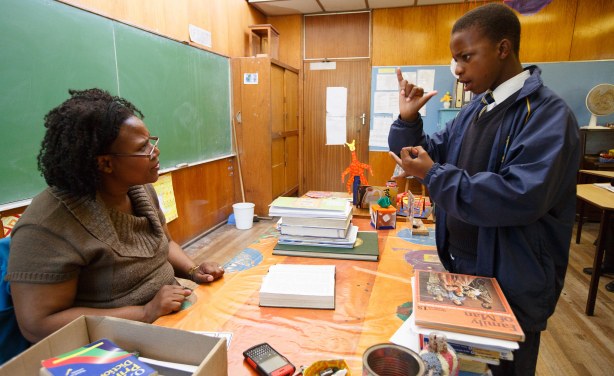
The Pan South African Language Board has welcomed the Constitutional Review Committee in Parliament’s reccomendation that Sign Language be declared the 12th official language, saying it is a «positive step».

The Constitutional Review Committee in Parliament has recommended that Sign Language be declared the 12th official language in SA, a language board has said.

The Pan South African Language Board (PanSALB) released a statement on Thursday acknowledging «the positive step».

«The committee is recommending that section 6 (1) and (5) (a) be amended to include SA Sign Language as an official language. The committee accepted the fact that, the issue of addressing the proposal for declaring SASL as an official language was long overdue,» said PanSALB spokesperson Sibusiso Nkosi.

PanSALB chief executive officer Dr Rakwena Monareng said Sign Language, like any other official language is a «fundamental human right that should be treated equally.

«We have made several crucial calls to government to prioritise sign language like any other formal language and efforts have for a very long time drawn blank. This was done on the basis that we believe it has been violated and marginalised as compared to other languages,» Monareng said.

 Implications

He added that he was looking forward to working with the department of education to help the promotion of Sign Language.

 Speaking to News24, director for the Centre of Constitutional Rights Phephelaphi Dube said that state institutions would first be affected by the addition of Sign Language as an official language.

«All state institutions, schools hospitals, government departments would need to have personnel who know Sign Language and can communicate in it.»

She said that because it would become a constitutional right, the private sector would also have to fall in line.

«It would mean the private sector itself – say banks for example – would have to take steps so members of the public interact with Sign Language.»

Dube further welcomed the proposed amendment to the Constitution.

«This is a manner of ensuring there is greater inclusivity in the SA context: A means of achieving further equality and not just on paper. It is a measure that we welcome.»

She said it was hoped that implementation would be concise.

Fuente: http://allafrica.com/stories/201707270794.html

Comparte este contenido:

Sudáfrica: Gauteng Education Deals With Sexual Assault Cases

Sudáfrica/Agosto de 2017/Fuente: All Africa

Resumen:  El Departamento de Educación de Gauteng dice que seis de 11 casos disciplinarios de agresión sexual han sido concluidos y los cinco restantes están bajo investigación. El departamento dijo el viernes que todos los educadores implicados fueron removidos de sus respectivas escuelas, mientras se finalizan sus procedimientos disciplinarios. De los seis que se han tratado, se despidieron a tres educadores, uno fue declarado no culpable, otro se ha colocado en dos meses de suspensión sin salario y otro educador ha renunciado. El departamento dijo que los estudiantes tienen acceso a servicios psicológicos proporcionados por los Equipos de Apoyo Basados en el Distrito, los cuales están vinculados con Organizaciones No Gubernamentales (ONGs) y otros departamentos gubernamentales para proveer servicios de consejería a estudiantes abusados.

The Gauteng Education Department says about six out of 11 disciplinary cases of sexual assault have been concluded, and the remaining five are under investigation.

The department on Friday said all implicated educators were removed from their respective schools, pending finalisation of their disciplinary proceedings.

Of the six that have been dealt with, about three educators were dismissed, one was found not guilty, another one has been placed on two months suspension without salary, and another educator has resigned.

The department said learners have access to psychological services provided by District Based Support Teams, which are linked with Non-government Organisations (NGOs) and other government departments to provide counselling services to abused learners.

Referrals are also done to specialist organisations such as Teddy Bear Clinic, Childline, Kidz Clinic and Child Welfare.

The department has assured the public that it has zero tolerance towards sexual harassment.

«We strongly condemn any acts of sexual misconduct in schools and always encourage learners to report such incidents to the relevant authorities at schools accordingly.

Such cases are reported to the department and upon receipt we always act immediately for appropriate action to be taken.

The department’s MEC Panyaza Lesufi said sexual assaults will never be tolerated at Gauteng schools, and warned that perpetrators will always be dealt with harshly.

«It is our responsibility to protect our children, especially a girl child. I am comforted that out of all reported cases, disciplinary steps were immediately taken and that all those found guilty were dismissed while those under investigation were removed from their respective schools pending the outcome of their disciplinary cases,» said the MEC.

According to education legislation, sexual relations between educators and learners are forbidden, even if learner/s consents to sex.

It is imperative that educators, learners and parents have a legal and ethical obligation to report such cases to the relevant authorities, for a prompt action.

«We always continue to call upon all educators to refrain from all types of misconduct because educators should lead by example to ensure that learners mirror their conduct in creating a safe school environment, conducive for effective teaching and learning at all times.

«Any transgressions will be promptly investigated and the department will deal with the perpetrators in accordance with relevant prescripts.»

Fuente: http://allafrica.com/stories/201708040729.html

Comparte este contenido:

South Africa: ANC Wants Free Tertiary Education for Poor Students in 2018

Africa/Sudafrica/Allafrica

Resumen: El Congreso Nacional Africano quiere que el gobierno proporcione educación terciaria gratuita a estudiantes pobres en el año académico 2018, dijo este lunes 31/07 el secretario general del partido, Gwede Mantashe. «Los subsidios totalmente subvencionados deben ser proporcionados a los estudiantes pobres que califican académicamente y los pobres se definen como provenientes de familias que ganan un ingreso familiar bruto de R150,000 y menos por año», dijo Mantashe. La propuesta surgió del comité ejecutivo nacional del ANC lekgotla durante el fin de semana, por delante del gabinete lekgotla que comienza el martes. El ANC dijo que los estudiantes cuyas familias ganaban entre R150 000 y R600 00 por año deberían ser subsidiados a través de una combinación de subvenciones y préstamos.


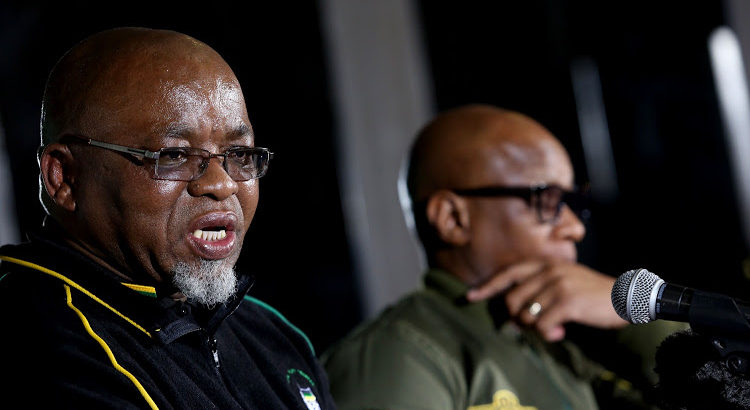
The African National Congress wants government to provide free tertiary education to poor students in the 2018 academic year, the party’s secretary general Gwede Mantashe said on Monday.

«Fully subsidised grants should be provided to academically qualifying poor students. Poor students are defined as coming from families who earn a gross family income of R150 000 and below per annum,» Mantashe said.

The proposal emerged from the ANC national executive committee lekgotla over the weekend, ahead of the Cabinet lekgotla that starts on Tuesday.

The ANC said students whose families earned between R150 000 and R600 00 per annum should be subsidised through a combination of grants and loans.

«Students will be required to maintain adequate academic performance, and failure to do so would lead to disqualification,» Mantashe said.

 The ANC government is under pressure from within the party, and from students, to provide free education.

The ANC Youth League called for free education to be implemented by 2018 at the party’s national policy conference. There have also been nationwide Fees Must Fall protests.

The ANC’s recommendation comes ahead of findings by a commission established to investigate the feasibility of free higher education.

The commission has until August 30 to release its findings.

Source: News24

Fuente: http://allafrica.com/stories/201707311055.html
Comparte este contenido:

South African Education Head Welcomes Racist Teacher’s Dismissal

South African/August 01, 2017/By: News24/Source: All Africa

Gauteng Education MEC, Panyaza Lesufi has welcomed the decision by St John’s College to fire a teacher who was found guilty of misconduct in an internal hearing about a racist campaign against black, Indian and Greek students, as well as foreign students.

Lesufi said the teacher left the school with immediate effect on Friday, following his visit to the school earlier in the day.

The elite school in Houghton, Johannesburg was engulfed in a race crisis after the teacher was charged with bringing the school into disrepute; contravening the South African Council of Education’s code; and making racist remarks.

He was found guilty during the internal hearing and given a final written warning, but retained by the school.

The school’s spokesperson Jacqui Deeks told News24 on Thursday although the educator had been found guilty, there were «mitigating circumstances which did not warrant dismissal».

«St John’s College would like to emphasise that it takes allegations of racism and discrimination very seriously and we are vehemently opposed to bigotry in any form and will not tolerate racist actions,» Deeks said at the time.

 Lesufi rejected the school’s position and called for the teacher to be fired. He then visited the school on Friday morning to give the school an opportunity to redeem itself.
 During his meeting with the school’s management, Lesufi demanded that the school dismiss the teacher before 1pm on Friday and said legal action would be taken if it failed to do so.

«The MEC said the final written warning was unsatisfactory considering the seriousness of the charges and the guilty finding against the educator,» the department said.

Following the meeting, Lesufi met the representatives of the Independent Schools Association of South Africa (ISASA) to discuss the issues facing the private education sector.

«It was agreed that a summit would be facilitated in September 2017 to deal in detail with all issues affecting private and independent schools in particular. A date for the summit will be announced in due course,» he said.

He said all schools, whether they fell under the public or private sector, could not have codes of conduct which contravened the country’s Constitution.

«We will deal with racism decisively and not give racists space to breath because non-racialism is non-negotiable,» Lesufi said.

Source:

http://allafrica.com/stories/201707280656.html

Comparte este contenido:

Sudáfrica: R101m private school subsidy slated by teacher unions

Sudáfrica/Julio de 2017/Fuente: IOL

Resumen:  El departamento provincial de educación ha subvencionado 101 escuelas independientes por un monto de R101 millones durante el año fiscal 2016/17, dijo la portavoz de la educación MEC Debbie Schäfer, Jessica Shelver, en respuesta a una consulta de Cape Times. Los sindicatos de maestros han criticado la financiación, diciendo que se debe disponer de dinero para mejorar la infraestructura y mejorar el personal de las escuelas públicas que atienden a los alumnos más desfavorecidos. El director ejecutivo de la Organización Nacional de Profesores Profesionales de Sudáfrica (Naptosa), Basil Manuel, dijo que mientras que las escuelas independientes siempre han tenido derecho a subsidios, no había necesidad de tener escuelas independientes si se proporcionaba fondos adecuados para mejorar las escuelas públicas.

The provincial education department has subsidised 101 independent schools to the tune of R101 million during the 2016/17 financial year, Education MEC Debbie Schäfer’s spokesperson, Jessica Shelver, said in response to a Cape Times query.Teacher unions have slammed the funding, saying money should be made available to improve infrastructure and upskill staff at public schools who cater to the most disadvantaged pupils.

National Professional Teachers’ Organisation of South Africa (Naptosa) executive director Basil Manuel said while independent schools have always been entitled to subsidies, there was no need to have start-up independent schools if proper funding was provided to improve state schools.

“You get schools like Bishops, and then you get schools that are battling, many are on the other side of that divide,” Manuel said.

He said funding was required for state school infrastructure and teacher development. “The way children from the most impoverished backgrounds can be reached is in the public sector and in public schools.

“There are far worse results in some of these (independent) start-up schools,” Manuel said.

Manuel added that independent schools were also emerging as public schools struggled to accommodate increasing numbers of pupils entering the schooling system.

“One of the challenges is staffing, this is a major crisis in many places. We are still sitting with school numbers in excess of 40 pupils per class. There is also the issue of appropriately qualified teachers. We need money to train our teachers and improve our public schools,” he said.

South African Democratic Teachers Union (Sadtu) provincial secretary Jonovan Rustin said the union would enter into discussions with the department on the issue.

“We know that some of these (independent) schools being funded are in disadvantaged areas.

“But we would like to see all schools become state schools,” Rustin said.

He said independent schools should be absorbed and become state schools for the government to take responsibility for the education of these pupils.

Shelver said the same amount of money was spent on subsiding independent schools in the previous financial year.

“Independents schools play an important part in education in South Africa – evidence of this is where independent schools make up almost 24% (as opposed to almost 13% in the Western Cape) of schools in Gauteng,” Shelver said.

“The department has a positive relationship with the 254 registered schools in the Western Cape and assists our poorer independent schools where possible, by providing them with monitoring and support from both head office and district officials.

“We also provide a subsidy for those that qualify,” she said.

In a statement this week, provincial DA spokesperson on education and standing committee on education chairperson Basil Kivedo, said the 254 independent schools registered in the province were located across all eight districts.

“This equates to 40% of all independent schools receiving support from the Department of Education,” Kivedo said.

“All schools that wish to apply must have been in operation for at least one year.

“We urge all registered independent schools to apply for support from the WCED.”

Kivedo added that he was pleased that the WCED continues to foster a relationship with independent schools through the ongoing monitoring and support provided from both head office and district officials across the province.

Fuente: http://www.iol.co.za/capetimes/news/r101m-private-school-subsidy-slated-by-teacher-unions-10514716

Comparte este contenido:

South Africa: Basic Education Sets Record Straight On Pass Requirements

Sudáfrica/ 24 de Julio de 2017/Allafrica

The government is considering a proposal that Mathematics is no longer a compulsory passing subject for the promotion of senior learners.

The Department of Basic Education (DBE) has rebuffed media reports on the minimum promotion requirements in school, labelling these claims as misleading.

«The original article, which appeared in Rapport newspaper on 2 July 2017, titled Nòg ‘n verlaging van slaagpunte ‘beledig jonges’, and subsequently published on Mybroadband.co.za (2 July, Government wants to drop pass marks in school even further) is riddled with errors. It is confusing and also vague.

 «It seems the journalist did not have sufficient information or did not fully understand the issue under discussion.

«One glaring error in the article (in Rapport) refers to purported changes to be made in promotion requirements in Grade 10 and 11. The truth is, there are no such changes being made or anticipated [to be made] or being discussed,» the department said in a statement.

National Curriculum Statement

The department said the Task Team established by the Minister of Education in 2009 to investigate poor curriculum implementation in schools recommended changes to the programme and promotion requirements in the Foundation, Intermediate and Senior Phase.

«The National Curriculum Statement, Grades R – 12, was approved as national policy and published in the Government Gazette 34600, Notices 722 and 723 of 12 September 2011, and it contained the new promotion and progression requirements.

 «The new promotion requirements are not aligned with the National Senior Certificate (NSC) promotion requirements, which is the national benchmark. Hence, there is a need to align the promotion requirements across the Foundation, Intermediate and Senior Phase with the FET [Further Education and Training] band,» the department explained.

The department said it has been monitoring the implementation of the new requirements in provinces, and it was apparent from the 2014 mid-year performance that the new promotion requirements were adversely affecting the performance of learners at school level.

National Assessment Circular

 To minimise the impact of the higher promotion requirements in the Senior Phase, the department issued National Assessment Circular 3 of 2015 to allow for the adjustment of marks and in 2016, given the adverse impact of the compulsory pass requirement of Mathematics at 40%, a special condonation dispensation for Mathematics was applied.

Based on National Assessment Circular 3 of 2016, the department said, learners who passed all other subjects, but failed Mathematics with a minimum mark of 20%, were condoned and would thus pass Mathematics and pass the examination as a whole.

«It is therefore considered necessary, having observed the negative impact of the compulsory pass requirement of Mathematics at 40% and Language (Home Language) at 50%, to consider amending policy and regulations in order to respond to the challenges and the unintended consequences brought about by the new programme and promotion requirements,» the department said.

In view of these observations, the department said it will embark on a broad consultation process with educationists, assessment experts, higher education institutions, parents and members of the public, on the amendments to the Foundation, Intermediate and Senior Phase promotion requirements.

The proposal that will be consulted on relating to the Senior Phase includes:

Passing four subjects at 40%, one of which is a Home Language; passing any other four subjects at 30%; and Mathematics being removed as a compulsory promotion requirement.

«The above proposal is aligned to the current requirements in the FET band. Once discussed internally and externally, approved and promulgated, the relevant policy and curriculum changes will be communicated to all relevant stakeholder bodies by means of official curriculum and examination circulars.

«At this point, this is merely an issue for internal discussion and broader public consultation,» the department said.

Fuente: http://allafrica.com/stories/201707040367.html
Comparte este contenido:
Page 17 of 49
1 15 16 17 18 19 49