Page 731 of 1685
1 729 730 731 732 733 1.685

Unicef y OMS promueven nueva guía de apoyo a la lactancia materna

UNICEF – OMS/ 17 de abril de 2018/Fuente: http://prensa-latina.cu

La Organización Mundial de la Salud (OMS) y el Fondo de Naciones Unidas para la Infancia (Unicef) promueven hoy una guía de apoyo a la lactancia materna en los centros de salud para embarazadas y recién nacidos.
El documento incluye lo que denominan 10 pasos para una lactancia materna exitosa y apoya la iniciativa de hospitales amigo de la madre y el niño, lanzada en 1991 con el fin de alentar a las madres primerizas a amamantar y a orientar a los trabajadores de salud sobre la mejor forma de apoyarlas.

Según dijo la directora ejecutiva de Unicef, Henrietta H. Fore, la lactancia materna salva vidas y ayuda a mantener a los bebes sanos desde sus primeros días hasta su madurez.

Los hospitales no están solo para curar a los enfermos, también tienen que promover la vida y garantizar que la gente pueda desarrollarse y vivir al máximo de sus posibilidades, señaló el director general de la Organización Mundial de la Salud, Tedros Adhanom Ghebreyesus.

Unicef y la OMS consideran que son los centros sanitarios -representantes de la lucha a favor de la sanidad universal- quienes deben ejercer el liderazgo a la hora de promover esas prácticas.

De acuerdo con sus informes, Cuba destaca entre los países con mejores resultados al aplicar la iniciativa de hospitales amigos de la madre y el niño.

La guía de 10 pasos que promueve ahora la OMS y la Unicef insiste en la necesidad de informar a todas las embarazadas y a sus familias de los beneficios de la lactancia natural y la forma de ponerla en práctica.

Además, aboga por facilitar el contacto ‘piel con piel’ y ayudar a las madres a iniciar la lactancia cuanto antes sea posible tras el parto.

La lactancia materna es vital para la salud de un niño y reduce los costos de atención para los centros de salud, las familias y los gobiernos, indican investigaciones.

Amamantar a todos los bebés durante los primeros dos años salvaría anualmente la vida de más de 820 mil niños menores de 5 años, reporta la OMS.

La lactancia durante la primera hora después del nacimiento protege a los recién nacidos de las infecciones, mejora su coeficiente intelectual, la preparación para la escuela y reduce el riesgo de cáncer de mama en la madre.

Fuente del documento:
http://prensa-latina.cu/index.php?o=rn&id=170415&SEO=unicef-y-oms-promueven-nueva-guia-de-apoyo-a-la-lactancia-materna
Comparte este contenido:

Examen de admisión a licenciatura de la UNAM: Talento que se desaprovecha

Por: Roberto Rodríguez Gómez

La Universidad Nacional Autónoma de México es la institución superior más atractiva para los egresados del bachillerato. Cada año, una creciente demanda de acceso desborda las capacidades de cupo de la institución. La UNAM dispone para el primer ingreso al ciclo de licenciatura un total de cuarenta y nueve mil lugares, cifra que incluye la matrícula de los sistemas escolarizado, abierto y a distancia y que suma la inscripción en todos los campus y escuelas de la institución. De ese total más de la mitad es ocupado por los egresados del propio bachillerato de la Universidad: la Escuela Nacional Preparatoria y el Colegio de Ciencias y Humanidades. El resto, aproximadamente 23 mil lugares, se distribuyen a los egresados de otras opciones de enseñanza media superior que participan en el concurso de selección de la UNAM.

Mediante el mecanismo normativo de “pase reglamentado” los egresados del bachillerato de la UNAM pueden tener acceso directo al plantel y carrera de su preferencia siempre que satisfagan varios supuestos: haber terminado sus estudios en tres años y contar con un promedio mínimo de nueve puntos. Quienes concluyeron estudios en un máximo de cuatro años y tienen promedio de siete están sujetos al cupo disponible en las carreras, aunque se respecta el beneficio del pase directo. Este subconjunto debe solicitar admisión declarando una segunda opción para el caso en que no sean asignados a su primera preferencia. Por último, quienes egresan después del cuarto año con al menos siete de promedio tienen derecho a presentarse al concurso de selección, pero no cuentan con los beneficios del pase directo.

Bajo estas condiciones, no es de extrañar que en los planteles y carreras de mayor demanda el número de egresados del bachillerato de la UNAM limite las posibilidades de acceso de los egresados de otras instituciones, ya sean públicas o privadas. Como el número de aspirantes externos ha crecido notablemente —prácticamente se ha duplicado en la última década al pasar de cien mil a doscientos mil solicitantes— la calificación del examen de admisión requerida para obtener un lugar en la Universidad se ha elevado cada año.

La UNAM no determina desde su administración central el número de plazas escolares disponibles para el primer ingreso a licenciatura. Es una decisión descentralizada. En cada facultad y escuela, el Consejo Técnico, a propuesta del director, establece el cupo máximo de primer ingreso en cada carrera, así como el número de lugares disponibles para la vía del concurso de selección. Una vez que se conocen los resultados del examen de selección (se practican dos al año para ingreso a licenciatura), ingresan en orden de prelación, por su calificación en el examen, los primeros de la lista de aspirantes. Cubierto el cupo, el resto queda fuera. En este esquema, en cada carrera queda fijada una calificación de corte. Suele ocurrir que la misma carrera, en los diferentes planteles en que se imparte, tenga distintas calificaciones de corte.

La UNAM publica cada periodo el número de aciertos que posibilitaron el primer ingreso en cada carrera, plantel y modalidad el año previo. De ese modo los estudiantes pueden, en teoría, calcular sus posibilidades de ingreso y elegir lo que más les convenga según un balance de intereses y capacidades. Pero no es un cálculo simple, dado que algunas carreras presentan indicadores de corte superiores a cien puntos.

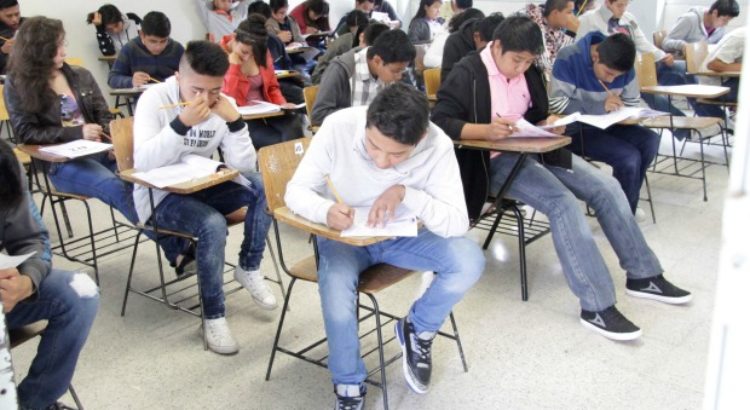
Obtener cien puntos o más en el examen de ingreso no es nada sencillo. La calificación promedio del total de aspirantes es de apenas 51 aciertos. Apenas uno de cada cien aspirantes consigue remontar esa barrera en los exámenes. En la última convocatoria poco más de tres mil aspirantes obtuvieron cien puntos o más en el examen. Lo sorprendente es que 640 de ellos no obtuvieron lugar al haber optado por carreras de alta demanda.

Para el ciclo 2017-2018 los datos del concurso de la UNAM indican que en 36 de los planes de estudios la calificación de corte, es decir el umbral de admisión superó los cien puntos. La mayoría de estos planes corresponden a la modalidad escolarizada de carreras que se imparten en las facultades de Ciudad Universitaria. Veamos la lista con la puntuación de corte entre paréntesis. De la Facultad de Ciencias las carreras de Actuaría (109), Biología (107), Ciencias de la Computación (105), Ciencias de la Tierra (102), Física (110), Física Biomédica (107), Matemáticas (104) y Matemáticas Aplicadas (107). De la Facultad de Ciencias Políticas y Sociales las carreras de Ciencias de la Comunicación (106) y Relaciones Internacionales. De la Facultad de Odontología la carrera de Cirujano Dentista (103). De la Facultad de Derecho la carrera del mismo nombre (101). De la Facultad de Ingeniería, prácticamente todas las carreras: Civil (100), Minas y Metalurgia (105), Eléctrica y Electrónica (101), Computación (102), Industrial (102) y Mecánica (106). De Filosofía y Letras las carreras de Derecho y Gestión Interculturales (103), Lengua y Literatura Hispánicas (108), Letras Clásicas (103), Literatura Dramática y Teatro (104). De la Facultad de Medicina la carrera de Médico Cirujano (114), de la Facultad de Medicina Veterinaria y Zootecnia la carrera de igual denominación (108), y de la Facultad de Química todas las carreras: Ingeniería Química (103), Química (106) y Químico Farmacobiólogo (109). Por último, de la Facultad de Psicología la carrera de Psicólogo (108).

En varios de los campus exteriores hay carreras que también exigen un puntaje superior a las cien unidades: Actuaría en la FES Acatlán (107); Artes Visuales (105), y Diseño y Comunicación Visual (106) de la Facultad de Artes y Diseño; en la FES Cuautitlán la carrera de Diseño y Comunicación Visual (101) y la de Medicina Veterinaria y Zootecnia (100). Por último, la carrera de Médico Cirujano en las dos unidades externas: FEZ Zaragoza (114) y FES Iztacala (111).
Conviene remarcar. En el concurso de selección más de seiscientos estudiantes, de los mejores que hay, quedaron fuera por falta de cupo. La UNAM no debería prescindir es este talento sino, al contrario, buscar formas para su integración a la institución.

Fuente del Artículo:

Examen de admisión a licenciatura de la UNAM: Talento que se desaprovecha


Comparte este contenido:

Interview: Deborah Quazzo on the Business of Education Innovation, the Nation’s Shrinking Skilled Workforce & the GSV Acceleration Fund

By: EMMELINE ZHAO

Deborah Quazzo got her start in education at an investment bank.

In the mid-1990s, while Quazzo was working in finance at Merrill Lynch & Co., she was inspired by colleague Michael Moe, who was a growth research analyst identifying trends and themes in the growth economy. Moe developed white papers and built businesses around one of the core themes: education.

What Moe discovered was that human capital, a major chunk of American GDP, was highly fragmented and inefficient, yet untouched by technology at the time. Employers and economists were deeply dissatisfied with outcomes across the board. In working together, Moe and Quazzo realized that there was huge potential for entrepreneurs to enter the space and create businesses in education that built human capital.

With that, Quazzo began looking at the future of education as an investing platform, from which she and Moe eventually grew to become business partners upon leaving Merrill Lynch. As Moe continued to explore abroad growth themes, Quazzo was diving deeper into education domestically.

In 2009, Quazzo co-founded GSV Advisors, an advisory firm focused on learning and human capital technology companies. She now acts as founder and managing partner of GSV Acceleration Fund, a venture capital fund with more than 25 investments in disruptive technology companies, including ClassDojo, Course Hero, and Turnitin.

GSV, which stands for Global Silicon Valley, partnered in 2010 with Arizona State University for the first ASU+GSV summit. Now in its eighth year, the gathering brings together leaders from investment, enterprise, higher education, and pre-K–12 sectors “for elevating dialogue and driving actionaround raising learning and career outcomes through scaled innovation.”

Ahead of the summit next week, during which more than 4,000 stakeholders and change makers in education innovation will descend on San Diego for the conference, The 74 spoke with Quazzo about the inspiration behind ASU+GSV, the role of technology and investment in learning, and the state of innovation across the American education sector. This interview has been edited for length and clarity.

What happened in 2008 that made you decide to dedicate 100 percent of your time to investing in education technology?

I realized that I had become quite passionate both philanthropically as well as professionally around the fact that innovation in the education market is a unique lever in giving people access. Our motto is getting all people access to the future and allowing all people to participate in the future economy. So it was an area that I was inspired by and made me get out of bed in the morning, so I really hunkered down and began to spend 100 percent of my time there, which has been great.

How has your perspective on education evolved since the time when you were just reading Moe’s reports at Merrill Lynch?

I don’t know if it’s change as much as just what I didn’t know when I started.

We have invested thousands of hours, meeting with companies, talking to entrepreneurs and innovators, both philanthropically as well as socially. We spent time in schools with educators both in the K-12 space as well as the higher ed space. The enterprise is as interesting as anything.

I think there is great dysfunction in terms of delivering the right learning at the right time and the enterprise, especially with the pace at which jobs are changing today. So I’m a lot more optimistic today than I was probably when I got into this 20 years ago.

I think 20 years ago, the education sector really lagged every other technology sector in terms of adoption of technology-based solutions. That’s not to say that technology is a silver bullet, but it can certainly give critical scale in an area where we really need scale to help us bridge achievement gaps and bridge the fact that only 30 percent of people have a higher education credential and probably more like 60 to 80 percent of people are going to need them in the future. So we think it’s a critical wedge.

I think what’s really changed is that somewhere around 2008, 2009, 2010, we began to see a new a new breed of leader and entrepreneur come into the sector — both social and commercial. People who had either been very successful in technology or in other sectors and actually wanted to come make a big difference began to bring their talents into the marketplace.

The population of students and teachers also over time became dominated by digital natives in a way that obviously wasn’t true in prior years. In programs like Teach for America young people out of college will go into the teaching profession and become inspired about fixing one thing or another in their classroom experience, and go back out and found companies. We’ve seen lots of that from different sources.

So I think there has been sea change. I think the other thing that’s happened is just where we are in the tech sector in terms of having data and being able to transparently look at results: It allows students, teachers, faculty members, and adult learners to know whether the things they are using are actually working. That was something that hadn’t really been true in the past.

It’s what we like to call “a confluence of catalysts.” There was dramatic reduction in costs for technology implementation, the huge influx of talent into the sector, and just the natural migration of demographics such that the user had a natural digital proclivity.

Do you think we’ve seen a true disruption in K-12 and higher ed?

I do. The K-12 market gets kicked around a lot as being a market environment that never changes, but I actually think some of the greatest innovations are happening in K-12 and has happened around personalized learning, around looking at different ways of delivering instruction, led by great school leaders and teachers. So maybe I don’t know it’s been disruptive as much as it has been a strong evolution towards more effective delivery of learning in classrooms, and I think you can see results in different pockets all over the country.

Chicago is a good example of where people have really looked to leverage all kinds of that innovation and thinking to drive outcomes for students.

I’d say higher ed has seen more literal disruption, whether it’s MOOCs, which people love to act like they aren’t working, but they’ve aggregated just a massive number of global students. Students at Coursera, for example, are actually accelerating on a month-to-month basis coming onto the platform.

We’re seeing all kinds of interesting businesses being developed for the delivery of online degrees at universities in a non-university setting. So I think there actually has been a really interesting disruption in higher education institutions, whereas 10 years ago you had to sell an online learning product. Today I think it’s pretty well recognized that digital delivery of learning in some format is a sensible part of your portfolio. Students are really expecting to see some component of their learning in online formats, so I think there has been a literal disruption in the higher ed market that’s continuing. And it will continue to play out, as we’ve actually got some pretty interesting demographic changes coming down the pike to higher ed.

Tell us more about these demographic changes.

There’s a book written by Nathan Grawe called Demographics and the Demand for Higher Education. There was a dramatic fall-off in fertility rates during 2008–2010, a depression that really has not bounced back. So if you look out to the 2025 area, you begin to see very substantial reductions in high school population that would be going to college: 10 to 15 percent, even higher percentages, depending on geography. And you also end up seeing a re-sorting of where the growth is.

The Northeast and the Midwest will see the most precipitous declines. The Southwest is the only area that’s seeing any material growth in college-eligible high school population, so it’s a pretty interesting dynamic for a university to be planning for that, that has been landlocked by their site.

So if you’re a mid-tier university in the Northeast, you probably need to be thinking about where you’re going to be pulling your student body from, whether it should be all physical or whether you need to actually have it be digital or online in order to support your physical plan.

What’s your analysis of the education policy landscape right now in terms of innovation?

My general sense is that the wheels are in motion. No one wants to talk about Common Core anymore, but those wheels did get set in motion and did get planted in different ways — maybe people changed the titles. But accountability at the district level, we certainly see it here in Chicago, there’s a very effective accountability framework.

I think a lot of the things that have been put in place are moving forward. I think whether there’s policy changes in higher ed that result in freedom for for-profit institutions is sort of a moot point at this point, as many of them have now converted into different formats of not-for-profit and for-profit pieces, so that industry has really already restructured ahead of any further policy change unless new entities jump in as a result, which seems less likely.

So I don’t get the sense that policy is either being used to aggressively accelerate things — which I would say would have been true under the Obama administration — or to decelerate things — which could also be argued to be true under the Obama administration, depending on what sector you’re talking about — but it was an activist policy environment then and perhaps it’s activist in a different way now with the folks on choice and things like that. But I just don’t see that as having as much of an impact, barring some big changes today.

Have you encountered challenges and/or opportunities because you are a woman?

Challenges change. I do think we’re particularly proud within the education and human capital talent in the technology sector. At our ASU+GSV Summit, we don’t select with this in mind, but we have about 400 CEOs of tech companies present the summit and about a third of those companies are founded or led by women. This year actually the numbers went up to about 38 percent of the companies are founded or led by women.

On the positive side, I would say this: The education and human capital sector, for whatever reason, seems to be one that’s much more supportive for women to participate in leadership roles, because a normal tech sector is more like 6 percent.

I have a venture capital fund, and certainly those numbers are still pretty bad in venture capital. We need to have much more aggressive tone in looking at the benefit of having diversity in terms of sex, race, investment communities, and everything else. Diversity leads to better decisions.

About a quarter of our companies are led by people of color, so we’re very proud of those numbers. But in the finance community we don’t see that kind of diversity, so it has a long way to go and we have a lot of work to do.

What are too few people paying attention to right now in education?

It’s a great sector to work in because you have so many people who really care about it. I’m quite optimistic about where things are directionally. I think people do need to keep looking down the road at things like the demographic changes, which are mathematical and should have been obvious to everybody, but I think it’s kind of taken this guy writing a book to really move it front and center.

The bizarre part is we have declining enrollment in higher education and yet we’ve got an expanding need for people to have a higher ed credential of some sort in order to be relevant in the economy and have a good job.

So I think there is a strange dichotomy there that doesn’t seem to get a lot of focus for explanation, like why would we have declining enrollments in the face of people actually needing to have higher levels of skills to hold employment?

Otherwise I feel really fortunate to be operating an area where there are lots of people who really care a lot about the outcomes here, because they know it’s going to make a huge difference in how this country performs in the next 100 years — or doesn’t.

How do you think the private and public sectors should co-exist in education?

We have a concept called “no labels.” We think it’s relatively irrelevant what your tax structure is — whether you’re for-profit, not-for-profit. Organizations have to be held accountable for delivery of “return on education.” Are you increasing access, reducing costs, providing leverage to learning, and that accountability should really be there for any actor in the market. For-profits and higher ed should not be held more accountable than not-for-profits, because there are many bad actors in the not-for-profit sector, as there might have been in the for-profit sector. So I think it’s bizarre to have accountability standards that are different.

Every organization should have similar accountability standards. I think sometimes what you’ll see in for-profit entities is that you can instill greater urgency with potentially less bureaucratic overload, and I think things can get done in startups that can’t get done at bigger companies, either for-profit or not-for-profit, that can be very productive and disruptive to what’s happening. So I think it’s critical that there’s a partnership between the commercial and social organizations in the sector, and that they’re both marching forward and are both held highly accountable for outcomes.

See the full 74 Interview archive right here; get the latest editions delivered straight to your inbox by signing up for The 74 Newsletter

Source: 

74 Interview: Deborah Quazzo on the Business of Education Innovation, the Nation’s Shrinking Skilled Workforce & the GSV Acceleration Fund

Comparte este contenido:

EEUU: Utah leaders hope education measure helps keep teachers

EEUU/April 17, 2018/JULIAN HATTEM. The Associated Press/Source: https://www.seattletimes.com

Political leaders in Utah said Monday they hope a new ballot measure that would nearly triple education funding in five years will help the state entice and hold on to its best teachers.

The ballot initiative will give voters the opportunity to support an increase in the gas tax, currently 29.4 cents a gallon, by 10 cents to gradually increase education funding over the next five years. The proposal was crafted as part of a compromise between lawmakers and an education group that wanted voters to approve a plan that would have sent $715 million to the schools immediately through a hike in state sales and income taxes.

Combined with other funds and a freeze on state property tax rates, which would otherwise drop as property values rise, the initiative would increase education funding yearly starting at $141 million in 2019 and reaching $386 million in 2023.

That would raise overall state education funding to $585 million — nearly three times the funding schools would otherwise receive that year.

If voters approve the measure in November, lawmakers would decide how to allocate the new educational spending, including how much will go to teachers.

The initiative comes as other states grapple with standoffs over teacher salaries that have led to mass protests from West Virginia to Arizona. Last week, thousands of teachers in Kentucky protested at the state Capitol and cheered as lawmakers overruled a veto of a budget that would increase public education spending.

“We need to make sure we can pay our teachers and attract the best and brightest and retain them in the schoolrooms,” Republican Gov. Gary Herbert said at a ceremonial signing for the bill at an elementary school in suburban Salt Lake City on Monday.

Heidi Matthews, the president of the Utah Education Association, the state’s largest teachers’ union, said the money could be used for classroom assistants to give students “more one-on-one learning and alleviate the impact of Utah’s exceptionally large class sizes.”

Additional funding will ensure teachers “have the resources they need to reach, teach and inspire every student and deliver the high quality education that they deserve,” she said.

Utah’s spending per pupil in school is the lowest in the nation. The state spent an average of $6,575 per student in 2015, according to the U.S. Census Bureau, compared to $11,392 nationally.

The state also has some of the nation’s fullest classrooms, according to Department of Education data.

Source:

https://www.seattletimes.com/nation-world/utah-leaders-hope-education-measure-helps-keep-teachers/?utm_source=RSS&utm_medium=Referral&utm_campaign=RSS_all

Comparte este contenido:

How Minecraft is becoming the foundation of a generation’s computer science education

By: CHAD SAPIEHA

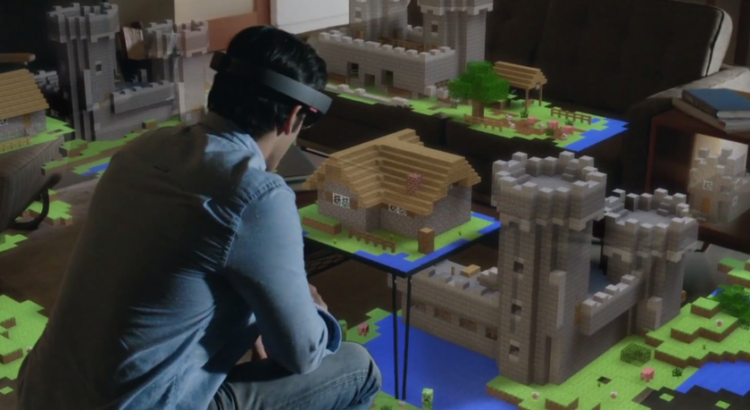
Minecraft: Education Edition will be one of the most popular modules at Hour of Code events around the world this week.

Like many adults, Benjamin Kelly didn’t initially get the global Minecraft phenomenon, which has seen millions upon millions of kids investing endless hours exploring and creating within a blocky virtual world. Eventually he came around.

“I consider myself a late adopter,” says Kelly, who teaches technology at Caledonia Regional High School in New Brunswick. “But the students’ passion for the game was unyielding. I adopted Minecraft mainly because of that.”

By “adopted” he means he not only began playing it himself but also brought the game into his classroom. In addition to the 120 million-plus copies of the consumer-oriented version that have been sold since the Swedish-made mining game launched in 2011, Microsoft Corp. has sold more than 2 million Minecraft: Education Edition licenses specially designed to help kids learn to code.

Once he started poking around the game he began to see its educational potential. “It offers community,” he explains. “Minecraft is so popular it’s a culture. And by adding the recent powerful coding connections to the game Microsoft has created the ideal computer science education environment.”

Minecraft: Education Edition allows kids to command an agent within the game using computer code, sending it off to perform actions such as mining, harvesting, or building while the player continues doing whatever he or she likes. It’s designed to provide a familiar and accessible environment in which to introduce kids to some of the core concepts of computer science while keeping things fun and creative.

“I’ve seen examples where coding has caused the agent to build entire cities with random building heights all while the student continues to explore the game,” says Kelly.

Once he began using Minecraft in his classroom there was no turning back. Kelly went on to become a Microsoft Innovative Educator Expert and a Global Minecraft Mentor. He was recently named New Brunswick’s Inspirational STEM Teacher of the Year for 2017.

Minecraft may be the single best educational tool available to support inclusion, universal design for learning, a wide variety of curriculum, and, most importantly, 21st century skills and competencies needed for successful lives and careers,” he says.

Kelly is just one of thousands of teachers now using Minecraft: Education Edition, and he’ll putting it to work again this week as part of the Hour of Code, a series of more than 100,000 teacher-planned educational events taking place in over 180 countries, with 3,000-plus events registered in Canada alone. Educators can choose from hundreds of ready-made tutorials sorted by grade and topics, many with prepared teacher notes. The student-led Minecraft module is, unsurprisingly, among the most popular of these programs.

Cam Smith, a spokesperson for Microsoft in Education Canada who has spent his entire career leveraging technology as a teaching aid (he built his first computer when he was 15), isn’t surprised that kids gravitate towards Minecraft as a portal to learning about computer science. He says nearly 70 million people have used Minecraft tutorials to understand the basics of coding.

Minecraft is a great first step into coding,” says Smith. “It’s an open sandbox environment that is already beloved by students of all ages, genders, and backgrounds around the world. It’s a powerful validation that coding can be a truly creative pursuit for students.”

But are kids actually learning anything by playing Minecraft in the classroom? Smith is convinced they are.

“I’ve seen first-hand the power of how a gamified learning approach to coding ignites curiosity and passion within students,” he explains. “I’ve spoken to educators and have seen students learn to code using Minecraft in classrooms across the country. Complimentary to learning to code, Minecraft: Education Edition helps kids with teamwork by building worlds together.”

Smith’s job has given him opportunity to see how Minecraft not only helps students learn about computer science, but also geography and architecture as kids recreate real world replicas of schools, provinces, and cities. He even once observed students building a river in Minecraft to study fish conservation.

And he’s looked on, satisfied, as Minecraft has nudged quiet students out of their shells. “I’ve seen Minecraft: Education Edition be an incredible tool for students to stand out where they might not be as vocal in the classroom,” he says. “Their work shines through building confidence and an interest in STEM learning.”

As a teacher, Kelly has seen these sorts of occurrences first-hand, too. He believes that Canadian universities are now being flooded with students in computer science and engineering who cut their coding teeth via Minecraft. He thinks even those who don’t go on to study STEM subjects benefit from spending time with Minecraft in the classroom.

“As our world becomes more and more globally competitive and robots take over countless careers, creativity will be a badge for employment,” he explains. “Minecraft is a giant sandbox only limited by the player’s creativity while at the same time fostering the growth of creative ability. The 21st century competencies will win careers moving forward in a world where knowledge is just a mobile device away. Computer science education – and Minecraft: Education Edition – prepare our students today for that future.”

Source:

http://calgaryherald.com/technology/gaming/how-minecraft-is-becoming-the-foundation-of-a-generations-computer-science-education/wcm/f18131f0-a3d4-4d78-a758-2794077de785

Comparte este contenido:

Educación para la democracia

Por Carlos Ornelas.

Es tiempo de campañas políticas; mucha gente quiere hacerle llegar sus propuestas a los aspirantes a la Presidencia y, si no se puede, a los postulantes a puestos menores. Estoy convencido de que la mayoría de los proyectos que personas y organizaciones presentan a los candidatos son ejercicios en optimismo. No los van a leer, menos a tomar en cuenta. Hoy hago una maniobra de otra índole. Me pregunto cómo pudiera ponerse en práctica —a partir de lo existente— un gobierno democrático de las escuelas.

La educación para la democracia transita por el gobierno democrático de las escuelas (Dewey dixit). Complemento: el gobierno es política, no nada más administración. Con todo y que repruebo el uso de la palabra gobernanza, ciertos de los razonamientos expuestos en el Capítulo V del Modelo educativo para la educación obligatoria que propone la SEP abren la puerta —o al menos ofrecen la oportunidad— para ampliar la deliberación democrática en la base del sistema, en cada escuela. El Modelo asienta una estrategia de arriba hacia abajo.

Sin embargo, casi de inmediato despliega la posibilidad de franquear ese trazado al destacar que: “El nuevo esquema que coloca la escuela al centro del sistema educativo no sólo supone un cambio en la gestión y en la pedagogía, sino que implica una transformación cultural de la mayor relevancia, en la cual se subordina todo ejercicio de la autoridad al aprendizaje de los estudiantes”. De acuerdo, es oferta, no realidad.

En lugar de nada más criticar esta propuesta, pienso que vale la pena tomar en serio la idea de colocar la escuela al centro de la política educativa. Veo una coyuntura para poner en práctica la estrategia que propuso Jacques Delors, en su célebre, La educación encierra un tesoro: “La participación de la comunidad local en valorar necesidades por medio del diálogo con las autoridades y grupos interesados en la sociedad es una primera, esencial, etapa para ensanchar el acceso y mejora de la educación”. El desafío consiste en cómo involucrar al mayor número de maestros que conciban a la democracia como un ejercicio de la crítica y la acción libre.

Impugno la idea de que hacer huelgas, marchar por las calles y sitiar a las autoridades son acciones democráticas. La defensa de la educación pública —no de intereses de grupo o salvaguarda de privilegios— es más eficaz con un trabajo profesional. Los maestros la deben practicar —lo hacen ya en cierta medida— con su acción en la escuela y en las relaciones cotidianas con sus pares, alumnos y padres de familia; también con las autoridades inmediatas, pero no con un talante de subordinación, sino de respeto. La jerarquía, en las relaciones democráticas, no desaparece, pero se basa en la deliberación.

Ésa es una aspiración para el plazo largo. No obstante, ese vencimiento se compone de términos breves. El requisito previo es desmantelar la hegemonía del Sindicato Nacional de Trabajadores de la Educación, acabar con su temple vertical y autoritario que se funda en su estructura nacional. En lugar de la afiliación obligatoria, implantar sindicatos libres donde los maestros funcionen en libertad sustancial para elegir a sus representantes y actuar en su profesión. El gobierno, cualquier gobierno, no atentará contra el SNTE, liberarse del yugo corporativo es una tarea de los maestros mismos.

No me hago ilusiones, abogo por un proyecto democrático para la educación nacional, pero conozco las barreras que impone el corporativismo. El sindicalismo libre es el antídoto contra el autoritarismo y un instrumento clave del gobierno democrático de las escuelas. No me engaño con la idea de que el cambio democrático venga de arriba, por eso no me preocupa si los candidatos a cualquier puesto de elección popular no leen mi pieza.

Fuente del artículo: http://www.excelsior.com.mx/opinion/opinion-del-experto-nacional/educacion-para-la-democracia/1232555.

Comparte este contenido:

México: Brinda la UTEZ educación continua

América del Norte/México/ 16.04.2018/ Fuente: www.elsoldecuernavaca.com.mx.

La Universidad Tecnológica Emiliano Zapata (UTEZ) ofrece cursos de educación continua a egresados y estudiantes, a fin de proporcionar actualizaciones e innovaciones de conocimiento.

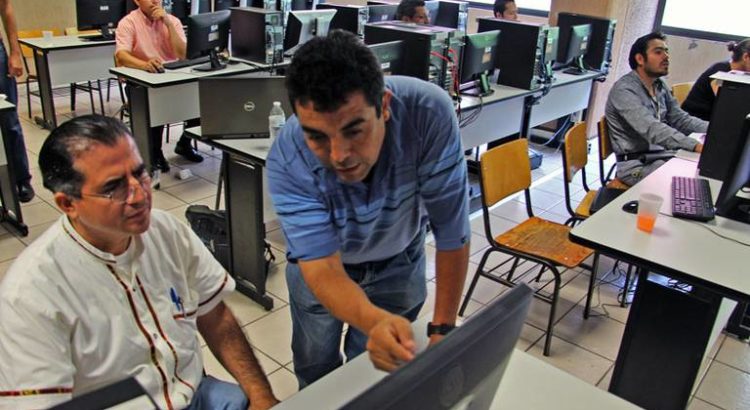
El próximo 28 de abril iniciará el curso con certificación en Solid Works, considerada una de las de mayor demanda en la industria automotriz, la cual permite a través del modelado mecánico en 2D y 3D potenciar habilidades fundamentales de diseño.

A partir del 5 de mayo se realizará el curso GNU/Linux I, el cual es un sistema operativo libre que ha alcanzado gran popularidad entre sus usuarios y que constará de una duración de 40 horas.

De igual manera, el 26 de mayo iniciará el taller Aspel COI, el cual permitirá a los participantes agilizar, a través de la automatización, el registro contable personal o empresarial.

Por último, se impartirá el curso sabatino de inglés el cual incluye un taller de preparación para el examen TOEFL en el cual pueden participar personas a partir de los 12 años de edad.

Todos los cursos ofertados en la UTEZ son impartidos por docentes certificados en cada una de las áreas específicas. Quienes tengan interés en algún curso pueden obtener mayor información a los teléfonos 101 0238 0 777 368 1165 extensión 280 o al correo electrónico: educacioncontinua@utez.edu.mx

Fuente de la noticia: https://www.elsoldecuernavaca.com.mx/local/brinda-la-utez-educacion-continua-1615071.html

Comparte este contenido:
Page 731 of 1685
1 729 730 731 732 733 1.685