Page 926 of 1686
1 924 925 926 927 928 1.686

Canadá: How to help your kids transition to high school

América del Norte/Canada/Agosto del 2017/Noticias/https://theconversation.com/

At this time of year, it can sometimes be hard to tell who’s more excited about returning to school, youth or their parents.

But the excitement for kids about new friends, teachers and ventures can be overshadowed by anxiety and stress, particularly if they’re moving into high school.

The sheer size of a high school building can be overwhelming to the uninitiated. The potential loss of social status among a larger group of peers and the increased number of teachers — each having different styles and expectations – can be intimidating for newcomers. Add to this the hormonal changes that accompany puberty and drive physical, emotional and cognitive growth, and the demands on young people can be overwhelming.

In high school, teachers tend to stay in one place while the students rotate through their classrooms. This can be difficult for students who are used to having a homeroom teacher for the majority of their subjects.

Some high schools have instituted homerooms for core subjects such as language arts and social studies. These allow students to connect daily to at least one key adult who knows them and ostensibly has their best interests in mind. Regrettably, this practice is rare past Grade 8.

Fortunately, parents and their children can take some steps to make the transition easier. As an educator and a psychologist from the Werklund School of Education at the University of Calgary, I offer you a few simple strategies:

1. Get to know the school space

Familiarity helps to reduce anxiety. If possible, youth should try to tour the school halls in advance to get to know where specific rooms are located. Of course, it helps if they can have a school map to help them navigate. It’s always important to learn where key spaces are such as the administrative offices, washrooms, cafeteria and water fountains.

2. Make the leap with a few friends

The adolescent years are significant in the transition from relying on parents to learning to trust and rely on peers. During this time, peer socialization becomes critically important and being part of a peer collective can make the transition smoother while helping to ease stress. Confidence in social interactions with peers contributes to positive self-evaluation and successful school transitions.

Youth can identify friends from their previous school who plan to attend the same high school. If they live close together, they can travel together to school or plan to meet up before school, at lunch breaks and during times when they might not have scheduled classes. Among other things, this will give them the opportunity to share and compare experiences — essentially normalizing what they are going through, while brainstorming solutions to challenges they might be facing.

3. Identify clubs and interest groups

These hobby-based groups tend to be smaller than regular classes and have supportive teacher sponsors with an interest in the subject area. This can be an easy way to connect with others who have similar interests, while building a support network at school.

Since the high school years are ones of exploration, novelty seeking and even risk-taking, such groups offer an opportunity to explore interests in a safe environment.

4. Help with planning and organization

In high school, there’s an increased expectation for students to take responsibility for planning and organizing materials for themselves, as well as getting to class on time, handing in homework and assignments and coming prepared for quizzes and exams. This also includes managing class materials, unique clothing for sports and clubs, musical instruments and other school equipment. Most schools offer a personal planner booklet that can help students to overcome some of these challenges. However, most will require support to be able to use and maintain them properly.

It’s true that adolescence is a time of cognitive growth and consolidation. This comes from the myelination of nerves (insulation for faster signals) and the pruning of neural networks (specialization for efficient brain function) that improve thinking capacities. However, the adolescent brain keeps developing well into the early 20s. Higher order thinking, planning and foresight can take time to develop.

5. Organize a study schedule

Family support and parental engagement are linked to academic success. It’s important to start building study habits early, even if there is no assigned homework to do. Students should plan for 30 to 60 minutes of study, homework and project work per night. It is often best to schedule a regular time, such as just before or after the family dinner.

Whatever the schedule, it’s also important to take breaks after school. And try to plan time carefully so that such work does not drag on and become demotivating.

6. Monitor stress

Even after settling into the new environment, getting to know teachers and their expectations and collecting a group of friends, the level of stress in high school can still be intense. Schools can be competitive environments. Exams (particularly high-stakes final exams) can be stressful to the point of debilitation. And social demands can be overwhelming.

Challenges like these can be exacerbated if students have unique needs such as physical or sensory impairments, learning disabilities, attention deficit hyperactivity disorder (ADHD) or a mental health condition such as anxiety or depression. In cases where such challenges are known in advance, it is important to connect to the receiving school’s specialized supports, which often come in the form of guidance and counselling services and accessibility services.

Kids should also be monitored to ensure they’re coping with the demands being placed on them. Their ability to cope can change day to day and month to month, and parents should be ready to offer support when it’s needed. In some cases, stress can become overwhelming or persistent to the point of immobilization. If they aren’t experiencing reduced anxiety within a month, they likely need help.

If so, specialized professional support may be needed to identify the underlying problem and intervene appropriately. School counsellors can be a good place to start, while family doctors can often point the way toward a good child psychologist or counselling specialist.

With the right kind of planning and support, the transition to high school can be a life-changing and empowering one that can set your youth on the path toward an amazing future. Start now to plan for success.

Fuente: https://theconversation.com/how-to-help-your-kids-transition-to-high-school-81018

Imagen: https://lh3.googleusercontent.com/lROQhGjLfBOsrAltdUJg2uAR30IoOw2s2w_AT-Uhd76JBZjk_qfr_AhUXoQdKnSJSIOntw=s85
Comparte este contenido:

México: Normalistas de Ayotzinapa escalarán protestas si no hay avances en caso de los 43.

América del Norte/México/Agosto del 2017/Pedro Matías/http://insurgenciamagisterial.com/

Por: Pedro Matías.

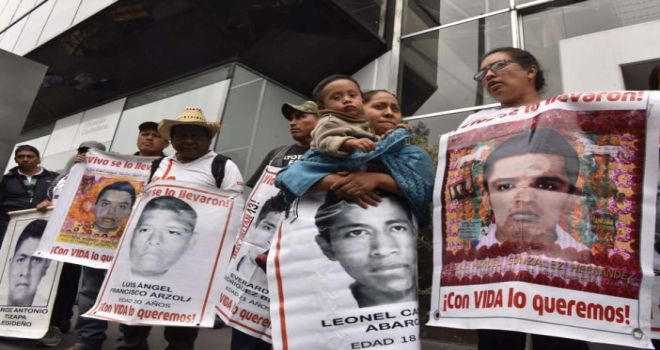
Estudiantes de la Escuela Normal Rural de Ayotzinapa “Raúl Isidro Burgos” advirtieron al gobierno de Enrique Peña Nieto que, si no hay avances en la investigación sobre la desaparición de los 43 normalistas, “tendremos que elevar el nivel de lucha y no tememos ofrendar nuestra sangre porque no queremos que haya un desaparecido más en el país”.

Felipe de la Cruz, padre de uno de los normalistas desaparecidos, manifestó que nuevamente recorren el país porque “son tres años de angustia, tormento, de esperanza y nadie puede apagar una flama que se encendió con la intención de encontrar 43 vidas, 43 futuros maestros que darían educación a los niños más marginados del país. Si hoy nos detenemos, estamos sentenciando a más mexicanos a vivir esta pesadilla”.

“Ante este crimen cometido por el Estado y encabezado por Enrique Peña Nieto, a casi tres años del crimen cometido en Iguala los días 26 y 27 de septiembre de 2014, los padres de familia seguimos caminando en busca de la verdad y la justicia. No podemos quedarnos con los brazos cruzados ante un gobierno corrupto y asesino”, soltó.

Una comisión de padres de familia de los desaparecidos de Ayotzinapa que recorre México manifestó, en la sede de la Sección 22, que “este dolor y rabia se han generalizado en el país porque no hay ningún estado que no esté viviendo la inseguridad, el despojo y la violación a los derechos humanos”.

Los inconformes insistieron en cuatro líneas de investigación para conocer la verdad de la desaparición de los 43 normalistas y echar abajo la “verdad histórica” de Jesús Murillo Karam, extitular de la PGR.

Puntualizaron en que “los militares sean llamados a declarar y se investigue su participación, ya que no tenemos dudas de que participaron en los hechos, de acuerdo con testimonios de sobrevivientes y del grupo de expertos independientes; entonces, el Ejército Mexicano debe ser investigado”.

Llamadas desde el Cisen y Campo Militar 1

Otra línea es la telefonía celular, pues mientras “Murillo Karam decía en su ‘verdad histórica’ que los 43 normalistas habían sido quemados en el basurero de Cocula con todas sus pertenencias, con base en la investigación de los expertos se confirmó que varios teléfonos de los jóvenes siguieron funcionando y una de las llamadas se ubica en el Campo Militar número 1 de la Ciudad de México, y otra en el Cisen, que son instituciones federales”.

La tercera línea es que “no es crimen de la delincuencia organizada, sino de Estado, es crimen de lesa humanidad porque el supuesto móvil del trasiego de las drogas de Iguala a Chicago no ha sido tocado porque sabemos cuáles serían las consecuencias para los gobernantes”.

Y la última línea es la detención de los elementos de la Policía Federal y municipal de Huitzuco que participaron en la desaparición de 25 jóvenes en el puente del Chipote, quienes fueron “levantados” para que “El Patrón” decidera qué hacer con ellos.

Es por ello que padres y estudiantes preparan una jornada de lucha que culminará el martes 26 de septiembre con la exigencia de la presentación con vida de los 43 normalistas de Ayotzinapa.

Fuente: http://insurgenciamagisterial.com/normalistas-de-ayotzinapa-escalaran-protestas-si-no-hay-avances-en-caso-de-los-43/

Imagen:

https://lh3.googleusercontent.com/30YPH1Yo-8l2bNKEF6tHNlSfzNYCgGzF7hLLuLWgKVT_JHd99kwn50vXwM1RAFlbyCwkWQ=s85

Comparte este contenido:

EEUU: 3-day open innovation hackathon from Aug. 29

América del Norte /Asia/EEUU/India/Agosto del 2017/Noticias/http://www.thehindu.com

Chief Minister to present awards for best prototypes during the event

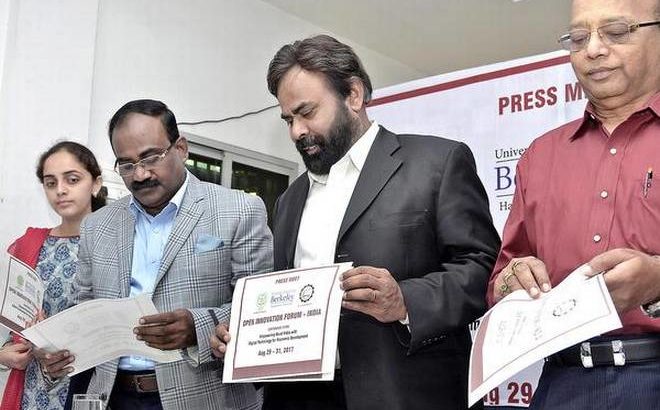
Students of University of California (UC) Berkeley will work together with the students of Indian universities on ‘UC Berkeley-Andhra Smart Villages’ programme and an agreement has been made in this regard.

The US university has partnered with Koneru Lakshmaiah University (KLU) and other Indian universities to evaluate and find solutions to the problems in the rural areas, according to Solomon Darwin of University of California and chairman of Open Innovation Forum.

As part of the project, the open innovation hackathon would hold a convention for students, entrepreneurs, businessmen and heads of different global banks on KLU campus at Vaddeswaram in Guntur district from August 29 to 31, said Darwin at a press conference held here on Tuesday. “The hackathon designing team has identified categories, including agriculture, education, health, aquaculture, digital technology, transportation, entrepreneurship, skill development, communication, safety and security, proposed to develop in villages.

Chief Minister N. Chandrababu Naidu will present awards for best prototypes in each category,” said Prof. Darwin. The theme of the programme was to empower rural India with digital technology for economic development by creating a platform to converge knowledge centres, academicians, administrators, researchers and students, said KL University Vice-Chancellor L.S.S. Reddy. Chief Advisor of Berkeley-Andhra Smart Villages Project I.V. Murali Krishna said as many as 22 students worked on different technologies and challenges would share their ideas with the Indian students. KLU Registrar T. Uma Maheswara Rao and university open forum chairman M. Kishore Babu said arrangements were on for the event.

“As many as 2,300 student teams from different institutions got registered for the three-day open innovation forum, of which 30 best teams were selected for the meet, in which representatives of various technical institutions in India, professors from UC-Berkeley and Stanford Universities, corporate executives of Silicon Valley and other firms will address the delegates”, Mr. Murali Krishna said.

Fuente: http://www.thehindu.com/news/national/andhra-pradesh/3-day-open-innovation-hackathon-from-aug-29/article19543789.ece

Imagen: https://lh3.googleusercontent.com/Db-nqRCd3GqZbDUqx0Afryany3zt0Zc-oztsY27L02wU8PKJP0opIVCOmtLyI0yf7eWhrA=s85

Comparte este contenido:

En Venezuela: Este es el nuevo plan de estudio para bachillerato presentado por el ministro Elías Jaua

América del Sur/ Venezuela/AVN

A partir del 02 de octubre, fecha en la que se espera comience el Año Escolar 2017 – 2018, los estudiantes de educación media general recibirán su formación con un plan de estudio que se ha adecuado a las nuevas exigencias de la nación, informó este miércoles el ministro para la Educación, Elías Jaua.

Jaua indicó que la adecuación curricular obedece a los resultados de la Consulta Nacional por la Calidad Educativa, que se efectuó en todo el país en 2014, así como a los planteamientos de académicos, docentes y estudiantes.

«Queremos anunciar que tras seis meses de discusión, de revisión, de rectificación, de las críticas, las autocríticas de sectores de la opinión pública, sectores interesados en la educación venezolana, pero fundamentalmente de las bases del sector educativo, del sistema público nacional de los estudiantes, de las familias, de los profesores, de los docentes, hemos hecho una adecuación al plan de estudio», dijo.

Explicó como parte de la discusión, por instrucciones del presidente de la República, Nicolás Maduro, comenzó -en enero pasado- otro proceso de debate, del que surgió la necesidad de unificar el plan de estudio.

Desde el Liceo Andrés Bello, en Caracas, donde ofreció una rueda de prensa, el ministro también informó que los profesores recibirán, a partir del próximo 18 de septiembre, talleres de inducción y orientación sobre el nuevo plan, que será publicado en Gaceta Oficial en los próximos días.

Plan de estudio

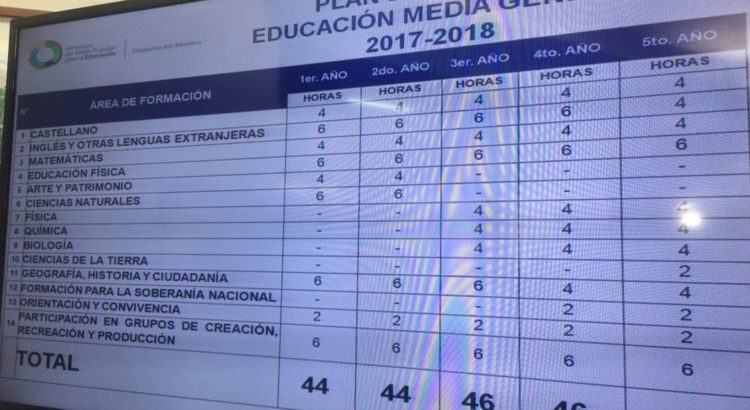
Jaua indicó que los estudiantes de primero y segundo año de bachillerato tendrán un total de 44 horas académicas y que los de tercero a quinto año, tendrán 46.

Los cinco niveles recibirán formación en las siguientes áreas del conocimiento: Castellano, Inglés y otras Lenguas Extranjeras; Matemáticas; Educación Física; Geografía, Historia y Ciudadanía; Orientación y Convivencia; y Participación en Grupos de Creación y Producción.

Arte y Patrimonio y Ciencias Naturales también se impartirán a primero y segundo año. Mientras que Física, Química y Biología será para los niveles de tercero a quinto año. Este último igualmente recibirá formación en Ciencias de la Tierra.

Formación para la Soberanía Nacional (similar a lo que en su momento fue Instrucción Premilitar) se dictará a los niveles cuarto y quinto año.

Balance

El ministro precisó que en primaria se recibirán 480.000 nuevos estudiantes y en la educación media general 526.000.

Reiteró que el Programa de Alimentación Escolar (PAE) llegará a 15.328 planteles, de los más de 24.000 que funcionan en todo el país, para los que habrá un programa especial de meriendas.

Jaua detalló que un total de 7 millones 195.335 estudiantes están convocados para el inicio de clases.

Fuente: http://www.ultimahora.com/estudiantes-realizan-funeral-la-educacion-paraguaya-frente-al-mec-n1103942.html

Comparte este contenido:

EEUU: la guerra de datos educativos en el Estado de Tennesse

América del Norte/ EEUU/tnedreport.com

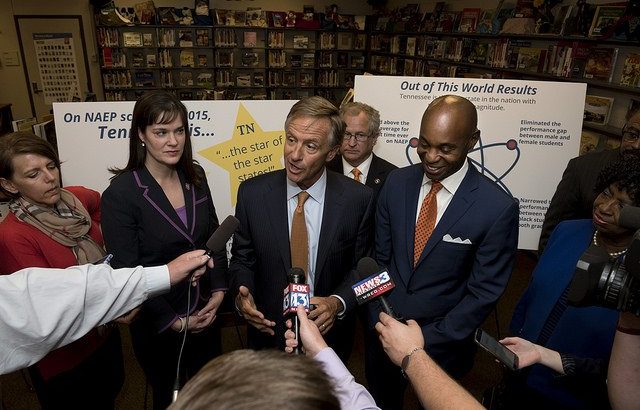
Candice McQueen ha establecido un enfrentamiento con los dos distritos escolares más grandes del estado sobre el intercambio de datos de estudiantes y escuelas charter.

McQueen envió una carta a Shelby County Schools y compartió la misma carta con MNPS. En la carta, toma nota de una nueva ley estatal que requiere que los distritos escolares compartan los datos de los estudiantes con las escuelas chárter bajo petición. Los datos se utilizan para que las escuelas autónomas puedan comercializar a los estudiantes potenciales.

Así es como Chalkbeat informa sobre el problema del Condado de Shelby:

La Comisionada Candice McQueen dirigió este lunes a la Superintendente Dorsey Hopson  una comunicación solicitándole compartir inmediatamente la información solicitada por  las Escuelas Públicas de Green Dot . Dijo que la negativa del distrito viola una nueva ley estatal al negar la información que los operadores charter necesitan para reclutar estudiantes y comercializar sus programas.

Las Escuelas del Condado de Shelby aún no han dicho que cumplirán con la solicitud de McQueen.

Por su parte, MNPS está comenzando a tomar medidas para restringir los datos disponibles para el ASD.

Jason González informa en el Tennessean :

La práctica de proporcionar a las escuelas chárter  la información de contacto de los estudiantes ha sido común en Nashville, pero los miembros del consejo se opusieron el martes al intercambio de información con el Distrito Escolar Achievement.

Aunque no fue una votación final, la junta dio un paso crucial hacia adelante con una nueva política que no revelará información de contacto al Distrito Escolar de Logros.

La política se retiró del comité con 7 miembros del consejo a favor, abstención de Jo Ann Brannon y Mary Pierce votando en contra de la propuesta.

La pregunta clave ahora es: ¿Qué sucede si el Condado de Shelby y MNPS se rehúsan a compartir estos datos? ¿Qué pena podrían enfrentar?

González señala:

En 2012, Metro Schools decidió rechazar la solicitud de las escuelas charter de Great Hearts Academies, después de que el estado no lo hiciera, y entonces el comisionado de Educación de Tennessee, Kevin Huffman, atrajo a Nashville $ 3.4 millones en fondos para educación.

Del mismo modo, durante el fiasco de pruebas de TNReady , McQueen amenazó a los distritos con una penalización de financiación.

Aún no está claro lo que ocurrirá esta vez, pero parece que una sanción financiera será estará en última instancia sobre la mesa si los dos distritos no cumplen.

Estén atentos, las guerras de datos están comenzando.

Para más información sobre políticas y políticas de educación en Tennessee, siga@TNEdReport

Fuente: http://tnedreport.com/

Imagen tomada de: https://www.chalkbeat.org/posts/tn/2017/08/21/mcqueen-directs-hopson-to-share-memphis-student-information-with-charter-operator-green-dot/

Comparte este contenido:

Canada: Education report promising, but success depends on resources, says teachers’ union

Resumen:

El jefe de la Asociación de Maestros de Terranova y Labrador dice que un reciente informe sobre el sistema educativo de la provincia refleja lo que ha estado escuchando de sus miembros, pero la verdadera sustancia será en cómo se implementan las recomendaciones. El primer ministro Dwight Ball publicó el  martes el Informe del Grupo de Trabajo sobre la mejora de los resultados educativos , diciendo que su gobierno planea comenzar a actuar sobre las 82 recomendaciones en 2018. La larga lista de cambios recomendados se centra en la educación inclusiva, los actuales programas de matemáticas y lectura, la salud mental de los estudiantes, el desarrollo profesional de los maestros y más. Jim Dinn, presidente del sindicato de maestros, dijo que el reporte aborda temas que han sido planteados por los maestros durante años, pero el verdadero desafío ahora será reunir a todas las personas adecuadas para cambiar las cosas para mejor. Lea el reporte completo aqui


The head of Newfoundland and Labrador’s Teachers’ Association says a recent report on the province’s education system reflects what he’s been hearing from his members, but the real substance will be in how the recommendations are implemented.

Premier Dwight Ball released the completed Task Force Report on Improving Educational Outcomes on Tuesday, saying his government plans to start acting on the 82 recommendations in 2018.

The long list of recommended changes centre around inclusive education, the current math and reading curriculums, student mental health, teacher professional development and more.

Jim Dinn, president of the teachers’ union, said the report addresses issues that have been raised by teachers for years, but the real challenge will now be bringing all the right people together to change things for the better.

The premier’s task force on education presented 82 recommendations that ranged from overhauling inclusive education to addressing student mental health and well being. (CBC)

«It’s a big challenge but it’s going to require all partners,» he told CBC Radio’s St. John’s Morning Show.

«It takes a village to raise a child, and it takes a community and a province to make an education system work.»

Inclusive education

When it comes to the inclusive education component, the task force report recommended an overhaul of the approach which has often been criticized by teachers who say more resources are needed.

Dinn said the problem over the last few years isn’t that people necessarily disagreed with the actual philosophy behind inclusion, but there was a feeling that they were just not equipped to properly manage an inclusive classroom.

«In my four years as president I will tell you I have yet to meet a teacher that they oppose inclusive education. The frustration for them is the inability to help the students in their care,» he said.

‘If you increase the time in one subject area, it’s coming from somewhere else.’– Jim Dinn

«I’ve been in schools where they’ve been noted for their inclusive education practices. Go back the next year and they’ve had a lot of the resources gutted, and they’re struggling.»

It’s a bit overwhelming to cover all 82 recommendation in one interview, Dinn said, but the most important point he wants to stress is that ultimately the ability or inability to implement any of the task force’s ideas will come down to the workload and class sizes that teachers have to contend with.

Government can give teachers all the professional development they want, but if they have a large class of varied students and little support to deal with them all, then it’s going to be a challenge to deliver proper education — no matter how well thought out the policies of the education system are.

«You cannot talk about diverse needs or student behaviour in the classroom without looking at the composition of that classroom,» he said.

«You cannot talk about the fact of having small group settings without realizing that that’s going to mean you will have to increase the numebr of teachers in the system.»

Flexibility with teaching math

The task force report also heavily focused on the need for changes to the current math and reading curriculums in the province, including ending current standardized provincial assessments.

Classroom

Jim Dinn says addressing class sizes and composition is key to any improvement to educational outcomes. (Shutterstock/Syda Productions)

Dinn said requiring all students to use the exact same strategies for solving a math problem completely went against what teachers were told about inclusive education.

Instead, he said allowing educators more flexibility to teach and accept different ways of learning and how students show their work will benefit for everyone involved.

«It’s a system that’s based on diverse instruction, and differentiated instruction, yet we focus on that one marker, and one marker only,» he said.

«If you have a class that of students that are doing well in math, how many strategies do you need? They’ve obviously already mastered the skill.»

Dinn said he does have concerns about the recommendation to increase the amount of time spent on math by 20 per cent, and has questions about what courses will suffer to make up that extra time.

«If you increase the time in one subject area, it’s coming from somewhere else,» he said. «There are other subject areas that are important.»

Fuente: http://www.cbc.ca/news/canada/newfoundland-labrador/jim-dinn-nlta-report-education-1.4221955

Comparte este contenido:

Las normales rurales

Por: Gilberto Guevara Niebla

A lo largo de la historia, las escuelas norma-les rurales (ENR) han generado en su entorno una mitología según la cual ellas tienen una orientación ideológica socialista, popular, crítica, de lucha por la emancipación del pueblo. Pero me pregunto: ¿Tienen las ENR una orientación ideológica distinta a la que postula la Constitución?

El carácter distintivo de las ENR puede surgir de otra idea, dado que nacieron al calor de la educación socialista y dado que la Federación de Estudiantes Campesinos y Socialistas (1935) fue creada durante el sexenio de Cárdenas, es posible que esas escuelas se identifiquen primeramente con la ideología educativa del contexto de su nacimiento.

Lo real es que las ENR ofrecen estudios para hijos de campesinos pobres y constituyen una palanca real de movilidad social para las comunidades donde se encuentran. Según escuché decir a un maestro, las ENR ofrecen cinco tipos de estudios: 1) Académico; 2) Productivo, 3) Cultural, 4) Deportivo y 5) Político.

En abstracto, estas categorías son inobjetables. Pero me vuelvo a preguntar: ¿Las ENR no se sujetan al currículum oficial? Maestros y alumnos confiesan, que en esas escuelas se estudia marxismo, además de los “problemas de la realidad nacional”.  El estudio de estos dos campos se justifica, dicen ellos, porqué las ENR tienen una misión que consiste en “abrir la mente de las personas”.

Este postulado supone que la mente de las personas está cerrada, lo cual, en muchos aspectos, es cierto. ¿Pero qué revelación pueden alumnos y maestros de las ENR aportar a la inteligencia de las personas? Esta teoría del despertar de la conciencia, creo, responde a la sugerencia que hace un marxismo-leninismo rudimentario en el sentido de que el pueblo, en el capitalismo, vive alienado e inconsciente de la explotación que sufre y que sólo romperá con su alienación cuando la vanguardia revolucionaria lo incite a hacerlo.

En tal caso surge otra interrogante crucial: ¿Es que las ENR se proponen hacer una revolución? En esa dirección apuntan algunas acusaciones torpes hechas por políticos locales prepotentes que las han acusado de ser “semilleros de guerrilleros”. Los estudiantes de la FECySM niegan categóricamente esta acusación, sin embargo, la propia federación estudiantil dice actuar en la “semiclandestinidad” y en los edificios de algunas ENR (por ejemplo, Ayotzinapa) se encuentra murales glorificando a guerrilleros que fueron maestros como Lucio Cabañas y Genaro Vásquez y al ícono de la violencia guerrillera, Ernesto “Ché” Guevara. Esto, por lo menos, crea confusión.

Los líderes de la FECySM sostienen que su lucha es para defenderse del afán del gobierno (o los gobiernos) para suprimir las ENR. ¿Es esto cierto? ¿Existe algún plan oficial para consumar eso? No hay ninguna evidencia —en los últimos años, por lo menos que así lo demuestre. Es verdad que hace 50 años, el presidente Díaz Ordaz ordenó la supresión de 16 de estas escuelas, y también es cierto que muchos años después (2003), la escuela Luis Villarreal de El Mexe (Hgo) fue clausurada y substituida por una universidad politécnica, pero decir que existe una política dirigida a desaparecer las ENR es, sinceramente, un falso.

Cuando se les interroga, ni estudiantes ni maestros de las ENR admiten que se propongan destruir al poder público, lo que es cierto, en cambio, es que la FECySM tiene enfrentamientos frecuentes contra las autoridades locales y federales, enfrentamientos que se suscitan por motivos diversos, algunos muy justificados (sobre todo cuando sufren atropellos de la autoridad local). Lo que es difícil de entender es que casi sin excepción estos enfrentamientos desembocan en hechos de violencia y que se producen, en muchos casos, por iniciativa de los mismos estudiantes. Los líderes de las ENR piensan que su lucha es correcta y sienten —sinceramente— que cargan sobre sus espaldas la responsabilidad inmensa de lograr la justicia social en el país.

Fuente: http://www.educacionfutura.org/las-normales-rurales/

Comparte este contenido:
Page 926 of 1686
1 924 925 926 927 928 1.686