Page 726 of 772
1 724 725 726 727 728 772

ODS/ Objetivo 16: Paz, justicia e instituciones fuertes

Promover sociedades pacíficas e inclusivas para el desarrollo sostenible, facilitar el acceso a la justicia para todos y crear instituciones eficaces, responsables e inclusivas a todos los niveles

La paz, la estabilidad, los derechos humanos y la gobernabilidad efectiva basada en el Estado de derecho son vías importantes para el desarrollo sostenible. Vivimos en un mundo cada vez más dividido. Algunas regiones gozan de niveles permanentes de paz, seguridad y prosperidad, mientras que otras caen en ciclos aparentemente eternos de conflicto y violencia. De ninguna manera se trata de algo inevitable y debe ser abordado.

Los altos niveles de violencia armada e inseguridad tienen consecuencias destructivas para el desarrollo de un país, afectan el crecimiento económico y redundan a menudo en agravios arraigados entre comunidades que pueden extenderse por generaciones. La violencia sexual, los delitos, la explotación y la tortura también son fenómenos generalizados donde existen conflictos o no hay Estado de derecho y los países deben tomar medidas para proteger a los sectores que corren más riesgos.

Los Objetivos de Desarrollo Sostenible buscan reducir sustancialmente todas las formas de violencia y trabajan con los gobiernos y las comunidades para encontrar soluciones duraderas a los conflictos e inseguridad. El fortalecimiento del Estado de derecho y la promoción de los derechos humanos es fundamental en este proceso, así como la reducción del flujo de armas ilícitas y la consolidación de la participación de los países en desarrollo en las instituciones de gobernabilidad mundial.

Promover la paz y la justicia es uno de los 17 Objetivos Globales de la nueva Agenda para el Desarrollo Sostenible. Un enfoque integral es crucial para avanzar en los diversos objetivos.

Comparte este contenido:

Sabias que cocinar una hamburguesa contamina más que manejar un camión

Fuente: Ecoportal /18 de Abril de 2016

Cuando se piensa en la contaminación del aire se imagina humos de motores, chimeneas de fábricas y tubos de escape. A nadie se le ocurre que una hamburguesería es algo peor que eso. Sin embargo, los científicos de la Universidad de California descubrieron que las parrillas de los restaurantes emiten una gran cantidad de sustancias contaminantes al aire, más que los motores diésel.

Las instalaciones de cocinas comerciales generan sin control grasas, humos, vapores y productos de combustión, según el informe de la universidad. El pasado año, la Agencia de Control del Aire en la Costa Sur de Estados Unidos reveló que los restaurantes son la segunda fuente de emisiones al aire más importante de la región.

“Las emisiones de cocinas comerciales son unas dos veces mayores que las de camiones pesados con motor diésel”, sostiene el ingeniero jefe de la investigación, Bill Weich. “Para comparar: un camión de 18 ruedas con motor diésel tendría que recorrer por autopista 230 kilómetros para lanzar al aire la misma cantidad de partículas que se emiten durante la preparación de una sola hamburguesa”, añade.

Actualmente los investigadores están probando un sistema que neutraliza las emisiones. Todas lashamburguesas preparadas durante el experimento se envían a un banco de alimentos local.

Ecoportal.net

Comparte este contenido:

“Engaging Tomorrow’s Professionals in Leading Anti-Corruption Initiatives”

Fuente IIPE/ 18 de Abril de 2016

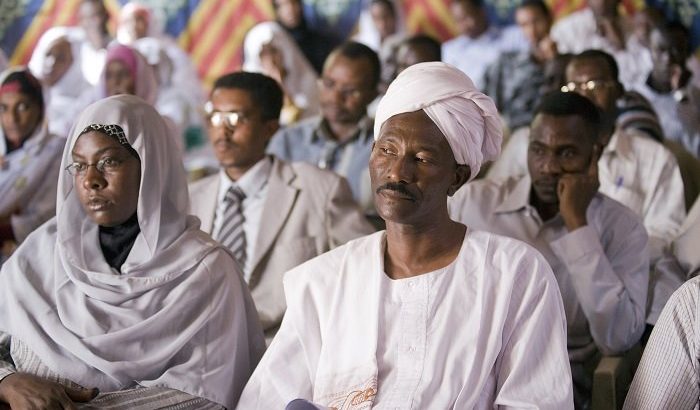
The IIEP hosted a session entitled “Engaging Tomorrow’s Professionals in Leading Anti-Corruption Initiatives”, as part of the 16th International Anti-Corruption Conference (IACC) in Putrajaya, Malaysia. The central theme of the conference, which took place from the 2nd – 4th September 2015, was how impunity enables the spread of corruption.

Khairul Anuar Che Azmi (Head of the Integrity Unit at the Universiti Sains Malaysia (USM), Ronald E. Berenbeim (Senior fellow at The Conference Board), Jorge Eduardo Mori (Higher Education Policy Advisor and Founder of Universidad Coherente) and Edda Müller (Chairperson of Transparency International Germany) participated as experts at the IIEP session and discussed how the global community can encourage tomorrow’s professionals by creating initiatives aimed at fighting impunity for corruption within the education sector. During the session four main anti-corruption initiatives were showcased, focusing on the development and implementation of various tools, ways of measuring risks of corruption at the higher educational level, and the exchange of existing practices.

The first initiative named “Universidad Coherente” comes from Peru. Because of the unexpected negative effects of increased public funds for universities, a web platform, including a university directory, was developed. It allows new generations of young leaders to monitor the performance and financial management of university authorities. The second initiative “Hochschulwatch”, from Germany, promotes transparency as a means to prevent improper influence by industry and commerce by mapping the influence of private funding within universities. The database includes 10.000 connections between corporations and universities and provides information about 350 universities. The third initiative was from the Universiti Sains Malaysia, which came up with a series of proposals at the university level, e.g. the USM Student‘s Integrity Secretariat and the USM Student’s Anti-Corruption Secretariat. USM’s initiatives help to protect staff who make disclosures and increase disciplinary action against staff and students. Finally, a toolkit of the Principles for Responsible Management Education (PRME) was introduced. According to the founder, it was designed to “provide comprehensive anti-corruption guidelines for curriculum change in business schools and management-related academic institutions around the world.” It is aligned with internationally accepted values such as the principles of the United Nations Global Compact.

As a result of the session, the development of an international initiative that would help to identify common educational challenges and enable the exchange of practices to address corruption in higher education was discussed. Such an initiative would aim to promote quality of higher education and the independence of research, which are considered crucial to development and economic prosperity going into the future. The participants of the session all came to an agreement that future leaders need to integrate values of transparency and integrity in order to strengthen the fight of corruption in the context of education.

For more information on the outcomes of the conference, do not hesitate to contact us.

Comparte este contenido:

Plataforma paneuropea en Ética

Fuente Boletín ético /IIPE/ 18 de Abril de 2016

En octubre del 2015, el Consejo de Europa lanzó una plataforma paneuropea en Ética, Transparencia e integridad en la Educación (ETINED). Su meta es establecer una plataforma paneuropea de intercambios de información y mejores prácticas en ética e integridad en la educación con miras de promover la  “Agenda Helsinki para la calidad de educación en Europa”

There is currently worldwide concern over corruption in education. This concern touches all Member States and all levels of education . While some forms of corruption may be difficult to evaluate or quantify, no country today can claim to be totally exempt from corruption in the education sector.
The Pan-European Platform on Ethics, Transparency and Integrity in Education (ETINED) will try to address this challenge through a genuinely European dialogue and by drawing upon the materials and norms developed by the Council of Europe over the years.

Misión

Programa de Actividades

Comparte este contenido:

Seminario ¿Como se mide la calidad de los servicios de cuidado infantil?

¿Te interesa el desarrollo infantil? Participa de este seminario en línea con especialistas del Banco Interamericano de Desarrollo. Conocerás detalles teóricos y prácticos sobre la medición de la calidad de servicios de cuidado infantil, además del uso de este libro como herramienta de trabajo.

Miércoles, 27 de abril de 2016
12:00 PM a 1:30 PM (hora de Washington, DC)

regìstrate aquí

Este es el enlace del libro: ¿Cómo se mide la calidad de los servicios de cuidado infantil?


Comparte este contenido:

ODS/ Objetivo 15: Vida en la tierra

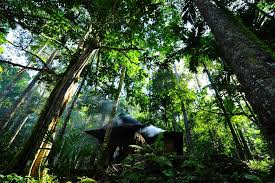
Proteger, restablecer y promover el uso sostenible de los ecosistemas terrestres, efectuar una ordenación sostenible de los bosques, luchar contra la desertificación, detener y revertir la degradación de las tierras y poner freno a la pérdida de diversidad biológica

La vida humana depende de la tierra tanto como del océano para su sustento y subsistencia. La flora provee el 80% de la alimentación humana y la agricultura representa un recurso económico y medio de desarrollo importante. Por otra parte, los bosques cubren el 30% de la superficie terrestre, proveen hábitats cruciales a millones de especies y son fuente importante de aire limpio y agua. Además, son fundamentales para combatir el cambio climático.

La actual degradación del suelo no tiene precedentes y la pérdida de tierras cultivables es de 30 a 35 veces superior al ritmo histórico. Las sequías y la desertificación también aumentan todos los años; sus pérdidas equivalen a 12 millones de hectáreas y afectan a las comunidades pobres de todo el mundo. De las 8.300 especies conocidas de animales, el 8% ya está extinto y otro 22% corre el riesgo de desaparecer.

Los Objetivos de Desarrollo Sostenible apuntan a conservar y recuperar el uso de ecosistemas terrestres como bosques, humedales, tierras áridas y montañas para 2020. Promover la ordenación sostenible de los bosques y detener la deforestación también es de vital importancia para mitigar los impactos del cambio climático. Es urgente tomar medidas para reducir la pérdida de hábitats naturales y la biodiversidad, que son parte del patrimonio común de la humanidad.

Conservar los bosques y otros ecosistemas es uno de los 17 Objetivos Globales de la nueva Agenda para el Desarrollo Sostenible. Un enfoque integral es crucial para avanzar en los diversos objetivos.

Comparte este contenido:

No. of applicants for Korean language proficiency test logs record high of 72,000

Asia/Corea de Sur/Abril 2016/Autor: Editor/ Fuente: http://english.yonhapnews.co.kr

ResumenEl número de solicitantes para tomar la prueba de dominio del idioma coreano para los hablantes no nativos coreanos y coreanos étnicos ha alcanzado un máximo histórico en medio del creciente interés de los extranjeros en la cultura pop coreana, dijo el lunes el Ministerio de Educación.

The number of applicants to take the state-run Korean language proficiency test for non-native Korean speakers and ethnic Koreans has reached a record high amid foreigners’ growing interest in Korean pop culture, the education ministry said Monday.

A total of 72,295 applicants, who are interested mostly in school admissions and job searches in South Korea, applied for the 46th Test of Proficiency in Korean (TOPIK), administered Saturday and Sunday at 164 locations in 45 countries worldwide.

The number of test-takers for the test this time is the largest at one time since it was launched in 1997.

TOPIK measures the ability to understand Korean grammar, reading, listening and writing for people preparing to work or study in South Korea as well as those wishing to work for South Korean firms’ overseas branches or plants.

The National Institute for International Education, the test’s administrator, increased the number of times the test is given to six a year in 2015 from once in 1997.

According to the test’s administrator, the number of TOPIK applicants has steadily increased, rising from 2,692 in 1997 to 34,028 in 2006 and 206,768 last year. It showed a more than 70-fold increase during the 20 years that the test has been administrated.

The test was administrated in only four countries — South Korea, Japan, Uzbekistan and Kazakhstan — in 1997. But the number of countries that offer the test soared to 71 this year.

In the 34th TOPIK, the test was administrated for the first time in Cuba, with which South Korea has yet to establish diplomatic ties. Three more countries — Bolivia, Jamaica and Poland — will be added to the group of countries administrating the test in the latter part of this year.

«The test is one of the projects heightening the national brand and plays a role in helping diffuse the Korean language and boosting the national image,» said an official at the National Institute for International Education.

Fuente de la noticia: http://english.yonhapnews.co.kr/national/2016/04/18/0301000000AEN20160418002900315.html

Fuente de la imagen: http://img.yonhapnews.co.kr/etc/inner/EN/2016/04/18/AEN20160418002900315_01_i.jpg

Comparte este contenido:
Page 726 of 772
1 724 725 726 727 728 772