Page 238 of 266
1 236 237 238 239 240 266

Nueva Zelanda: ‘Huge’ education reforms worry teacher unions

Nueva Zelanda / 28 de septiembre de 2016 / Por: John Gerritsen / Fuente: http://www.radionz.co.nz/

The government’s wide-ranging change agenda for the education system is worrying the school and early childhood unions, the NZEI and the PPTA.

The Post Primary Teachers Association says changes are aimed at paving the way for privatising the school system – a claim denied by the government – and the Educational Institute has warned the changes must be driven by the needs of children, not by ideology.

The unions are holding their annual conferences this week; the PPTA in Wellington and the NZEI in Rotorua.

The conferences are taking place amid a raft of proposed changes across the sector, including school and early childhood funding systems, special education and the Education Act.

The unions’ leaders said the government’s reforms were ‘huge’ and covered most aspects of the school system.

The changes were the most significant in more than 25 years, NZEI president Louise Green said.

«They change the way schooling and early childhood education are delivered, so it changes the system, and these are the biggest changes since Tomorrow’s Schools was introduced in 1989,» she said.

Ms Green said the changes could harm the public education system.

«We pride ourselves in New Zealand on high quality public education and we’re concerned that many of the changes start to undermine that, because they think more about the system and less about the child.»

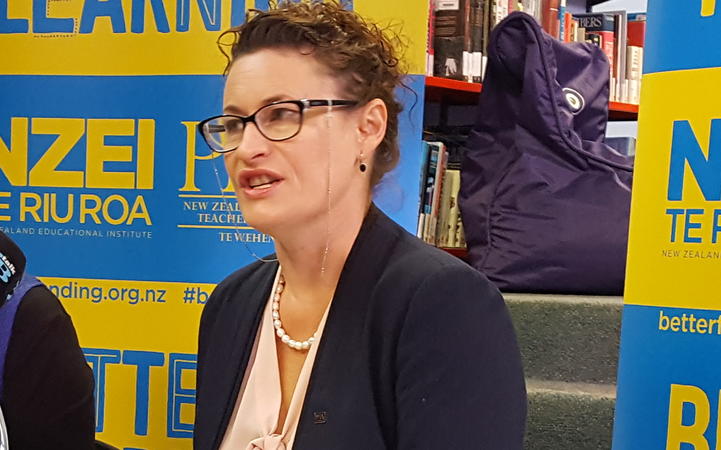
NZEI president Louise Green and PPTA president Angela Roberts announce the results of a vote in which teachers overwhelmingly opposed a proposed change to school funding.

Louise Green, left, and Angela Roberts are concerned about the proposed changes. Photo: RNZ / John Gerritsen

PPTA president Angela Roberts said some of the changes appeared to be paving the way for privatisation of the school system.

«When you start connecting all of those bits up, it’s a very, very clear agenda,» she said.

«This is about privatisation and giving corporate entities, to use the government’s own language, access to our schools.»

Ms Roberts said companies were geared to make profit, and nobody should profit from the school system.

«That will absolutely undermine and destroy what is a world-class system.»

But in a statement, Acting Education Minister Anne Tolley said there was no plan for privatisation.

«The changes being proposed for the future of our education system have nothing to do with laying the path for privatisation of education.

«Any suggestion that they are makes it quite clear that there is a lot of misinformation being put out at union events.»

Fuente noticia: http://www.radionz.co.nz/news/national/314360/’huge’-education-reforms-worry-teacher-unions

Comparte este contenido:

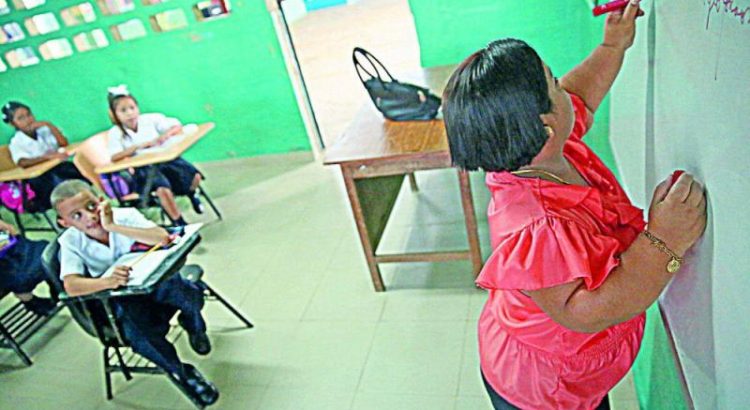
Panamá: Cien escuelas, cerca de la excelencia educativa

Panamá/ 27 de septiembre de 2016/Autora: Ana María Pinilla/Fuente: La Estrella de Panamá

El concurso nacional ya cuenta con el primer centenar de colegios oficiales para la primera fase de prueba de conocimientos.

La Fundación para la Promoción de la Excelencia Educativa avanza en la primera fase de selección de cien escuelas para que se las evalúe.

Junto a los auditores de KPMG, los evaluadores revisarán los conocimientos en lenguaje, matemática y ciencias, el próximo 6 de octubre a nivel nacional.

La selección fue realizada por diecisiete miembros de la sociedad civil, entre periodistas, científicos, docentes universitarios y gerentes de empresas privadas, que evaluaron el ensayo y entrevista de 201 escuelas participantes.

Esas doscientas escuelas oficiales representaban a dieciséis regiones del país, desde Bocas del Toro a Darién, incluyendo centros en áreas de difícil acceso.

Actualmente están en competencia doce centros educativos de Bocas del Toro, cuarenta de Chiriquí, trece de la provincia de Coclé, ocho de Colón, una en Guna Yala, siete de la comarca Ngäbe Buglé, doce de Darién, nueve de Herrera, ocho de Los Santos y doce de Veraguas.

Además, treinta centros educativos de la región de Panamá centro, tres de Panamá Este, trece de Panamá norte, catorce de Panamá oeste y catorce del distrito de San Miguelito.

‘Esta fase de revisión es crucial. Queremos agradecer a los entrevistadores por cumplir con la meta de entrega, ya que hicieron todo de manera voluntaria para poder contar pronto con el listado’, señaló Julio Escobar, presidente de la Fundación para la Promoción de la Excelencia Educativa.

LA INICIATIVA

El concurso organizado por esta fundación busca incentivar a la comunidad educativa de las escuelas públicas del país para elevar la calidad del proceso enseñanza-aprendizaje.

El certamen, que convoca a cien escuelas a nivel nacional, se desarrolla en tres etapas. En cada una se elegirá a diez niños al azar.

En cada fase, los diez niños de VI, IX y XII grado tendrán que responder preguntas de tres asignaturas: Español, Ciencias y Matemáticas.

Las escuelas que pasen hacia la segunda etapa tendrán que rendir otros exámenes de los mismos temas con otros de sus diez estudiantes, mecanismo que se repetirá con los centros educativos que lleguen a la tercera y última ronda.

‘Si en Panamá no se cree en elevar la calidad de la educación, todas las medidas que se tomen para mejorarla nadarán a contracorriente’, afirma Julio Escobar, de la fundación.

El presidente de la fundación afirmó que el objetivo es premiar a los colegios que se esfuercen por mejorar la calidad de la educación. ‘Es para celebrar y no para criticar la realidad educativa’, subrayó.

Según explica, el concurso ayudará a que ‘las evaluaciones no causen estrés’, y agrega que ‘cada vez que a Panamá le toca pasar por pruebas internacionales, como PISA, TERCE y hasta las nacionales, hay una anticipación de que se va a salir mal, una situación que ‘paraliza’, dice Escobar, e impide que ‘encaremos las razones de los resultados de estas pruebas y las soluciones a futuro’.

El concurso se presentará en cadena televisiva el próximo 17 de noviembre.

Fuente de la Noticia:

http://laestrella.com.pa/panama/nacional/cien-escuelas-cerca-excelencia-educativa/23962254

Comparte este contenido:

Higher Education and Neoliberal Temptation: An Interview With Henry A. Giroux

Por Almantas Samalavicius , Eurozine

Educación Superior y la tentación neoliberal: Una entrevista con Henry A. Giroux

Si la universidad es para sobrevivir, los profesores van a tener que reconsiderar su papel como intelectuales públicos críticos, conecte su beca a los problemas sociales más amplios y aprender cómo escribir para y habla a un público más amplio. De esta cantidad, el crítico cultural y decano de la pedagogía crítica Henry Giroux está convencido.

—————————-

If the university is to survive, faculty are going to have to rethink their roles as critical public intellectuals, connect their scholarship to broader social issues and learn how to write for and speak to a broader public. Of this much, the cultural critic and doyen of critical pedagogy Henry Giroux is convinced.

Almantas Samalavicius: The neoliberal agenda that came into being a few decades ago in the northern hemisphere, and was eventually globalized, now seems to threaten systems of higher education worldwide. The persistence of this phenomenon has become alarming to many who care about its social consequences. As you have correctly and insightfully observed in your 2014 book Neoliberalism’s War on Higher Education, «a full-fledged assault is also being waged on higher education in North America, the United Kingdom and various European countries. While the nature of the assault varies across countries, there is a common set of assumptions and practices driving the transformation of higher education into an adjunct of corporate power and values.» Why is this agenda taking over societies that are so different from each other? What makes neoliberalism so overwhelmingly powerful and resistant to criticism as well as to social action? Why do governments give themselves up to neoliberal ideology, even if they claim to represent quite different ideological positions?

Henry Giroux: For all of its differences, neoliberalism brings together a number of elements that makes it appear almost insurmountable, if not universal, in its ability to normalize itself and convince the rest of the world that there is no alternative as Margaret Thatcher once argued.

First, it has created a new set of power relations in which power is global and politics is local. The financial elite now operate in the global flows of capital and have no allegiance to the nation-state or to the social contract that mediated between labour and capital in the post-war period. This separation points to a crisis of agency on the part of the state and a crisis of politics in terms of the ability to develop social formations that can challenge capital on a global rather than simply a local scale. The nation-state can no longer make concrete decisions on the economic level or create social provisions necessary to limit the effects of the market and offer the most basic services for people.

At the nation level, state sovereignty has been transformed into economic sovereignty. Governments don’t give themselves up, they have been hijacked by the institutions, power and wealth of the global elite. There is no way for states to challenge global forms of governance. We must remember that neoliberalism is very powerful not only because of its economic structures but also because of its pedagogical and ideological power. It not only consolidates wealth and power in different wars for the ultra-rich, it also controls all of those cultural apparatuses and pedagogical sites that function to produce identities, desires and values that mimic the market. In this sense it is a mode of governance that controls all of social life and not simply the market.

As a mode of governance, it produces identities, subjects and ways of life free of government regulations, driven by a survival of the fittest ethic, grounded in the idea of the free, possessive individual and committed to the right of ruling groups and institutions to accrue wealth removed from matters of ethics and social costs. As a policy and political project, neoliberalism is wedded to the privatization of public services, the selling off of state functions, the deregulation of finance and labour, the elimination of the welfare state and unions, the liberalization of trade in goods and capital investment and the marketization and commodification of society. As a form of public pedagogy and cultural politics, neoliberalism casts all dimensions of life in terms of market rationality.

As public higher education withers in a number of countries, either various policies of privatizing higher education are introduced or the logic of the market takes over. More and more universities and other institutions of higher education are being run as if they were large multinational companies seeking immediate profit; politicians and administrators speak out for efficiency, marketability of knowledge, institutional sensitivity and adaptability to the market, etc. What do you think will be the social and cultural price if this tendency continues to retain the upper hand? And do you see any possibilities to resist this global transformation of universities as well as higher education in general?

If this tendency continues, it will mean the death of critical thinking and higher education will simply become another ideological apparatus dedicated to training rather than education, stifling critical inquiry rather than nurturing it — and will narrow if not kill the imagination rather than cultivate it. One consequence will be that knowledge will be utterly commodified, students will be defined in utterly instrumental terms and the obligations of citizenship will be reduced to the private orbits of self-interest, consumption and commodification. This nightmare scenario will reinforce one of the central tendencies of totalitarianism; that is, a society dominated by thoughtlessness, stupidity and diverse modes of depoliticization.

In the United States and in many other countries, many of the problems in higher education can be linked to low funding, the domination of universities by market mechanisms, the rise of for-profit colleges, the intrusion of the national security state and the lack of faculty self-governance, all of which not only contradicts the culture and democratic value of higher education but also makes a mockery of the very meaning and mission of the university as a democratic public sphere. Decreased financial support for higher education stands in sharp contrast to increased support for tax benefits for the rich, big banks, military budgets and mega corporations. Rather than enlarge the moral imagination and critical capacities of students, too many universities are now wedded to producing would-be hedge fund managers, depoliticized students and creating modes of education that promote a «technically trained docility.»

Strapped for money and increasingly defined in the language of corporate culture, many universities are now driven principally by vocational, military and economic considerations while increasingly removing academic knowledge production from democratic values and projects. The ideal of the university as a place to think, to engage in thoughtful consideration, promote dialogue and learn how to hold power accountable is viewed as a threat to neoliberal modes of governance. At the same time, higher education is viewed by the apostles of market fundamentalism as a space for producing profits, educating a docile labour force and a powerful institution for indoctrinating students into accepting the obedience demanded by the corporate order.

However, it is crucial to remember that power is never without resistance and this suggests that faculty, students, unions and broader social movements must fight to regain higher education as a democratic public sphere. In addition, it must be made clear to a larger public that higher education is not simply about educating young people to be smart, socially responsible and adequately prepared for what ever notions of the future they can imagine, but that higher education is central to democracy itself.

Without the formative culture that makes democracy possible, there will be no critical agents, no foundation for enabling people to hold power accountable and no wider foundation for challenging neoliberalism as a mode of governance and political and ideological rationality. The struggle over higher education and its democratic misuse cannot be separated from the struggle to undo the reign of markets, neoliberalism and the ideologies informing this savage market fundamentalism. We see this struggle being taken up in precisely these terms in many countries in Latin America, the United Kingdom and the United States. Time will tell if they can spark a global movement to transform both higher education and the political and economic system that holds it hostage.

The American research university has been a model institution of higher education during the last half-century in many places of the globe. Despite the spectacular ascent of multiversity, proclaimed as early as 1963 by Clark Kerr in his famous book The Uses of the University, the production of research is in fact just one of the university’s functions. However, this function is taken for granted and even fetishized. Meanwhile, the teaching and education of informed, responsible citizens, capable of critical scrutiny as well as many of the other tasks of higher education, have been largely neglected and ignored. Do you see this imbalance in the functions of the university as threatening? What are the potential dangers of imagining the university exclusively as a research enterprise that relinquishes any commitment to teaching and cultivating a critical consciousness?

The role of research in the university cannot be separated from the modes of power that influence how research is defined and carried out. Under the reign of neoliberalism and given the encroaching power of the military-industrial complex, research is prioritized and rewarded when it serves the interests of the larger society. In this instance, research becomes armed and instrumentalized, serving largely the interests of powerful corporations or the ongoing death-machine of the military and its corporate allies. Research that matters informs teaching and vice versa. Universities are not factories and should not be defined as such. They are there to serve faculty, students and the wider community in the interests of furthering the public good. When the latter become subordinated to a research agenda that is simply about accumulating capital, the critical, moral and political essence of the university withers and everybody who believes in a democracy is marked for either failure, exclusion or punishment.

The corporate university is the ultimate expression of a disimagination machine, which employs a top-down authoritarian style of power, mimics a business culture, infantilizes students by treating them as consumers and depoliticizes faculty by removing them from all forms of governance. Clearly all of these defining relations produced by the neoliberal university have to be challenged and changed.

Traditionally, the university has been understood as community of scholars and students. However, there are multiple reasons for the university hardly existing any more in these terms. Back in the 1970s, the American social thinker Paul Goodman still articulated a vision of a community of scholars but during recent decades, academics either function simply as obedient personnel afraid to lose their diminishing rights and «privileges» (if there are any at all) or otherwise their collective voice is hardly heard. How can public criticism get back to where it should belong — i.e. in the universities?

The increasing corporatization of higher education poses a dire threat to its role as a democratic public sphere and a vital site where faculty can address important social issues, be self-reflective and learn the knowledge, values and ideas central to deepening and expanding the capacities required to be engaged and critical agents. Unfortunately, with the rise of the corporate university which now defines all aspects of governing, curriculum, financial matters and a host of other academic policies, education is now largely about training, creating an elite class of managers and eviscerating those forms of knowledge that conjure up what might be considered dangerous forms of moral witnessing and collective political action.

Many faculty have bought into this model because it is safe for them and they get rewarded. If the university is to survive, faculty are going to have to rethink their roles as critical public intellectuals, connect their scholarship to broader social issues and learn how to write for and speak to a broader public. Neoliberal modes of governance reinforce the worse dimensions of the university: specialisms, a cult of distorted professionalism, a narrow empiricism, unwillingness to work with others and a mode of scholarship steeped in obtuse and often mind-numbing discourse. All of this must change for faculty or they will not only be unable to defend their own labour as academics, they will continue to lose power to the corporate and managerial elite.

Higher education is intrinsically connected to what is usually termed as a public good, however, as you penetratingly observe «under the current regime of neoliberalism, schools have been transformed into a private right rather than a public good.» Do you think it is possible for higher education to reclaim its role in creating and providing a public good or at least providing a setting where a public good might be created? Under what conditions can are universities able to perform such a task? How can they get support from the public? Can one count on public intellectuals at all?

Universities are suffering from a crisis of legitimacy and a crisis of agency. If they are going to regain their role as a public good, faculty, students and other educational progressives are going to have to strongly challenge the current role of higher education. This means that faculty, students and various groups outside of the university are going to have to engage in a range of acts of civil disobedience extending from occupying classrooms to mobilizing larger populations in the street to force the hand of corporate power and its allies.

We saw this happen in Quebec a few years ago and such actions must be repeated on a global level. Public intellectuals are absolutely necessary to participate meaningfully in this role. We rarely hear about them but there are plenty of academics acting as public intellectuals, not only in the liberal arts, social sciences and humanities, but also in the health sciences where faculty are working closely with communities to improve the conditions of the often poor residents who reside in these communities. While public intellectuals can ask important questions, provide a critical language, help write policy and work with social movements, any real change will only come from the outside when social formations, educators and other progressive groups can force the hands of political power, governance and legislation.

Despite higher education’s present orientation toward the market and the reign of an ideology that glorifies the market even in those spheres where it is not supposed to and cannot work, what is your vision of the coming tendencies in higher education during the next decades? Do you expect the present trends concerning the marketization of higher education to be finally reversed? Or will we witness the final triumph of neoliberalism?

I am not optimistic but hopeful. That means, I don’t think progressive change will come by default, but only by recognizing the problems that have to be faced and then addressing them. The latter is a matter of real hope. The cruelty, barbarism and violence of neoliberalism is no longer invisible, the contradictions it produces abound and the misery it inflicts has become extreme. Out of the ashes will hopefully rise the phoenix of hope.

 ALMANTAS SAMALAVICIUS

Almantas Samalavicius tiene un Ph.D. en la historia y teoría del arte y es un profesor de la Universidad Técnica Vilnius Gediminas. Es autor de numerosos libros y ensayos sobre crítica cultural y literaria, la última de las cuales es, Ideas y Estructuras: Ensayos en Historia de la Arquitectura (2011). Además se ha traducido libros de Zygmunt Bauman y Gerard Delanty al lituano.

Fuente de la Entrevista:

http://www.truth-out.org/news/item/35956-higher-education-and-neoliberal-temptation

Fuente de la Foto:

Luke Jones ; Editado: LW / A

Comparte este contenido:

España: Más de 11.000 alumnos madrileños estudian chino en colegios e institutos

España/ 27 de septiembre de 2016/Autor: Itziar Reyero/ Fuente: ABC Madrid

El bilingüismo inglés-español es desde hace años seña de identidad del sistema educativo público madrileño, que ahora amplía horizontes y se ha fijado en el otro gran idioma del futuro: el chino. La demanda de la enseñanza del mandarín ha crecido exponencialmente en los últimos cinco años y ya son 29 los colegios e institutos públicos de la región que lo ofertan como actividad extraescolar. Otros 19 centros privados o concertados lo incluyen como asignatura curricular: el chino cuenta tanto como las materias clásicas Matemáticas o Historia. En total hay 11.000 alumnos madrileños estudiando la lengua milenaria de símbolos, a primera vista, imposibles.

Este auge se explica por varias razones, empezando por la cada vez mayor presencia de población china en la región, donde hay empadronados 55.784 ciudadanos de este origen, un 5,5% más que hace un año. El aluvión de turistas chinos (más de 100.000 en 2015, un 50% más que en 2014) y, en general, las arrolladoras perspectivas de crecimiento económico del gigante asiático hacen de este idioma un goloso complemento para el currículo de cualquier alumno. «Tenemos evidencias de estudios de la Comisión Europeade que las personas que saben inglés tienen como promedio un 9% más de salario. Nuestra obligación es ofrecer igualdad de oportunidades para formar a nuestros alumnos. Madrid es referente en la enseñanza bilingüe del inglés y también fomentamos la enseñanza del idioma con más pujanza, el chino», señala Ismael Sanz, director general de Innovación, Becas y Ayudas a la Educación del Gobierno regional.

La Consejería de Educación puso en marcha en el curso 2013/2014 un programa piloto en una decena de centros educativos públicos de la zona norte, donde se empezó a incluir la materia de Lengua y Literatura china como extraescolar. La actividad es gratuita gracias a un convenio suscrito con elInstituto Confucio -el Cervantes del chino- en España y la Universidad Autónoma de Madrid. Dado el éxito notable de la iniciativa, el programa se ha ampliado a 14 colegios y 13 institutos este curso, con un millar de alumnos matriculados.

 Caligrafía y cultura

Ochenta chavales del Instituto Beatriz Galindo, en la calle de Goya, acuden a las clases extraescolares de chino. «Van con una motivación tremenda. Aunque es difícil, los alumnos saben que es un plus y aprenden caligrafía y cultura china. Tienen beca para dos cursos, los libros gratuitos y opción de estudiar en agosto en una universidad internacional de Shangái. Dos alumnas nuestras sacaron un 10. Es un éxito total», afirma Carlos Romero, director del centro, que desde 2014 acoge la sede del Instituto Confucio, merced al citado convenio. La profesora de chino que pone la institución asiática es la más valorada entre el alumnado, asegura.

Este docente sembró en 2008 la semilla de la enseñanza del chino siendo director de un instituto de San Blas. El aumento de niños de origen chino, que hablan en casa pero que requieren de un refuerzo extra para aprender su idioma materno, propició el acuerdo del centro con la comunidad china del barrio. «Ofrecíamos las aulas el sábado por la mañana para que los niños chinos pudieran tomar clases, a cambio de que se ofreciera a todos nuestros alumnos esa misma posibilidad gratis», explica Romero. «Por allí pasaron unos 700 chicos», indica, orgulloso de haber abierto la senda del mandarín en Madrid.

Otro referente en la región es el Colegio Humanitas de Tres Cantos, centro concertado al que la Comunidad exigió para su creación en 2011, que incorporara la asignatura de chino mandarín dentro del horario escolar, como materia obligatoria, dos horas por semana. Tras el inglés, es la segunda lengua extranjera para sus 1.200 alumnos matriculados, desde los 3 hasta los 16 años. En Bachillerato se convierte en optativa, aunque muchos la eligen. «La experiencia es muy positiva», apuntan desde el centro, reconocido como examinador oficial de lengua china mandarín en Madrid y que tiene convenios de intercambio con centros chinos en Pekín, Shangái o Jinán.

La Escuela Oficial de Idiomas Jesús Maestro ofrece desde los años sesenta el idioma chino, con un incremento constante de alumnos en la última década. Si en el curso 2004/2005 había 115 matriculados, este año son 259.

Comparte este contenido:

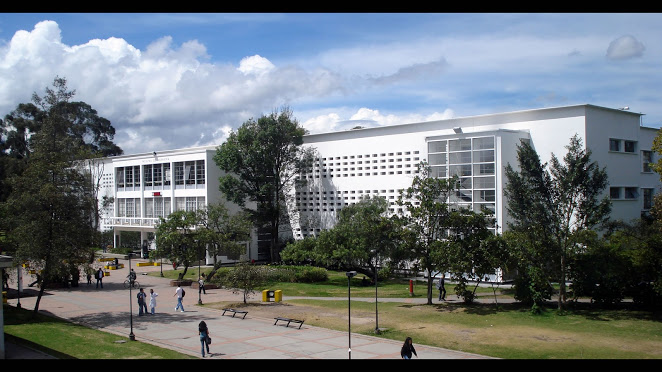
Génesis de la Universidad Nacional

Por: Ignacio Mantilla

Como ha sido costumbre desde hace algunos años, la celebración se realizó en el marco de la semana universitaria en la que se programan múltiples eventos culturales y académicos, y en la que tiene lugar el acto académico más importante del año, cuyo propósito es exaltar y distinguir a personalidades y profesores que con rectitud y dedicación han llevado a cabo una labor que la comunidad universitaria destaca como sobresaliente y ejemplar.

Este año, la celebración ha tenido un especial significado: la Universidad se prepara para conmemorar en 2017 el sesquicentenario de su fundación. Será un año lleno de eventos que resaltarán su papel y destacarán el legado universitario que como consciencia y guía fundamental para la educación superior del país, ha dejado en la formación de miles de profesionales y nuevos investigadores.

Los orígenes de la Universidad Nacional pueden rastrearse en la promulgación de la Ley del 18 de marzo de 1826 y el Decreto del 3 de octubre del mismo año que fijó el plan de estudios del gobierno del general Santander en la Gran Colombia, para apoyar la construcción de una nación moderna e ilustrada.

Aquel Código de 1826, redactado por el general Santander, constituyó un avance importante en la concepción educativa del país, pues eliminó el dominio religioso en la educación, pasando este poder al Estado; y extendió la instrucción pública a todos los rincones de la patria, creando los Colegios Santanderianos y escuelas y universidades en distintos departamentos. Gracias a este Plan de educación se logró la creación de las universidades Central de Bogotá, Central de Quito y Central de Caracas. La reforma educativa del 26 implantó el modelo napoleónico de educación, ampliamente adoptado por las nuevas repúblicas latinoamericanas, desplazando el modelo clerical del Imperio Español.

En 1830 y gracias a las conversaciones sostenidas con Wilhelm von Humboldt durante su exilio, Santander se introduce en las ideas renovadoras sobre educación que se desarrollaron con éxito en Alemania a partir de la famosa reforma educativa de 1808 adelantada precisamente por Humboldt. En los encuentros con el sabio alemán y en su visita a la Universidad de Berlín, Santander recibe la influencia metodológica, científica e investigativa de la reforma educativa alemana que se contrapuso a los modelos napoleónicos de la educación en Europa y que habían sido los paradigmas teóricos, utilizados por el mismo Santander en la fundación de la Universidad Central con sus tres seccionales en Quito, Bogotá y Caracas.

Su obsesión por la educación pública lo condujo a adquirir un gran conocimiento en esta materia, Santander pensaba que la educación superior debía ganar ante todo en autonomía. Estaba convencido de que los decretos de 1826 ponían a las universidades cadenas estatales indebidas que la limitaban para desarrollar libremente la investigación científica. El general trabajó por más de dos años redactando y discutiendo un nuevo código de instrucción pública que fue entregado al Congreso para su aprobación en 1834.

Lamentablemente, dichas ideas encontraron fuerte oposición en el Congreso de la Nueva Granada. El respeto de Santander por la institucionalidad le detuvo a forzar su aprobación. El proyecto de 1834 se discutió por cerca de ocho años y al final no fue aprobado por el Congreso. No obstante, Santander sí llevó a cabo, durante su período como presidente, algunos cambios en la educación de la República con los que logró incrementar sustancialmente el número de escuelas, la participación de la mujer en la educación y los cupos para la formación superior.

Estos ideales liberales del general Santander están de alguna manera reflejados en el proyecto de ley de 1864 que buscaba organizar la universidad, presentado por Manuel Plata Azuero y José María Samper al Congreso de los Estados Unidos de Colombia. Este proyecto, que se convertiría en la ley que finalmente da vida a la Universidad Nacional fue un proyecto de profundas motivaciones pacifistas para formar a jóvenes provenientes de cada rincón del país recién constituido. Un proyecto de universidad para toda la nación y de todos los colombianos en donde los jóvenes encontraran verdaderas posibilidades para desarrollarse personalmente y, a partir de allí, llevar progreso a sus regiones.

El gran esfuerzo del Estado en esta línea de acción se consolidócon la ley 66 por la cual se organiza la Universidad Nacional de los Estados Unidos de Colombia, hoy conocida como la Universidad Nacional de Colombia, aprobada el 22 de septiembre de 1867. El objetivo principal de esta Ley era contar con una institución mediante la cual el Estado organizara y desarrollara las políticas de educación superior para el país.

Esta universidad, de carácter nacional, ostentaba una relativa autonomía frente al gobierno de turno y total financiamiento por parte del Estado, como lo había propuesto Santander. Su misión se definió como la de desarrollar y fortalecer el saber académico, la ciencia y la investigación a través de seis escuelas que pretendían cubrir todas las áreas del conocimiento: la Escuela de Medicina, de Derecho, de Ciencias Naturales, de Ingenieros, de Artes y Oficios y de Literatura y Filosofía.

La Universidad Nacional de Colombia, desde sus inicios, ha estado comprometida con grandes objetivos sociales y con el pensamiento libre. Ahora, 149 años después, la Universidad Nacional, patrimonio de todos los colombianos, continúa fiel a los principios rectores de sus orígenes de servicio a Colombia, desarrollando con excelencia su quehacer académico.

Fuente: http://www.elespectador.com/opinion/genesis-de-universidad-nacional

Imagen: https://plus.google.com/118431447098053475449

Comparte este contenido:

La DAC (Docentes Argentinos Confederados) convocó a Paro Nacional para el 27 de Septiembre

Así lo resolvieron los Secretarios Generales de los diferentes gremios que componen Docentes Argentinos Confederados (DAC), en reclamo por una Ley de Paritarias Nacional, eliminación del Impuesto a las Ganancias y reapertura de las negociaciones salariales, entre otros temas.

En el día de ayer, la Comisión Directiva de DAC (Docentes Argentinos Confederados) se reunió para debatir sobre temas y problemáticas que atañen tanto a docentes de todo el país como de las diferentes jurisdicciones (Ej. Santiago del Estero) y que impactan en la construcción social de la Escuela Pública.
Reapertura de las negociaciones salariales, como consecuencia del deterioro del poder adquisitivo del salario docente.

Rechazo a la modalidad de la Evaluación Nacional Aprender 2016. No estamos en contra de las instancias de evaluación, entendiendo como tal la puesta en valor de los procesos de enseñanza-aprendizaje que se desarrollan dentro de un determinado contexto institucional, social, económico e histórico en el compromiso profesional de repensar las prácticas, las dinámicas, los logros, las dificultades por las que son atravesadas cada una de las instituciones escolares en su devenir y con sus particularidades. La propuesta dela Evaluación Nacional Aprender 2016 lejos está de ese concepto de evaluación, no se ha planteado ningún tipo de espacio de participación ni de aporte de los docentes, que mucho tenemos para decir desde nuestros propios saberes y experiencias. Se pretenden realizar pruebas estandarizadas cuyos resultados, tenemos sospechas fundadas, podrían ser utilizados para categorizar a los docentes, a las escuelas y a las jurisdicciones.
Alerta y preocupación por posibles modificaciones de los regímenes jubilatorios docentes.La Ley de Reparación Histórica para los Jubilados y Pensionados N° 27260/2016, en su artículo 27 refiere a la “ARMONIZACIÓN DE SISTEMAS PREVISIONALES PROVINCIALES” que consiste en acordar con las provincias, cuyos sistemas previsionales no fueron transferidos a la Nación, para compensar las eventuales asimetrías respecto de las jurisdicciones que sí hubieran transferido sus regímenes previsionales, de manera de colocar a todas las provincias en pie de igualdad en materia previsional. Este punto se desarrolla aún más en el Decreto 894/16 que reglamenta la mencionada ley.

Además, desde DAC continuamos con nuestros históricos reclamos, que precisa y lamentablemente llamamos “históricos” porque tanto el Gobierno Nacional, los gobiernos de las distintas jurisdicciones y los Diputados y Senadores, según su grado de responsabilidad en cada tema, no escuchan a los docentes de nuestro país en sus legítimos reclamos.

Aumento del presupuesto educativo.

Jerarquización y respeto de la carrera docente. – Concursos en tiempo y forma según lo establecido en la normativa vigente – en todas y cada una de las jurisdicciones del país.
Eliminación de las cifras salariales “en negro” que conforman gran parte del salario en distintas jurisdicciones. Ej. Santiago del Estero con el salario básico más bajo del país.
Eliminación del impuesto a las ganancias que impacta negativa y directamente tanto en la carrera del docente como en el ascenso escalafonario al que accede por los concursos y pfeccionamientos establecidos estatutariamente.
Cese de las persecuciones, represión y hostigamiento con el intento de silenciar las voces de miles de docentes provinciales que reclaman por sus justos derechos. En la actualidad, dirigentes sindicales que desarrollan su actividad, han sido víctimas de hechos de violencia por hacer públicos los reclamos en defensa de los derechos de sus representados, y se los castiga con la suspensión de su salario desde hace cuatro años. – caso SISADOC, Pcia. de Santiago del Estero –
No intervención que el Gobierno de Santiago del Estero realizó al Consejo General de Educación de esa provincia – que comprende la Presidencia del mismo y sus vocales, las Direcciones de Nivel Inicial, Primario, Secundario, Superior y Modalidades Educativas, de las Juntas de Calificación y Clasificaciones de cada Nivel y Tribunal de Disciplina. – , avasallando el derecho de los docentes santiagueños a elegir sus representantes gremiales para formar parte del mismo.
¡LEY DE PARITARIA NACIONAL YA!

PORQUE la DAC nació con la finalidad de defender irrestrictamente los Derechos de los Docentes y de la Educación Pública SIN NINGUNA BANDERA POLÍTICO PARTIDARIA y es la voz de más de 100.000 docentes que se sienten representados por esta organización sindical a nivel nacional.

PORQUE queremos verdaderas instancias de diálogo y no monólogos.

PORQUE sostenemos que defender los derechos de los docentes y la Escuela Pública, es defender a los niños y adolescentes en tanto sujetos del derecho a la educación.

Fuente: http://feb.org.ar/noticias/gremial/la_dac_convoco_a_paro_nacional_para_el_27_de_septiembre/1611/

Comparte este contenido:

Venezuela: Para el período escolar 2016-2017. Nuevas instituciones educativas inaugurará Gobierno nacional en Lara

Venezuela/20 de septiembre de 2016/Fuente: Correo del Orinoco

La mayoría  de las infraestructuras educativas se encuentran en última fase unas y otras en fase intermedia de construcción. Unas serán inauguradas con el inicio del nuevo año escolar, y otras a finales de 2016, informó Mirna Víes.

20 nuevas instituciones educativas inaugurará el Gobierno Nacional en el estado Lara, en la región centro-occidental del país, en el nuevo año escolar 2016-2017 que se iniciará el 26 de septiembre.

Así lo anunció este jueves la directora de la Zona Educativa de esta entidad federal, Mirna Víes, durante una rueda de prensa realizada en su despacho.

Indicó que 11 de estas nuevas obras de infraestructura se encuentran en la Ciudad Socialista Alí Primera, complejo habitacional de 4.032 apartamentos erigidos por la Gran Misión Vivienda Venezuela en el norte de Barquisimeto.

Allí serán inaugurados instituciones de educación inicial, básica y secundaria. Dijo que igualmente será inaugurada una escuela en el sector rural La Represa del municipio Morán (El Tocuyo), así como la Escuela Ana Teresa Zerpa en Sanare, la capital del municipio Andrés Eloy Blanco. También se encuentran por inaugurar siete unidades educativas para jóvenes especiales.

Informó que la mayoría de las infraestructuras educativas se encuentran en última fase unas y otras en fase intermedia de construcción. Unas serán inauguradas con el inicio del nuevo año escolar, y otras a finales de 2016.

25 UNIDADES EDUCATIVAS EN REHABILITACIÓN

Víes igualmente señaló que las infraestructuras de las 2.002 instituciones educativas, públicas y privadas, de esta entidad federal, están listas para el inicio del nuevo año escolar 2016-2017.

Informó que de esas instituciones 25 se encuentran actualmente en proceso de rehabilitación de reparaciones menores. “Estas rehabilitaciones incluye reparación de baños, pintura de escuelas y otras obras menores”, dijo.

También anunció que este viernes se iniciará la entrega de los primeros combos de uniformes escolares, que elaboran los Comités Locales de Abastecimiento y Producción (Clap). Igualmente se preparan para la entrega de morrales y computadores Canaima.

Comparte este contenido:
Page 238 of 266
1 236 237 238 239 240 266