Page 138 of 144
1 136 137 138 139 140 144

Q&A: Metis educator, author and researcher Rita Bouvier reflects on 2017 World Indigenous Peoples Conference on Education

Morgan Modjeski, Saskatoon StarPhoenix, Saskatoon StarPhoenix

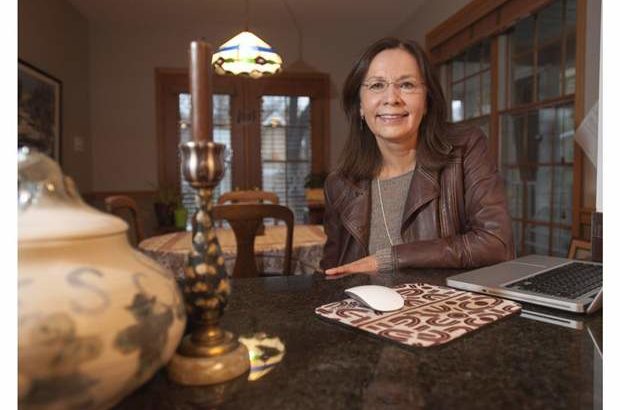
Rita Bouvier poses for a photo in her home in November 2013. An award-winning author, educator and researcher, Bouvier spoke about her time at the 2017 World Indigenous Peoples Conference on Education, which ran from July 24 to July 28 in Toronto Ont. She said the gathering was a chance for community members, educators and researchers to come together and discuss the future of Indigenous education in Canada and around the world, looking for answers through traditional knowledge and intellect.

Educators, academics, community members and researchers gathered in Toronto this week for the World Indigenous Peoples Conference on Education (WIPCE) hosted by TAP Resources and Six Nations Polytechnic.

Held every three years, the conference is a chance for stakeholders from around the world to gather and discuss the future of Indigenous education while working to address some of the major issues affecting Indigenous peoples on a local, regional and global level through traditional intellect.

Award-winning Metis educator, researcher, poet and activist Rita Bouvier, originally from Ile à la Crosse, has attended the conference nine times over the course of her career. She spoke with Morgan Modjeski about her time at the conference, both as a contributor and student.

This interview has been condensed and edited.

Q: What were some of the main issues that these intellectuals and academics were discussing?

A: “They’re not all intellectuals and academics. These are people who are working in various positions in the education system and in the community that supports the education systems. So we really have a diversity of roles and responsibilities that are reflected with the people attending … It’s a diversity of people that are working to support the education of our youth.”

Q: What’s the importance of having that melding of the minds between those working on the front lines in schools and those working on the front lines in a research and community capacity?

A: “We’re all trying to do the same thing … We want our youth to have some success, but we really feel that can only happen by strengthening the identity of our youth, to begin to understand who they are as human beings … and that they have a place in this world and they have a purpose. And we’re doing that by centring their story and their lives within their own traditions. But in doing that, Indigenous education, if I might call it that, and Indigenous knowledge can speak to everyone.

“A lot of that knowledge is carried in our languages and in the ceremonies and in the teachings that are passed on in many of the communities to this day … The purposes of education for many of our communities is not just individual success, it’s about the responsibility we have to the earth and to the natural world around us and the importance of us being in a relationship to that environment.”

Q: How has the conference and the work that the conference is focusing on changed in your time attending?

A: “Thirty years ago, we started out really being very unhappy. The kind of information that was being put out there, in particular by research, as academia, in some part, has produced some that of knowledge, which … essentially stereotyped, essentialized and romanticized who we were as a people, and all of us 30 years ago were challenging that western framework and we have come a long way. … This is some of the work that’s going on in Ontario right now, but the session that I just went to, where one particular community is sharing how they’ve created Indigenous knowledge and traditions — intellectual traditions — as a foundation for their curriculum, and still meet the curricular objectives and outcomes for the province, and it’s incredible. So it’s doable.”

Q: What is it like being part of the collective voice that’s at WIPCE from Saskatchewan?

A: “I have a responsibility to give back to my community and I have the privilege of having gained a lot of knowledge and experience in the work that I’ve done and I also believe that I have certain gifts, that I bring a certain passion to it, and so I feel very privileged to be among I want to say my peers and to have an opportunity to share stories with them.

“Not only about the challenges we face in our respective regions and in our respective countries, but also to celebrate the resilience, that despite everything else, we are still working so hard to centre what is important to us and that knowledge that has been passed on to us. And we feel that if people open their hearts, they can also benefit from the intellectual traditions of our community and to address … some of the challenges that face us globally and I’m talking about the environment.

“I’m talking about the fact that oftentimes, we seem to centre our whole educational endeavour around economic purposes, but that isn’t the ‘end all be all’ — we also have an obligation to create a world that is sustainable for future generations. That’s our responsibility, it isn’t to accumulate more and more.”

Q: If you could relay one lesson that you learned from WIPCE to the people of Saskatchewan, what would it be?

A: “Work with our communities, at the local, regional, provincial, national level. Work with us … The relationships that were established at the beginning of this country need to be honoured.”

mmodjeski@postmedia.com

Twitter.com/MorganM_SP

—This story has been updated.

Source:

http://www.leaderpost.com/business/metis+educator+author+researcher+rita+bouvier+reflects+2017+world/13957858/story.html
 

Comparte este contenido:

EEUU: Experience the World: Culture & Education at the Dinner Table

EEUU/August 01, 2017/By: Sarah Rohler/Source: einnews.com

Ahnnyeonghase-yo. Hej. Namaste. Hello. A greeting in any language implies the same thing; yet what makes each of them unique is the culture surrounding these everyday words. And each of these cultures are breathtaking to get to know; providing a spark of inspiration and warmth in our lives. ETC offers such an opportunity – hosting a student would mean to take in an international student for a brief term as a member of the family. Host families and students are encouraged to engage with each other as warmly and welcoming as possible; exchanging their respective cultures through pictures, stories, food, and affection.

The philosophy of ETC is to promote international goodwill and understanding through international student exchange experiences. It is our staunch belief that participating as a host to a student needing a home to stay will foster understanding and friendship between international cultures.

Education at the Dinner Table:
While in school one may memorize the various gendered pronouns of the Spanish language, or learn how to differentiate between the many homophones present in the English language; true learning of culture and life happens socially. This is especially true for life at home – whether it be through conversation at the dinner table, a small thank you whilst sharing the chores, or through showing each other humorous videos, daily life in a host family will impact the core of each exchange student and expand their worldview. These lessons are not only restricted to the student; families as well will learn about the many nuances present in a strange culture, and change the way they perceive their world.

Travelling Without Leaving Home:
A ticket to Iceland may be out of your price range; a week in Japan may be unthinkable when considering how expensive hotels are. Hosting negates all of these costs and difficulties that arise from planning a trip abroad, as families are allowed to bring a small part of this foreign culture straight into their living room. No longer will Korea or Honduras be a mere name on the map, but a dear second home that elicits countless warm memories spent with your student.

Foreign Partners:
ETC closely works with carefully screened, experienced agents that work diligently in each of the countries that offer students for hosting. Each agent painstakingly screens and examines each of the students and offers them with an orientation so that the students will be able to adjust to the United States with minimal difficulty. When the student finally arrives stateside, our partner organizations will always be available to act as a friendly liaison and counselor between the host family, ETC, and the student’s natural parents.

Special Activities:
We are highly involved with each of the host families and students that are part of the ETC family. ETC hosts fall welcome parties, monthly local activities, themed holiday parties, five (optional) trips every year, and a spring farewell picnic – all of which are available to ETC Local Coordinators, host families, and students, as a way to encourage bonding within a family-like atmosphere.

American Public High Schools:
ETC maintains a strict standard for those students who will be attending American public high schools on a J-1 visa. Each student will be placed within such a high school in their homestay community and will be required to take classes in English and American History or Civics. They are not permitted to take ESL or English immersion classes. Those students who are unable to maintain a C average are required to hire a tutor at their own expense.

Financial Responsibilities:
Host families are not required to take on the burden of the student’s financial expenses. Every student possesses comprehensive medical insurance, and are required to pay for their own personal expenses, which include but are not limited to school activity charges, class fees, clothing expenses, travel expenses, entertainment allowances, bus passes, long distance phone charges, and lunches purchased at the school. Each host family is considered as a volunteer, and are not expected to pay for such student expenses.

Learning About the World, at Home:
Each ETC foreign exchange student is brave and willing to leave family and friends for nearly ten months to broaden their horizons and learn about the culture of the United States. By considering a new short term addition to the family, host families can help courageous students out immensely, whilst learning similar things to the student themselves.

ETC is now accepting host family applications for both five-month and ten-month students. Each student speaks a proficient level of English, has been carefully screened, and will attend the host family’s local high school. Each student arrives fully covered by medical insurance and possesses their own spending money.

About Education, Travel & Culture:
Education, Travel & Culture is a non-profit [501 (c)(3)] educational exchange organization. Its purpose is to promote international understanding and goodwill by providing high quality educational and cultural exchange programs in the United States and abroad. ETC provides inbound program opportunities for high school students throughout the world to study in an American high school and live with an American family.

For more information, FAQs or even to apply to become a host family, visit http://edutrav.org or email Field Director, Brenda Ferland at bferland@edutrav.org

Sarah Rohler
Education, Travel & Culture
6236937999

ETC Is Your Opportunity to Experience the World

Source:

http://education.einnews.com/pr_news/395486931/experience-the-world-culture-education-at-the-dinner-table


Comparte este contenido:

NAAC Monitors Private Universities in India

India/August 01, 2017/Source: http://abclive.in

NAAC: National Assessment and Accreditation Council (NAAC) is the recognized accreditation agency in the Country for all Higher Educational (Non-technical) Institutions. As per procedure for accreditation, the Institutions/Universities submit the data and information in the prescribed format to NAAC.

The data are validated by a peer team constituted by NAAC before submission of its report to NAAC for accreditation of the Institutions. At times, NAAC, thorough its visiting team and complaints / RTIs from the stakeholders, has noticed that various Institutions have submitted fraudulent data for acquiring higher grade. These complaints are considered by visiting team of NAAC before assigning the final scores under the respective components of assessment.

To avoid submission of fraudulent data by the Institutions for accreditation, NAAC has taken following steps:

  1. It is mandatory for the Institutions to upload the information provided to NAAC on their website and retain the information on their website until completion of the validity period of accreditation and provide access to all the stakeholders.
  2. Institutions are instructed to videograph the whole assessment exercise and submit the same to NAAC and also upload on its website.

iii.            A Complainants Management Committee has been established which looks into the complaints especially those received after accreditation for initiating necessary action.

  1. The new procedure of Assessment and Accreditation (A&A) implemented by NAAC w.e.f. July 2017, has introduced an additional step, wherein the data submitted by Institution are subjected to a Data Verification and Validation (DVV) process. The new process has also provision for imposing severe penalties on Institutions submitting fraudulent data.

There is no such proposal under consideration of the Government to set up a Regulatory Commission for monitoring the performance of Private Universities. All existing private universities are established by the Act of their respective State Legislatures.  These universities are governed and regulated by their respective State Acts and University Grants Commission (UGC) (Establishment of and Maintenance of Standards in Private Universities) Regulations, 2003. As far as Private Deemed to be Universities are concerned, they are regulated by UGC (Institutions Deemed to be Universities) Regulations, 2016. As per the Regulations, UGC conducts periodic inspection of these Universities and deficiencies, if any, observed during inspection are communicated to respective University for rectification. In addition, various Professional Regulatory Councils viz. Bar Council of India (BCI), Dental Council of India (DCI), Indian Nursing Council (INC), Medical Council of India (MCI), National Council for Teacher Education (NCTE), Pharmacy Council of India (PCI), etc. also review these Universities in their respective areas. Further, ranking of Higher Educational Institutions done by the Government under National Institutional Ranking Framework acts as performance indicator.

This information was given by the Minister of State (HRD), Dr. Mahendra Nath Pandey today in a written reply to a Lok Sabha question.

http://abclive.in/naac-monitors-private-universities-india/

Comparte este contenido:

Islamic University best in Gaza, third in Palestine

Gaza – Palestine/August 01, 2017/Source: https://www.middleeastmonitor.com

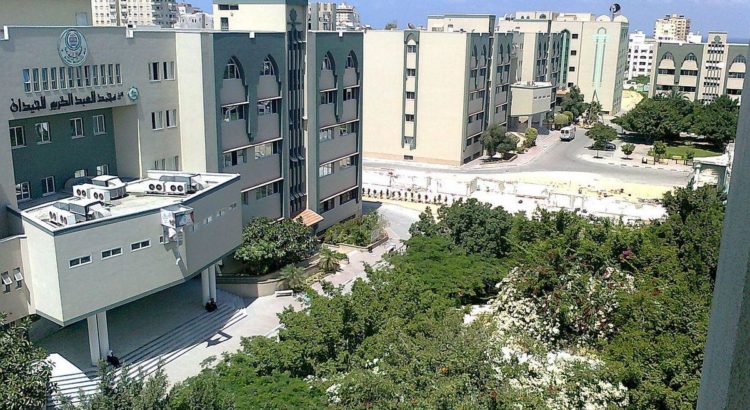
The Islamic University of Gaza (IUG) announced yesterday that it was classed the top higher education institution in the Gaza Strip and the third in Palestine based on Webometrics July 2017 edition, Safa news agency reported.

The IUG said it came in at number 54 among 988 high education institutions in the Arab region which were included in the evaluation.

Chairman of the IUG, Professor Adel Awadallah, hailed the efforts of the university staff who worked hard to maintain these high levels and ensured its continued development.

The university has been subjected to destructive Israeli rocket attacks in 2008 and 2014 and in 2007, the Palestinian Authority (PA) security services affiliated to Fatah President Mahmoud Abbas attacked and burnt its buildings.

Since the start of the Israeli siege 11 years ago, the IUG has suffered from severe shortages of educational equipment and materials.

The Webometrics system is the largest system for evaluating international universities, covering more than 25,000 institutions worldwide. It is published in Spain by the Higher Council for Scientific Research. It is linked to the standard of research and technical files and is updated every six months.

Source:

Islamic University best in Gaza, third in Palestine

Comparte este contenido:

EEUU: State Board Of Education Approves New Tennessee Academic Standards For Social Studies

 EEUU, July 28, 2017. By http://education.einnews.com.
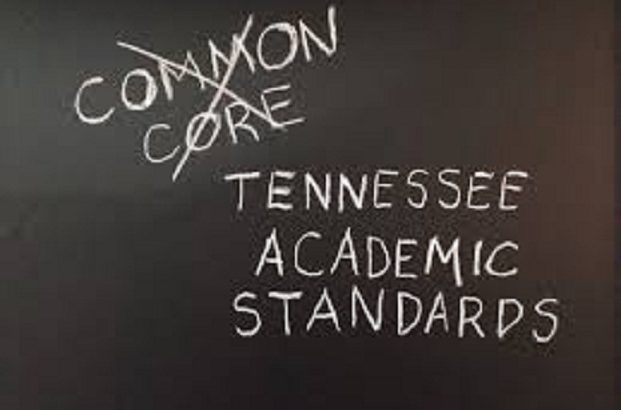
 The State Board of Education voted unanimously on final reading to approve new, Tennessee-specific academic standards for social studies on Friday.

The new Tennessee Academic Standards for Social Studies will be implemented in classrooms in the 2019-20 school year. This multi-year, comprehensive review involved teams of Tennessee educators, subject matter experts, higher education faculty, state history and geography organizations, and multiple public comment opportunities, ensuring that all Tennesseans had a voice throughout the process.

“These new social studies standards provide a strong foundation for our students, due in part to incredible participation from educators and Tennesseans across the state in the review process,” said Dr. Sara Morrison, executive director of the State Board of Education. “Standards point the way for high quality instruction in the classroom, which is our ultimate goal.”

The K-12 social studies standards were first considered in April 2017. Between first and final reading, the draft standards were revised according to feedback received from a variety of stakeholders and to align with recent legislative action affecting social studies. The 110th Tennessee General Assembly passed the Senator Douglas Henry Tennessee History Act, mandating that a Tennessee history course be taught in grades K-12. This legislative action, Public Chapter 482, prompted further changes to the draft standards to ensure full compliance with the law.

The social studies standards review process began with an initial online review period beginning in January 2016 that brought in nearly 64,000 reviews and 15,000 individual comments. A committee of Tennessee social studies educators then analyzed each individual standard to update or revise them based on the public feedback and their classroom expertise. That set of revised standards was posted a second time for public review in September 2016. The shorter review period brought in nearly 54,000 reviews and 10,000 comments.

The Standards Recommendation Committee, whose members were appointed by the Governor, Lt. Governor, and Speaker of the House of Representatives and confirmed by the General Assembly, reviewed the second round of public feedback and worked tirelessly to review each grade level’s standards from September 2016 through March 2017. The SRC presented their draft standards to the State Board of Education in April 2017.

Tennessee’s comprehensive standards review process was initiated in October 2014, when Governor Haslam announced the creation of a standards review website that would be open to the public to review and offer feedback on what Tennessee students should know and be able to do by the end of each K-12 school year in both mathematics and English language arts. This process was further expounded upon by the 109th Tennessee General Assembly in Pub. Ch. 423, which charged the State Board of Education with overseeing not only the review of math and ELA standards, but also science and social studies standards.

From: http://education.einnews.com/article/395013334/ZFx1IXw53qQdCOT7?lcf=ZdFIsVy5FNL1d6BCqG9muZ1ThG_8NrDelJyazu0BSuo%3D

Comparte este contenido:

Vanuatu: PM announces free primary and secondary education – again

Vanuatu/July 25, 17/Source: https://vanuatudigest.com

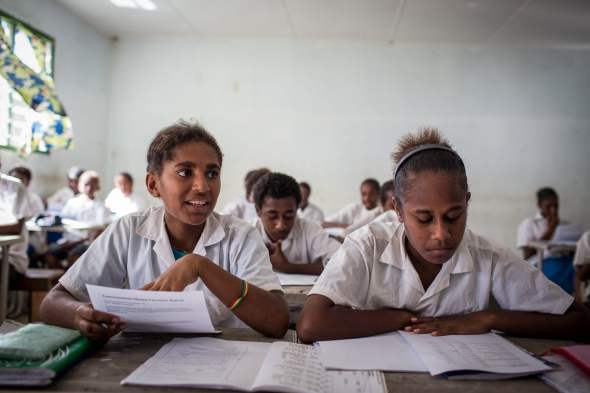
Happy Vanuatu Children’s Day. Children are appropriately singled out today with the announcement that the entire government is behind the Free Secondary Education Scheme. This will start from next year. The Governments of Australia and New Zealand have looked after the entirety of the first years of education for, really, far too long: Vanuatu should have found a solution. It now has and will shoulder the full burden of primary education henceforth. Today’s story in Daily Post raises many questions and it is to be hoped these will be answered after today’s celebrations are over. Their subhead is “Prime Minister declares free early childhood and secondary education.” This promise was made exactly a year ago. Our present PM is not one to simply take an advantage of a public holiday to tout a rehashed policy. But we want all the details. Government is extremely concerned at the number of late primary dropouts. This policy action is intended to stop it worsening.

Another Children’s Day venture: Government support for a Telecom Vanuatu–Wan Smolbag initiative to combat street crime. The two organisations have the best interests of youth at heart, as has Government. An annual street dance battle would seem to be just what it can use from the stack of amazing talents of the organisations who are sponsoring!

Source:

https://vanuatudigest.com/2017/07/24/pm-announces-free-primary-and-secondary-education-again/

Comparte este contenido:

Prague: Education Ministry keeps money for teachers’ career system

Prague/July 25, 17/Source: http://praguemonitor.com

Some 1.7 billion crowns originally designated for the rejected teachers’ career advancement system will probably remain in the Czech Education Ministry’s budget for 2018, Education Minister Stanislav Stech told reporters after his talks with Finance Minister Ivan Pilny on Monday.

Stech (for senior government Social Democrats, CSSD) would like to spend the money on the introduction of some elements from the career advancement system the amendment on which the Chamber of Deputies, the lower house of Czech parliament, turned down in July.

Stech and Pilny (ANO) did not talk about particular sums within the education budget on Monday.

According to the budget draft, the Education Ministry is to get some 160 billion crowns for 2018, while the sector originally demanded 172 billion. This year the ministry has some 148 billion at its disposal.

Stech said he believed that he would manage to increase the budget of higher education facilities as well.

His predecessor Katerina Valachova (CSSD) proposed that the universities’ budget rise from 21 billion to 27 billion crowns next year, while the sum for university teachers’ salaries, investments and post-graduate students in doctoral programmes should rise by 4.5 billion crowns.

However, the Finance Ministry only plans a 100-million-crown rise so far.

Representatives of higher education facilities and trade unions insist on a more significant rise. If they fail with their demand, they plan to take some pressure steps in September and October.

Stech said he would like to secure a rise in the universities’ budget that would lead to «differentiation» of their quality and performance.

Pilny said he was willing to keep negotiating about these demands.

Stech also said he would like to use the money from the career advancement system mainly to fund regional schools.

Pilny assured him that he still considered the school system a priority though they had not yet reached consensus on particular budget sums.

Stech will have to decide whether he wants to use the money for regional schools, teachers’ salaries or universities, Pilny added.

Both ministers also discussed the funding of school inclusion this year.

The Finance Ministry has already found 400 million crowns in the budget that the Education Ministry can spend on supportive measures and aids for children with special educational needs, Pilny said.

The ministers will debate the 2018 budget again in about a month.

Source:

http://praguemonitor.com/2017/07/25/education-ministry-keeps-money-teachers-career-system

Comparte este contenido:
Page 138 of 144
1 136 137 138 139 140 144