Page 1446 of 2546
1 1.444 1.445 1.446 1.447 1.448 2.546

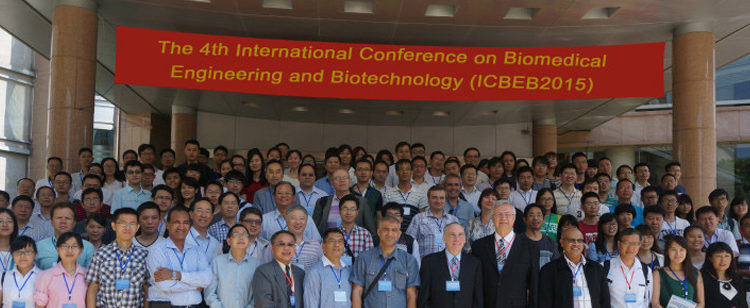
China: Quinta Conferencia Internacional de Biotecnología y de Ingeniería Biomédica , ICBEB 2016

Asia/China/ Julio del 2016/Reseñas/cn.icbeb.org

Bienvenidos  a ICBEB 2016!
  A la quinta  Conferencia Internacional de Biotecnología y Ingeniería de Biomédica ICBEB 2016
Se llevará a cabo en Hangzhou 1 de agosto de 2016.
Se realizaron en la 4ª Zhi. En ICBEB de 2015 , ICBEB de 2014 , ICBEB 2013 , ICBEB 2012 , basado en el éxito del 4ta., ICBEB 2016. Seguirá centrándose en la ingeniería transversal biomédica, materiales biomédicos, imagen biomédica, ingeniería biomecánica y otras disciplinas de la cooperación y el intercambio .
Cuatro años, los académicos ICBEB campo biomédico, investigadores, brindando intercambio investigación de vanguardia, plataforma internacional para la discusión, con el fin de alcanzar logros académicos compartidos aplicación propósito de los resultados. 2016, ICBEB se centrará en el establecimiento de dos seminarios – Tercer Simposio de Imágenes Biomédicas y Biología Molecular Rama de la primera sesión.
Aquí, en nombre del comité organizador ICBEB, para darle la bienvenida a asistir a la Quinta Conferencia de Ingeniería Biomédica e Internacional de Biotecnología, el Tercer Simposio de Imágenes Biomédicas y Molecular Biología rama de los primeros intercambios mutuos, con sus homólogos en otros países del mundo aprender unos de otros.

Fuente: https: http://cn.icbeb.org/

Fuente imagen: http://cn.icbeb.org/images/banner01.jpg

欢迎来到2016年ICBEB!

生物第五届医学工程与生物技术国际学术会议,ICBEB 2016年8月2016年1将于日至4日在杭州召开。在ICBEB 2015ICBEB 2014ICBEB 2013ICBEB 2012年 ,前四届成功举办的基础上,ICBEB 2016将继续致力于生物医学工程、生物医学材料、生物医学影像、生物力学工程等学科的跨领域合作交流。

四 年来,ICBEB为生物医学领域的学者、研究人员,提供前沿性研究交流、讨论的国际平台,以达到学术成果共享,成果应用的目的。2016年,ICBEB将 重点设立两个研讨会——第三届生物医学影像研讨会和第一届分子生物学分会。在此,谨代表ICBEB组委会,欢迎各位参加第五届生物医学工程与生物技术国际 学术会议,第三届生物医学影像研讨会和第一届分子生物学分会,与世界其他国家同行相互交流,相互学习。


Comparte este contenido:

Reino Unido: The Think Project, Brexit and the urgent need for better citizenship education

Europa/Reino Unido/Julio 2016/Autor: Rocio Cifuentes  / Fuente: opendemocracy.ne

Resumen: The Think Project in Gales, que nace de un proyecto para combatir el naciente extremismo islámico, demuestra que la discusión abierta puede aprovechar eficazmente a los jóvenes en riesgo de las ideologías de extrema derecha.

Last Friday’s momentous decision by the majority of the voting UK population to leave the EU was shocking, but, in retrospect, not surprising. It is now glaringly obvious that too many people for too long have been without prospects, without education and without hope. For these people, the benefits of the EU – including the possibility to live and work in one of 27 countries, or the many jobs it funded, were simply never considered as relevant or accessible to them. The imagined disadvantages however – of too many immigrants, and EU bureaucracy – were shouted out to them daily for more than a decade through the populist mainstream media, and legitimised more recently by opportunist mainstream politicians anxious to seem in touch with their concerns.

Indeed Brexit is just a moment on a journey which arguably began after the terrorist attacks in New York on 9/11 and London on 7/7. This is when historical dichotomies of east vs west and narratives of anti-Islam were energetically revived, quickly evolving into anti-anyone-who-looks-Muslim as we saw with the mistaken killing of the Brazilian Jean DeMenezes on the London underground. The global financial crash and acceleration of austerity measures in the UK offered the perfect storm in which foreigners, asylum seekers and Muslims could all be blamed for ‘taking all the jobs and all the houses’.

Preventing extremism with dialogue
In this UK context of increasing racism, xenophobia and Islamophobia, the Ethnic Youth Support Team – a charity established in 2005 to support young ethnic minorities living in Wales – saw a need to do something more practical than simply support victims of, or condemn or report racist hate crime. We knew from our experience delivering projects to address Islamist extremism that young people’s resilience can be increased by simply allowing them to air their grievances and concerns in a safe and respectful environment, coupled with giving them facts and ideas to counter extremist narratives. We also knew, from 10 years of working with a wide range of young people that, given the time, space and opportunity, most have a huge capacity to learn and to change.

Consequently, we developed the ‘Think Project’ – a practical educational programme designed to engage with and educate the most ‘disadvantaged’ young people. These are arguably those most vulnerable to far-right messages, and they include those excluded from mainstream schools in alternative education, and those in the youth offending system, youth prisons, and so on. It was designed as a three-day educational programme giving young people the truth about immigration, about asylum and about Muslims, and changing their views on these issues for the better.

Delivered by ethnically diverse and engaging youth workers, its uniqueness stems from the fact that it combines facts about immigration, Islam and asylum, with a positive first-hand experience of diversity. Also central to its success is its emphasis on open dialogue and debate, allowing young people to say openly how they really feel about migration and Muslims, before those views can be debated and challenged.

The proof of the pudding is in the eating
Following a successful pilot, the Think Project was funded by the Big Lottery Innovation Fund, and between 2012 and 2015 438 young people completed the three-day programme. The project’s formal evaluation found a 95% success rate in radically changing young people’s views from being anti to pro-diversity. As one young man from Merthyr Tydfil said: “I’ve always been a bit racist, I’m not gonna lie, but this project has changed the way I look at things, I see everything completely differently now – it’s changed my life”.

What stood out was the degree of misconception surrounding the issues of immigration, asylum and Islam. At the beginning of the programme, 96% of young people did not know what an asylum seeker was, and those who tried to define it understood it as ‘someone who comes here to take our jobs and benefits’. By the end 83% did know what the term meant, and could link it to the human right to be offered sanctuary from war and persecution. One of the most valued parts of the programme, which was mentioned repeatedly by project participants, was the opportunity to meet and hear first-hand the experiences of someone who had sought asylum in the UK, which they said was something they would never forget.

Crucially, and illuminatingly in light of the Brexit decision, the vast majority of young people grossly overestimated the number of people from a different ethnic background to themselves living in Wales – over half of the young participants estimated that this was more than 50%, and about a quarter thought it was over 75%. By the end of the programme 89% correctly put the figure at under 10%. Distorted perceptions of reality chime perfectly with the message of the Brexiteers; the UK is being over-run with immigrants, who are here to take jobs, houses and benefits, and that we are indeed at a ‘breaking point’. However, our programme shows that given the opportunity to learn the facts, and given a positive first-hand experience of meeting and talking to Muslims and refugees, all this can be changed, making these young people significantly more resilient to the messages and ideology of far-right extremists.

The shame is not that the popular press has been allowed to peddle these myths and misrepresentations for so many years, nor that opportunist politicians have capitalised and exploited these stereotypes, turning vulnerable groups into scapegoats for austerity. No, the greatest shame has been that educational institutions, charged with giving young people the tools to become positive and active contributors to society, have failed to give such a large proportion of young people a clear understanding some of the biggest issues and challenges facing contemporary societies. And of course there have been personal tragedies and victims along the way, including most recently the murder of MP Jo Cox at the hands of a far-right terrorist. If we are to avoid more tragic murders, we need to stop such home grown terrorism in its tracks, and prevent it from taking root in the minds and hearts of our young people.

Citizenship, diversity and democracy all need to become core parts of the national curriculum taught to all young people at every stage of their education. However this should not be the preserve of the high-flying elite. Such programmes rather need to reach out in a more targeted and proactive way to those young people who arguably need it the most, including those who miss out on mainstream schooling, and whose life prospects are limited due to other complex factors linked to poverty and deprivation.

There are much wider challenges involved in addressing the entrenched and inter-generational poverty facing many young people today, and it is no wonder that many feel aggrieved. However, it is essential that schools and educational institutions in particular work proactively to counter and challenge the anti-immigrant and anti-Muslim narratives which have been enjoying a resurgence in the UK and across Europe in recent years, and equip young people to question and critique the media, politicians and extremist groups.

The Think Project is one example of such an approach which has been shown to be effective.

Fuente de la noticia: https://www.opendemocracy.net/rocio-cifuentes/think-project-brexit-and-urgent-need-for-better-citizenship-education

Fuente de la imagen: https://cdn.opendemocracy.net/files/u555228/PA-7708644_920.jpg

Comparte este contenido:

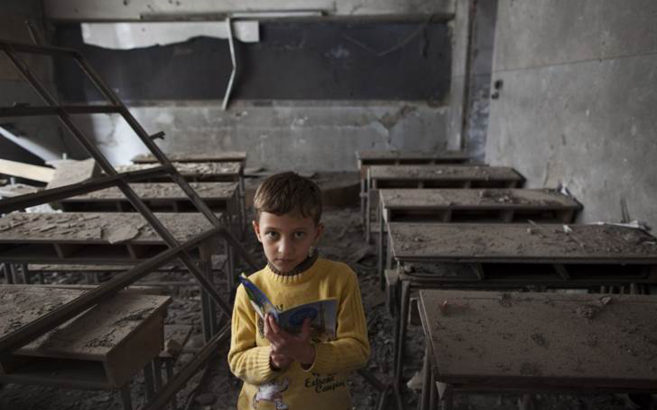
Irak: Iraq’s war children face void without world’s help- UNICEF country chief

Asia/Irak/Julio 2016/Autor:  Tom Esslemont / Fuente: Reuters

Resumen:  Una generación de niños se enfrentan a la sombría perspectiva de estar sin una educación, a menos que el gobierno iraquí, sus aliados y los organismos de ayuda reconstruyan las comunidades desgarradas por años de guerra, dijo el viernes un funcionario superior de la agencia oficial de los niños de ONU.

A generation of children face the bleak prospect of going without an education unless the Iraqi government, its allies and aid agencies rebuild communities torn apart by years of war, a senior U.N. children’s agency official said on Friday.
Peter Hawkins, UNICEF representative in Iraq, said recent fighting between government forces, backed by a U.S.-led coalition, and Islamic State fighters, had cut off thousands of children from school and healthcare.
«We are faced with a whole generation losing its way and losing prospects for a healthy future,» said Hawkins in an interview.
Government institutions, faced with financial deficit, are collapsing leaving them dependent on U.N. agencies to provide schools and teacher training, following more than a decade of sectarian violence, Hawkins said during a visit to London.
«What is needed is a cash injection through central government so that we can see it building the systems required for an economic turnover,» he told the Thomson Reuters Foundation.
Conflict has worsened the situation across Iraq, with an estimated 4.7 million children – about a third of all children in the country – in need of assistance, the U.N. agency said in a report last month.
Mass movements of people forced from their homes by fighting in areas like Ramadi and Falluja, west of the capital, Baghdad, put one in five Iraqi children at risk of death, injury, sexual violence, abduction and recruitment into fighting, the report said.
UNICEF said earlier this year that at least 20,000 children in Falluja faced the risk of forced recruitment into fighting and separation from their families.
«A big problem is the lack of schools, with a lack of investment in recent years meaning the systems have all but collapsed,» Hawkins said.
CHILD RECRUITMENT
Thousands of civilians across much of western Iraq’s rugged Anbar province have been driven from their homes into the searing desert heat in the last two years, as a tide of Islamic State fighters took control of key towns and cities.
Despite losing considerable ground on the battlefield, a massive suicide bombing in Baghdad’s central shopping district of Karrada last weekend showed Islamic State remains capable of causing major loss of life.
In Anbar, where fighting has ruined scores of residential areas, many of the people displaced by the militants were now «in limbo», waiting in displacement centres, Hawkins said.
Nearly one in five schools in Iraq is out of use due to conflict. Since 2014 the U.N. has verified 135 attacks on educational facilities and personnel, with nearly 800 facilities taken over as shelters for the displaced, UNICEF data shows.
But Hawkins said he expected thousands of families to soon return home and rebuild their lives.
In Ramadi, where government forces retook control last December, UNICEF will help the ministry of education reestablish schools, provide catch-up lessons and teacher training over the summer after it had been «flattened» by fighting, Hawkins said.
The veteran aid worker, who has also worked in Angola, Sri Lanka, Afghanistan and Pakistan, said his «biggest fear» was that children could get caught up in a battle to retake Mosul, Iraq’s biggest northern city still held by the militants.
Protection of children must be part of a military strategy to retake Mosul, said Hawkins.
Pressures on UNICEF’s $170 million annual budget for 2016-17, which Hawkins said was short by $100 million, were hampering its ability to reach all those affected and may mean some child protection programmes are abandoned, he said.

Fuente de la noticia: http://www.dailymail.co.uk/wires/reuters/article-3681136/Iraqs-war-children-face-void-without-worlds-help-UNICEF-country-chief.html

Fuente de la imagen: https://www.google.co.ve/search?q=guerra+escuela+irak&espv=2&biw=1366&bih=681&source=lnms&tbm=isch&sa=X&ved=0ahUKEwj3282inOXNAhUBJh4KHUrlCjUQ_AUIBigB&dpr=1#imgdii=UXBgFFweGa111M%3A%3BUXBgFFweGa111M%3A%3Bkoao8M7azQY4qM%3A&imgrc=UXBgFFweGa111M%3A

Comparte este contenido:

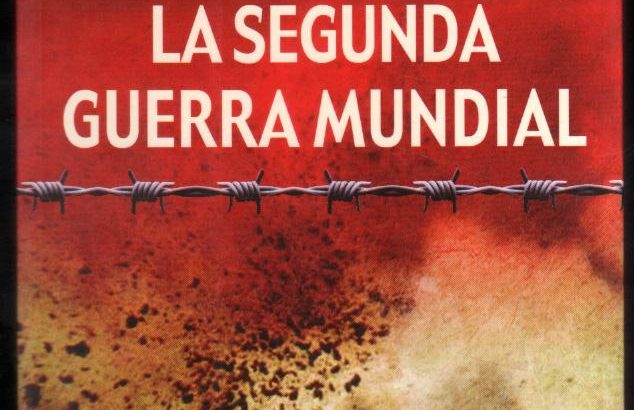
Libro: Las Mentiras de la Segunda Guerra Mundial, del autor Philippe Faverjon

Asia/Rusia/Julio del 2016/Resumen/http://www.elresumen.com

A nadie le asombra que la historia esté íntimamente relacionada con la mentira. Así, en el tumulto de la Segunda Guerra Mundial, hubo acontecimientos emblemáticos que se manipularon hábilmente.

Desde la enmascarada eutanasia de niños alemanes discapacitados, en 1933, a la mascarada de Gleiwitz que desencadenó la invasión a Polonia y el estallido de la guerra; desde el levantamiento de Varsovia hasta el sacrificio inútil de los kamikazes, sin olvidar el «reparto» del mundo en Yalta, Philippe Faverjon revela la cara oculta de la última guerra mundial.

Nada es anecdótico en este apasionante relato. Basándose en los descubrimientos más recientes, el autor explica lo bien que funcionan estos engaños.

Por ejemplo, el campo de concentración de Theresiendstadt, antecámara de la muerte, en una visita de la Cruz Roja fue transformado por sus propios habitantes en una ciudad balnearia para judíos privilegiados: la célebre organización humanitaria no se enteró de nada.

Lo mismo pasó en Katyn: el descubrimiento en abril de 1943 de un osario de oficiales polacos asesinados por el NKVD, organismo de seguridad soviético antecesor de la KGB, causó enseguida una gran polémica orquestada por los rusos, cuya verdad recién salió a la luz en los años noventa.

Un libro que pone al descubierto una increíble suma de errores humanos y de decisiones arbitrarias protegidas por el sello de la mentira.

Autor: Philippe Faverjon

Género: Historia / Guerra / Ciencias Sociales / Humanidades

Idioma: Español

Fuente:http://www.elresumen.com/libros/las_mentiras_de_la_segunda_guerra_mundial.htm

Fuente Imagen: http://www.elresumen.com/libros/las_mentiras_de_la_segunda_guerra_mundial.jpg

Comparte este contenido:

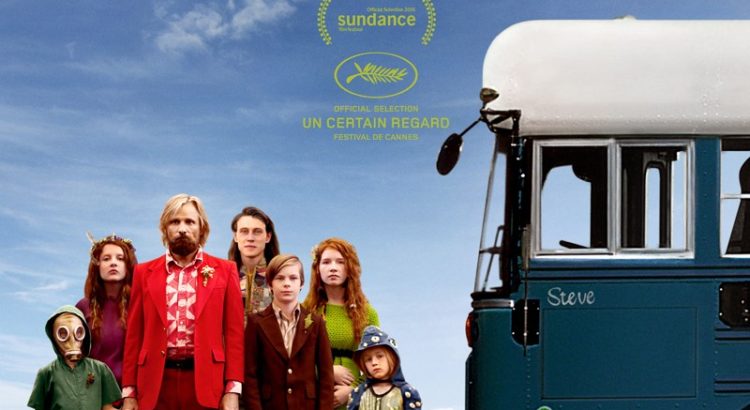
Película: Captain Fantastic

América del Norte/EEUU/Julio del 2016/Reseña/http://www.slugmag.com

By:Alex Springer

Capitán Fantástico
Directora: Matt Ross
Bleecker Street
Reseña:

Hacer un drama significativa acerca de una peculiar familia es como navegar en un campo de minas plagado de dulzor meloso o una tragedia llena de savia, pero Matt Ross ‘Captain Fantastic combina con éxito un drama familiar tocar con la comedia y el momento oportuno la imprevisibilidad de una película de carretera. Ross captura la esencia emocional de lo que hace que todas las familias garrapata, y su reparto estelar sigue con prontitud traje.

Ben (Viggo Mortensen) y Leslie (Trin Miller) han optado por dejar el mundo del capitalismo estadounidense y criar a sus seis hijos fuera de la red en un hogar desierto autosuficiente. A continuación, se aseguran de que sus hijos están bien versados en la ciencia, la historia, Noam Chomsky y cómo cazar y matar a un ciervo. Cuando una tragedia familiar les obliga a salir de su hogar armonioso e interactuar con el mundo ya que la mayoría de nosotros sabemos que, hay algunos golpes evidentes a lo largo de la carretera. El escritor / director Ross (ventiladores de Silicon Valley lo sabrán como Gavin Belson) utiliza esta historia de pez fuera del agua para ofrecer hilarante críticas de la sociedad moderna, la orientación de todo, desde la religión organizada a la educación pública. Aunque la escritura del anti-establecimiento de Ross tenía el potencial de convertirse en preconizantes y pesimista, que sabiamente evitar esas trampas mediante la elaboración de perspectivas equitativas de cada personaje. Suburbanite parientes de la familia son excelentes láminas a los métodos de crianza de Ben, y viendo sus dos familias cabezas del extremo es la imagen perfecta para el conflicto principal de la historia.

La escritura de Ross utiliza cada una de muchas ideologías contrastantes familiares para demostrar que no hay una única manera de formar una familia. Aunque nos encanta métodos poco ortodoxos de Ben, también nos damos cuenta de que él tiene que dejar de lado la hostilidad inicial que le hizo llevar a su familia al desierto. Captain Fantastic muestra cómo las diferentes familias tienen dificultades, pero no dicen tener la respuesta. En su lugar, se trata de demostrar que cada familia es menos de una institución estática y más de un organismo en evolución.

Los actores adultos en Captain Fantastic son grandes, pero los miembros más jóvenes de la película hacen de este trabajo en el cine. Invertir tanto de la trama de actores más jóvenes es una gran apuesta, pero cada miembro de la familia de Ben y Leslie, de la más antigua Bodevan (George MacKay) a los más jóvenes, los gemelos Nai (Charlie Shotwell) y Zaja (Shree ladrones), son bien personajes dibujados. El diseñador de vestuario Courtney Hoffman (El odioso Ocho) merece mucho las gracias-sus diseños creativos crean representaciones, pero de carácter local por toque las actuaciones definitivamente no deben pasarse por alto. – Alex Springer

Fuente: http://www.slugmag.com/movie-reviews/captain-fantastic-2/

Fuente imagen:http://www.slugmag.com/images/pdf_button.png

Comparte este contenido:

Senegal: Global academic collaboration: a new form of colonisation?

África/Senegal/Julio 2016/Autor: Hanne Kirstine Adriansen / Fuente: theconversation.com

Resumen:  La educación superior en África es tan antigua como las pirámides de Egipto. Pero las instituciones más antiguas del continente desaparecieron hace tiempo. El tipo de educación superior que se entrega hoy en África, desde el curriculum a las estructura de los estudios y de las lenguas de instrucción, tiene sus raíces en el colonialismo. Esto ha llevado a muchos a preguntarse si las universidades africanas siguen sufriendo una especie de colonización – de la mente.

Higher education in Africa is as old as the pyramids in Egypt. But the continent’s ancient institutions have long disappeared. The type of higher education that’s delivered in Africa today, from curriculum to degree structure and the languages of instruction, is rooted in colonialism. This has led many to question whether African universities are still suffering from a sort of colonisation – of the mind.

The story of renowned climate change researcher Cheikh Mbow is an example. Mbow was born in Senegal in 1969 and studied there. Looking back at his experiences during his first years of university, Mbow observes: “I knew all about the geography and biology of France but nothing about that of Senegal.”

Mbow also happens to be my friend, and together with one of his colleagues we wrote a book chapter about the production of scientific knowledge in Africa today. The chapter is based on Mbow’s life story – which I’ll return to shortly.

In recent years a new consciousness has emerged about higher education’s historical roots. People are calling strongly for a decolonised academy. This feeds into a broader debate about the role of modern universities.

There’s little doubt that Africa’s universities need to be locally relevant – focusing their teaching and research on local needs. Unavoidably, though, they’re simultaneously expected to internationalise and participate in the heated global higher education competition. Standardisation is the name of the game here. Universities compete to feature on global ranking lists, mimicking each other.

Internationalisation also sees African researchers like Mbow travelling North in search of research environments with better resources. These international collaborations can be hugely beneficial. But all too often it’s organisations, universities and researchers in the global North that call the shots.

So how can the continent’s universities manage the tricky balance between local relevance and internationalisation? How can they participate in international collaboration without being “recolonised” by subjecting themselves to the standards of curriculum and quality derived in the North? How can they avoid collaborative programmes with the North that become mere tick-box exercises that only benefit the Northern researchers and organisations?

International collaboration grows

Over the past 20 years, international interest in African higher education has intensified. Aid agencies in the North have developed policies that are designed to strengthen Africa’s research capacity. Scandinavian countries were among the first to do so: Denmark has the Building Stronger Universities programme. Norway and Sweden have similar collaborative programmes.

Such initiatives are important. Research funding is very limited at African universities. National higher education budgets are quite low, especially compared with universities in the North. In their bid to educate rapidly growing populations, African universities tend to emphasise teaching rather than research. So these institutions rely heavily on external funding for research and depend on support from development agencies via so-called capacity building projects. These projects engage researchers from the North and South in joint activities within teaching and research, ideally to create partnerships based on mutual respect.

Many researchers from universities in the North and South are involved in these collaborative projects, usually as practitioners. Only rarely do we turn these collaborative projects into a research field, turning the microscope on ourselves and our own practice. After participating in a capacity building project in Africa, some colleagues and I became interested in understanding the geography and power of scientific knowledge.

We wanted to know how this power and geography is negotiated through capacity building projects. We also sought to understand whether such projects functioned as quality assurance or a type of neo-imperialism.

Simply put, our research explored whether capacity building and the tendency towards increased international collaboration in higher education is helping or hindering African universities. The answer? Both.

‘Monocultures of the mind’

The problem with such projects is that they might create what Indian activist Vandana Shiva calls “monocultures of the mind”. Shiva argues that these make diversity disappear from perception and consequently from the world. People all end up thinking in the same ways.

International collaboration can cause African universities to become more dependent on the North. Their dependence is on funding; through publication in journals from the North; and through technology that only exists in the North. It also manifests in thinking mainly using concepts and solutions developed in the North.

Another problem is that this international collaboration may draw African universities into the competition fetish that dominates higher education today. This may help them to become globally competitive. But they risk losing their local relevance in the process.

Capacity building projects risk creating Shiva’s monocultures of the mind. But they can also have the opposite effect: they can empower African researchers and help them to become more independent.

Empowerment through capacity building

For Cheikh Mbow, the North represented both an imposed curriculum through colonial heritage and the chance to acquire the skills needed to become an emancipated academic capable of creating new knowledge.

His PhD project explored natural resource management in Senegal “but using methods designed in the global North, in particular from France”. During his project he travelled from Senegal to Denmark and was exposed to another way of behaving. At his home institution, the Université de Cheikh Anta Diop in Dakar, questioning the knowledge and methods of older professors was perceived as misbehaviour. In Denmark he experienced a different system. There he was asked to question what was taken for granted even if it meant questioning older professors.

Paradoxically, the Danish system enabled Mbow to become an independent researcher. He became aware of how knowledge and methods inherited from the North were used in an African context without being questioned.

This is precisely what the African academy – and its societies more broadly – require.

Collaboration to decolonise

I would argue that collaborative projects such as capacity building programmes can be a means to assist African universities in producing contextualised knowledge. These projects can even lead to some sort of decolonisation of the academy if they are based on long-term partnerships, a close understanding of historical, political and geographical context, and not least a common exploration of knowledge diversity.

Fuente de la noticia: https://theconversation.com/global-academic-collaboration-a-new-form-of-colonisation-61382

Fuente de la imagen: https://62e528761d0685343e1c-f3d1b99a743ffa4142d9d7f1978d9686.ssl.cf2.rackcdn.com/files/128962/width926/image-20160701-18306-1fjureg.jpg

Comparte este contenido:

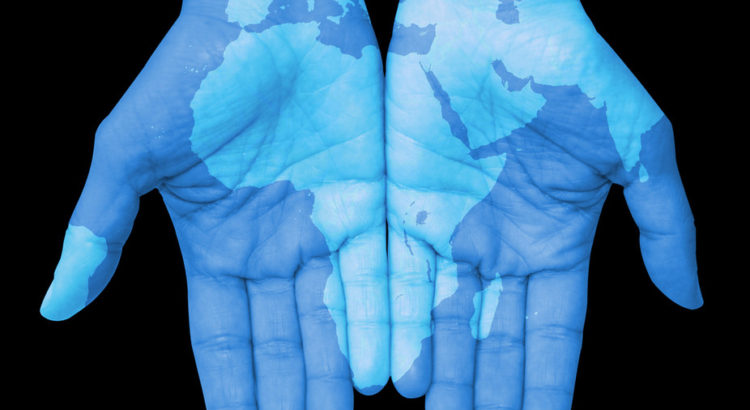
Venezuela : África allende la oscuridad heredada del imaginario occidental Una toma de conciencia

América del Sur/ Venezuela /Julio 2016/María Gabriela Mata Carnevali/Artículo/Revista Humania del Sur. Año 5, Nº 8.

África allende la oscuridad heredada del imaginario occidental Una toma de conciencia

Autora:

María Gabriela Mata Carnevali

Cómo hacemos historia, refleja nuestra forma de pensar sobre la política, y cómo participamos en política afecta nuestra forma de ver lahistoria (Frederick Cooper, 2005). En consecuencia, como afirma Shotwell (1982), “la historia de la historia es el relato de aquel ahondar en la memoriay la curiosidad científica que da la medida de nuestra conciencia social y de nuestra vida intelectual”. “La historia de África, como la de la humanidad, es en efecto, una toma de conciencia” (Ki- Zerbo, 1981).
Más allá del “panafricanismo” y su vertiente académico cultural,el “afrocentrismo”, hace ya más de veinte años que se viene consolidando una brillante corriente historiográfica dedicada a los estudios de la “subal-ternidad”, que propone una conjunción interesante de las posturas antico-colonialistas con las teorías post modernas. Dentro de este marco la cultura se entiende como un “elemento esencial en la producción y reproducción cotidiana de la vida social”, incluyendo las relaciones de poder.
En otras pa-labras, es el proceso de resolución de la dominación y subordinación dentro de las relaciones sociales lo que define la cultura de los grupos dominantes y subordinados, colocando a la primera en posición hegemónica sobre la segunda, lo cual no siempre es aceptado pasivamente por parte de la población sometida.
Esto implica un dinamismo que niega la visión tradicional de la cultura como un inventario estático de costumbres y pensamientos particulares, y sitúa esta categoría como un elemento constitutivo integraldel proceso histórico; lo cual, a su vez, resalta la condición de agente de los seres humanos, es decir, su poder para cambiar el entorno en el que se desenvuelven (Dube, 1999). Para efectos de este trabajo, nos acogemos a este novedoso enfoqueque nos permite abordar las imaginaciones imperiales y las construcciones coloniales que perduran en la historia contemporánea de África, interrogar la añeja dialéctica de Imperio e Ilustración, y cuestionar la dinámica de raza y razón que sigue moldeando nuestras formas de conocimiento, pero, sobre todo, nos invita a profundizar en la comprensión de la dinámica de un continente que busca dejar atrás el rol “subalterno” que le ha sido asignado y que lo caracteriza como la parte “oscura” de nuestro mundo, reconociendo Humania del Sur 29 la “agencialidad”, o capacidad de acción, de los hombres y mujeres que luchan por hacer de su continente un lugar mejor para vivir.
Las ideas desarrolladas parten de dos observaciones planteadas en primera instancia por Achille Mbembe (2001: 6):
           1) Lo que se entiende por realidad social en África hoy es el producto de las prácticas sociales objetivadas, las cuales van mucho más allá del discurso y del lenguaje, aunque por supuesto, la experiencia existencial del mundo está, allí como en todas partes, estructurada simbólicamente a través del lenguaje.
           2) El sujeto africano no existe separado de los actos que determinan su realidad, o separados del proceso a través del cual esas prácticas son imbuidas de significado.
Adaptándolas a nuestro propósito tendríamos entonces que:
          A) Las prácticas de la dominación post colonial que configuran la realidad africana, y por tanto su ubicación en el orden internacional, obedecen , o son reflejo de, el imaginario occidental
     B) Los africanos, como sujetos de su propia historia, crean nuevos significados que pueden ser interpretadosde distintas maneras, y que nosotros escogemos leer como señales de un cambio en gestación.
 África en el orden internacional: Un producto del imaginario occidental
La discusión acerca de cómo es producido el conocimiento sobre África, por quién y con qué objetivos, resulta por demás relevante en relación a la posición que ocupa el continente en nuestra mente y en el orden internacional.
Para la gran mayoría de la gente, sobre todo en América Latina, a pesar de los innegables avances en el diálogo multilateral promovido por las cumbres ASA.
        1 .-África se encuentra al margen del acontecer internacional. Por lo tanto, no es de extrañar que a dicha región con excepción de Sudáfrica y los países de la OPEP– se la considere sumida en la pobreza, víctima de una cadena de guerras “tribales” o interétnicas, y fuera de la nueva dinámica mundial, o, en el mejor de los casos, integrada a ella sólo de manera superficial, lo que es atribuido a la incapacidad de los africanos para competir en el mercado libre ignorando, los que así piensan, los antecedentes históricos y los criterios políticos que explican las desigualdades en la economía mundial.
          2.- ¿Lecturas post coloniales?
Como el camino se hace al andar, otros nombres se han ido sumando
a la lista de africanistas críticos (algunos ya citados), cumpliendo un importante papel en la concienciación de las nuevas generaciones. Víctima de la trata de esclavos (siglo XVI al XIX), la Conferencia de Berlín y posterior repartición del continente (1884-1885), la tardía colonización (1900-1950),y ahora de la globalización, África necesita como nunca que sus pobladores se asuman como “sujetos” de su propia historia, para dejar de ser un “objeto” de la de los demás. Lamentablemente, pareciera que la historia del continente africano la escriben los medios de comunicación y ellos son responsables de que la imagen negativa heredada del imaginario europeo persista permeando incluso la producción académica reciente de la cual se retroalimenta en un
círculo vicioso. La información que nos llega de África rinde culto a la muerte, transmitiendo en vivo y en directo la agonía en los rostros de hombres, mujeres y niños africanos atrapados en guerras interétnicas, muriendo de hambre o víctimas de las inclemencias de la geografía y de enfermedades como el sida, la malaria y otras que hace tiempo dejaron de atormentar al resto del mundo. Parece que las cámaras y las plumas de los periodistas están para contar la historia de la muerte, no la intensidad de la vida y la fuerza de la esperanza. Cuando son generosos cambian la imagen de miseria por la de “exotismo»
Coda
Conviene, pues, mantener el esfuerzo por comprender una realidad tan compleja como la africana, para una mejor aproximación a la historia y los procesos contemporáneos que impactan a las regiones del mundo, con una conciencia clara de los conceptos y enfoques que vamos a utilizar. En lo que concierne a los estudios africanos, no podemos ubicarnos complacientemente en la época post colonial sin desmontar las formas y procesos asociados a la dominación colonial.

Pero, si podemos y debemos, siguiendo la línea de los estudios “subalternos”, intentar despojar al continente de sustatus de víctima reconociendo en sus hombres y mujeres, agentes capaces de cambiar las cosas; considerar en toda su valía el aporte de las sociedades africanas que luchan, rebosantes de vida y esperanza,  por abrirse camino ante las adversidades. África “emergente” merece al menos igual atención que la África “pobre”, “a punto de morir”, heredera del imaginario occidental. Concederle su espacio

contribuye a “desproblematizar” el continente, lo cual resulta deseable, nopara negar la oscuridad, sino para atraer la luz. Al fin y al cabo, “el búho de Minerva vuela de noche”, la sabiduría se despliega al anochecer luego de que los eventos ya han tenido lugar.


Referencias
Abramovici, P. (2005). Activisme militaire américain. Maniere de voir. 79.
Le Monde Diplomatique.
Anderson, Benedict (1991).Imagined Communities
. Verso, London (2nd edition),
pp: 1-8.
Bisbal, Marcelino (1999).Teoría de la Comunicación. Curso universitario de
locución. Caracas: UCV.
Blom Hansen T. y Stepputat F. (2001). States of imagination.
Carolina del Norte, USA. Duke UP.
Bou Bou Hama y J. Ki-Zerbo (1982). Lugar de la historia en la sociedad Africana. Historia General de África I.
París: UNESCO.
Comaroff, Jean and Comaroff Jhon (1992). Ethnography and the Historical Imagination
. San Francisco: Oxford, Westview Press.
Cooper, F. (2005). Colonialism in Question. California: University of California Press.
Dube Saurabh (2004). Post colonial passages: Contemporary History Writing on India. USA: Oxford University Press.
_____. (1999).Pasados poscoloniales. México: COLMEX.
Entralgo, A. (2005). El oro de la costa y otros recorridos.
La Habana: Instituto Cubano del Libro. Editorial de Ciencias Sociales.
Fall, Yoro K. (1988). L ́Histoire et les historiens dans l ́Afrique contemporaine. En:
René Remond ( ed. )
Être historian aujourdhui. Paris: UNESCO.
Fayolleo C. y Goldberg S. (1978): “Prólogo”. Narrativa africana . La Habana.
Harootonian H. (2000). Overcome by modernity: History culture, and community
in interwar Japan.Princeton: Princeton Universdity Press.
Hegel,G.W.F. (1982).
Fuente:http://www.saber.ula.ve/bitstream/123456789/31357/3/articulo2.pdf
Fuente imagen :http://api.ning.com/files/UNsexXQ7LVlZtVTqi*f-4UIJrgagv78Sl5xUl1oxLBuqyRTB-aTaHTuArpXUJOFqDFXEnyNr4CuGVCjau20ZmcWujl80HURY/PORLADIVERSIDAD.jpg
Comparte este contenido:
Page 1446 of 2546
1 1.444 1.445 1.446 1.447 1.448 2.546