Page 222 of 622
1 220 221 222 223 224 622

Algerian unions work towards increased gender equality

Africa/Algeria/PrensaIE

Resumen: Los sindicatos de educación argelinos están trabajando con la Internacional de la Educación para abordar cuestiones de igualdad de género en sus sindicatos como parte de un programa de desarrollo de capacidades. Dos sindicatos de educación argelinos – el Sindicato Nacional de Trabajadores yFormadores (UNPEF) y el Sindicato Nacional Autónomo de Profesionales de la Educación(SNAPEST) – están trabajando juntos para abordar la desigualdad de género. Los sindicatos están colaborando en un programa de desarrollo de capacidades de 18 meses organizado por Education International (EI). La iniciativa se lanzó formalmente el 18 de febrero en una reunión conjunta con miembros de las juntas nacionales de ambos sindicatos.


Algerian education unions are working with Education International to address gender equality issues in their unions as part of a capacity development programme.

Two Algerian education unions – the Syndicat National des travailleurs et de la formation(UNPEF) and the Syndicat national autonome des professeurs de l’éducation (SNAPEST) – are working together to address gender inequality. The unions are collaborating on an 18-month capacity building programme organised by Education International (EI). The initiative was formally launched on 18 February at a joint meeting with members of the national boards of both unions.

This innovative programme is based on the Gender Action Learning (GAL) approach pioneered by Gender at Work, a network of associate experts working to address and transform the deep roots of inequality and discriminatory social standards within organisations.

Peer-based learning

The GAL approach to organisational change is based on experimental, peer-based learning techniques to enable organisations to change gender power dynamics internally and in their programmatic work. The GAL approach also provides an opportunity for the two unions to collaborate and to learn from each other through structured peer-learning activities. This is the first time the GAL methodology is being used with EI member organisations in North Africa.

The work of the UNPEF and the SNAPEST will be facilitated by a senior Gender at Work associate with support from EI.

Gathering stories

The GAL process consists, in the first instance, of a hearing our stories meeting with up to 30 union members, leaders, and staff from each union. At this initial meeting, participants reflect on and assess their union’s past, present, and future approaches, policies, and activities to increase gender equality within their union. Hearing our stories workshops took place in the UNPEF from 19-20 February, and in the SNAPEST from 21-22 February.

Participants gained a deeper understanding of gender equality issues within their unions; they reflected on their responsibility and their role as individuals, and the role of their respective unions in addressing gender inequalities. Participants also began to identify possible actions to take, at individual, union, and community levels in this regard.

Change

The second step in the GAL process is for the unions to identify a change team comprising up to six people (with a 50/50 gender ratio). This team will be responsible for developing the ‘change experiments’ that will be implemented during the programme. The change teams of both unions will receive mentoring and support from Gender at Work associates throughout the programme, as they work to implement their change experiments in the unions.

Next steps

The change team members from both unions will participate in three peer-learning workshops during the 18-month programme. They will share and learn from each other’s experiences of implementing change experiments in their respective unions. The first of these peer workshops will take place in March 2018.

Stay tuned for further updates on how this work is progressing in Algeria.

FUENTE: https://www.ei-ie.org/en/detail/15723/algerian-unions-work-towards-increased-gender-equality

Comparte este contenido:

AFRICA Science academy calls for STI policy reform to meet SDGs

Africa/universityworldnews.com

Resumen: La Academia Africana de Ciencias ha pedido una reforma urgente de las políticas nacionales africanas de ciencia, tecnología e innovación (STI) para centrar su atención en las dimensiones sociales y ambientales del desarrollo y alinearlas más estrechamente con los Objetivos de Desarrollo Sostenible de las Naciones Unidas (ODS)
En un estudio clave, África más allá de 2030: Aprovechando el conocimiento y la innovación para asegurar los Objetivos de Desarrollo Sostenible , la Academia Africana de Ciencias (AAS) dice que en 2016 menos de la mitad de los países africanos habían adoptado políticas de CTI. Aquellos que incluyeron a Argelia, Angola, Botswana, Burundi, Etiopía, Egipto, Gambia, Ghana, Kenia, Lesotho, Malawi, Mozambique, Namibia, Nigeria, Ruanda, Tanzania, Túnez, Senegal, Sudáfrica, Swazilandia, Uganda, Zambia y Zimbabue. Sin embargo, la mayoría de estas políticas no consideran los imperativos del desarrollo sostenible de manera integral, señala el informe. «En cambio, tienden a centrarse en la financiación de la investigación científica con menos énfasis en el desarrollo de la tecnología, las adquisiciones y la innovación. Esto puede estimular la producción de conocimiento para el crecimiento económico a corto plazo, pero no estimula la inclusión social y la sustentabilidad ambiental que son necesarias para el desarrollo sostenible a largo plazo «. El informe señala que» los esfuerzos para implementar una política efectiva de CTI están limitados por una política baja alfabetización, capacidad humana débil, supervisión y responsabilidad insuficientes, y presupuestos inadecuados para la
política de CTI «.


The African Academy of Sciences has called for urgent reform of African national science, technology and innovation (STI) policies to sharpen their focus on the social and environmental dimensions of development and bring them in closer alignment with the United Nations’ Sustainable Development Goals (SDGs).

In a key study, Africa Beyond 2030: Leveraging knowledge and innovation to secure Sustainable Development Goals, the African Academy of Sciences (AAS) says that in 2016 fewer than half of African countries had adopted STI policies. Those that had included Algeria, Angola, Botswana, Burundi, Ethiopia, Egypt, the Gambia, Ghana, Kenya, Lesotho, Malawi, Mozambique, Namibia, Nigeria, Rwanda, Tanzania, Tunisia, Senegal, South Africa, Swaziland, Uganda, Zambia and Zimbabwe.

However, most of these policies do not consider sustainable development imperatives holistically, the report notes. “Instead, they tend to focus on funding scientific research with less emphasis on technology development, procurement and innovation. This may stimulate the production of knowledge for short-term economic growth, but fails to spur social inclusion and environmental sustainability that are necessary to long-term sustainable development.”

The report notes that “efforts to implement effective STI policy are limited by low policy literacy, weak human capacity, insufficient monitoring and accountability, and inadequate budgets for STI
policy”.

Red flag

“In effect, our report is a red-flag to African countries that diffusion and adoption of skills in various technologies critical to sustainable development had been too slow,” Dr Evelyn Namubiru-Mwaura, the strategy and policy manager for AAS and editor of the latest study, told University World News in an interview in Nairobi.

According to AAS Executive Director Professor Nelson Torto, most scientific research programmes launched in the past decade have not been realigned with the SDGs and their targets. “We need to bring science and technology to bear on sustainable development targets that are related to reducing hunger and malnutrition, the high burden of disease, water shortages, energy insecurity, social inequality and loss of biodiversity,” said Torto.

He said this could only be achieved if institutions such as the AAS, the New Partnership for Africa’s Development (NEPAD) and the United Nations Economic Commission for Africa, among others, could be co-opted to develop a comprehensive guide for scientists to SDGs, focusing on how science, technology and innovation in Africa could drive those goals and targets.

Pointing to the fact that the AAS and national scientific institutions are the main voices representing science on the continent, Torto said they are better placed to provide leadership in the formulation of credible scientific policies based on expertise of scientists and researchers on the continent.

An urgent challenge

Fast-tracking the science, technology and innovation agenda in Africa is becoming increasingly urgent, as the report notes. According to Dr Ameenah Gurib-Fakim, president of Mauritius, about 65% of children born today will eventually be in jobs that do not exist currently.

“Over the coming decades, jobs will move by the millions from white collar office positions to those in computer, healthcare, scientific research, architectural and engineering fields,” said Gurib-Fakim, who is also the chair of the AAS-supported Coalition for African Research and Innovation.

For Africa this is a major challenge, according to Gurib-Fakim. The continent is home to 15% of the global population and boasts one of the world’s fastest growing populations but only produces 3% of the global gross domestic product (GDP). The continent also suffers 25% of the global burden of disease, including an increase in non-communicable diseases.

The urgent need to accelerate development based on science, technology and innovation was also highlighted by Akinwumi Adesina, president of the African Development Bank, when he addressed the third edition of the Africa Forum on Science, Technology and Innovation held last month in Cairo, Egypt.

Adesina said Africa was in a race against time as the continent is projected to have over 840 million youth by 2050. In the context of the fourth industrial revolution, highlighted by Garib-Fakim in the AAS report, with the rapid growth for instance in artificial intelligence, robotics, nanotechnology, biotechnology, genetic engineering and big data analytics, Africa needs to do more to catch up.

Bright spots

There are “bright spots” in terms of Africa’s development. According to the report, adoption and diffusion of information and communication technologies, especially mobile telephony, has been a bright spot in Africa.

“Platforms such as M-Pesa, the money transfer solution that was initially developed and launched in Kenya, are now common in East Africa, while virtual learning across the continent is improving access to education,” says the report. Similarly, genetic modification in agricultural crops, including cotton, is slowly been adopted on the continent, providing hope for increased food and textile production.

Amid efforts to build and mobilise a robust science, technology and innovation policy platform for Africa’s development, AAS offers itself as an apex institution to spearhead the efforts. It intends to collaborate with other scientific institutions such as the African Centre for Technology Studies, the Africa Technology Policy Studies Network and African universities that offer postgraduate studies on innovation and technology management.

According to Namubiru-Mwaura, plans are under way to set up a pan-African dialogue on how to increase investments in science, technology and innovation initiatives.

She said progress regarding investment in research and development in Africa has been mixed across the various countries. Whereas Algeria, Botswana, Kenya, Rwanda, Namibia and Tunisia have increased their national annual gross domestic expenditure on research and development (GERD), many other countries in Sub-Saharan Africa have reduced their investment.

“Unfortunately, even countries that are considered to be making high investments have not reached the target of 1% of GDP as recommended by the African Union in 2007,” said Namubiru-Mwaura.

According to the report, African research and development is mostly or exclusively externally financed. According to the Global Innovation Index of 2015, about 100% of Mozambique’s, 73% of Uganda’s, 60% of Kenya’s, and approximately 50% of Tanzania’s, Burundi’s and Senegal’s GERD was financed by external sources.

“Funding for scientific research, particularly in Sub-Saharan Africa, is from international donor agencies based in the European Union, the United States and Japan,” says the report.

Thus, if Africa is to forge ahead, the AAS says the continent should stop relying heavily on others for funding of its science, technology and innovation research and development projects. According to the African Development Bank, Sub-Saharan Africa needs to increase its current 0.41% share of GDP devoted to science, technology and innovation by a whopping 400% if it is to catch up with the 1.7% global average.

In its reform agenda for African science, technology and innovation, AAS offers the following recommendations:

  • African countries should improve intake and quality of science, technology, engineering and mathematics education in their universities and other tertiary institutions.
  • Countries should facilitate researchers’ mobility and joint research and development activities across regions on the continent.
  • Countries should improve the quality and relevance of their STI policy frameworks to sharpen focus on the social and environmental dimensions of sustainable development.
  • Countries should advance manufacturing technologies and develop specific technology policies and strategies in this area as one way of reducing dependency on imported commodities.

Fuente: http://www.universityworldnews.com/article.php?story=20180302073559245
Comparte este contenido:

Acnur alerta sobre brecha de género en la educación de refugiados

08 Marzo 2018/ONU
La Agencia de Naciones Unidas para los Refugiados (Acnur) advirtió hoy sobre las brechas de género que existen en el acceso a la educación entre niñas y niños refugiados.
Para las niñas es más difícil encontrar un lugar en el aula y mantenerlo, indicó un reporte de ese organismo de la ONU.

Según el informe titulado ‘El turno de ellas’, las niñas de nivel secundario de enseñanza tienen la mitad de posibilidades de matricular que sus compañeros varones.

A medida que crecen, las niñas refugiadas también enfrentan una mayor marginación y la brecha de género en las escuelas secundarias se hace más amplia, recalcó la Acnur.

Las niñas representan la mitad de la población refugiada en edad escolar y urge tomar cuanto antes medidas dirigidas a garantizar su acceso a la educación.

De acuerdo con Acnur, la permanencia de las niñas en las escuelas también reduce la vulnerabilidad a la explotación, la violencia sexual y de género, el embarazo adolescente y el matrimonio infantil.

Este informe es un llamado de atención para que la comunidad internacional proteja a las niñas refugiadas, añadió la agencia.

Si continuamos descuidando la educación de las niñas refugiadas, es evidente que las consecuencias se dejarán sentir durante generaciones, alertó el alto comisionado de la Acnur, Filippo Grandi.

Es hora de que la comunidad internacional reconozca la injusticia de negarles educación a las niñas y mujeres refugiadas, y hacer de su acceso a los estudios una prioridad, subrayó.

Según el reporte de la Acnur, las convenciones sociales y culturales a menudo resultan en la priorización de los niños sobre las niñas para asistir a la escuela y otras actividades.

Otros factores en contra resultan las condiciones de inseguridad para llegar a los centros de enseñanza, las instalaciones deficientes, la falta de baños apropiados y el alto costo de libros, uniformes y otros útiles.

Fuente: http://www.prensa-latina.cu/index.php?o=rn&id=158235&SEO=acnur-alerta-sobre-brecha-de-genero-en-la-educacion-de-refugiados
Comparte este contenido:

Más de 500 millones de niños fuera del alcance de ODS, dice Unicef

08 Marzo/UNICEF
Más de 500 millones de niños en el mundo viven en países donde los Objetivos de Desarrollo Sostenible (ODS) están fuera del alcance o se desconocen datos al respecto, alerta hoy un informe de la Unicef.
De acuerdo con el director de la División de Datos, Investigación y Política del Fondo de Naciones Unidas para la Infancia, Laurence Chandy, el mundo debe renovar su compromiso de alcanzar los ODS, empezando por cumplir su promesa de medirlos.

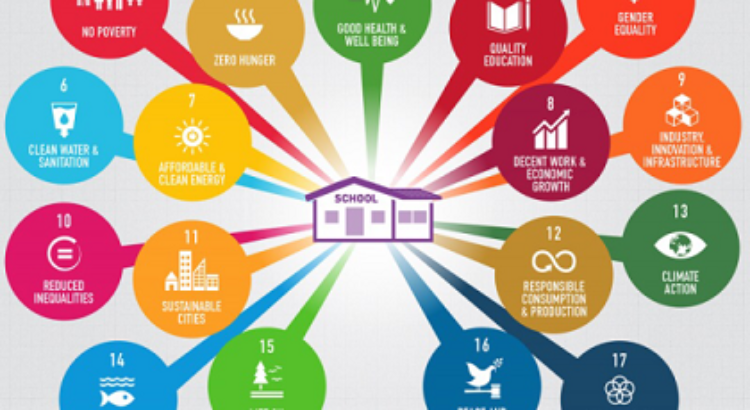
Las 17 metas establecidas en la Agenda 2030 para el Desarrollo Sostenible son el marco para crear un futuro de paz, dignidad y prosperidad para todos en un planeta saludable, recordó.

Pero la evaluación temprana del progreso hacia el logro de los ODS confirma una alarmante falta de datos en 64 países, así como un progreso insuficiente en 37 donde se encontraron informaciones sobre el tema.

Sin un progreso acelerado, la situación de 650 millones de niños podría empeorar y quedarían sin lograrse las metas propuestas para el año 2030, añade.

Las proyecciones de Unicef muestran que, de aquí a 2030, 10 millones de niños pueden morir por causas prevenibles antes de su quinto cumpleaños y 31 millones pueden sufrir retraso en el crecimiento debido a una nutrición inadecuada.

Además, 22 millones de niños perderían la educación preprimaria y 150 millones de niñas se casarían antes de cumplir los 18 años.

Hace dos años, el mundo acordó una agenda ambiciosa para dar a cada niño las mejores oportunidades en la vida, pero todavía ni siquiera se cuentan con instituciones capaces de monitorear la situación, lamentó Chandy.

En ese sentido, llamó a los gobiernos de cada país y a la comunidad internacional a un mayor compromiso con la Agenda 2030 de Desarrollo Ssotenible.

Fuente: http://www.prensa-latina.cu/index.php?o=rn&id=158134&SEO=mas-de-500-millones-de-ninos-fuera-del-alcance-de-ods-dice-unicef
Comparte este contenido:

Etiopía: UA insiste en importancia de programas de alimentación escolar

África/Etiopía/08 Marzo 2018/Fuente: Prensa Latina

 La alimentación escolar ayuda a las familias a garantizar que todos los niños puedan acceder a la educación desde la primera infancia hasta el segundo nivel, insistió hoy la Unión Africana (UA) en un comunicado.
La UA hace un llamado a los Estados miembros para que trabajen en ese sentido, no solo un día al año, como cuando el pasado 1 de marzo se celebró el Día Africano de Alimentación Escolar, sino todo el tiempo, de manera que los menores tengan una nutrición adecuada y cero hambre.

El tema en lo adelante continuará siendo ‘Hacer realidad el potencial total del niño africano a través de una alimentación escolar efectiva en el hogar’, apuntó el texto divulgado por el ente regional.

La UA instó además a que el año próximo la participación en el Día de Alimentación sea aún mayor, aunque agradeció la participación esta vez de 32 Estados miembros, cerca de mil representantes de 32 países, instituciones interesadas, agencias de la ONU, incluidos alumnos, maestros, personal de apoyo y padres de escuelas.

Algunos resultados de reuniones sobre el tema que servirán para trabajar mejor enfocados en lo adelante, también fueron publicados por la UA en el informe, como un enfoque multisectorial en la implementación de la alimentación escolar, unido al estudio de los contextos específicos de cada país para determinar factores tales como los tipos de alimentos y la estructura de financiamiento.

El papel de la mujer, especialmente en las cadenas de valor agrícolas; la asociación público-privada; la disponibilidad de la tierra al involucrar al gobierno local y las comisiones de tierras en el proceso de configuración y planificación de las intervenciones de alimentación escolar, fueron otras de las recomendaciones hechas por la UA.

Los Estados miembros deben trabajar para asignar presupuestos importantes a la alimentación escolar a fin de fortalecer la propiedad y el control nacionales, reforzó la organización regional.

Gambia, Zimbabwe, Benin, Burkina Faso, Guinea-Bissau, Níger, Burundi y Côte d’Ivoire son ejemplos dignos de mención a este respecto, concluyó el organismo panafricano.

Fuente: http://www.prensa-latina.cu/index.php?o=rn&id=158099&SEO=ua-insiste-en-importancia-de-programas-de-alimentacion-escolar
Comparte este contenido:

Etiopía intensifica labor para erradicar el trabajo infantil

África/Etiopía/08 Marzo 2018/Fuente: Prensa Latina

Etiopía intensifica hoy su labor para implementar las convenciones de la Organización Internacional del Trabajo (OIT), y presta especial atención a las leyes sobre la erradicación el trabajo infantil.
De acuerdo con Mesfin Girma, experto en niños del Ministerio de Asuntos Sociales y Laborales, la OIT clasifica a los hombres y mujeres menores de 18 años como niños y cada tarea que hace ese grupo de edad, incluido el doméstico, es equivalente a la explotación laboral.

De ahí que para esta nación del Cuerno africano sea una prioridad en lo adelante, según Mesfin, erradicar todo vestigio de trabajo en menores, tomando en cuenta que alrededor del 80 por ciento de la población etíope se dedica activamente a las tareas domésticas rutinarias, como ir a buscar agua, recoger leña y cuidar a los bebés.

El trabajo infantil también se está empleando en la agricultura y la cosecha, dijo el funcionario, y los padres no tienen la suficiente conciencia creada en ese sentido.

Pero eso cambiará, manifestó Mesfin, quien además alertó sobre el hecho de que la ley etíope categoriza como niño a menores de 14 años.

En esa etapa, se supone que el menor llega al 8vo grado si está matriculado en la escuela, indicó el especialista, y negar a los niños el acceso a los derechos de educación, salud y otros servicios es inaceptable por ley.

Los padres que son encontrados culpables de negar los derechos mencionados por insertar a sus hijos en el trabajo, aunque sea doméstico, están sujetos a responsabilidad legal, concluyó.

Fuente: http://www.prensa-latina.cu/index.php?o=rn&id=158034&SEO=etiopia-intensifica-labor-para-erradicar-el-trabajo-infantil
Comparte este contenido:

¿What first phase of quality education campaign achieved?

Por: www.newtimes.co.rw/07-03-2018

Offices at the Ministry of Education were closed early last month as top officials in the Ministry, and all affiliated institutions, embarked on a tour to assess the quality of education in over 600 schools including primary, secondary, university, as well as technical and vocational education and training institutions (TVET).

Dubbed “Quality Education Enhancement Awareness Campaign”, it was the first countrywide campaign organised by the Ministry, unlike the regular inspection and visits made by officials to various schools.

15203995991

Some students at TTC Kanama listening to education officials during the campaign. /Jean d’Amour Mbonyinshuti

Education officials had some hours each day to tour at least two schools. They visited classrooms, dormitories, laboratories, kitchens and even checked the hygiene status of the facilities.

Later, officials sat with the school management teams to discuss issues pertaining quality education and, management. They discussed the challenges they face and what can be done to boost quality education.

Issues discussed were the growing number of school dropouts and high repetition rates which could result in results in poor completion rates, use of drugs and unwanted pregnancies, among others.

According to 2015 figures from the Ministry of Education, school dropout rates stood at 5.7 per cent, 6.5 per cent and 2.5 per cent in primary, and lower and upper secondary respectively. The repetition rate was 18.4 per cent, 11.6 per cent and 6 per cent respectively.

The Ministry of Health also reported that 17,444 teenage pregnancies were reported in 2016 alone which affected transition and completion rates.

The campaign was expected to progressively lead to the enhancement of the quality of education by reducing school dropout and class repetition rates.

It also sought to improve the quality of school management and leadership, raise pupil awareness on the effects of drug abuse, improve school hygiene and sanitation among all education stakeholders.

Schools will be ranked based on a standard checklist and inspection criteria and findings by officials.

How important is it?

According to school managers, teachers and parents, the campaign was long overdue as it brought them closer to officials in the education sector at the national level to discuss the challenges hindering quality education and, helped them understand the role each should play.

Denis Uzaribara, the head teacher of G.S Kanama Catholique in Rubavu, says the campaign was an eye opener and an opportunity to chat with top officials to raise their concerns and seek ways to address the issues of quality education.

“The campaign was timely; meeting with officials from the Ministry of Education was an opportunity to discuss issues affecting the sector. It was an eye opener as we were told that even with challenges, what we are doing is not enough to provide quality education.”

“It was also an opportunity for us to raise the issues we have in order to improve quality education. Officials have seen for themselves the pupil-teacher ratio imbalance, whereby some classes have over 70 learners, and while we are committed to contributing to education for all, teachers are overwhelmed and it remains hard to offer quality education,” he says.

Agnes Musabyimana, another teacher from G.S Kanama Catholique, says that it was a great opportunity to meet top officials from the Ministry, and interact and share their experiences.

“We are thankful for the campaign, officials needed to come to the field and see how we are performing. We were reminded that we need to work closely with all stakeholders and avoid the blame game,” she says.

Musabyimana adds that in some cases, parents get busy and forget to take care of their children, hence just sending them to school without help in revision or homework.

“For instance, we discussed during the campaign that we need to work with parents and local leaders to ensure that there are no more cases of dropouts and that students attend classes regularly. We also discussed with local leaders and education officers that it is their responsibility to follow up on whether parents are playing their part,” Musabyimana says.

A teacher only identified as Juvenal from Nyabihu District said that he wished all the findings from the campaign could be addressed accordingly, adding that in some cases, teachers are asked to do a lot with little facilitation.

“For instance, we are required to provide quality education using the knowledge-based curriculum but we don’t have educational material. We are dealing with a greater number of learners per class and we find it hard to serve them all in a short period of time,” he says.

Juvenal referred to the fact that a teacher can have as many as 80 pupils in one shift and the same number in another shift, which he says is hard if they are to provide quality education.

“We need more issues to be addressed at the ministerial level, we need materials, we need more classrooms to be constructed and we need the government to involve parents to be aware of their responsibilities,” he says.

Dieudonné Manishimwe, a science teacher from Centre Scholaire Rusamaza in Rubavu District, says the campaign was important as it helped them understand the responsibility of each player.

“The Ministry should put into use the recommendations from the campaign; we need their support to ensure we provide quality education.” he says.

Fidel Basebanya, a parent from Rugerero sector in Rubavu District, argues that teachers can do very little if parents do not play their part.

“This campaign brought us together and as a representative of other parents, I will work with local leaders to ensure that we mobilise parents to understand their role,” he says.

Officials speak out

Dr Eugene Mutimura, the Minister of Education, says the campaign was an opportunity to assess quality education and the challenges facing the system, so as to seek solutions and address them.

“It showed us that we need to strengthen the collaboration with schools, local leaders and education officers at the sector and district levels. We should keep the momentum to boost quality education in schools,” he says.

The Minister says that once all players work together, the issue of dropouts, repetition, absenteeism and unwanted pregnancies will be curbed, and he urges all key players to play their part.

The Minister notes the department was aware of the teacher-learner ratio problem, especially in primary schools, adding that more classrooms will be constructed and more teachers will be engaged.

He says that some schools need renovation while others are dilapidated and need demolition. Last year alone, about 1000 classrooms and latrines were constructed and there are plans to build more.

Over the next seven years, the Prime Minister says the government will construct a total of 28,665 classrooms.

According to Marie Christine Gasingirwa, the Director General for Sciences Research and Technology at the Ministry of Education, students need support from parents, teachers and the community.

“We want to start with the youth because they are the treasure of the country, we also need to know that the education sector cuts across and that all the sectors can develop,” she says.

The campaign, held under the theme “Good Learning Methods and Cultural Values are the Foundations of Quality Education” will be held on a quarterly basis throughout the year.

editorial@!newtimes.co.rw

*Fuente: http://www.newtimes.co.rw/section/read/229144/

Comparte este contenido:
Page 222 of 622
1 220 221 222 223 224 622