Page 39 of 621
1 37 38 39 40 41 621

El Congo: Thousands flee Goma city in DR Congo after volcano erupts

Thousands flee Goma city in DR Congo after volcano erupts

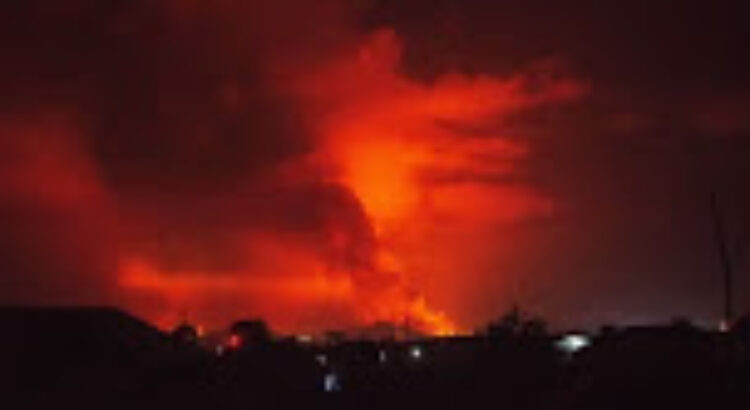
This general view taken on May 22, 2021 in Goma in the East of the Democratic Republic of Congo shows flame spewing from the Nyiragongo volcano. Picture: Moses Sawasawa/AFP

Albert Kambale and Justin Katimwa

Goma, DR Congo – Thousands have fled a volcanic eruption in the Democratic Republic of Congo, but the flaming lava from Mount Nyiragongo appeared to have come to a halt on the outskirts of Goma city early Sunday.

According to an AFP correspondent at the scene, the molten rock, which the eruption had sent close to Goma airport on the shores of Lake Kivu, still appeared unstable, but had come to a standstill in the suburbs of the eastern city.

And around a dozen earth tremors were felt in the early hours.

«People are beginning to return to their homes. The situation seems to have calmed down for the moment,» one resident said.

«But people are still scared. The authorities still haven’t made any official announcement so far this morning,» he added.

Thousands had fled during the night and many families slept on pavements surrounded by their belongings under a night sky turned red by fire and fumes.

«There is a smell of sulphur. In the distance you can see giant flames coming out of the mountain,» one resident, Carine Mbala, told AFP.

Officials said the lava had reached Goma city airport although residents said it had stopped at the edge of the facility.

Goma appeared relatively calm as dawn broke, but people said they are still wary.

«People are wondering whether the volcano has stopped, or whether it will continue, whether the lava will reappear,» one resident said.

A few cars were on seen on the streets, but no police or military presence was visible.

«We’re not convinced that the eruption is over in just a day. We’re waiting,» said one man.

On Saturday, Communications Minister Patrick Muyaya had said that the government had activated an evacuation plan and was «discussing the urgent measures to take at present.»

Congolese President Felix Tshisekedi had said he would «interrupt his stay in Europe to return home this Sunday to supervise the coordination of aid».

By early Sunday, between 5,000 and 7,000 people had arrived in neighbouring Rwanda, according to the country’s national broadcaster.

The Rwanda Broadcast Agency tweeted photos of those arriving in Rubavu district, but said early Sunday that the evacuees had already begun heading home.

«At the moment, the Congolese who had evacuated into Rwanda because of the Nyiragongo volcanic eruption are returning to their homeland. It appears that the eruption has stopped,» it tweeted.

The first departures from Goma city came even before the official confirmation that Mount Nyiragongo had erupted at around 7:00 pm Saturday, spewing red fumes into the night sky.

Power was already cut in large parts of the city when hundreds of residents began leaving their homes.

Some headed out of the southern end of the city towards the nearby border post with Rwanda, while others headed west towards Sake, in the neighbouring Congolese region of Masisi.

Resident Richard Bahati said he was incredibly worried about the eruption: «I lived through this volcano problem in 2002.

«The volcano had devastated all our homes and all our possessions. That’s why I’m scared again this time.»

Electricity was cut off in a large part of the city, with thousands of people — encumbered with mattresses, food and parcels — heading towards the Rwandan border.

«There are a lot of people on the road, a lot of cars, it’s an escape,» one man with his family in his car told AFP.

«It is moving at a snail’s pace, on three or four lanes,» he said, adding: «There are children, women, old people who are on foot and the rain is coming. It’s complicated.»

Goma is home to a large contingent of peacekeepers and staff of MONUSCO, the UN mission in the country, as well as the base of many NGOs and international organisations.

Several planes, belonging to Monusco and private companies, took off in the evening, according to an airport source, with a local adding they had also seen the unusual nighttime activity.

In a May 10 report, the Goma Vulcanology Observatory warned that seismic activity around the volcano had increased and warranted careful monitoring.

The last time Nyiragongo erupted was January 17, 2002, killing more than a hundred people and covering almost all of the eastern part of Goma with lava, including half of the airport’s landing strip.

During that eruption, the victims were mostly sick or elderly abandoned to their fate in the northern districts of the city with some looting also taking place.


Fuente de la Información: https://www.iol.co.za/news/africa/thousands-flee-goma-city-in-dr-congo-after-volcano-erupts-692bcb76-6da0-4186-8f8b-38451ba45e35
 

Comparte este contenido:

Marruecos: Migrant Surge on Spain-Morocco Border Brings More Suffering

Migrant Surge on Spain-Morocco Border Brings More Suffering

FNIDEQ, MOROCCO – Desperate teenagers and jobless men from Morocco’s coastal towns, its mountainous east or even farther away converged on the border town of Fnideq this week, part of an extraordinary mass effort to swim or scale barbed-wire fences to get into Spain for a chance at a new life.

More than 8,000 migrants made it into the city of Ceuta, an enclave in North Africa that is separated from the rest of Spain by the Mediterranean — but for most of them, it was a short-lived success.

The extraordinary surge of migrants crossing from Morocco into Spain came amid the chaos of a diplomatic spat between the two countries.

Spanish troops forced over half of them back to Fnideq, putting additional strain on the Moroccan town whose limited resources are overwhelmed by the coronavirus pandemic.

«We will keep trying. We will find one way or another, even if the ocean turns into ice!» said  Badreddine, 27.

He and his fellow Moroccans — Salah, 22, and  Hosam, 24 — all have diplomas but no jobs. Like most seeking to get into Spain, they spoke on condition their last names not be published for fear of their security because they are risking illegal migration.

Being stuck in Morocco «is like being dead, so why not risk your life anyway? We’re currently living on streets, sleeping in the cold. Our parents know that we’re here, they pray for us. They told us, ‘Go, may Gold help you,’ » Salah said.

Sleeping outside, eating handouts

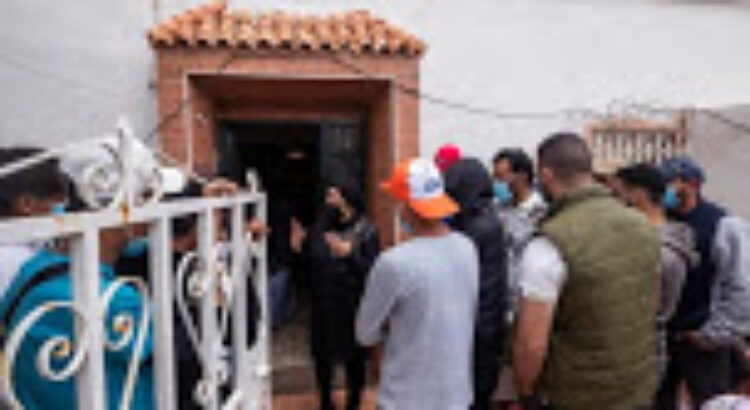
They and others sleep in Fnideq’s parks, on benches and outside mosques. Some hang out near hotels and restaurants, begging for food and whatever people can spare. Volunteers hand out bread and sandwiches.

Some have fled the impoverished countries of sub-Saharan Africa, but most are from Morocco, generally seen as one of the continent’s economic engines that has made strides in lowering poverty in recent years.

Still, inequality is rife, the pandemic has worsened unemployment and average incomes are a small fraction of those in Europe, which sits tantalizingly close — just across the Fnideq-Ceuta fence.

Minors who crossed into Spain take shelter inside an abandoned building in Ceuta, Friday, May 21, 2021. Spain says it has…

Amid tighter security by Spain in recent years, some would-be migrants have abandoned the effort, but others are determined to find a way around the security checkpoints or battle bad weather at sea.

«We want to leave [Morocco] because there is nothing left for us in the country, nothing to do, no future. We go to school but don’t want to stay here,» said Khalid, 15.

This week, many of them saw an opportunity as word spread quickly in Morocco about the tensions with Spain.

When the government in Madrid gave medical treatment to a Western Saharan independence fighter that Morocco considers a terrorist, the decision led to chaos in Ceuta. The port city has always drawn those seeking to cross into Europe, but thousands were seen streaming toward Fnideq on highways and through forests and hills.

On the march

«Spain, here we come!» a group of Moroccans cried as they marched, singing soccer chants and hurling expletives at their native country. In central Fnideq, thousands lined the corniche that looks toward Ceuta, and they ended up swimming or taking small boats around breakwaters separating the countries.

While Moroccan security forces normally are spread out on the beach and in nearby hills patrolling a wide perimeter, there seemed to be fewer guards earlier this week. As large groups of youths scaled the fence and wrapped clothes on their hands to get over the barbed wire, Associated Press reporters saw border police standing by idly.

While Morocco has said little about the relaxed border controls, it was widely seen as retaliation for Madrid’s allowing militant leader Brahim Ghali to receive medical treatment inside Spain. Two Moroccan officials made that link in comments Wednesday.

Mattress and belongings of migrants sit atop of a hill in the Spanish enclave of Ceuta, near the border of Morocco and Spain,…

Spain eventually sent in military forces and pushed most of the migrants back to Morocco. The Red Cross says one young man died and dozens were treated for hypothermia.

Khalid, 15, and Amin, 16, came to Fnideq on Sunday in a bus with about 40 others from Temara, a coastal town outside the capital, Rabat. They said they crossed into Spain three times, but were pushed back. The last time, they were forced to swim back along the shore back to Morocco.

Back on duty

By Thursday, Moroccan border guards seemed to be back in their positions, but hundreds of youths have remained, and the men and boys in Fnideq haven’t lost hope of crossing over.

«I am the eldest of my brothers. My mother sells vegetables in the market» and can’t afford to support them, said Ayoub, in his early 20s, who arrived Thursday from the inland city of Meknes. «I had to try and help my mother.»

While Morocco’s government has focused on the Western Sahara in its limited public statements this week, it hasn’t addressed the poverty and despair that is driving so many to want to leave the country.

Fnideq, meanwhile, is suffering under the sudden influx of would-be migrants.

The town relied heavily on trade with Ceuta before the pandemic, but Morocco’s strict border closure since March 2020 has deprived residents of livelihoods and access to Spain. Protests broke out earlier this year by residents demanding government aid or an open border.

Human rights groups and opposition lawmakers accused the Moroccan government of using migrants as pawns instead of solving their problems. The opposition Istiqlal party urged «an economic alternative that guarantees the population their constitutional right to the necessities of a decent living.»

Despite the scenes of tear gas and troops on the border this week, the dream of getting out of Morocco remains strong for many struggling youths, even in the relatively prosperous capital.

«If you ask anyone in Rabat … that person will tell you that he wants to go to Europe,» said street vendor Mohammed Ouhaddou. «…Politicians are not doing anything. They are asleep and no one listens to us.»

Fuente de la Información: https://www.voanews.com/europe/migrant-surge-spain-morocco-border-brings-more-suffering

Comparte este contenido:

La crisis en Líbano deja a muchos niños sin acceso a las escuelas

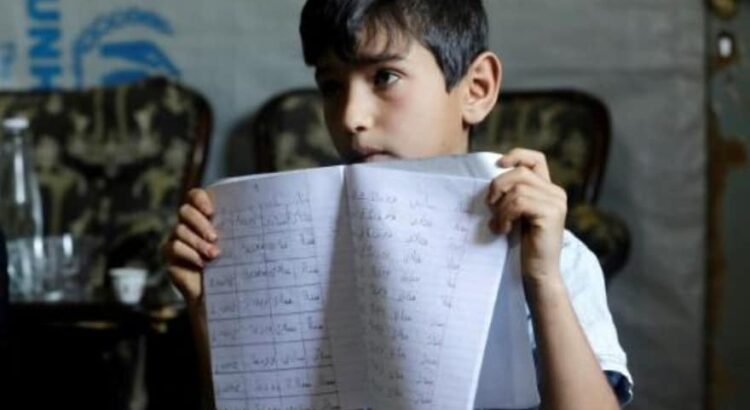
En un campo de refugiados sirios en el este de Líbano, Mohamed y sus tres hermanas temen quedarse sin ir a la escuela por tercer año consecutivo, debido a que no tienen cómo acceder a la enseñanza remota.

«Mire mi teléfono, ¿cómo espera que mi hijo estudie con esto?», preguntó su padre, Abdel Nasser, sentado en la carpa de su familia en el valle del Becá. «La pantalla está quebrada… y no tengo internet», lamentó.

Mohamed, de 11 años, y sus hermanas están entre decenas de miles de niños sirios, libaneses y palestinos que han quedado meses sin enseñanza escolar a causa de las restricciones por el coronavirus.

Grupos de derechos humanos han calificado la situación de una «catástrofe educativa» que afecta especialmente a los refugiados, los cuales ya tenían dificultades para estudiar antes de la pandemia.

«No tenemos dinero para comprar un celular para todos. Primero tenemos que alimentar a nuestros hijos», dijo su madre, Shamaa.

Mohamed llegó a Líbano desde Siria en 2012, un año después del estallido del conflicto que ha dejado 388.000 muertos y millones de desplazados.

No pudo ingresar a la escuela hasta 2019 porque el sistema de enseñanza pública libanés no admitió a los refugiados sirios hasta 2013, y solo aceptaba un número limitado.

El primer año de escuela de Mohamed coincidió con la pandemia del covid-19, que provocó la suspensión de las clases. «Él ni siquiera sabe multiplicar por uno», contó su padre.

– Impacto de la crisis –

Hind, Sara y Amal, las hermanas de Mohamed, con edades de entre 12 y 14 años, habían estado cuatro años en la escuela cuando el Ministerio de Educación adoptó, en marzo de 2020, la enseñanza a distancia.

«Yo estaba feliz. Estaba estudiando árabe, inglés, ciencia y geografía», comentó Amal, de 14 años. «Pero ahora mis padres no pueden darme una educación en línea», lamentó.

Más de 1,2 millones de niños en Líbano han quedado sin acceso a la escuela desde febrero de 2020, cuando llegó la pandemia al país, según la organización Save the Children.

La entidad advirtió el mes pasado que muchos niños podrían no volver nunca más a un aula, ya sea porque ya han perdido tantas clases o porque sus familias no tienen recursos para matricularlos.

Líbano enfrenta su peor crisis económica desde la guerra civil de 1975 a 1990, con más de la mitad de su población abajo de la línea de pobreza.

Entre los sirios la pobreza es aún mayor, con 90% de las familias que apenas logran sobrevivir.

Lisa Abou Khaled, del Alto Comisionado de la ONU para los Refugiados, dice que la crisis económica afecta a la educación.

Citando datos del Ministerio de Educación libanés, Abou dijo que 25.000 estudiantes sirios tenían que haber iniciado o reingresado a la escuela en el período 2020-2021, pero no lo hicieron.

«Creemos que la cifra real es más alta que eso», agregó, tras apuntar que más de la mitad de los niños sirios no asisten a clases.

– «Indignada» –

La catástrofe educativa también golpea a decenas de miles de libaneses que han perdido sus empleos o sufrido una caída en sus ingresos desde 2019, cuando se aceleró la crisis.

En un apartamento estrecho del barrio Burj Hammoud, en el este de Beirut, Pamela, de 11 años, muestra un teclado, lo único que quedó de una computadora que fue destruida en la enorme explosión del 4 de agosto de 2020 en el puerto de Beirut.

El estallido, que dejó más de 200 muertos, impactó la casa de Pamela y agravó la miseria que sufre su familia por el agravamiento de la crisis financiera.

La familia no tenía cómo comprar una nueva computadora, que se encareció por la rápida devaluación de la libra libanesa. «Comencé a llevar clases en mi teléfono celular», contó Pamela.

Pero los apagones de hasta 18 horas diarias la dejaron luchando por mantener su teléfono encendido y conectado a internet. Hasta que desistió de la escuela.

«Estaba indignada con la educación en línea, no lo podía aguantar más», reclamó.

Su padre, un taxista desempleado, dijo que quería que Pamela dejara las clases desde meses antes.

Pero Pamela tiene la esperanza de regresar un día a las aulas. «Quiero estudiar para que pueda conseguir un trabajo decente más adelante y así ayudar a mis padres», comentó.

Fuente: https://www.swissinfo.ch/spa/la-crisis-en-l%C3%ADbano-deja-a-muchos-ni%C3%B1os-sin-acceso-a-las-escuelas/46624300

Comparte este contenido:

La dura lucha contra el trabajo infantil en la producción de cacao en Costa de Marfil

Al cabo de 20 minutos de entrevista con un educador, Issouf lo reconoce: trabaja en una plantación de cacao. Forma parte de los 60 niños recogidos por la policía durante una operación en el oeste de Costa de Marfil.

La operación «Nawa 2» se llevó a cabo a principios de mayo en la región de Soubré, a 400 km al oeste de Abiyán, la gran zona de cultivo de cacao. Su objetivo: convencer que las autoridades marfileñas combaten el trabajo infantil en el cacao, un flagelo denunciado por las oenegés internacionales desde hace 20 años.

Este país de África Occidental, principal productor mundial de cacao, y las empresas multinacionales del chocolate se encuentran bajo presión. Los consumidores occidentales exigen cada vez más un producto ético, fabricado sin abusos contra los niños ni daños al medio ambiente.

Un proyecto de ley estadounidense, que finalmente no salió adelante, amenazaba a Costa de Marfil con un boicot a su cacao.

Issouf dice que vino de Burkina Faso hace dos años con su padre, que se fue después de un mes, dejándolo con un hombre que le dijeron que era su tío, para trabajar en una plantación.

«Este es un caso de trata», estima Alain-Didier Lath Mel, director de protección de la infancia en el ministerio de la Familia marfileño.

Muchos de los niños explotados en las plantaciones proceden de Burkina Faso y de Malí, países vecinos pobres y que proveen de mano de obra a Costa de Marfil, más rica que ellos.

Según la encuesta NORC de la Universidad de Chicago en 2018-19, casi 800.000 niños trabajan en el cacao, frente a 1,2 millones según un estudio anterior de la universidad estadounidense de Tulane en 2013-14.

Los casos de trata afectan a menos de 2.000 niños, según otro estudio de 2018 llevado a cabo por la Fundación Walk Free y la oenegé Vérité.

– Persecuciones –

Estas cifras son solo estimaciones y la metodología de la investigación varía, subraya el Comité Nacional de Vigilancia de las acciones de lucha contra la trata, la explotación y el trabajo Infantil (CNS), presidido por Dominique Ouattara, esposa del presidente marfileño.

La operación «Nawa 2», la quinta de este tipo desde 2009, movilizó durante dos días a un centenar de hombres y requirió mucho trabajo preparatorio y de inteligencia, explica el comisario Luc Zaka, subdirector de la policía criminal.

Un equipo de periodistas, incluidos los de la AFP, acompañó a la policía en la zona de Meagui, a 50 km de Soubré.

A bordo de una media docena de 4×4, avanzaron por una pista que serpentea entre los verdes campos de árboles de cacao y de caucho, precedidos por un motorista.

El convoy se detenía cada cierto tiempo: sorprendía a los niños volviendo del campo con machetes u ocupándose de los granos de cacao que se secan frente a las casas de las aldeas.

Los agentes también recorrían los campos para localizar a niños en las plantaciones. Algunos escapaban y los perseguían.

Tras cuatro horas de intervención, recogieron a unos doce niños y adolescentes. Los llevaron al centro de acogida infantil de Soubré, inaugurado en 2018, donde, como Issouf, son atendidos por educadores y psicólogos. Los familiares los recogen al día siguiente tras una charla con la policía y los empleados del centro.

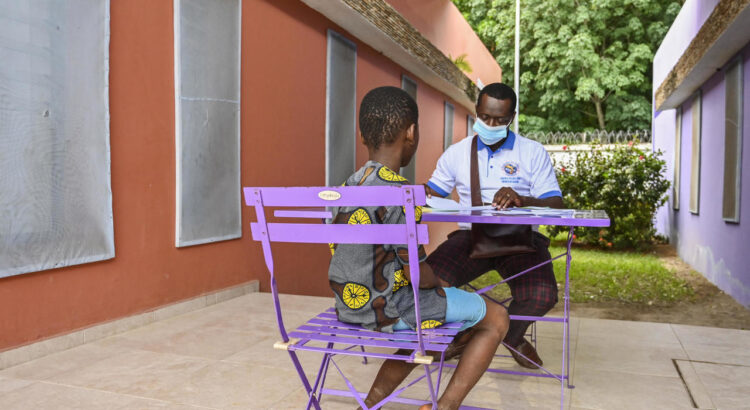
En los casos graves de malos tratos o trabajos forzados, los niños, generalmente analfabetos, se quedan en el centro unos meses. Vuelven al colegio y aprenden un oficio: ganadería, horticultura, costura, peluquería, herrería.

Al margen de las operaciones, los comités locales de protección de la infancia realizan una labor en las zonas rurales.

– Pobreza –

«La mediación con las familias es muy importante», comenta Lath Mel, quien ve «avances».

Según la investigación NORC, la tasa de escolarización de los niños de familias productoras de cacao ha mejorado, pasando del 59% en 2008-09 al 85% en 2018-19. Sin embargo, el estudio de 2020 del Consejo Café Cacao de Costa de Marfil (CCCI), el organismo público que gestiona estos sectores, apunta que solo el 71% de los niños de 5 a 17 años están matriculados en los colegios.

Desde 2019 se ha sacado a unos 2.000 niños de las plantaciones de cacao, 200 de los cuales se quedaron en el centro de acogida de Soubré, según el CNS.

Además Costa de Marfil se ha dotado de un «arsenal jurídico» en los últimos diez años, destaca el fiscal de Soubré, Alexandre Koné, con multas y penas de prisión que van desde unos meses hasta cadena perpetua por la esclavitud de menores de 10 años.

Unas 300 personas han sido condenadas por tráfico de niños, de unas 600 personas llevadas ante la justicia entre 2012 y 2020, según el CNS.

Pero en lo que va de año solo hubo un juicio en el tribunal de Soubré -reconoce el fiscal- sobre un traficante de niños condenado a 10 años de prisión.

Kouassi Kouakou Franck, de 25 años, un habitante de la aldea de Issakro con

el que la AFP habló durante la operación, piensa que «los niños deben ir a la escuela, pero si los padres no tienen medios, entonces se quedan aquí trabajando».

Lath Mel lo corrobora: «La pobreza es la principal causa del trabajo y la trata de niños».

Según el Banco Mundial, más de la mitad de los 5 a 6 millones de personas que se ganan la vida con el cacao viven por debajo del umbral de pobreza en Costa de Marfil.


Fuente: https://www.france24.com/es/minuto-a-minuto/20210511-la-dura-lucha-contra-el-trabajo-infantil-en-la-producci%C3%B3n-de-cacao-en-costa-de-marfil

Comparte este contenido:

Ghanna: Involve parents in the education of their wards—Denmark-based Ghanaian Educationist

Involve parents in the education of their wards—Denmark-based Ghanaian Educationist

A Denmark-based-Ghanaian educationist and lecturer at the Aalborg Universitet Dr. Hanan Lassen Zakaria have called for the involvement of parents in the education of their wards at all stages of education.

This, Dr. Hanan observed would help improve students’ performance and also make the education system more participatory.

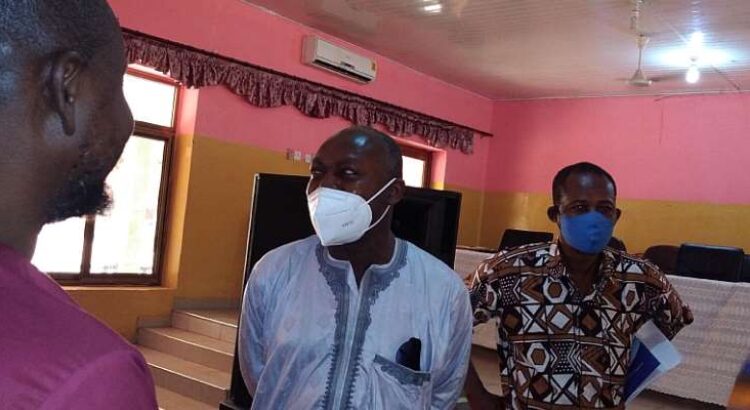
Dr. Hanan observed this as part of remarks he gave during a review meeting of the Professional Learning, Communities, and Coaching (PLCC) project on Thursday, April 8, 2021, at the Tamale College of Education.

The one-year pilot project dubbed «Strengthening Basic School Teacher Quality through Professional Learning, Communities and Coaching» (PLCC) is being implemented by the College (TACE ) with funding support from the Commonwealth of Learning (CoL).

In all, 380 basic school teachers in 32 selected schools in the Northern and North East regions of Ghana benefit from the project.

PLCC is implemented in five districts, namely; Tamale Metro, Sagnerigu municipal, Kumbungu District, Yendi municipal, and the West Mampurigu district assembly.

Originally, the pilot project started in October 2019 to reposition In-Service Basic School Teachers and enhance their professional competencies in lesson development and delivery.

The implementation was however interrupted by the outbreak of the COVID-19 pandemic, therefore the delays.

As the last activity under the pilot project, the meeting provided an opportunity for the implementers to analyze their successes, challenges, and the way forward.

Dr. Hanan Lessen who is the lead consultant for the project noted that though there are lots of efforts in building the capacity of teachers and students, the parents were often forgotten when it comes to their education.

«The thinking says that if you support or if parents get involved with their kid’s education, the tendency is that the learning outcomes of their kids in schools will be higher» he stated.

He noted that the outcomes of the pilot project were very encouraging and that the first phase termed TACE CoL 1.0 would be replaced with phase two ( TACE CoL 2.0) to give room for more inputs.

He advised that the number of clusters under the PLCC project be increased so that many schools can benefit.

The Vice-Principal of the college Mr. Nuhu Imoro Alhassan on behalf of the principal Dr. Sulemana Iddrisu stated that despite the outbreak of the Covid-19 pandemic, the project was able to achieve its objectives.

«For the pandemic, the pilot project would have come to an end by August last year» he noted.

Metropolitan Director of education for the Tamale Metro Assembly Mr. T. D Amithus, in his submission lauded the project. And called for increment in beneficiary schools to give way for more pupils to benefit from the project.

«The thing that should be done differently which would have made the project a lovely one is just to increase the number of schools so that many schools will benefit. The organization is okay, whatever that they have done is appropriate, but what would have been more interesting and make the project an enticing one would have been to size up the numbers» he said

Beneficiary teachers who spoke to the media thanked the Tamale College of education and the Commonwealth of Learning (CoL) for the knowledge they have gained from the project. According to some of them, though they were trained teachers, the benefits they derived from the project were incomparable.

On his part, project contact person, Mr. Hamza Alhassan said it was a dream come true that phase one of the project has ended successfully despite the spark of the COVID-19 pandemic and other challenges.

He also said he was hopeful that many of such projects would come out to help make Teachers more professionals as they should be, which would, in turn, improve learners’ performance in schools.

Fuente de la información: https://www.modernghana.com/news/1080437/involve-parents-in-the-education-of-their-wards.html

Comparte este contenido:

African Countries Must Embrace the Concept of Good Food As Good Medicine

African Countries Must Embrace the Concept of Good Food As Good Medicine

ANALYSIS

Fresh impetus is being directed into identifying and advocating for scientific priorities in the area of food security and nutrition across Africa, with a particular focus on health implications.

At the centre of these efforts is a a five-year project initiated by the Alliance for Accelerating Excellence in Africa, a partnership between the African Academy of Sciences and the African Union Development Agency-NEPAD. This project aims to identify the continent’s most urgent research and development questions, and to advocate for investments in these areas. This will go a long way in helping the continent achieve its vision of transforming lives through science.

As a professor of pharmacology and having worked in the field of African indigenous medical knowledge for decades, I have been involved in research in this field, and have been a strong advocate for more research. I also believe the translation of this research into policy is critical.

One of the things that has become clear to me is that, while Africa is rich in biological diversity, this reality simply isn’t being used to its full potential. This was emphasised at a consultative round table last year on food security and nutrition priorities for Africa organised as part of the five-year project.

A survey was designed for this round table to prioritise research and development questions relating to food security and nutrition. This survey attracted comments and engagement from more than 1,000 experts globally.

The experts made it clear that what is needed is a prioritisation of the health and medicinal values of the food that’s consumed in African countries. In turn, this will spur more research and development of new supplements and phytomedicines – that is, plant-based therapies and medicines – across the continent. This approach has been successful elsewhere, most notably in China. The Asian country has invested heavily in training young practitioners of Chinese traditional medicine, who work with, among other things, plant-based therapies and phytomedicines. The Chinese government has also spent a great deal on manufacturing phytomedicines.

One of the things that has become clear to me is that, while Africa is rich in biological diversity, this reality simply isn’t being used to its full potential. This was emphasised at a consultative round table last year on food security and nutrition priorities for Africa organised as part of the five-year project.

A survey was designed for this round table to prioritise research and development questions relating to food security and nutrition. This survey attracted comments and engagement from more than 1,000 experts globally.

The experts made it clear that what is needed is a prioritisation of the health and medicinal values of the food that’s consumed in African countries. In turn, this will spur more research and development of new supplements and phytomedicines – that is, plant-based therapies and medicines – across the continent. This approach has been successful elsewhere, most notably in China. The Asian country has invested heavily in training young practitioners of Chinese traditional medicine, who work with, among other things, plant-based therapies and phytomedicines. The Chinese government has also spent a great deal on manufacturing phytomedicines.

Fuente de la Información: https://allafrica.com/stories/202105110163.html


Comparte este contenido:

Liberan a una treintena de estudiantes secuestrados en Nigeria en marzo

África/Nigeria/Autor(a) y Fuente: www.andina.pe

Un total de 29 estudiantes secuestrados el pasado marzo en un escuela atacada por hombres armados en el estado de Kaduna, en el noroeste de Nigeria, recuperaron la libertad este miércoles, según informaron medios locales.

«Sí, han sido liberados. Están de camino desde el bosque en el que han sido retenidos durante los últimos 50 días», confirmó hoy a medios locales el portavoz de los padres de los secuestrados, Malam Abdullahi Usman.

«No durmieron en el campo (de los bandidos) anoche. Fueron trasladados a la residencia de uno de los mediadores para dormir. Ya hemos enviado a nuestra gente con vehículos y una ambulancia para recogerlos. Esperamos que lleguen en cualquier momento», aseguró Usman.

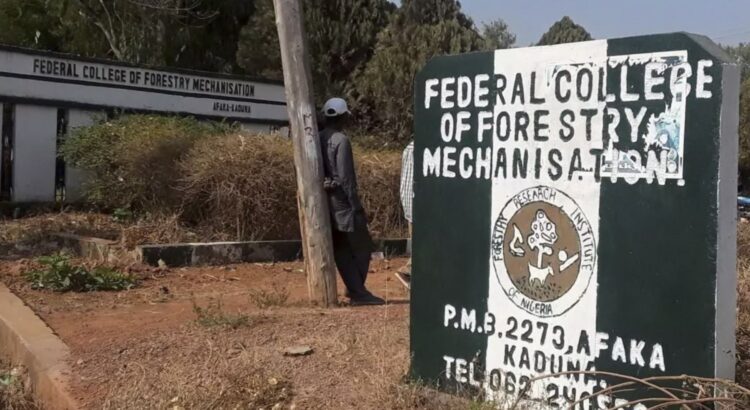
El secuestro ocurrió en la madrugada del pasado 12 de marzo, cuando un gran número de hombres armados irrumpieron en la Escuela Superior de Mecanización Forestal de Igabi y raptaron a un total de 39 alumnos, de los cuales 10 habían sido ya liberados.

Los atacantes eran hombres armados sospechosos de ser bandidos y, tras asaltar la escuela, secuestraron a los 39 estudiantes, entre ellos 23 mujeres y 16 hombres.

Los bandidos exigieron más tarde un rescate en un video que mostraba a algunos de los estudiantes siendo golpeados en un lugar desconocido de un bosque.

Pero el gobernador de Kaduna, Nasir El-Rufai, había dejado claro que no negociaría con los bandidos para liberar a los secuestrados, ya que pagar rescates alentaría más ataques.

Los progenitores de los alumnos raptados habían organizado protestas en los últimos días y acusado a las instituciones de indiferencia ante la desaparición de sus hijos, llegando a amenazar con ocupar la Asamblea Nacional si no emprendían acciones para encontrarlos.

Fuente e Imagen: https://www.andina.pe/agencia/noticia-liberan-a-una-treintena-estudiantes-secuestrados-nigeria-marzo-844011.aspx

Comparte este contenido:
Page 39 of 621
1 37 38 39 40 41 621