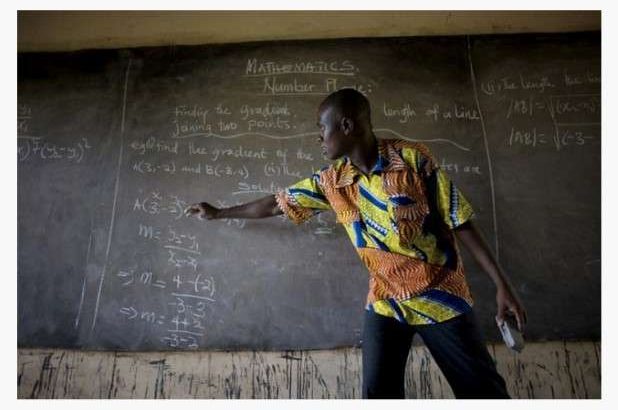
RESUMEN: El presidente Mahama dijo que el desarrollo es una señal de que los estándares educativos están mejorando, instando al público a no ser engañado por las afirmaciones de que las normas están cayendo. Agradeció a los sindicatos de maestros y al Servicio de Educación de Ghana por reducir el absentismo de los docentes del 27% al 7%. «Quiero agradecer a los sindicatos de maestros, a la GNAT (Asociación Nacional de Maestros de Ghana) ya la GNAGRAT (Asociación Nacional de Maestros de Posgrado) y al Servicio de Educación de Ghana. Hoy en día, como en este año, el ausentismo de maestros es inferior al 27%, dijo en la comisión de la Escuela Comunitaria Frafraha. La reducción gradual del absentismo de los maestros se ha atribuido a medidas estrictas adoptadas por el Ministerio de Educación y otras partes interesadas para abordar la cuestión. Las regiones de Brong Ahafo y Upper East registraron las menores tasas de ausentismo de los maestros en el país. Las dos regiones registraron un 2 por ciento frente a la tasa nacional del 7 por ciento.
President Mahama said the development is a sign that educational standards are improving, urging the public not to be misled by claims that standards are falling.
He thanked the teacher unions and the Ghana Education Service for reducing teacher absenteeism from 27 percent to 7 percent.
«I want to thank the teacher unions, GNAT (Ghana National Association of Teachers) and GNAGRAT (National Association of Graduate Teachers) and also the Ghana Education Service. Today as I speak, as at this year, teacher absenteeism is down from 27 percent to seven percent,» he said at the commissioning of the Frafraha Community Day School.
The gradual reduction of teacher absenteeism has been attributed to strict measures put in place by the Ministry of Education and other stakeholders to tackle the issue.
The Brong Ahafo and Upper East Regions recorded the lowest teacher absenteeism rates in the country. The two regions recorded 2 percent as against the national rate of 7 percent.
The National Inspectorate Board (NIB) of the Ghana Education Service in 2013 mentioned teacher absenteeism as a major challenge for quality education in the country.
África/Liberia/13 Noviembre 2016/Fuente y Autor: frontpageafricaonline
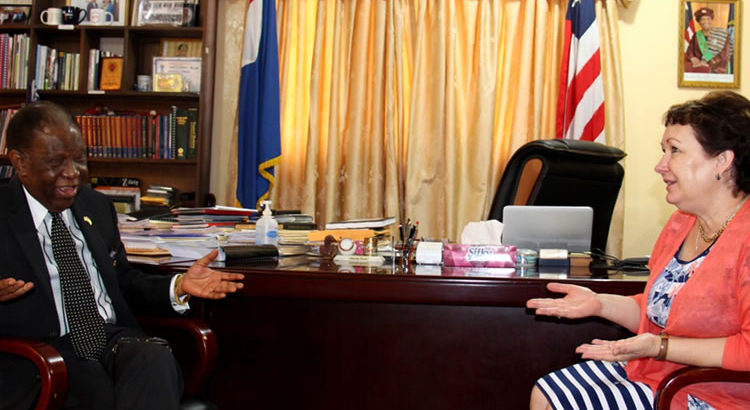
Resumen: La Gerente del Banco Mundial Larisa Leshchenko dice que el desarrollo de la educación superior es fundamental para el crecimiento y desarrollo del país. En el sector educativo, la Sra Leshchenko señaló que el Banco tiene previsto llegar a las instituciones superiores de enseñanza, incluyendo la Universidad de Liberia conseguir entradas a través del proceso de consultas.
Monrovia – World Bank Liberia Country Manager Larisa Leshchenko says the development of tertiary education is critical to the growth and development of the country.
She was speaking on Thursday, November, 10, when she paid a courtesy call on the President of the University of Liberia (UL), Dr. Emmet Dennis. Ms. Leshchenko said that advanced tertiary education development will eventually filter down to the primary and secondary educational levels, noting that, «for example, once teachers are properly trained at the higher educational level, they will be well equipped to provide quality services in the classrooms.» She used the occasion to inform the UL President that the Bank has started the process of developing its new Country Partnership Framework (CPF). The CPF will guide the Bank’s engagement with Liberia over the next 3-5 years.
On the educational sector, Ms. Leshchenko noted that the Bank plans to reach out to higher institutions of learning, including the University of Liberia get inputs through the consultations process.
These inputs will be important to the development of the CPF, which will assist the Bank identify constraints to poverty reduction, she said. Country Manager Leshchenko then informed Dr. Dennis that the World Bank is working on a plan to deploy its visiting professional staff to provide lectures at the UL.
She added that this initiative will help with capacity development of students and lecturers of the UL. President Dennis thanked the Country Manager for the visit and commended the Bank for its support towards the development of the University.
He cited the Bank supported 3-year project: Strengthening the Accountancy Program at the University of Liberia.
He pledged to work with the World Bank in the development of Tertiary Education in Liberia. He stressed that a qualified faculty is essential for quality Tertiary Education. The UL President briefed Madam Leshchenko on the operations of the University and highlighted progress and challenges being faced by the institution.
Dr. Dennis said the University currently has an enrollment of 22,000 students, though its carrying capacity is 15,000. Attending the meeting were Professor Geegbae Geegbae, University of Liberia Vice President for Institutional Development, Saidu Dani Goje, Public Financial Management Specialist at the World Bank and Michael Sahr, World Bank Communications Specialist.
Fuente de la noticia: http://www.frontpageafricaonline.com/index.php/news/2522-advanced-tertiary-education-critical-to-growth-of-liberia
Fuente de la imagen: http://www.frontpageafricaonline.com/images/news/dennis-larisa.jpg
África/Rwanda/13 Noviembre 2016/Fuente: Allafrica/Autor:Michel Nkurunziza
Resumen: El Ministerio de Educación está reuniendo otros asociados, entre ellos el sector privado, las iglesias, las ONG y la sociedad civil para movilizar recursos para complementar el presupuesto de educación, actualmente en el 13 por ciento del presupuesto total del gobierno, como parte de los esfuerzos para aumentar el acceso a la educación.
The Ministry of Education is rallying other partners including private sector, churches, NGOs, and civil society to mobilise resources to complement the education budget, currently at 13 per cent of total government budget, as part of efforts to increase access to education.
The call was made at the 2016/17 Joint Review of Education Sector meeting, that brought together education stakeholders in Kigali, yesterday.
Education minister Papias Musafiri said their priorities include increasing access to pre-primary education by increasing infrastructure development, paying teachers’ salaries on time and providing capitation grant, especially in rural areas, for pre-primary schools.
Others include the implementation of new competency based curricula, and improving quality and relevance of technical and vocational education and training (TVET), among other things.
Repetition rate, drop out reduced
Dr Celestin Ntivuguruzwa, the ministry’s Permanent Secretary, said the number of students increased from 2,450,705 in 2015 to 2,544,394 in 2016, while the number of staff increased from 42,004 in 2015 to 43,558 in 2016.
The completion rate in primary has increased significantly from 60.4 per cent in 2015 to 65.2 per cent in 2016 against the 2017 target of 74 per cent.
«The drop-out rate narrowed from 10.3 per cent in 2015 to 5.7 per cent in 2016,» he said.
The number of pre-primary schools increased from 2,618 to 2,834 in 2015 and 2016, respectively while student enrolment increased from 183,645 in 2015 to 190,100 in 2016, a new report shows.
It shows that in lower secondary education, drop-out rate narrowed from 14.4 per cent in 2014 to 6.5 per cent in 2015, meaning that the 2015/16 target of 12.1 per cent has been surpassed.
But the repetition rate remained constant, at 11.6 per cent, meaning the 2015/16 target of 3.1 per cent was not met.
A significant progress has been made in Adult Literacy Programme, whereby a total number of centres increased from 4,313 in 2015 to 4,511 in 2016 while the learners increased from 95,829 in 2015 to 120,820 in 2016.
According to the Workforce Development Authority, TVET institutions increased from 383 to 391, while student enrolment increased from 94,373 last year to 97,671 in 2016.
Officials said there is a TVET financing loan scheme that is being developed to boost the enrolment rate.
Meanwhile, although the total education sector budget, worth Rwf205.6bn, was executed at 99 per cent (Rwf203.7bn spent), the budget allocated to education quality and standards was executed lowest compared to other priorities, according to the sector review report.
Education partners questioned the ministry on why education quality and standards as well as higher educationassurance budget had the lowest execution performance with 77 per cent and 75 per cent, respectively.
Education quality and standards as well as higher education assurance budget were Rwf2bn and Rwf140m yet only Rwf1.5bn and Rwf105m, respectively, was absorbed.
«The low performance in budget execution in comparison to other priorities is influenced by many factors. Partly, it depends on how money is disbursed and where it goes,» Janvier Gasana, the Director General of Rwanda Education Board, explained.
This department, Gasana said, does not only deal with quality but also reducing ratio in classrooms.
«It also deals with monitoring quality and that is why we are focusing on training teachers, increasing the number of schools and teachers while putting in place incentive mechanisms,» he added.
Teacher ratio
On the other hand, Clement Mugabo, the Ag. Director General, Education Planning, said the primary qualified teacher ratio for 2015/2016 is one teacher per 62 pupils against the target of one per 52 pupils.
However, he said that qualified teacher-student ratio in secondary school is on track since one teacher is per 29 students against the mid-term target of 32 students for one student.
Fuente de la noticia: http://allafrica.com/stories/201611110635.html
Fuente de la imagen: http://allafrica.com/download/pic/main/main/csiid/00360054:5e976100770defeabe387ed294e3a4fe:arc614x376:w285:us1.png
África/Uganda/13 Noviembre 2016/Fuente: Allafrica/Autores:Blanshe Musinguzi and Damali Mukhaye
Resumen: La 67ª ceremonia de graduación de la Universidad de Makerere que se fijó para enero del próximo año pende de un hilo después de la administración de la universidad dio a entender en un posible aplazamiento de la misma.
Kampala — Makerere University’s 67th graduation ceremony that was set for January next year hangs in the balance after the university management hinted on a possibility of postponing it.
Prof Ddumba Sentamu, the Vice Chancellor, yesterday said confirming the date for the graduation would depend on when the university would be reopened by the President.
«We may postpone the graduation depending on the circumstances. If the university is reopened this year, automatically the graduation is bound to take place on the scheduled date. But if it opens next year, it is obvious we shall also postpone the graduation,» Prof Ddumba Ssentamu said.
President Museveni indefinitely closed the university recently after students went on strike demanding that lecturers resume teaching.
The lecturers under their pressure group, the Makerere University Academic Staff Association (Muasa) general assembly, went on strike on October 26 demanding payment of incentives arrears amounting to 28b.
At the time of the strike, some students had not cleared with the university to enable them graduate while others had missing marks.
Prof Ddumba said yesterday they were waiting for guidance from the Education ministry on a way forward.
Meanwhile, the staff have defied the University Council’s directive to return university property, including cars.
All lecturers and senior administrators were ordered to hand over university cars to the estates’ department by Monday 5pm. However, a number them have defied the council directive. The university has 382 cars.
Prof Ddumba declined to reveal the number of university staff who had handed over the cars.
He dismissed claims from a section of staff members to the effect that they had not officially been notified to return the cars.
«That is a lie. We made a communication to staff members to bring back the cars. You (media) have seen the communication, how come they (staff members) have not seen it?» Prof Ddumba asked, adding: «It is difficult to say how many people have returned the cars. They are responding.»
Students guild president Roy Ssemboga said he has not received any letter requesting him to return the car.
«I just hear rumours that people are supposed to return the cars. But it’s parked,» he said.
On Tuesday, Makerere University spokesperson Ritah Namisango said she consulted the Estates and Works department who have informed her that they are on station receiving the university vehicles.
«Some members of staff have also contacted the university authorities and informed them that they will hand over the vehicles by close of business tomorrow (Wednesday). I am certain that by close of business on Wednesday [yesterday], the team from Estates and Works Department will provide an update to the Deputy Vice Chancellor (Finance and Administration) and Vice Chancellor on the number of vehicles returned,» Ms Namisango said.
«We will then be in a position to inform the media [on] the number of vehicles returned and parked by that time,» she added.
Dr Muhammed Kiggundu, the Muasa chairperson, said: «If they found it necessary that lecturers should return cars, that is okay.»
He said less than one per cent of university lecturers have cars.
Meanwhile, Buganda Road Chief Magistrates Court has remanded to Luzira Prison four Makerere University students arrested over demonstrating against the closure of the university.
They were advocating the re-opening of the Makerere University but the police said they were disrupting peace in the area.
Students jailed
Makerere University students Paul Kato, Ronald Ainebyona, Edmund Kahigi and Crispus Waswa, were charged on Tuesday with taking part in unlawful assembly and were remanded to Luzira prison. They denied the charges before Chief Magistrate Jamson Karemani.
The four were arrested on November 7 on Namirembe Road in Kampala on grounds that they were participating in an illegal demonstration.
Fuente de la noticia:http://allafrica.com/stories/201611110016.html
Fuente de la imagen: http://allafrica.com/download/pic/main/main/csiid/00301697:13c2b98c60236e8c2ca6555002735a81:arc614x376:w285:us1.png
Kenia / 12 de noviembre de 2016 / Por: RUSHDIE OUDIA / Fuente: http://www.nation.co.ke/
The Kisumu County Assembly on Wednesday unanimously passed a bill allowing the local government to provide free education for disabled children at Early Childhood Development centres in the region.
According to the 2016 Kisumu County Disability Bill, students with special needs enrolled in youth polytechnics will also benefit from the free education. The bill further provides for the establishment of special schools for the disabled in the area.
Nominated MCA Farida Salim said the group was suffering at mainstream schools, which she said lack proper facilities for disabled students.
“Persons with disabilities get little attention in the [mainstream] schools and many cannot access basic amenities such as toilets,” said Mrs Salim.
She advised the county government to ensure it builds model centres that are friendly to the group.
Parents or guardians of disabled children are now required to enrol them in the schools or risk facing legal action.
“A parent, guardian or custodian who contravenes this section commits an offence and is liable on summary conviction to a fine not exceeding Ksh100,000, or to a term of imprisonment not exceeding three months,” said nominated MCA Caroline Agwanda, who tabled the bill in the House.
“Civic education should be introduced on disability issues in healthcare programmes and further promote the use of sign language,” she added.
África/Sudáfrica/Noviembre de 2016/Autores: Sahal Yacoob, Karen Jacqueline Cloete/Fuente: MGAfrica
RESUMEN: La academia constituye 50 jóvenes académicos y 20 ex alumnos de múltiples disciplinas – incluyendo ciencias de la salud, ciencias naturales y sociales, ingeniería y humanidades.Son seleccionados por mérito académico de instituciones de educación superior e investigación. Este es un resumen de una declaración formulada en la asamblea general de la organización 2016 en octubre. En ella, la academia advierte de consecuencias «catastróficas» si continúan las protestas universitarias y no se implementan soluciones a largo plazo a los complejos problemas de múltiples niveles del sector. Somos muy conscientes de los desafíos que enfrentan los estudiantes. Enseñamos y supervisamos estudiantes de pregrado y posgrado. Estos son los futuros jóvenes académicos de Sudáfrica. Financiamos la finalización de nuestra propia educación superior. Varios de nosotros están ahora cargados con altos niveles de deuda que – como jóvenes académicos empleados en variadas posiciones temporales, permanentes, financiadas y autofinanciadas – nos esforzamos por pagar.
The academy constitutes 50 young academics and 20 alumni from multiple disciplines – including health sciences, natural and social sciences, engineering and the humanities. They are selected on academic merit from institutions of higher education and research.
This is a summary of a statement formulated at the organisation’s 2016 general assembly in October. In it, the academy warns of “catastrophic” consequences if university protests continue and no long-term solutions to the sector’s complex, multi-tiered problems are implemented.
We are acutely aware of the challenges that students face. We teach and supervise undergraduate and postgraduate students. These are South Africa’s future young academics.
We financed the completion of our own higher education. A number of us are now burdened with high levels of debt that – as young academics employed in varied temporary, permanent, funded and self-funded positions –- we struggle to repay.
As a group of young academics committed to the South African academic project, we can no longer avoid engaging with these crucial issues at this complicated moment. If this situation remains unresolved, the implications will be catastrophic. This is true for undergraduate and postgraduate students, including both South African and international students. Those who are on time-limited bursaries and fellowships are also at risk.
As an example, if any academic year is compromised, the country could experience a shortage of medical doctors and allied health professionals. Internship placements in those fields will be vacant without graduates. This will place further stress on an overburdened public health system upon which most South Africans rely.
There has so far been a lack of constructive leadership at the national level and lack of effective engagement between staff and student leaders. This has triggered escalating tensions. It has also led to the development of unproductive, often confrontational and personalised debates. These run counter to the principles of scholarly engagement. They hinder the possibility of finding collective solutions to this crisis.
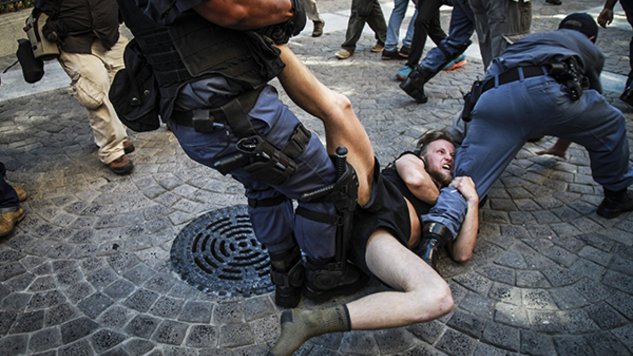
We call for urgent and peaceful resolutions across our campuses that will result in the removal of police and private security. We want to avoid confrontations between police and private security with students and staff. We acknowledge the presence of diverse experiences of structural and direct violence, and the threat these forms of violence pose across our campuses.
We also acknowledge that the presence of police and security is experienced differently. It creates contexts in which teaching, learning, research and innovation cannot take place.
Universities need to recognise the anxiety and psychological trauma experienced by many staff and students during this period. Institutions must commit to addressing this trauma and anxiety. Doing so will help facilitate the resumption of high-quality teaching and learning when institutions reopen.
Recommendations
It’s crucial to develop spaces for respectful engagement that acknowledges and supports continued debate and differences of opinion. We offer our members as a resource to support constructive national dialogue on this crisis.
Fee-free higher education could be financed in different ways, guided through the development of evidence-informed financing models. But it is not academics alone who ought to be involved in this process.
We call on the President of South Africa to:
urgently address the root cause and not just the symptoms of the crisis being experienced across institutes of higher education;
commit to increased funding streams for the sector, which will improve equity in access to quality higher education;
immediately convene a national dialogue. It needs to include student, parent and academic representatives. University administrators, the private sector and industry must also be included. This will be a safe space to discuss approaches and develop a consensus statement committing to realising the goal of fee-free quality higher education for poor and “missing middle” students. The missing middle are those whose parents earn too much money to qualify for government loans but not enough to afford tuition;
urgently reformulate the emergency task team he established around this crisis to include the National Treasury. This is necessary to move away from reducing the crisis to one associated only with security concerns. The National Treasury is a key player in realising funding goals.
It’s also important that the President work with the fees commission he established to complete its inquiry into different financing models. The commission needs to release an approved model for implementing fee-free quality higher education for poor and “missing middle” students.
We offer the President our academy’s expertise to support the development of sustainable solutions.
Dire consequences
South Africa will struggle to maintain and grow its internationally respected research-intensive environment if academic programmes are suspended and university campuses closed.
The country’s academy and science innovation needs room to transform and grow. We are very concerned that this crisis will negate the gains made to date – and will have dire consequences moving forward.
Sierra Leona debe levantar la prohibición profundamente discriminatoria de que las niñas claramente embarazadas asistan a la escuela y se presenten a pruebas académicas, una prohibición que continúa afianzando la desigualdad de género en el país y que pone en peligro el futuro de miles de adolescentes, ha afirmado hoy Amnistía Internacional, cuando se cumple un año de su informe sobre este asunto.
“La prohibición de que las niñas claramente embarazadas asistan a escuelas públicas y se presenten a pruebas académicas es profundamente desacertada y no contribuye a que se aborden las causas profundas del alto índice de embarazos adolescentes en Sierra Leona, que aumentó durante la devastadora crisis del ébola y que sigue siendo elevado pese a la prohibición”, ha declarado Alioune Tine, director regional de Amnistía Internacional para África Occidental y Central.
La prohibición fue declarada política oficial del gobierno en abril de 2015, poco antes de la reapertura de los centros escolares tras la crisis del ébola. Más de un año y medio después, Amnistía Internacional siente honda preocupación por que la prohibición sigue vigente a pesar de las críticas nacionales e internacionales.
Amnistía Internacional ha hablado con 68 niñas de entre 15 y 20 años embarazadas o que habían dado a luz recientemente en zonas urbanas y rurales del oeste de Sierra Leona. También ha hablado con 26 agentes nacionales e internacionales de la sociedad civil, profesores y profesoras y autoridades gubernamentales para evaluar el impacto de la prohibición.
La mayoría de las niñas entrevistadas quedaron encintas durante el brote de ébola, momento en el que hubo un aumento de los embarazos adolescentes junto con un incremento de la violencia sexual. El impacto económico negativo de la crisis del ébola dio lugar a un aumento de las relaciones de explotación y de abuso.
La mayoría de las niñas entrevistadas quedaron encintas durante el brote de ébola.
La mayoría de las niñas afirmó que esta política les hizo sentirse abandonadas y desanimadas por no poder ir a la escuela. Describieron su frustración por no poder presentarse a pruebas académicas para las que se habían preparado.
Una niña contó a nuestro equipo de investigación: “Podría haber hecho el examen. Estudié bastante. Aunque estés embarazada, si has estudiado, deberías poder examinarte.”
Las niñas también hablaron de su frustración al tener que repetir curso después de dar a luz, por haber perdido la oportunidad de hacer el examen cuando estaban embarazadas:
“Tengo que repetir curso. Me siento mal porque veo que mis amistades pasarán de curso el año que viene”, contó una niña de 17 años a Amnistía Internacional.
La estigmatización que existe en torno al embarazo adolescente en Sierra Leona conlleva que se haga sentir vergüenza a las niñas por estar embarazadas y que a veces sufran el ostracismo o incluso abusos por parte de sus familias y profesores.
Una niña con la que habló Amnistía Internacional afirmó que había abandonado voluntariamente la escuela tras ver el trato que habían recibido sus compañeras en el pasado: “Un profesor anunció […] que la niña estaba embarazada delante de toda la escuela, le quitó la mochila (con la que la niña se estaba protegiendo el vientre) y la golpeó con una vara”.
Tengo que repetir curso. Me siento mal porque veo que mis amistades pasarán de curso el año que viene.
En mayo de 2015, ante la presión internacional y nacional, el presidente de Sierra Leona, Ernest Bai Koroma, anunció el establecimiento de un sistema educativo “puente” alternativo que permitiría a las niñas embarazadas seguir acudiendo a la escuela, pero en locales u horarios diferentes los de sus iguales.
A pesar de que este sistema paralelo ofrece a las niñas acceso a una forma limitada de educación, el presidente Koroma, en su discurso del Día de la Mujer de marzo de 2016, pareció confirmar que, en parte, se fundamentaba en estereotipos negativos de las niñas embarazadas cuando afirmó: “Continuarán recibiendo una educación formal pero no se les permitirá estar en la misma clase con otras niñas que también van a la escuela. Volvamos a lo básico y protejamos nuestros valores y nuestra cultura.”
Autoridades del ministerio de Educación contaron a Amnistía Internacional que, inicialmente, 14.500 niñas se inscribieron en el plan y que alrededor de 5.000 habían regresado al sistema público ordinario tras dar a luz. Las clases se impartían tres veces por semana, entre dos y tres horas al día. El plan de estudios era distinto al de las escuelas regulares y sólo se impartían asignaturas troncales. También se ofrecía a las niñas información y servicios de salud, tales como planificación familiar.
La mayoría de las niñas con las que habló Amnistía Internacional hicieron comentarios positivos sobre el sistema puente. Algunas niñas afirmaron preferirlo al de su escuela regular por la estigmatización a la que allí se enfrentaban.
Una niña dijo a Amnistía Internacional: “Me sentía avergonzada, en la escuela regular todo el mundo se reía de mí.”
Sin embargo, varias niñas afirmaron que, de haber podido elegir, hubieran preferido permanecer en el sistema escolar ordinario.
“Sólo nos enseñaban matemáticas e inglés, pero yo estudiaba comercio en la escuela, y eso no nos lo enseñan”, contó una niña a Amnistía Internacional.
Otra niña dijo: “Yo preferiría ir a mi escuela, porque allí me dan resultados [calificaciones de los exámenes]. Cuando dé a luz, seguiré estudiando en mi escuela; el centro de aprendizaje es sólo para cuando estoy embarazada.”
El plan puente concluyó en agosto de 2016, pero las clases alternativas para niñas embarazadas continuarán con el nuevo plan —gestionado por el ministerio de Educación, con el apoyo de UNICEF y del gobierno del Reino Unido—, que se centrará también en las niñas que hayan abandonado la escuela por diferentes motivos así como en intervenciones para ayudar a las niñas a que sigan yendo a la escuela. El nuevo plan tendrá una duración de 17 meses y empezará a aplicarse en noviembre de 2016.
Amnistía Internacional y expertos nacionales han aplaudido la atención permanente a la educación de las niñas a través de este programa. Con todo, sigue suscitando preocupación la falta de opciones para las niñas embarazadas debida a la prohibición y a que no pueden presentarse a pruebas académicas, lo que supone un incumplimiento de las obligaciones de Sierra Leona de proporcionar igualdad de acceso a una educación de calidad para todos los niños y todas las niñas.
Las escuelas especiales para niñas embarazadas no son la solución para abordar el elevado índice de embarazos adolescentes de Sierra Leona. A pesar de las recomendaciones formuladas por Amnistía Internacional, el Comité de los Derechos del Niño y organizaciones nacionales, la información sobre salud sexual y reproductiva todavía no forma parte del plan de estudios oficial. La mayoría de las niñas contaron a Amnistía Internacional que antes de quedar embarazadas no tenían conocimientos sobre planificación familiar y que habían recibido muy poca o ninguna educación sexual.
La mayoría de las niñas contaron que antes de quedar embarazadas no tenían conocimientos sobre planificación familiar y que habían recibido muy poca o ninguna educación sexual.
Una de la niñas dijo a nuestro equipo de investigación: “En la escuela, realmente no nos enseñan planificación familiar. Creen que somos demasiado pequeñas, o que es malo, o que nos animará a tener relaciones sexuales.”
Las niñas también tenían mucho miedo y recibían información errónea sobre la planificación familiar.
Una niña de 19 años que estaba embarazada de cuatro meses afirmó:
“Me puse la inyección durante uno o dos años, pero no me llegaba el periodo. Alguien nos dijo que la inyección mató una niña porque evita que tengas el periodo. Pensé que debía dejar de ponerme la inyección hasta que me llegara el periodo. No sabía dónde preguntar sobre este tema. Luego quedé embarazada.”
Las niñas que quedan embarazadas pueden enfrentar obstáculos complejos y entrecruzados para proseguir con su educación. Además de la prohibición del embarazo, los gastos escolares también preocupaban enormemente a la mayoría de las niñas con las que habló Amnistía Internacional.
En un país en el que el 72 por ciento de la población vive en una situación de pobreza extrema, esos gastos y el costo de tener un hijo o una hija pueden ser abrumadores. Además, la estigmatización relacionada con el embarazo adolescente implica que muchas familias les retiren su apoyo económico, lo que dificulta aún más a muchas niñas poder regresar a la educación regular, incluso después del nacimiento de sus hijos.
Como una niña dijo a Amnistía Internacional:
“No puedo volver a mi escuela porque no puedo pagar los gastos. Intento buscarme la vida e ir a clases particulares. Nadie me ayuda.”
“A no ser que se eliminen los obstáculos a la educación, el gobierno de Sierra Leona está dejando en la estacada a sus niñas y poniendo en peligro su futuro. De conformidad con sus obligaciones internacionales, el gobierno debe dar pasos concretos para garantizar progresivamente el acceso de todas las niñas a la educación —incluso con subvenciones para aquellas que las necesiten— como parte de su estrategia educativa”, ha declarado Alioune Tine.
A no ser que se eliminen los obstáculos a la educación, el gobierno de Sierra Leona está dejando en la estacada a sus niñas y poniendo en peligro su futuro.
“También es fundamental erradicar la estigmatización que existe en torno a las niñas embarazadas. Sierra Leona ha hecho grandes esfuerzos para abordar la estigmatización de las personas supervivientes de ébola, y debe garantizar que las adolescentes en situaciones de gran vulnerabilidad reciban la protección y el apoyo de sus profesores, familias y comunidades; en vez de que las avergüencen y las culpabilicen.”
Información complementaria
En noviembre de 2015, un informe de Amnistía Internacional estimó que hasta 10.000 niñas resultaron afectadas por la prohibición de que las niñas claramente embarazadas asistieran a la escuela y se presentaran a pruebas académicas. Diversos estudios han concluido que durante el brote de ébola se produjo un incremento de los embarazos adolescentes. Un estudio realizado en 2016 por Secure Livelihoods Consortium afirmó que las encuestas del Fondo de Población de las Naciones Unidas indicaban que 18.119 adolescentes quedaron embarazadas durante el brote de ébola.
Incluso antes de que se produjera el brote, a finales de 2013, Sierra Leona tenía uno de los índices de embarazos adolescentes más elevados del mundo, con un 28 por ciento de las niñas de entre 15 y 19 años embarazadas o habiendo dado a luz al menos una vez.
El Comité de los Derechos del Niño, en su reciente examen de octubre de 2016, instó a Sierra Leona a levantar inmediatamente la discriminatoria prohibición de que las niñas embarazadas asistan a la escuela y se presenten a pruebas académicas, y a garantizar que tanto ellas como las madres adolescentes reciben apoyo y ayuda para proseguir con su educación en escuelas regulares. Muchos otros países formularon recomendaciones similares durante el examen periódico universal llevado a cabo por el Consejo de Derechos Humanos en enero de 2016, pero Sierra Leona no las aceptó. La Comisión de Derechos Humanos de Sierra Leona, la coalición Educación para Todos, el Colectivo de la Sociedad Civil sobre Matrimonio Precoz y Embarazo Adolescente y el equipo de las Naciones Unidas en Sierra Leona emitieron declaraciones en 2015 en contra de la prohibición.
Excluir a las niñas embarazadas de la educación regular y de las pruebas académicas ha sido práctica habitual en Sierra Leona durante más de un decenio; no obstante, la declaración oficial de la prohibición en abril de 2015 convirtió una práctica informal y esporádica en una política gubernamental que formalizó y exacerbó el problema. Hace más de 10 años, tras el final de la guerra civil, la Comisión de la Verdad y la Reconciliación formuló una recomendación imperativa, afirmando que la práctica de expulsar a las niñas embarazadas de las instituciones educativas era discriminatoria y retrograda.
OtrasVocesenEducacion.org existe gracias al esfuerzo voluntario e independiente de un pequeño grupo de docentes que decidimos soñar con un espacio abierto de intercambio y debate.
¡Ayúdanos a mantener abiertas las puertas de esta aula!



 Users Today : 0
 Total Users : 35460748
 Views Today :
  Total views : 3419939