Page 412 of 622
1 410 411 412 413 414 622

Etiopía: 11ª reunión del Comité Intergubernamental para la Salvaguardia del Patrimonio Cultural Inmaterial

Africa/Etiopía/Noviembre de 2016/Fuente: UNESCO

11ª reunión del Comité Intergubernamental para la Salvaguardia del Patrimonio Cultural Inmaterial

Cuándo, hora local:  Lunes, 28 noviembre 2016 – 10:00amViernes, 2 diciembre 2016 – 6:00pm
Dónde:  Etiopía, Addis Ababa
Tipo de evento:  Categoría 2 – Reunión Intergubernamental
Contacto:  e.constantinou@unesco.org

Formado por 24 países y elegidos por la Asamble General de Estados Partes de la Convención de 2003 para la Salvaguardia del Patrimonio Cultural Inmaterial, el Comité Intergubernamental se reúne una vez al año.

Durante esta reunión, presidida por Yonas Desta Tsegaye (Etiopía), el Comité examinará los informes periódicos de los Estados Partes sobre la implementación de la Convención y respecto al actual estado de los elementos inscritos en la Lista Representativa del Patrimonio Cultural Inmaterial de la Humanidad. También se estudiarán las inscripciones en la Lista del Patrimonio Cultural Inmaterial que requiere medidas urgentes de salvaguardia, en la Lista Representativa del Patrimonio Cultural Inmaterial de la Humanidad y se otorgará asistencia financiera del Fondo del Patrimonio Cultural Inmaterial.

Tema/s:
Proteger el patrimonio y fomentar la creatividad
Patrimonio Cultural Inmaterial
Patrimonio en peligro
Diversidad de las expresiones culturales
Fuente: http://es.unesco.org/events/11a-reunion-del-comite-intergubernamental-salvaguardia-del-patrimonio-cultural-inmaterial
Comparte este contenido:

Sudáfrica: Basic Education Rejects Allegations Relating to Needu

África/Sudáfrica/Noviembre de 2016/Fuente: All Africa

RESUMEN: El Departamento de Educación Básica rechaza alegatos ridículos de la Alianza Democrática relacionados con NEEDU.El Ministro de Educación Básica de la Alianza Democrática (DA), Sr. Gavin Davis, ha formulado las absurdas e infundadas afirmaciones de que la Ministra de Educación Básica, la Sra. Angie Motshekga, está intentando influir de manera inapropiada en la labor de la Unidad de Evaluación y Desarrollo de la Educación Nacional NEEDU) y restringir su independencia. Las acusaciones provienen de un correo electrónico interno filtrado por el CEO interino del NEEDU, el Dr. Sibusiso Sithole al equipo de NEEDU. El correo electrónico fue visto en completo aislamiento de todos los demás acontecimientos que habían tenido lugar en el proceso de NEEDU la realización de su negocio. El Director Ejecutivo de NEEDU, personalmente abordó las preocupaciones planteadas y aclaró las opiniones mal informadas que el Sr. Davies llegó a saltar a conclusiones sobre un tema que él sabe muy poco sobre.

Department of Basic Education rejects ridiculous Democratic Alliance allegations relating to NEEDU

The Democratic Alliance (DA) shadow minister of Basic Education, Mr. Gavin Davis, has made the absurd and unfounded claims that the Minister of Basic Education, Mrs. Angie Motshekga is attempting to inappropriately influence the work of National Education Evaluation and Development Unit (NEEDU) and curtail its independence.

The allegations stem from a leaked internal email by the Acting CEO of the NEEDU, Dr Sibusiso Sithole to the NEEDU team.

The email was viewed in complete isolation from all other developments that had taken place in the process of NEEDU conducting its business.

The NEEDU CEO, personally addressed the concerns raised and clarified the ill-informed opinions that Mr. Davies arrived at by jumping to conclusions on a topic he clearly knows very little about.

The Business Case and Business Plan for the Establishment of the Office of Standards and Compliance for Basic Education (OSCBE), is one of the NEEDU founding documents, which was developed in consultation with and guidance from the Department of Public Service and Administration (DPSA) and the National Treasury. This document provides as follows:

«The unit [NEEDU] will be required to report annually to the Minister of Basic Education.»

Similarly, in section 5 (3) the NEEDU Bill, provides that «The NEEDU is accountable to the Minister for the performance of its functions in terms of this Bill.»

In line with these provisions, on 11 July 2016, the NEEDU met with the Minister. The purpose of this meeting was two-fold. First, to brief the Minister about the work of the Unit in the first five-year cycle of systemic evaluations (2012-2016), and, second, to present the plan for the Unit in the second five-year cycle (2017-2021).

«Following our briefing, the Minister asked the NEEDU to conduct deeper investigations on the areas that continue to cause concern in the system. This is what I called ‘the Minister’s directive’ in my communication to the NEEDU team. The Minister’s request or ‘directive,’ (the term that I used in my correspondence), is in line with section 6 (1) (h) in the NEEDU Bill and section 7(1) in the Regulations for the Establishment of the OSCBE, another NEEDU founding document. These clauses provide that ‘the functions of the NEEDU are to undertake any task consistent with this Bill at the request of the Minister,'» explains NEEDU CEO, Dr Sibusiso Sithole.

The NEEDU CEO admitted that as a team they have erred in judgment on several occasions over the past five years to the extent that they had to apologise to the Minister. «In my communication to the NEEDU team, when I was talking about the Minister having raised concerns about how ‘certain issues were handled in the past,’ I was referring to these errors in judgment, which are best known to the NEEDU team and the Ministry,» said Sithole.

He explained that when the Minister talked about the NEEDU being «the research/information hub of the department,» in his email, she was not talking about the NEEDU being part of the Department. She was in fact challenging NEEDU that, in conducting its own research, it must not be oblivious of research findings from the academia and the Department’s social partners. Engaging with research findings from these sources, and advising the Department about the implications of these findings on the work of the Department is part of NEEDU work as envisaged in The Business Case and Business Plan for the Establishment of the OSCBE. The following clause is quoted from this founding document to illustrate the point:

«The advisory reports of the unit [the NEEDU] will be uncompromisingly evidence-based, drawing only on the best available empirical data for its public declarations on the state of schools in South Africa.»

In line with the provisions of sections 6(1) (f) and 7(1) (a) in the NEEDU Bill and the Regulations for the Establishment of the OSCBE, respectively, in its national reports, NEEDU «makes proposals [to the education system] for remedying shortcomings in educational practice and eliminating barriers to quality education.»

In the NEEDU briefing to the Ministry, it indicated that over the past five years NEEDU had observed that some areas continued to cause concern in the system. They provided a list of these areas, and advised the Minister that they needed further in-depth investigation. From this list, NEEDU proposed that the Department should suggest which areas NEEDU could prioritise given that, due to financial constraints, NEEDU could not investigate all areas. «I was referring to these areas in my communique with the NEEDU team when I was talking about having ‘received a response to our submission from senior management about what they think we must prioritise in our work,'» said Sithole.

Having completed the first five-year evaluation cycle in July 2016, NEEDU needed to brief the Minister about its plan for the second five-year cycle (2017-2021). This is line with The Business Case and Business Plan for the Establishment of the OSCBE, which reads:

«Two factors must be present in the structure of OSCBE: independence from the DBE and the requirements to report to the Minister of Basic Education on the activities and outcomes of its work. These two factors are not in contention with each other, as the need for independence is related more to location, internal processes and a perceived separateness from the DBE whereas the need to report to the Minister is quite clear in terms of hierarchical accountability.»

Anticipating that, due to the Minister’s busy schedule, the meeting to brief her about the plan for the second five-year cycle would not take place as planned, the NEEDU had tentatively planned to do follow-up visits in schools that were evaluated in 2013 to establish how they were implementing NEEDU recommendations. «After briefing the Minister as NEEDU we felt it best to proceed with the commencement of the second five-year cycle plan. The reference to ‘suspending all school and district visits in mid-September to start planning for new work’ in my communication to the NEEDU team was about commencing with the second five-year cycle plan,» said Sithole.

The «close» relationship that the Minister was talking about is envisaged in all NEEDU founding documents. For example, The Business Case and Business Plan for the Establishment of the OSCBE, provides as follow:

«While OSCBE may have its own Advisory Council in terms of governance, it must be clearly established at the outset that the ultimate responsibility for ensuring that the unit achieves its objectives is with the Minister of Basic Education. It is essential that the Advisory Council and the CEO ensure that this relationship is nurtured.»

«Establishing OSCBE as a public entity outside government would not be ideal, since the kind of governing board required by a public entity outside of government will inhibit the direct relationship between the Head [of NEEDU], the NEEDU and the Minister required for the optimal functioning of OSCBE.»

Pursuant to the working relationship between the NEEDU and the Ministry of Basic Education envisaged in the NEEDU founding documents (quoted above), the Ministry cogently encouraged a relationship that would see the Department integrating the NEEDU findings and proposals in its work and using these findings to inform its planning. This is exactly the reason why NEEDU was established.

The Planning and Delivery Oversight Unit (PDOU), a branch within the Department of Basic Education, is tasked with the responsibility of monitoring and identifying gaps regarding how the system is working towards school improvement. To keep the NEEDU at «arms-length» from the Department, as envisaged in the NEEDU founding documents, it was prudent that one entry point through which NEEDU would engage with the Department should be identified. The PDOU was identified as that entry point. Thus, the two units (the NEEDU and the PDOU in the Department) would work collaboratively with NEEDU proposing approaches and strategies necessary for systemic change and PDOU, working with and through the provinces, addressing NEEDU findings. This is to ensure that NEEDU recommendations lead to notable impact in the system.

«It was never the Minister’s intention that NEEDU will be absorbed by the PDOU. It is for this reason that in my communique with NEEDU officials I said «NEEDU will work with [not under] the PDOU,» clarified Sithole.

The assertion by Mr. Davies that the Minister of Basic Education shelved the NEEDU Bill gazetted on 23 December 2011 in a bid to curb the independence of NEEDU is equally absurd.

Firstly the Minister did not shelve the NEEDU Bill. In 2012 the NEEDU Bill was gazetted for public comment. Comments from the public were received and changes were incorporated in the final draft.

In 2013, subsequent consultations with the National Treasury and the DPSA revealed that the then Minister of Public Service and Administration was of the view that institutions like NEEDU be established, not as statutory bodies, but as independent government components, under the generic title of Office of Standards and Compliance. It is within this understanding that the DPSA advised the NEEDU to abandon the Bill route in favour of establishing NEEDU as a «government component» called OSCBE.

The NEEDU Bill was then packaged into «Regulations for the establishment of OSCBE» verbatim, without any changes. In other words, the Regulations for the establishment of OSCBE are not different from the provisions of the final draft of the NEEDU Bill. In fact, the Regulations are nothing but euphemism for the already gazetted NEEDU Bill.

Following the decision by the DPSA to pursue a new legal pathway, plans are currently in progress to set NEEDU up as a government component, known as the Office of Standards and Compliance for Basic Education (OSCBE). The Minister would consult with the CEM on the Regulations, formulated in discussion with DPSA, DBE legal advisors and the State Law Advisor. Second, OSCBE would then be established by means of promulgation of the Regulations.

The Minister has in no way delayed the NEEDU report, delays in the report has absolutely nothing to do with her.

The 2014 NEEDU draft report was submitted to the Department of Basic Education for comments in December 2015. In terms of the NEEDU protocol, each site visited (including schools, districts, provinces and the national office) is given four to six weeks to comment on the NEEDU draft report before it is finalised. This practice, which was followed before the 2012 and 2013 NEEDU Reports were finalised, was also followed with regard to the 2014 Report.

NEEDU received inputs from the Department in February 2016. After considering these inputs carefully, there was a need for further analysis of data to provide evidence on the claims and conclusions that the report was making and to collect additional data to close the gaps that were identified in the report.

There are two main factors that caused the delay in the finalisation of the 2014 report according to NEEDU. First, owing to limited funds, further analysis of data had to be done in-house by two NEEDU staff members. While NEEDU has 25 professional staff members, 23 are field-workers (and are based in the provinces), and only two (at head office) are responsible for preparing the national reports, including the analysis of data and the collation of provincial reports into a national report. Secondly, the collection of additional data took longer than anticipated because the NEEDU team had to split into two groups. In the first semester of 2016, NEEDU had already planned to evaluate the quality of curriculum delivery in special schools. One team was therefore responsible for collecting data in special schools while another team was collecting additional data required to finalise the 2014 report. Data collection was completed in July 2016.

Informed by further analysis of data and additional data that was collected, the 2014 draft report is at the final stages of amendment and will be re-submitted to the Department by 30 November 2016 for final input. Thereafter, it will be submitted to the Minister for her consideration.

The Minister has never attempted to «capture» NEEDU, she sees NEEDU as an important and valuable entity whose research must be used by the Department to inform interventions in order to remedy any negative findings uncovered by the research conducted by the unit.

The following facts about the Minister’s commitment to an independent NEEDU speak for themselves:

In the initial stages when the Bill route was followed, the Minister approved the draft Bill. She then presented it at CEM and it was approved.

Following the decision by the DPSA to pursue a new legal pathway to establish NEEDU as an independent government components, and not as statutory body, the Minister:

In April 2014, wrote to the Ministers of Public Service and Administration and Finance requesting their written consent on the corporate form and funding requirements of the proposed government component so that OSCBE could be legally established in keeping with the requirements of the Public Service Act, 1994 (Proclamation No. 103 of 1994 as amended by Act 20 of 2007).

In April 2014, also approved that the relevant Government Notice containing Regulations for the establishment, governance and functions of the OSCBE be published once consent has been obtained from the Ministers of Finance and the Public Service and Administration.

Ministers Sisulu and Gordhan had not responded to the Minister’s request by the time they were deployed to other portfolios after the 2014 General Elections. With the change of political leadership in the Departments of Public Service and Administration and Finance, in July 2014, the Minister again wrote to the new Ministers of Public Service and Administration and Finance, requesting their support in the establishment of an independent NEEDU.

Following the Minister’s correspondence with the Ministers of Finance and the Public Service and Administration, in 2015, the Minister approved the Regulations for the establishment of OSCBE after they these Regulations were endorsed by the Chief State Law Advisor.

Since its inception in 2011 to date, the NEEDU has enjoyed full and unwavering support from the Ministry. Over the years, the Minister has given the NEEDU the space and leeway to do its work without any interference.

The Minister is currently considering the most suitable candidates to lead NEEDU as a permanent CEO and will appoint the best candidate in due course.

NEEDU continues to have an important role and function to facilitate school improvement through systemic evaluation. NEEDU would do this through the establishment of a countrywide credible, sustainable and holistic performance review system which focuses systemically on the state of teaching and learning in classrooms, and on the monitoring, administration and support functions at school, provincial and national levels.

Fuente: http://allafrica.com/stories/201611101047.html
Comparte este contenido:

La UNESCO examina las oportunidades para desarrollar la alfabetización de niñas y mujeres en Sudán

África/Sudán/Noviembre de 2016/Fuente: UNESCO

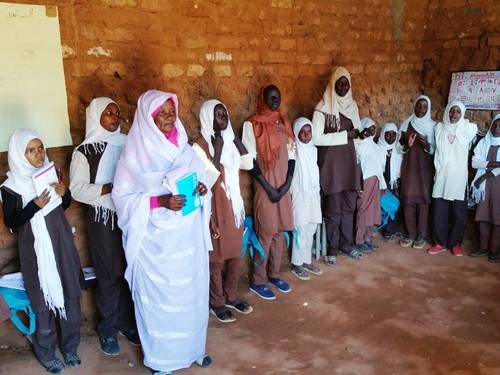
Los días 31 de octubre y 1 de noviembre la UNESCO celebró reuniones con miembros del Ministerio de Educación de Sudán y otros interesados principales con el fin de examinar la posibilidad de lanzar nuevas iniciativas que refuercen las competencias de lectoescritura y las oportunidades de aprendizaje de las niñas y las mujeres sudanesas, con una perspectiva de aprendizaje a lo largo de toda la vida.

Representantes de la Sección de Juventud, Alfabetización y Adquisición de Competencias de la UNESCO y de la Oficina de la Organización en Jartum se reunieron con la Ministra de Educación, la Sra. Souad Abdelrazig, a fin de examinar la posibilidad de reformar las actuales políticas educativas con miras a lograr un política integrada de educación nacional, que incorpore a otros ministerios, tales como los de Asuntos Sociales y Desarrollo de la Mujer, Salud, y Cooperación Internacional.

En el curso de la reunión, la Ministra hizo hincapié en la necesidad de incorporar las competencias básicas con otros conocimientos, particularmente en el sector agrícola, así como de integrar la alfabetización en programas educativos con una perspectiva de aprendizaje a lo largo de toda la vida.

También se insistió en que algunos de los ámbitos que requieren atención especial son la integración de las niñas y las mujeres en las industrias de tecnología punta y el apoyo a la labor que se lleva a cabo para colmar las lagunas existentes en las políticas educativas orientadas a las niñas y las mujeres. Asimismo hubo acuerdo en que la UNESCO y el Fondo Malala deberían examinar la posibilidad de crear centros de aprendizaje urbanos y rurales para niñas y mujeres, con especial atención a la adquisición de competencias para la vida práctica y el estudio de las asignaturas de ciencia, tecnología, ingeniería y matemáticas (STEM, por sus siglas en inglés), en una perspectiva de aprendizaje a lo largo de toda la vida.

Durante la misión, se realizó una visita a varias aulas que funcionan fuera de los centros escolares y se celebraron diversas reuniones con otros asociados, tales como la Unidad de Educación de las Niñas del Ministerio de Educación, el Departamento de Educación del UNICEF, la Cátedra UNESCO  Mujer, Ciencia y Tecnología, la Universidad Femenina Ahfad y la Unión de Mujeres.

El análisis de la situación actual de la educación de niñas y mujeres en Sudán se realizó en colaboración con la Fundación Malala para el derecho de las niñas a la educación, que apoya la ejecución de proyectos de alfabetización y enseñanza secundaria en el marco de la Alianza Mundial de la UNESCO para la Educación de las Niñas y Mujeres “Una vida mejor, un futuro mejor”.

Fuente: http://www.unesco.org/new/es/education/resources/online-materials/single-view/news/unesco_explores_opportunities_to_develop_literacy_education/


Comparte este contenido:

Nigeria is supposed to be Africa’s education base

África/Nigeria/Noviembre de 2016/Fuente: Vanguard

RESUMEN: Una consejera de educación, la Sra. Rose Omonubi ha afirmado que si la educación recibe la atención adecuada, Nigeria ahorraría enormes sumas de la fuga de capitales en el sector. El educador sostuvo además que, dada la atmósfera adecuada, se supone que Nigeria es la base de estudio para nacionales de otros países africanos. Omonubi hizo estas aseveraciones recientemente en la VIII Feria de Educación Norteamericana del Reino Unido en Lagos. La feria es una convergencia anual del Reino Unido, Canadá y Estados Unidos de América, donde los proveedores de educación primaria y post primaria convergieron. La exposición, según los organizadores, es un foro para padres y estudiantes para interactuar con los proveedores de internado y darles información sobre sus escuelas.

An Education Counsellor, Mrs. Rose Omonubi has asserted that if education receives the right attention, Nigeria would be saving huge sums from capital flight in the sector. The educationist further contended that given the right atmosphere, Nigeria is supposed to be the study base for nationals from other African countries.
Omonubi made these assertions recently at the 8th UK North American Education Fair in Lagos. The Fair is an annual convergence of UK, Canada and United States of Americ, where primary and post primary education providers converged. The exhibition, according to the organisers, is a forum for parents and students to interface with boarding school providers and give them information about their schools. “It’s a one-on-one thing for parents and their children to meet with these people”, Omonubi explained. Omonubi is the Director, NUBI Educational Counseling Limited. She also commented on some other issues bothering on Education. “I’m happy sending people abroad because Nigeria is supposed to be the study base for people from other African countries. If things are done right, no Nigerian should be seeking to study overseas. Here, if well motivated our teachers are very good. What we are grappling with today is illiteracy. Poor leadership, its illiteracy –no matter how you look at it, -whether they are in the House of Assembly, wherever they are, it’s illiteracy. “The breed of criminality in the country today – insurgency, kidnapping, militancy, Avengers or whatever, are all products of illiteracy. And the people who impoverished them are the same paying and sending them to go and commit crimes.
Those people who send them, do they not have children who they can send? “This is why I say it is all about illiteracy. Or why should someone send you to go and commit all such atrocities like bombing and killing yourself and you accept? It’s illiteracy. If they are educated and are gainfully engaged, someone cannot come to you and say, go and blow up this place, go and blow up that thing, go and blow up yourself and you’re doing it. But, they can’t think for themselves because they don’t have education. It’s a shame on the nation. She spoke on how the prevailing high exchange rate has affected the quest for overseas scholarship. According to her, it is somewhat a blessing in disguise. “Well, many oversea schools know what we’re going through presently. And they’re trying to help in different ways. Some of the schools are giving some discounts to the students. Some are even giving full scholarships. Some are giving 50 percent rebate, depending on what the school is looking out for. The local schools are not that cheap either; some go for four million, five million etc.”

Fuente: http://www.vanguardngr.com/2016/11/nigeria-supposed-africas-education-base/

Imagen de archivo
Comparte este contenido:

Hombre envenena con golosinas a 60 niños en colegios de Sudáfrica

África/Sudáfrica/11 Noviembre 2016/Primera Hora

Un hombre envenenó con golosinas a unos sesenta niños de tres escuelas del sur de Johannesburgo, que fueron ingresados con vómitos y dolores de estómago, informaron hoy a Efe fuentes de la Policía de Sudáfrica.

Dos de los niños fueron hospitalizados en estado crítico, pero su situación ha mejorado y ya han sido dados de alta junto al resto de los escolares, explicó a Efe el portavoz policial, Kay Makhubele.

El sospechoso, al que la Policía trata de identificar recabando información de los niños y del personal de los centros, y contra el que se han presentado cargos por intento de asesinato, repartió las chucherías a las puertas de los colegios.

El Departamento de Educación de la provincia de Gauteng confirmó que las gominolas llevaban sustancias dañinas para el organismo humano, aunque no proporcionó más detalles sobre su composición.

«Pedimos a los padres y a los maestros que insistan en que los niños no hablen ni interaccionen con personas desconocidas», declaró el jefe del departamento, Panyaza Lesufi, que dijo no poder entender las razones que llevan a alguien a envenenar a estos menores.

Varias ambulancias del servicio de emergencias se desplazaron hasta las escuelas para atender a los niños, después de que éstos se quejaran de dolores abdominales y náuseas.

Los menores fueron trasladados de inmediato a los hospitales del South Rand y Baragwanath, en Soweto, para recibir atención urgente.

Fuente: http://www.primerahora.com/noticias/mundo/nota/hombreenvenenacongolosinasa60ninosencolegiosdesudafrica-1187520/

Comparte este contenido:

ACNUR brinda una red de seguridad a los nigerianos en un campamento al lado del Lago Chad

Africa/Nigeria/LAGO DE CHAD, Chad, 10 de noviembre de 2016 / Fuente: (ACNUR)

Los refugiados y las comunidades de acogida luchan por salir adelante después de que miles cruzaran la frontera tras el inicio de los ataques de Boko Haram en el noreste de Nigeria

– Hawali Oumar, refugiado nigeriano despertó con el sonido de un tiroteo y su vecindario en llamas cuando Boko Haram atacó su ciudad natal en Baga, al noreste de Nigeria.

El pescador de 43 años buscó desesperadamente a los miembros de su familia y descubrió que su padre había sido asesinado. A pesar de no haber podido reunir a todos sus hijos, Oumar huyó a través de la frontera, para buscar la seguridad en Chad.

“Fue desgarrador cómo Boko Haram atacó nuestros hogares”, dijo. “Corrimos sin nada más que la ropa que llevábamos puesta. Después supe que 10 personas de mi familia extendida habían sido asesinadas. Algunos de los sobrevivientes terminaron en Camerún, otros en Chad, pero nos llevó más de un año lograr restablecer el contacto con todos”.

Más de 5.000 nigerianos han encontrado seguridad en el campamento In Dar es Salam en el lado chadiano del Lago Chad, después de huir de la terrible violencia, en diciembre de 2014. Un total de 2,4 millones de personas en el noreste de Nigeria, Camerún, Chad y Níger han sido desplazadas como resultado de la insurgencia de Boko Haram.

“Fue desgarrador cómo Boko Haram atacó nuestros hogares”.

Miles de familias están separadas y sin conocer el paradero de sus seres queridos. Oumar estaba aliviado de haberse podido reunir con Mariam, su hija de 18 años, hace dos meses. “Nunca pensé que la vería de nuevo, pero aquí estamos ya todos juntos”, dijo él. “Ella volvió a la escuela y esperamos que gradualmente podamos restaurar una vida normal”.

Mientras el ejército de Chad y un equipo de trabajo regional continúan combatiendo a Boko Haram en las provincias alrededor del lago, ACNUR, la Agencia de la ONU para los Refugiados, se enfoca en la protección, el albergue y la educación de las personas desplazadas. Esto involucra extender los programas de medios de vida y aumentar la cantidad de refugiados que se ven beneficiados de la asistencia, con el fin de retomar la actividad económica y lograr la autosuficiencia.

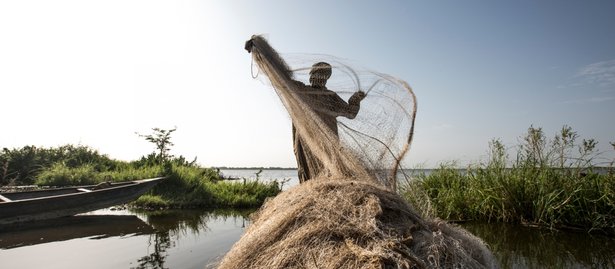
Los programas de medios de vida consisten en brindar medios para que los pescadores del lago retomen su trabajo. Hasta el momento, los beneficiarios han recibido canoas, redes y equipo básico de pesca.

El flujo de refugiados se ha estabilizado desde hace un año, pero la economía en el área del lago se ha visto dramáticamente afectada. El cierre de las fronteras de los otros tres países en la cuenca del lago (Nigeria, Camerún y Níger), ha deprimido las actividades de pesca, pastoreo y granja, y casi ha paralizado el intercambio comercial de la región. Estos son sectores vitales en Baga Sola, ciudad de acogida del campamento Dar es Sala y sus alrededores, así como de la mayoría de los refugiados que han huido a Chad para escapar de la amenaza de Boko Haram.

“No puedo volver a casa”, dijo Oumar. “Perdí a mi padre y a muchas otras personas en los ataques. Pienso en eso todo el tiempo. Se siente como si recién hubiera sucedido ayer”.

“Ahora a pesar de que me dicen que la paz está volviendo gradualmente a mi aldea, prefiero quedarme en Chad. Tengo miedo de volver después de todo lo que he visto y experimentado”.

Debido a la volatilidad de la región y el poco prospecto de que los refugiados vuelvan a sus hogares, ACNUR espera aumentar los programas de medios de vida para los refugiados en el campamento y para las comunidades de acogida en Bagasola y sus alrededores.

Hasta ahora, ACNUR ha asistido a 150 hogares con botes y materiales de pesca. Los beneficiarios ganan en promedio $10 dólares por semana, lo que les ayuda a sustentar a sus familias. Sin embargo, el programa únicamente cubre a un 8 por ciento de los refugiados en el campamento y los alrededores de Baga Sola.

“Perdí a mi padre y a muchas otras personas en los ataques. Pienso en eso todo el tiempo”.

Es necesario más financiamiento para poder incluir a pescadores, agricultores y pastores de las comunidades locales y refugiadas.

Oumar es uno de los beneficiarios. “Estoy agradecido por recibir las herramientas para poder retomar mi trabajo”, dijo. “Yo soy pescador, así que si pude sobrevivir con la pesca en Nigeria, puedo hacerlo en Chad. Pero si tuviéramos más personas trabajando, redes más grandes y mejor equipo, rápidamente podríamos independizarnos de la ayuda, impulsar a todo el pueblo, refugiados y locales juntos, y poder salir de la depresión económica”.

Para ACNUR y sus socios, dar los apoyos de medios de vida con el fin de que los limitados recursos en Baga Sola sean compartidos, es esencial para lograr la sostenibilidad y cohesión entre refugiados y comunidades de acogida. Se ha llevado a cabo una encuesta para registrar las habilidades y profesiones previas de los refugiados.

De acuerdo con Docteur Koussoumbi, asociado de medios de vida en la oficina de ACNUR en Baga Sola, el programa de auto suficiencia ha sido exitoso para los 150 hogares que se han visto beneficiados hasta ahora. Ahora ellos cuentan con experiencia en todos los aspectos de la pesca, desde operar equipos hasta vender y distribuir los productos.

“Estoy agradecido por recibir las herramientas para poder retomar mi trabajo”.

“Ahora el reto es doble”, dijo él. “Primero, involucrar a más hogares en el programa y brindarles las canoas y herramientas básicas para empezar la actividad. Segundo, satisfacer las necesidades de los actuales beneficiarios, cuyas operaciones han ido muy bien, por lo que necesitan botes y redes más grandes para aumentar el resultado y hacer esfuerzos para lograr la autosuficiencia. Estamos poniéndole atención a estos puntos, pero también nos estamos enfrentando con un serio faltante de fondos”.

El cambio climático también está teniendo un profundo efecto en las comunidades cercanas al Lago Chad, incluyendo a los refugiados. Debido a la vulnerabilidad del medio ambiente en el lago y a la fluctuación de las precipitaciones, los programas de medios de vida son una prioridad para la comunidad humanitaria, tanto en políticas como en financiamiento.

La superficie del lago se redujo a menos de una veinteava parte con respecto a su tamaño en la década de 1960 y las especies de plantas invasoras cubren alrededor del 50 por ciento de lo que queda. La vegetación se arraiga en el suelo del lago durante las estaciones secas y cuando el nivel del agua sube después de la lluvia, bloquea la costa, impidiendo que las comunidades naveguen con sus botes.

«Este es un nuevo fenómeno preocupante», dijo Koussoumbi. «Cada vez es más difícil para los pescadores salir al lago. Las plantas también rompen las redes e interrumpen las actividades pesqueras”.

Comparte este contenido:

La educación de las niñas es un antídoto contra la violencia

Por: Valeria Méndez de Vigo 

Se cumple ahora un mes del secuestro de 276 niñas y jóvenes de una escuela de Chibok, en el Estado de Borno, al noroeste de Nigeria, por el grupo terrorista Boko Haram. Los medios de comunicación se han hecho eco de la estremecedora noticia y las redes sociales se han llenado de fotos de numerosas personalidades con el hashtag Bring back our girls. No se trata de un caso aislado, sino que son muchos los casos en los que la educación es objeto de violencia, como señala UNESCO en su Informe Una crisis encubierta: conflictos armados y educación.

Sin llegar a esta violencia tan radical y explícita, todavía hoy hay 57 millones de niños y niñas- 31 millones son niñas- que no tienen acceso a la educación. Solo en Nigeria, hay diez millones de menores sin escolarizar- el 44% son niñas-. De las 774 millones de personas analfabetas en el mundo, dos tercios son mujeres. Tal y como señala UNESCO, sólo el 20% de los países de bajos ingresos tienen igual número de niñas que de niños en primaria. En Sudán del Sur, por ejemplo, una joven tiene el triple de posibilidades de morir de parto que de finalizar la primaria.

Pero estas niñas y jóvenes de Chibok iban a la escuela, sobreponiéndose a obstáculos prácticamente insalvables como la pobreza, el trabajo en el hogar, las prácticas sociales discriminatorias y los entornos inseguros y violentos. Y han sido víctimas de la violencia por ejercer el derecho a esa educación que les permitirá aumentar sus ingresos en el futuro, obtener un trabajo, evitar los matrimonios tempranos, espaciar los embarazos, ser conscientes de sus derechos o participar en las decisiones que les afectan. En definitiva, transformar sus vidas y las de sus comunidades. Por ello, la violencia contra ellas supone un ataque contra cualquier atisbo de transformación individual o colectiva.

¿Cómo se puede promover la educación de las niñas en condiciones de seguridad y equidad en Nigeria y en otros países del mundo?

Es evidente que el gobierno de Nigeria y la comunidad internacional deben hacer todo lo posible para rescatar a las niñas y jóvenes secuestradas y establecer los sistemas y mecanismos necesarios para que estos delitos no queden impunes. También deben asegurar la protección de las niñas y garantizar su derecho a la educación gratuita y de calidad. En Nigeria y en otros países hay que destinar la suficiente inversión y aplicar incentivos y becas para niñas y jóvenes. Hay que tomar medidas para que las escuelas sean lugares accesibles, seguros y libres de violencia. Es necesario propiciar que las escuelas sean espacios de aprendizaje con calidad y con equidad y procurar formación a docentes para que sean sensibles a las cuestiones de género, contratar a maestras que puedan servir como modelos y eliminar los estereotipos sexistas de los currículos, los materiales de enseñanza, las prácticas docentes o la gestión de las escuelas.

No hay nada más transformador de una realidad injusta, no hay mayor antídoto contra la violencia y la sinrazón, que la educación de las niñas y las mujeres. Como bellamente expone Malala Yousefai, la joven activista pakistaní tiroteada por los talibán por ejercer su derecho a la educación: «Libremos una gloriosa lucha contra el analfabetismo, la pobreza y el terrorismo, levantemos nuestros libros y nuestros lápices, pues son las armas más poderosas. Una niña, una maestra, una pluma y un libro pueden cambiar el mundo. La educación es la solución«.

[Pueden leer más sobre este asunto ene l informeLas niñas a clase. Una cuestión de justicia, publicado por Entreculturas en 2011.]

Fuente: http://elpais.com/elpais/2014/05/14/3500_millones/1400043600_140004.html

Comparte este contenido:
Page 412 of 622
1 410 411 412 413 414 622