Page 589 of 772
1 587 588 589 590 591 772

India: Prime Minister Modi reviews progress of education, literacy grievances resolution

Asia/India/28 de Agosto de 2016/Fuente: The Indian Express

RESUMEN: El Primer Ministro Narendra Modi presidió su interacción XIV a través de Pragati – la plataforma multimodal basado en las TIC para el gobierno pro-activa. El presidente del Gobierno revisó el progreso hacia el manejo y resolución de quejas relacionadas con la educación escolar y la alfabetización. Dijo que ahora hay una expectativa entre la gente, que el Gobierno estará en condiciones de resolver estas quejas. El primer ministro pidió específicamente funcionarios competentes para sistematizar las medidas adoptadas por ellos para atender las quejas de los estudiantes. Él les dio instrucciones para utilizar todas las herramientas tecnológicas disponibles para asegurar que los escolares no se enfrentan inconvenientes. A modo de ejemplo, recordó sus instrucciones anteriores para todos los Ministerios para el uso extensivo de la tecnología espacial. Dijo que esto podría ayudar en la ubicación correcta de los centros de examen, para reducir al mínimo las dificultades de acceso para los estudiantes. Revisar el progreso de la Sugamya Bharat Abhiyan, el Primer Ministro fue informado de los progresos realizados en la mejora de la accesibilidad en las escuelas, edificios públicos y estaciones de ferrocarril, etc.

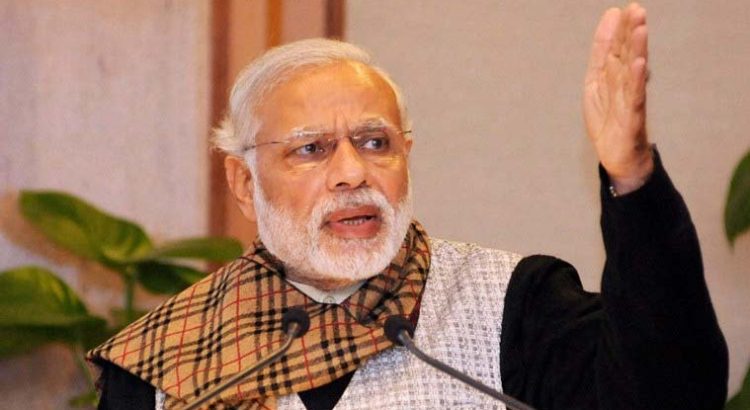
Prime Minister Narendra Modi on Wednesday chaired his fourteenth interaction through PRAGATI – the ICT-based, multi-modal platform for Pro-Active Governance and Timely Implementation. The Prime Minister reviewed the progress towards handling and resolution of grievances related to school education and literacy.

He said that there is now an expectation among the people, that the Government will be able to resolve these grievances. The Prime Minister specifically asked concerned officials to systematize the measures being taken by them to address grievances of students.

He instructed them to use all available technological tools to ensure that school-children do not face inconvenience. As an illustration, he recalled his earlier instructions to all Ministries for extensive use of space technology.

He said this could help in proper location of examination centres, to minimize difficulties in access for the students. Reviewing the progress of the Sugamya Bharat Abhiyan, the Prime Minister was apprised of progress made in improving accessibility in schools, public buildings and railway stations etc.

He appreciated the sensitivity that has been shown in this regard by various departments of the Central and State Governments. During an appraisal of the progress of Aadhaar enrolment, it was noted that overall enrolment is now close to 105 crore, and special attention is being given to the North-Eastern States which are lacking in this regard.

The Prime Minister urged States to accelerate enrolment among children in the 5 to 18 age-group so that scholarships and other educational benefits become more accessible to them.

The Prime Minister also reviewed the progress of vital infrastructure projects in the road, railway and power sectors, spread over several states including Punjab, Himachal Pradesh, Karnataka, West Bengal, Jammu and Kashmir, Uttar Pradesh, Andhra Pradesh, Sikkim and Maharashtra. Among the projects reviewed was Nangal Dam – Talwara Railway line, which was first sanctioned in 1981-82, and has been pending since then. The Prime Minister impressed upon the Chief Secretaries of Himachal Pradesh and Punjab, the need to facilitate works at the ground level, so that further delay in this project may be avoided.

Fuente: http://indianexpress.com/article/india/india-news-india/prime-minister-modi-reviews-progress-of-education-literacy-grievances-resolution-2994247/

Comparte este contenido:

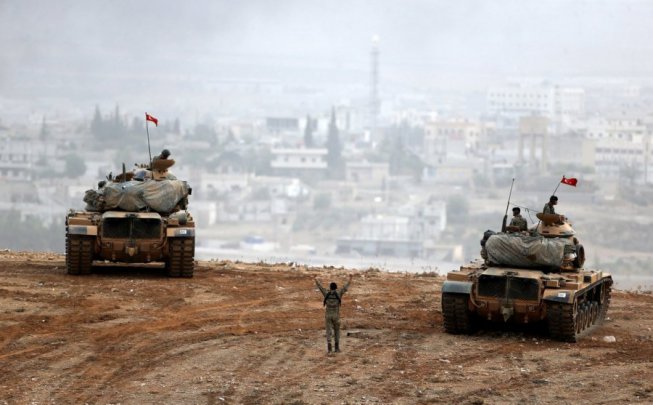
Turkey launches ground operation in Syria

Asia / Turkía / 28 de agosto de 2016 / Por: Mehmet Yılmaz Istambul

Although Turkish army claims to be fighting ISIS to legitimize the invasion, its real objective is to stop the advance of Kurdish militia, the only progressive force on the ground.

In a critical development in the Syrian civil war, the Turkish army and allies began a ground incursion towards the Syrian border city of Jarablus on the morning of August 24. Turkish artillery and jets, supported by US military advisers, warplanes and drones, started pounding ISIS targets at around 4 a.m. local time. This was followed by a land operation at 11 a.m. by Turkish special forces and tanks, as well as 1,500 Syrian radical Islamist fighters. These fighters, according to BBC Turkish, were brought a few days ago from Idlib by Turkish officers and grouped on the Turkish side of the border.

As of the writing of this piece, invading forces are advancing surprisingly rapidly, conquering village after village, and have already captured Jarablus as of at around 7 p.m. local time with only one casualty. Indeed, Kurdish sources argue that this is a mock fight, as ISIS is evacuating its troops from Jarablus, which has become a burden for it after the loss of Manbij.

Although the Turkish army is now vowing to «completely wipe out» ISIS, the real aim of the operation is to preempt an attack by the Kurdish militia towards Jarablus. Following recent victories against ISIS, culminating in the liberation of Manbij on August 12, the Kurdish YPG (Peoples’ Defense Units) and allies control a very large part of northern Syria, with the exception of the swathe of land between Jarablus and Marea. The US wanted them to march on ISIS’ main base in Raqqa, however, Kurds announced the establishment of military councils to liberate Jarablus and Al-Bab, so as to unite their cantons in the north.

Turkey vs ISIS?

Despite all its rhetoric, the Turkish government does not really see ISIS as an enemy. ISIS has controlled Jarablus since July 2013, and so far, it had never occurred to Turkey to launch an operation. On the contrary, Turkey perceived ISIS as a bulwark against the Kurdish militia. Numerous regional and Western journalists have indicated that Turkey is supplying arms and materials to ISIS, and buying crude oil from the group to be processed in state refineries. Turkey also supports other radical Islamist groups part of the so-called Army of Conquest, which are now in control of the Idlib province and southern Aleppo. The ground forces that now march on Jarablus hail from these radical Islamists, such as Sham Legion and Noureddin Zenki Movement, which decapitated a child on video last month, although they are described as “Free Syrian Army” -the existence of which is disputed by many.

So Turkey simply wants to replace one radical Islamist group, unable to stop the Kurdish forces, with others under its direct control. It is not an operation against “terrorists”, but simply a maneuver to block the advance of the most progressive force in Syria, the Kurdish militia.

Indeed, Syrian Kurdish leader Saleh Muslim wrote on his Twitter account, “Turkey is now in the Syrian quagmire, and will be defeated like ISIS.” In response, Turkish Foreign Minister threatened that Kurds have to abandon Manbij and retreat to the east of Euphrates, or else “face our ‘hammer-like’ response.”

Holy union against the Kurds

In fact, not only Turkey but the major forces involved in Syria seem to have turned their back on the Kurds following their latest gains.

US Vice President Joe Biden arrived in Turkey on Wednesday, and stated that the US supports Turkey’s position, demanding Kurdish forces to abandon Manbij. So far US warplanes had backed the Kurdish militia, the only force capable of stopping ISIS on the ground. Yet the US is also aware that the Kurdish advance risks alienating its NATO ally, Turkey. In fact, after the failed coup of July 15 against the Turkish government, the Turkish president Erdoğan had implied that US could be behind the coup, and the relations between the two countries had soured. It may be argued that the US has now decided to allow Turkey to invade Jarablus before the Kurds, to prevent a further Turkish pivot towards Iran and Russia (and also to check the power of the Kurds).

Even before the failed coup attempt, Turkey had started to cozy up to Russia and Iran, apologizing for downing a Russian plane in November 2015. Right after the coup attempt surfaced, Iranian diplomats called Erdoğan to announce their full support, even as their American and European colleagues waited to see which side would prevail. The seasoned Iranian diplomats are cognizant that Assad’s ground forces are exhausted — as can be seen in Hasakah or Aleppo — and that they eventually need to strike a deal with Turkey, one of the main backers of radical Islamists in Syria. Iran and Turkey also share a common animosity against the rising influence of Syrian Kurds, which could encourage their own Kurdish subjects. On the other hand, some journalists suggest that Russia does not want Assad to fully prevail against the Islamist opposition, since the continuity of a low-intensity conflict would indeed give Russians the perfect pretext to maintain their military presence in Syria—just like in the Caucasus region. As a result, Russia and Iran may have given the green light to a limited Turkish incursion, even though they have officially stated their concerns over Turkey’s ground operation.

There was intense shuttle diplomacy between Turkey, Iran and Russia in recent weeks, during which the Turkish government implied that it could now accept a transition with Assad. This was followed by Syrian air and land forces’ attacks (which failed bitterly) on the Kurdish-controlled town of Hasakah, the first major regime assault against the Kurds since the beginning of the conflict. Meanwhile, ISIS organized a suicide attack in the town of Gaziantep in Turkey, killing 54 people in a Kurdish wedding ceremony. Turkish intelligence knew the plans for such an attack, yet did not take any action to prevent it.

Erdoğan’s nationalist bloc

The war against the Kurds also serves Erdoğan’s domestic policy purposes. Despite the extensive purge in the state apparatus following the coup attempt, Erdoğan has implied that he still does not have full confidence in some sectors of the general staff and the national intelligence service. Precisely for this reason, Erdoğan chose to improve his relations with the bourgeois opposition (center-left CHP and ultra-nationalist MHP), virtually creating a nationalist bloc which culminated in a demonstration attended by one million people in Istanbul. Many ‘opposition’ MPs, far from criticizing the state of emergency declared by Erdoğan, instead employ his arguments accusing the coup-plotters of every problem in Turkey.

As such, a military maneuver towards the Syrian Kurdish provinces is also an effective way for Erdoğan to bolster this nationalist bloc within Turkey, and pave the way for the constitutional transition to an authoritarian presidential system. Unsurprisingly, CHP and MHP leaders expressed their full support of the military invasion.

However, although Turkey thinks that it can easily have its way, a direct military involvement in the Syrian civil war brings huge risks. There is already a strong presence of radical Islamist groups on the Turkish side of the border. The invasion of Syrian Kurdistan will further fuel the anger of Turkey’s Kurds towards the state. As such, the road seems to be opened for an escalation of inter-ethnic tension and conflict within Turkey as well.

Fuente: http://www.leftvoice.org/Turkey-launches-ground-operation-in-Syria

Comparte este contenido:

Diez puntos claves para tener un ambiente escolar seguro

Por:  EL TIEMPO

Estos aspectos son fundamentales para propiciar un rendimiento adecuado en los estudiantes.

Según expertos, estos puntos son fundamentales para propiciar un buen ambiente escolar.

1. Fomentar el respeto

 El psicólogo Charles Yáñez asegura que promover el respeto en el aula de clase –no solo de estudiante a docente, sino también viceversa– es la clave para alcanzar un buen ambiente en las instituciones y una formación integral de los alumnos.

2. Dar importancia a los estudiantes y reconocer sus problemas

La doctora Astrid Triana afirma que es fundamental que los docentes reconozcan que sus alumnos son personas que sienten y tienen problemas, y deben estar dispuestos a escucharlos y ayudarles a resolver dudas e inconvenientes.

3. Involucrar a los padres de familia

Según indican estudios, el acompañamiento de los padres a sus hijos es vital. Es necesario que conozcan los miedos, puedan reconocer comportamientos extraños en los niños y sepan sobre los peligros a los que pueden estar expuestos.

4. Espacios para quejas y denuncias

Debe existir en los colegios un espacio, bien sea virtual o personal, para que los niños se expresen frente a situaciones que les incomodan o los intimidan en el colegio.

5. Proyectos estructurados sobre el acoso escolar

Docentes y directivos deben establecer planes de acción frente a situaciones de acoso y abuso escolar, para proteger a los estudiantes.

6. Educar sobre la inteligencia emocional

Los niños deben aprender a reconocer sus sentimientos y necesidades; y los docentes, a entenderlos, pues cada alumno es un mundo diferente.

7. Valorar al estudiante

Los docentes deben entender que no todos sus alumnos tienen las mismas capacidades para llevar a cabo sus tareas, por lo que es importante valorar el esfuerzo de cada alumno.

8. Estrategias para detectar problemas

Las instituciones deben tener proyectos que permitan identificar rápidamente situaciones problemáticas y de riesgo para los estudiantes, y poder actuar de inmediato.

9. Proyectos de convivencia

Se deben desarrollar proyectos encaminados a fomentar una buena convivencia entre los estudiantes y promover el respeto por la diferencia.

10. Políticas de Estado

Proyectos gubernamentales que garanticen educación de calidad para todos.

Fuente: http://www.eltiempo.com/estilo-de-vida/educacion/consejos-para-tener-un-buen-ambiente-escolar/16678867

Comparte este contenido:

Vietnam:Provincia de Bac Giang experimenta enseñanza bilingüe de matemática

Asia/Vietnam/28 Agosto 2016/Fuente y Autor: vietnamplus

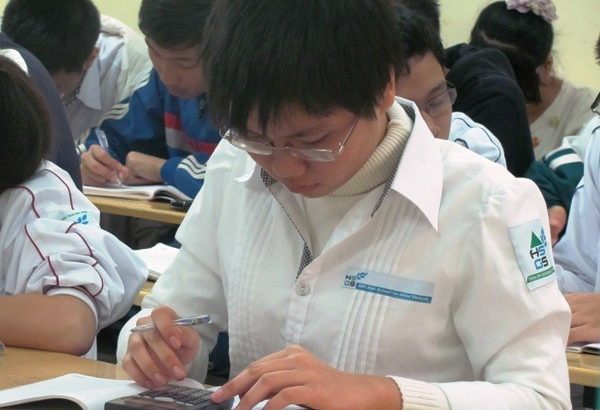
El sector educacional de la provincia norteña de Bac Giang experimentará la enseñanza bilingüe de matemática, en vietnamita e inglés, en algunos bachilleratos a partir del curso académico 2016- 2017.

El vicedirector del Servicio local de Educación y Formación Tran Tuan Nam dijo que las escuelas seleccionadas deben organizar cursos de capacitación a sus maestros y crear clubes de intercambio para alumnos y profesores.

De acuerdo con el funcionario, las escuelas pueden optar diferentes métodos de enseñanza y elaborar sus planes de estudio adecuados con sus condiciones para facilitar las labores de profesores y alumnos.

También se extenderá esa enseñanza a otros bachilleratos y escuelas secundarias en la localidad, si el modelo alcanza resultados positivos en los centros docentes beneficiados, informó.-VNA


Fuente de la noticia: http://es.vietnamplus.vn/provincia-de-bac-giang-experimenta-ensenanza-bilingue-de-matematica/65468.vnp

Fuente de la imagen:  http://img.es.vietnamplus.vn/Uploaded/KG1/2016_08_28/hoc_sinh_trung_hoc_1.jp

Comparte este contenido:

Camboya: Despliegan más de 1.500 policías para que los estudiantes no copien

Asia/Camboya/28 Agosto 2016/Fuente:El País /Autor: Phnom Penh

En los últimos años se han registrado casos de sobornos de los alumnos a los profesores para que no informaran de esta infracción

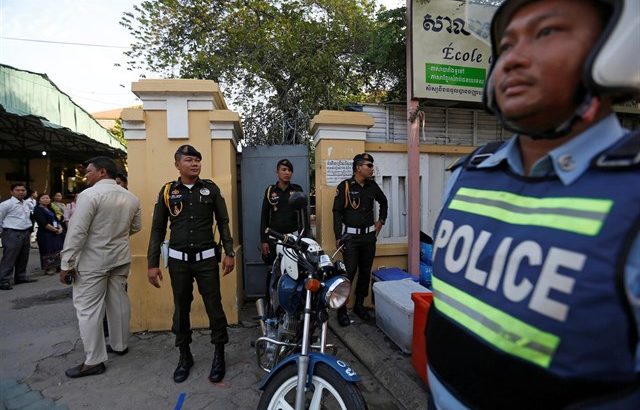
Camboya ha desplegado este lunes 1.570 policías en los centros donde se celebran los exámenes del último curso de instituto en todo el país. El Gobierno ha lanzado este dispositivo en el marco de una campaña contra los sobornos y la corrupción en el sistema educativo. En los últimos años ha habido casos en los que los estudiantes sobornaban a profesores para que ignoraran que habían copiado. Este año 93.755 estudiantes harán las pruebas finales antes de ir a la universidad.

Los centros han sido acordonados por la policía en la capital, Phnom Penh, y los estudiantes han sido registrados para evitar el uso de ‘chuletas’ y de teléfonos móviles. «Estamos haciendo esto para garantizar la transparencia y la calidad en el sistema educativo», ha explicado Ros Salin, portavoz del Ministerio de Educación.

San Chey, director ejecutivo del grupo activista Red Afiliada para la Rendición de Cuentas Social de Camboya, ha defendido que copiar está muy arraigado en el sistema educativo de Camboya. «Antes, los sobornos en los exámenes y las filtraciones de exámenes se hacían abiertamente, lo que ayudó a que aumentaran las tasas de aprobados», ha explicado.

La campaña del Gobierno contra esta práctica ha supuesto que el número de aprobados se hayan reducido en los últimos años. En 2014, la tasa de aprobados en el examen del último curso de instituto se vio reducida a la mitad hasta el 40,67% y en 2015 se situó en el 55,87%, según las cifras del Ministerio de Educación.

«Llamo a todos los estudiantes a estudiar duro para los exámenes y a no llevar ningún documento o aparato electrónico a los lugares de examen», ha apuntado el ministro de Educación, Hang Chuon Naron. «Si hay violaciones, seréis suspendidos automáticamente».

Fuente de la noticia: 

http://internacional.elpais.com/internacional/2016/08/22/actualidad/1471853685_306239.html?id_externo_rsoc=FB_CC

Fuente de la imagen: http://img.europapress.net/fotoweb/fotonoticia_20160822095651_640.jpg

Comparte este contenido:

Estudiantes crean bacteria que come el plástico de los océanos y lo transforma en agua

28 Agosto 2016/Fuente:ecocosas /Autor:  RAUL MANNISE

La contaminación en los océanos es un problema muy grave. De acuerdo con estudios recientes, es probable que en el 2050 encontremos más plástico que pescado en las aguas marinas. Y es por esto que hay muchas personas trabajando en soluciones, algunas muy imaginativas para revertir esta situación.

Pues bien, la novedad del momento es una bacteria, desarrollada por las estudiantes  Miranda Wang y Jeanny Yao. Quienes llevan trabajando desde sus años escolares en esta idea  y hoy pueden cosechar los frutos. Ya cuentan con dos patentes, y han conseguido un financiamiento inicial de 400mil dolares para comenzar a desarrollar el producto. Todo ello con tan solo veinte años!

Ya suman cinco premios gracias a su investigación, se hicieron famosas al ser las más jóvenes en ganar el premio de ciencia Perlman. Todo gracias a sus pequeñas bacterias capaces de convertir plástico en CO2 y agua. La tecnología se utiliza de dos maneras: para limpiar las playas y también para producir materias primas para prendas de vestir.

“Es prácticamente imposible hacer que la gente deje de usar plástico. Necesitamos una tecnología para romper el material. Y que todo se vuelva biodegradable “, dijo Wang.

El desarrollo de la tecnología consta de dos partes. En primer lugar el plástico es disuelto y las enzimas lo catalizan con lo que el plástico se transforma en fracciones sumamente maleables Estos componentes se colocan en una estación biodigestora, donde se compostan como si fuesen restos de comida. El proceso se lleva a cabo en tan solo 24hs, para pasar de plástico a agua, realmente prometedor!

Fuente de la noticia: http://ecocosas.com/noticias/bacteria-que-come-el-plastico-de-los-oceanos-y-lo-transforma-en-agua/#forward

Fuente de la imagen: http://ecocosas.com/wp-content/uploads/2016/07/bacteria-plastico.jpg

Comparte este contenido:

India: Delhi schools offer safe space for children to speak up about sexual abuse

Asía/India/28 Agosto 2016/Fuente: theguardian/Autor: Amrit Dhillon

Resumen: La mitad de la población estudiantil en la capital de la India sufren abuso, un tema tabú en muchos hogares. Ahora la policía están visitando escuelas para animar a los niños a denunciarlo. En el salón de actos cavernosa en la escuela pública Victor en el barrio de Delhi Shahdara, cientos de alumnos se sientan con las piernas cruzadas en el suelo para ver una historia de siete años de edad, Komal.

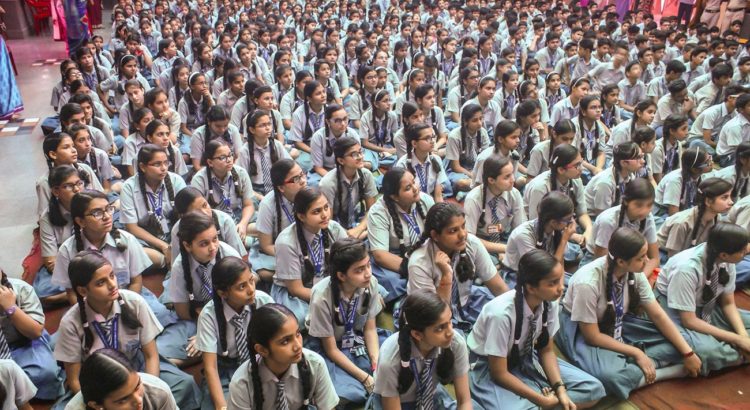
In the cavernous assembly hall at Victor public school in the Delhi suburb of Shahdara, hundreds of pupils sit cross-legged on the floor to watch a story about seven-year-old Komal.

Komal’s parents become friendly with a new neighbour. He treats her affectionately and her parents tell her to call him Bakshi Uncle. He gives her sweets. He plays hide-and-seek with her. Then he plays another “game” that leaves her feeling dirty. The video concludes with an explanation about the difference between “good” and “bad” touches.

Two female police officers then talk to the children about sex and sexual abuse.

The session is part of Project Nirbheek (meaning fearless in Hindi), launched in 556 schools in the north-east district of the city in August last year to raise awareness of child abuse and give youngsters a safe environment in which to speak out.

As well as the video and weekly visits by police officers, children can confidentially post any experiences of abuse or concerns they have in dropboxes installed in each school.

India has laws against child abuse, but implementation and knowledge of them are problematic.

“I realised we had to take the law into the classroom and create an atmosphere that allows children to invoke the law, otherwise the laws are pointless,” says the deputy commissioner of police, Veenu Bansal, who devised the project.

In the first six months, the police received more than 5,000 written and verbal complaints of abuse. Encouraged by the overwhelming response, Delhi police extended the programme to all schools in the capital.

“For the first time, children have a non-frightening way of reporting abuse in the familiar environment of school,” says Mukesh Kumari, one of the police officers visiting Victor public school.

Many of the children tell her that they thought adults would punish them if they talked about such “shameful” things. “Even I felt uneasy at first. It’s just not something we Indians talk about,” says Kumari.

During the session, many pupils look embarrassed. “In our house we don’t talk about such things. My father would slap me if I talked about this,” says 12-year-old Neelam Sharma.

But others were less timid. Two girls speak to Kumari and her colleague, Preeti Tomar, to complain about rowdy youths standing outside the school gates as they leave, directing obscenities at them. Another says she doesn’t like the way the auto-rickshaw driver who drives her home insists she sit close to him even when there is space on the back seat.

Across the city, one or two female police officers visit a school every week, wearing a Nirbheek armband. The police have so far interacted with more than 1 million children and installed complaint boxes in more than 1,500 schools.

Stalking, lewd comments by shopkeepers, inappropriate behaviour by auto-rickshaw drivers, and youths loitering outside the school propositioning girls are common complaints.

In many cases, it is relatively easy for the police to take prompt action against the lesser forms of harassment. If it’s a stalker, a visit to his home to speak to his family usually works. An auto-rickshaw driver can be warned. If it’s a teacher, the school authorities act to discipline, suspend or sack him. The more serious cases require a police investigation. The police have filed formal charges in 11 cases of sexual abuse so far in the north-east district alone.

The only statistics on child sex abuse (pdf) in India are from a 2007 government survey that showed half of children under the age of 18 had suffered some form of sex abuse, ranging from rape to fondling and forced kissing.

“I think the 2007 figure is an eye-opener and the actual problem may be much larger,” Bansal says. “From what I see, a very large number of girls face abuse at some stage in their lives. It’s grim. It happens under everyone’s nose. How can we let our girls, one-quarter of our population, be damaged for life by sexual abuse?”

Bansal enlisted the support of the Recovery and Healing from Incest Foundation (Rahi), an NGO that works with child abuse survivors to train police officers. About 500 have been trained so far.

“It has to be handled sensitively because the social and family dynamics can be so complex. They need to understand these aspects because it will shape their response. It’s great that the police are not waiting for cases to be registered but are being proactive,” says Rahi’s founder, Anuja Gupta.

Tomar admits to being deeply distressed hearing some complaints. “A father had been raping his daughter for years. When she told her mother, the mother said, ‘Just the way I’ve tolerated these things, you will have to tolerate it too.’ After the girl reported the abuse through the dropbox, the mother tried to force her to withdraw it but the girl refused,” she says.

In another case, says Bansal, a maths teacher had been assaulting girls for many years, touching them inappropriately when alone in the classroom. After two girls put a complaint in the dropbox, the other teachers sided with him and tried to bully the girls into retracting the allegation. But the police contacted ex-pupils who said they would testify against the teacher even if the two girls retracted their statements. The teacher is in police custody.

The success of Nirbheek in Delhi has come to the attention of Maneka Gandhi, minister for women and child development, and plans are being made to roll it out nationally using e-dropboxes, which will be hosted on the National Commission for Protection of Child Rights website.

Critics, though, say it’s not the police’s job to talk about sex abuse, and argue for sex education in schools.

Sex education is banned in 13 states and non-existent in the remaining 16. Because of ignorance, children usually don’t even know they are being abused. And the cultural pressure to respect and obey older relatives adds to their reluctance to speak out.

Fuente de la noticia: https://www.theguardian.com/global-development/2016/aug/22/children-start-talk-about-sexual-abuse-india-delhi-schools-offer-safe-space

Fuente de la imagen:

https://i.guim.co.uk/img/media/6d21c890f462075def9723b1fc1ed4c3d4f16617/0_0_2896_1738/master/2896.jpg?w=1300&q=55&auto=format&usm=12&fit=max&s=e5eca8f92853da4ecda074938904b04c

Comparte este contenido:
Page 589 of 772
1 587 588 589 590 591 772