Page 418 of 622
1 416 417 418 419 420 622

La formación profesional de calidad en la escuela proporciona mejores empleos a los estudiantes en Zambia

Africa/Zambia/30.10.2016/Autor y Fuente:http://www.unesco.org/

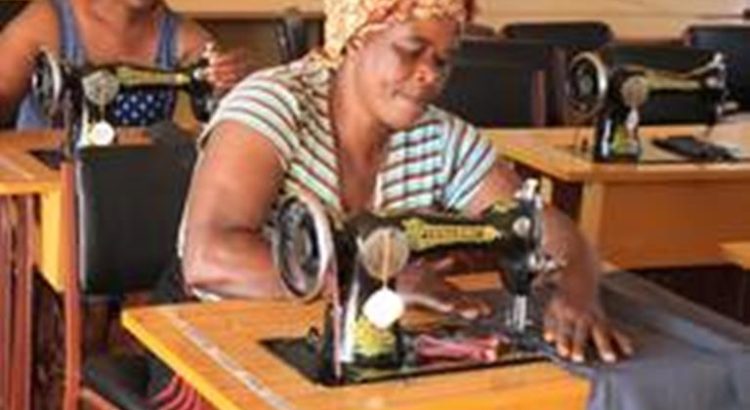
Cada año, unos 300.000 alumnos dejan los estudios en Zambia y muy pocos de ellos consiguen ingresar luego en cursos de EFTP. El proyecto de la UNESCO, que forma parte del Programa Mejor Educación para el Renacer de África (BEAR por sus siglas en inglés), aborda el problema mediante la incorporación de la formación profesional a los planes de estudios de la enseñanza secundaria.

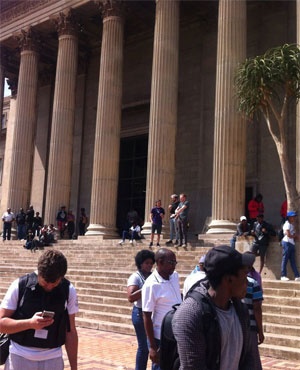
Estudiantes y jóvenes adultos que habían dejado los estudios participaron en un proyecto que se llevó a cabo en una escuela secundaria y un centro de aprendizaje y aumento de capacidad (CABLAC) del sur de Zambia, en el que obtuvieron diplomas de carpintería, construcción, metalurgia, fontanería, diseño y sastrería, entre otros.

El director de la escuela secundaria, Jericho Nzima, explicó las ventajas de combinar la formación profesional con el programa ordinario de estudios.

“Antes de que el Proyecto BEAR se aplicara en este centro, teníamos algo así como un sistema educativo de dos niveles, pero los índices de matrícula eran muy bajos. Con la introducción del proyecto hemos alcanzado un gran número de alumnos en nuestro programa de formación profesional”.

La escuela también otorgó diplomas a 50 pasantes que habían adquirido experiencia profesional empírica, pero carecían de instrucción formal o capacitación en sus especialidades respectivas. Al otorgar esta garantía en forma de un certificado oficial, los alumnos alcanzaron la condición de obreros calificados, lo que amplía sus oportunidades de empleo en sus comunidades.

Cursos de alfabetización como parte de la formación profesional

En el CABLAC del sur de Zambia los adultos que habían abandonado los estudios tuvieron la oportunidad de aprender oficios como diseño, corte y costura, en el marco del Proyecto BEAR, pero los cursos de alfabetización de adultos eran una condición indispensable para poder matricularse.

La coordinadora docente y tutora de alfabetización Tina Mtonga declaró: “Antes de comenzar el proyecto, realizamos una encuesta comunitaria con la TEVETA (Autoridad de capacitación técnica, profesional y empresarial) y descubrimos que la mayoría de los candidatos que habíamos entrevistado eran analfabetos”.

La Sra. Agness Bwalya Kaulwe dijo que se sentía muy feliz de recibir un diploma de diseño y alfabetización a sus 47 años de edad.

“Tras haber abandonado los estudios hace tantos años y sin posibilidad de ampliar mi educación, me complace estar aquí, en CABLAC, porque aprendo inglés y aritmética. Esto significa que podré comunicarme de manera más eficaz y gestionar mejor mi hogar y mi negocio, porque además nos enseñan técnicas empresariales”.

Treinta y una alumnas participaron en la primera edición del curso de diseño, que tuvo un efecto positivo en la comunidad.

“Estamos viendo muchos cambios, empezando por los alumnos de la escuela, porque la mayoría de ellos son los padres de nuestros propios alumnos (en la enseñanza primaria). Vemos respuestas positivas, porque se ha puesto de relieve la importancia de la educación”, afirmó la Sra. Mtonga.

El Proyecto BEAR cuenta con el apoyo financiero del gobierno de la República de Corea, que tiene por objeto ayudar a los países de la SADC [Comunidad para el Desarrollo del África Meridional, formada por Botswana, la República Democrática del Congo, Malawi, Namibia y Zambia] para que mejoren sus sistemas de EFTP. Desde 2011 el proyecto ha puesto en marcha programas sectoriales mediante iniciativas conjuntas con los sectores público y privado.

La UNESCO – Cedefop Global Skills Conference [Conferencia UNESCO-Cedefop sobre competencias a escala mundial] tendrá lugar en la Sede de la UNESCO en París, los días 20 y 21 de octubre de 2016, y en ella se examinará el tema “Competencias, empleos y desarrollo sostenible: Tendencias mundiales y problemas locales”.

Fuente:

http://www.unesco.org/new/es/education/resources/online-materials/single-view/news/quality_skills_training_at_school_opens_the_door_to_better_w/#.WAx5teXhAtt

Imagen: http://www.unesco.org/new/typo3temp/pics/b34c56081e.jpg

Comparte este contenido:

Kenya: Education Ministry sets tough measures to curb exam cheating

África/Kenya/30 Octubre 2016/Fuente:capitalfm /Autor:Simon Ndonga

Resumen: El Ministerio de Educación ha anunciado medidas más duras para frenar el engaño, que incluyen la prohibición de las cajas geométricas y portapapeles.  Las medidas anunciadas por el secretario del gabinete Educación Fred Matiang’i junto con su TIC y las contrapartes de Seguridad Interna Joe Mucheru y José Nkaissery también incluyen la prohibición de las tablas matemáticas y calculadoras para los exámenes que no requieren de ellos.

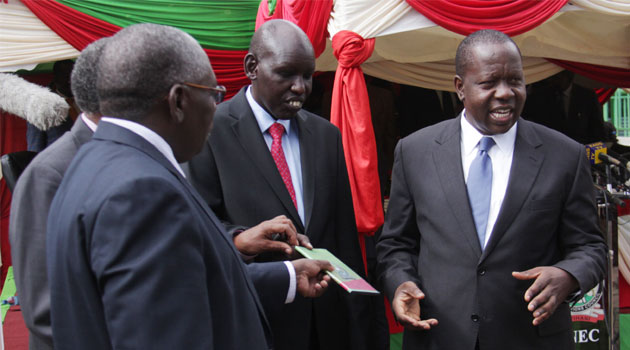
Nairobi — The Ministry of Education has announced more tough measures to curb cheating which include the banning of geometrical boxes and clipboards.

The measures announced by Education Cabinet Secretary Fred Matiang’i together with his ICT and Internal Security Counterparts Joe Mucheru and Joseph Nkaissery also include the banning of mathematical tables and calculators for exams that do not require them.

«The Kenya National Examinations Council (KNEC) has reviewed examination rules on the conduct of the national examinations to seal loopholes that have previously enabled candidates to cheat in examinations. Some of the changes include banning the use of clipboards and geometrical sets from examination rooms,» a statement from the ministry stated.

Candidates will be required to carry their geometrical instruments and writing materials in a clear see-through porch/poly bag/plastic paper.»

According to the statement, the use of mobile phones within the precincts of the examination centres will not be allowed for all involved during the written examinations set to begin next week.

«The role of Principals/Head teachers has been reviewed to make them Centre Managers in their examination schools hence ensure that they more accountable for the examination administration process,» the ministry said.

Matiang’i further stated that the teachers who are expected to remain in school will be those involved in the administration of practical subjects and boarding facilities as all schools are expected to close by Friday.

«All teachers except those involved in the administration of practical subjects and boarding facilities will be expected to remain out of schools during the examination season starting from November 1st to November 30th 2016,» he said.

He explained that head teachers and principals of all schools will pick the examination materials daily from the containers and return the scripts to the containers at the end of the examinations daily.

He stressed that all necessary staff have been trained on matters related to physical security, personal security and document security.

He pointed out that all supervisors and invigilators who will be involved in the 2016 examinations have been vetted to ensure that they are suitable to dispense their duties.

«It is expected that due to the creation of an examination season, teachers of high integrity will be released to supervise and invigilate the examinations,» he said.

He emphasised that all systems of storage and distribution of examination materials have been reviewed and that they will employ intensive ICTs more than ever before.

Fuente de la noticia: https://www.capitalfm.co.ke/news/2016/10/education-ministry-sets-tough-measures-to-curb-exam-cheating/

Fuente de la imagen: https://www.capitalfm.co.ke/news/files/2016/10/KCSE-2015-RESULTS-MATIANGI.jpg

Comparte este contenido:

South Africa: Roadmap needed to finance higher education

África/Sudáfrica/30 Octubre 2016/Fuente: /Autor:

Resumen: Se necesita una hoja de ruta para financiar los gastos de estudio de los estudiantes pobres y de clase de trabajo para hacer frente a las tasas universitarias en curso protestas en todo el país, dijo el miércoles el gobierno.

A roadmap to finance the study costs of poor and working class students is needed to address the ongoing university fees protests across the country, government said on Wednesday.

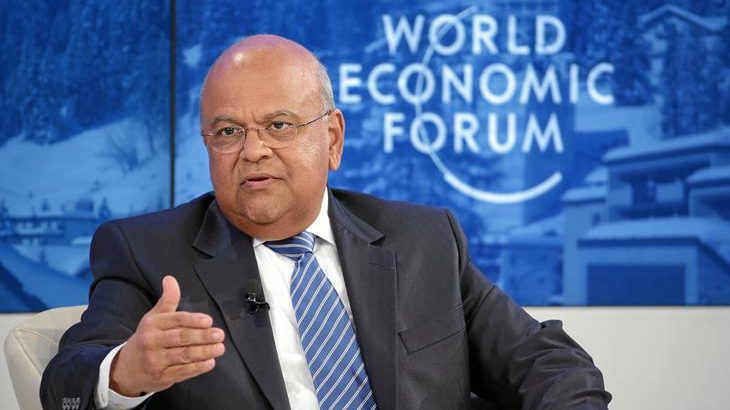
«A roadmap is needed to fully finance the costs of study for students from poor and working-class families. The plan needs to consider the impact of different education interventions to maximise social and economic transformation,» said government in its 2016 Medium Term Budget Policy Statement (MTBPS) tabled by Finance Minister Pravin Gordhan.

Minister Gordhan, who tabled the MTBPS in Parliament, said university education benefits society and it also improves graduates’ income and employment prospects.

The Minister said universities and students will receive an additional R17 billion over the term – R9 billion for the National Student Financial Aid Scheme over the period ahead and over R8 billion to meet the costs of fee increases for students from households with incomes up to R600 000.

In his maiden MTBPS since returning to the National Treasury portfolio, Minister Gordhan said the «fees must fall» movement by university students has placed the issue of education funding at the centre of the policy debate.

«It has also generated welcome suggestions on how to fund tertiary education,» noted the document.

The 2016 MTBPS which is also dubbed as the mini budget proposes to accelerate the growth of spending on post-school education. Despite fiscal constraints, subsidies to universities grow at 10.9 % each year and transfers to the National Student Financial Aid Scheme (NSFAS) grow at 18.5 %.

In the 2016 Budget, R5.7 billion was added to university subsidies to fund the zero percent fee increase for the 2016 academic year, while the NSFAS received additional funding of R10.6 billion over the MTEF period.

However, students across the country have continued their protests across various universities, calling for free higher education, despite the announcement by Higher Education and Training Minister Blade Nzimande. Minister Nzimande at a briefing last month said universities could increase fees by no more than 8%.

«In the 2017 Budget, government will fund the increase in fees at higher learning institutions for the 2017 academic year up to a maximum of 8% for students from households earning up to R600 000 per year,» said the MTBPS on Wednesday.

Speaking at a media briefing ahead of tabling the country’s 20th MTBPS, Minister Gordhan said concerns were raised by students.

«We hear them absolutely clearly. There’s no room for violence in any form. The objective is to ensure that people have access [to higher education] and become a dynamic part to our economy,» said Minister Gordhan.

He stressed that government is listening to students. «This is not a government that is not listening.»

Adding to the Minister’s comments, Planning, Monitoring and Evaluation Minister Jeff Radebe said that the task team set up to look into the matter is seized with bringing about normalcy to higher education institutions. «We need to protect the future of our children,» said Minister Radebe.

Speaking at the same briefing, Minister Nzimande said the country needs to expand its colleges and that the country is facing a shortage of mid level skills.

Over the past five years, expenditure on post-school education and training has grown much faster than other budgets.

Allocations have increased from 1% of Gross Domestic Product (GDP) in 2008 to 1.5 % today. Most of this increase benefited vocational colleges, sector education and training authorities and the National Skills Fund, rather than universities.

«Building on the successful expansion of access to higher education, government acknowledges the need to correct its course and increase the number of graduates, while improving teaching and research,» said Minister Gordhan.

The mini budget said those who go on to become affluent citizens have a responsibility to contribute a share of these gains to the next generation.

«In higher education, as in all areas of public policy, decisions and trade-offs are required to ensure balanced, sustainable development that meets the vast needs of the population using available resources.»

Added to that, government is working to expand post school education and training to produce a larger pool of mid to high level skills as envisioned in the National Development Plan.

Improving learner throughput rates by developing teaching and learning support plans for technical and vocational education and training (TVET) colleges is a priority.

The colleges will receive support to refurbish workshop facilities and to obtain equipment and protective gear for practical training. Training for artisans will be expanded while community education and training will receive support.

Fuente de la noticia: http://www.sanews.gov.za/south-africa/roadmap-needed-finance-higher-education

Fuente de la imagen: http://www.cnbcafrica.com/ImageGen.ashx?image=/media/18941608/gordhan__flickr.jpg&crop=resize&height=425&Compression=75&width=73

Comparte este contenido:

Ghana: Yvonne Nelson Promotes Education

África/Ghana/30 Octubre 2016/Fuente: Allafrica/Autor: Alex Ohene

Resumen: La actriz célebre, Yvonne Nelson, ha aconsejado a los estudiantes que tienen un gusto por las artes creativas que se tomen su educación formal en serio y no la abandonen.La actriz y productora populares dijo esto durante su discurso de aceptación después de que ella fue galardonada en la edición 2016 del Festival de Broadway Drama

Celebrated Ghanaian actress, Yvonne Nelson, has advised students who have a flair for creative arts to take their formal education seriously and not abandon it.

The popular actress and producer made the call on Saturday during her acceptance speech after she was honoured at the 2016 edition of Broadway Drama Festival.

The award was for her quest to discover new talents, to give others a chance to reach the height she has attained.

According to Yvonne Nelson, «Education is a key in every aspect of our lives. It prepares everyone for every endeavour, and so it is to the creative arts industry.»

Though a lot of schoolgoing children want to pursue a career in the showbiz industry, she reiterated that their primary aim now should be their education because they are still in school.

«Take your lessons seriously and make your parents proud,» she added when she tasked children not to waste their parents’ resources at school by not studying.

The drama festival which was held at the Presbyterian Hall at Osu in Accra on Saturday attracted different drama groups from various senior high schools across the country.

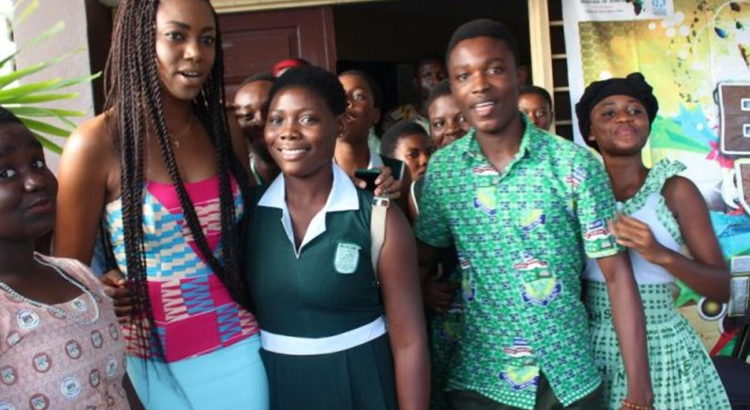
The ‘Heels & Sneakers’ producer was honoured at the ceremony alongside other personalities for their contributions towards the creative arts industry. Before leaving the premises of the Presbyterian Hall, she took time to pose for photographs opportunities with students.

Fuente de la noticia: http://allafrica.com/stories/201610260878.html

Fuente de la imagen: https://www.ghanastar.com/wp-content/uploads/2016/10/ghanastar_2016-10-26_09-24-06.jpg

Comparte este contenido:

Nigeria: Before indigenous languages go extinct

África/Nigeria/30 Octubre 2016/Fuente: Allafrica/Autor:NigeriaThisDay

Resumen: El gobierno debe tomar medidas concretas para hacer cumplir el aprendizaje y la enseñanza de la lengua materna. En un intento de preservar las lenguas indígenas de Nigeria, el gobierno federal promulgó la Política Nacional de Educación (NPE) en 1977. Sección 1 (8) la política hace hincapié en que el gobierno federal «tomará de interés de referencia, y hacer declaraciones de política sobre la la enseñanza de las lenguas indígenas, en lugar de en relación con sí mismo únicamente con idioma Inglés «. Sin embargo, en muchas escuelas de Nigeria, lo que se encuentra escrito audazmente es «está prohibido hablar en lengua vernácula».

Government must take concrete steps to enforce the learning and teaching of mother tongue

In an attempt to preserve Nigeria’s indigenous languages, the federal government enacted the National Policy on Education (NPE) in 1977. Section 1 (8) of the policy emphasises that the federal government «shall take official interest in, and make policy pronouncements on the teaching of the indigenous languages, instead of concerning itself solely with English Language». However, in many Nigerian schools, what you find written boldly is «vernacular speaking is prohibited», a repudiation of that same policy.

That perhaps explains why most of the studies that have been carried out revealed that majority of Nigerian children cannot speak the language of their parents. This, as we have stated on this page several times, has nothing but dire consequences for the country because as our indigenous languages face extinction, so are other aspects of our culture, including history, traditions and values. One of the ominous signs of danger today is the incremental loss of our rich arts forms, particular in music, dance and fashion as our youths have taken to the Western genre, threatening our cultural identity as African people.

Since embedded in our indigenous languages is our rich culture, history, traditions, and values, government must take deliberate and concrete steps to protect them by enforcing the national policy on education with regard to learning and teaching of mother tongue. That must be the starting point because education is the base of the future of every society.

Accordingly, the policy stipulates that every pupil must in the course of primary school education (which lasts six years), study two languages, namely, his/her mother-tongue, if available for study, or any other indigenous language of wider communication in his/her area of domicile alongside English Language.

The policy also requires that students in Junior Secondary School (JSS), (which is of three-year duration) must study three languages, namely, mother tongue, if available for study, or an indigenous language of wider communication in his/her area of domicile, alongside one of the three major indigenous languages in the country, namely, Hausa, Igbo, and Yoruba, provided the language chosen is distinct from the child’s mother-tongue. In Senior Secondary School (SSS), which also lasts three years, a Nigerian child, according to the policy, must study two languages: an indigenous language and English Language.

However, there have been challenges implementing this policy. Many schools are unable to offer these indigenous languages because of lack of teachers, a cumulative effect of several years of indifference. Obviously, the policymakers were aware of this acute shortfall when they used the phrase «if available for study» in the policy. This optional nature of the policy undermines its implementation.

Indeed, several studies have shown a relationship between level of development and language with the attendant result that those countries that use their indigenous languages, called Mother Tongue, as their lingual franca have a faster rate of development than those that use a second (foreign) language. The reason is that people learn and comprehend best in their indigenous language since it is ingrained in their blood. For instance, countries like China, Japan, Taiwan and South Africa that use mother tongue to teach Science and Technology are higher on the United Nations Human Development Index than Nigeria and others that use foreign languages.

We therefore urge the federal government to institute an intervention programme that will facilitate the learning and teaching of indigenous languages in our training and tertiary institutions with a view to producing teachers that would not only fill up the gap but would help in developing those languages to their fullest potential. It should also produce a definite format for all states to follow in the implementation of the national policy on education with regard to mother tongue.

Fuente de la noticia: http://www.thisdaylive.com/index.php/2016/10/28/before-indigenous-languages-go-extinct/

Fuente de la imagen: http://i1.wp.com/leadersandco.s3-eu-west-1.amazonaws.com/wp-content/uploads/2016/10/27225804/EXTINCT.jpg?resize=696%2C52

Comparte este contenido:

Libro: And so the youth fire raged on youth and practices of democracy and empowerment in Brazil and Kenya

África/Kenia/andsotheyouthAmérica del Sur/Brasil/Octubre 2016/Wangui Kimari/http://www.clacso.org.ar/
Wangui Kimari. [Autora]

Sur-Sur.
ISBN 978-987-722-177-0
CLACSO. CODESRIA. IDEAs.
Buenos Aires.
Abril de 2016

Heeding the 2013 CODESRIA / CLASCO call to attend to the localized entanglements of democracy and neoliberalism, this research is oriented by the bid to see what other political spaces have been established by young people in Kenya and Brazil, and what this says about how they fit in to normative political fora with their hegemonic discourses of democracy and neoliberalism; ideologies which often seek to impose on youth particular kinds of political practices and subjectivities. Overwhelmingly, it is also an attempt to share strategies and political imaginations that have emerged from poor urban youth in both countries; approaches, I argue, that also gesture towards the futures for these youth, their urban settings, and of the ‘democratic’ and ‘neoliberal’ political processes that have been entrenched in their national spaces.
Descarga libre
Fuente: 
Fuente Imagen: 
https://lh3.googleusercontent.com/UlzBipLP88MI_a1-HWT08bdAwwkJDcv4JRvJXKhflOSl4ZBbrd5-x_hBw3w3ShMcAiXl1g=s85
Comparte este contenido:

Sector leaders back income-contingent loans for South Africa

África/Sudáfrica/Octubre de 2016/Autor: Chris Havergal/Fuente: Times Higher Education

RESUMEN: Mientras los manifestantes estudiantiles de Sudáfrica están llamando a la educación superior universal y gratuita, si esto podría ser acordada por el gobierno del país es dudosa. Existe un reconocimiento generalizado de que la matrícula debe ser gratuita para las familias más pobres, pero, ya que el país sigue siendo agarrado por una crisis económica, los líderes del sector creen que la introducción de préstamos supeditados a los ingresos garantizados por el gobierno es una solución más viable para la mayoría. «La demanda es ‘educación superior gratuita ahora’; así ¿qué pasa con la salud, ¿qué pasa con la educación básica, ¿qué pasa con la vivienda, ¿qué pasa con los subsidios sociales? Estas son las conversaciones que tendrá que tener acerca de dónde es el lugar adecuado para la educación superior en eso «, dijo Wim de Villiers, rector de la Universidad de Stellenbosch. «Con la situación económica actual y la restricción financiera del gobierno está bajo, no puede prever que la educación superior gratuita podría ser una recomendación implementable.»

While South Africa’s student protesters are calling for universal free higher education, whether this could be afforded by the country’s government is doubtful.

There is widespread acknowledgement that tuition should be free for the poorest families but, as the country remains gripped by an economic crisis, sector leaders believe that the introduction of government-backed income-contingent loans is a more viable solution for the majority.

“The demand is ‘free higher education now’; well what about health, what about basic education, what about housing, what about social grants? These are the conversations we will need to have about where the right place is for higher education in that,” said Wim de Villiers, vice-chancellor of Stellenbosch University. “With the current economic climate and the financial restraint the government is under, I cannot foresee that free higher education could be an implementable recommendation.”

Many in South Africa argue that it is right that students who can afford to pay for their own university tuition should make a contribution. The question is, however, whether this would be acceptable to a protest movement that appears to retain the sympathy of students.

Martin Hall, emeritus professor in the University of Cape Town’s Graduate School of Business, highlighted that free higher education meant very different things to different people. Currently, fees in the country have to be paid up front and students with outstanding debts are unable to graduate. A graduate tax or income-contingent loan repayment system would be much more palatable, he suggested.

“There will always be students who won’t accept these solutions, but I think if there was a solution where there was a combination of bursaries and income-contingent loans, that would actually meet a very significant proportion of student demand to the extent that it could quieten the system down,” Professor Hall said.

The other question is whether a South African government, which too often seems unable to provide the solutions that the country needs, is actually capable of delivering such a system.

Belinda Bozzoli, the former deputy vice-chancellor (research) of the University of the Witwatersrand and the opposition Democratic Alliance’s shadow higher education minister, said that there were some in the ruling African National Congress who “don’t care a fig about universities”, although others were more understanding.

“What can be afforded by the government isn’t very big, and whether it is a priority for the state is not clear,” she said.

For those reasons many also see an important role for the private sector in South African student finance, perhaps providing the loans under direction from ministers.

Meanwhile, others believe that the current crisis should provide the impetus to rethink the funding of the country’s higher education system more fundamentally.

Cheryl de la Rey, vice-chancellor of the University of Pretoria, argued that some institutions should focus on undergraduate education, while others should be supported to maintain their excellence in research and postgraduate tuition.

“I see this as a defining moment for the future of higher education in South Africa,” she said. “I really think it is time for us to think about a national system that is differentiated.”

Fuente: https://www.timeshighereducation.com/news/sector-leaders-back-income-contingent-loans-south-africa


Comparte este contenido:
Page 418 of 622
1 416 417 418 419 420 622